Adrian discovered that I had accepted another man’s proposal twelve days before our divorce became final.
Not because I told him.
Because Sophie did.
She had been searching through my social media late at night when she found a photograph posted by one of my former medical-school classmates.
A dinner.
Six people around a table.
I was standing beside a man in a dark coat.
His name was Julian Hart.
And although nothing in the photograph was romantic, Sophie apparently enlarged it until she noticed the ring on my right hand.
The next morning, Adrian appeared in my office without knocking.
He threw his phone onto my desk.
“What is this?”
I glanced at the photograph.
“A dinner.”
“Who is he?”
“An old friend.”
His jaw tightened.
“What ring are you wearing?”
I continued signing a patient report.
“Mine.”
“Claire.”
I looked up.
“What?”
“You accepted someone’s proposal?”
So Sophie had told him everything she thought she knew.
I closed the file.
“Yes.”
For several seconds, Adrian simply stared at me.
Then he laughed.
Not because he found anything funny.
Because he thought I was lying.
“You agreed to marry another man?”
“Yes.”
“We’re still married.”
“For twelve more days.”
His smile disappeared.
“You know the divorce was only for Sophie.”
“No.”
I shook my head.
“You know that.”
“I signed a real divorce.”
“So did you.”
“That wasn’t the agreement between us.”
“There hasn’t been an agreement between us in years.”
He stepped closer.
“Who is he?”
I said nothing.
Adrian slammed his palm against the desk.
“Who is he?”
Several nurses outside turned toward the glass.
I lowered my voice.
“You’re making a scene.”
His face changed.
He hated hearing his own words used against him.
“Julian Hart,” I said.
The name finally registered.
Adrian became still.
Julian had been two years ahead of us in medical school.
Brilliant.
Quiet.
The son of a cardiac surgeon.
More importantly, he was the doctor who had taken over my treatment three days earlier when I arrived at another hospital with complications after losing the pregnancy.
Adrian’s eyes narrowed.
“The cardiothoracic surgeon?”
“Yes.”
“When did this start?”
I almost laughed.
“You want a timeline?”
“Yes.”
“Interesting.”
I leaned back.
“Because I’ve been asking for one regarding your seven lovers for years.”
He went silent.
“This is different.”
“How?”
“You’re my wife.”
The words came automatically.
Possessively.
As though the signed divorce papers had not existed until I decided to use them.
I reached into my drawer and placed a copy of our divorce agreement on the desk.
“No, Adrian.”
I pointed at his signature.
“You personally made sure I stopped being that.”
He looked at the paper.
Then at me.
For the first time, I saw fear.
Not anger.
Fear.
“Did you sleep with him?”
I stood.
The chair scraped against the floor.
“You don’t get to ask me that.”
“I have a right—”
“You had seven children with seven women.”
His mouth closed.
“And I stood outside operating rooms while they gave birth.”
“I signed forms.”
“I treated complications.”
“I listened while your friends joked about how long I would tolerate it.”
My voice remained calm.
“That was when you had the right to care who I belonged to.”
I walked past him.
“You chose not to use it.”
Julian was waiting for me downstairs.
He wasn’t actually my fiancé.
Not yet.
That was the part Sophie had misunderstood.
Three days earlier, after I lost the pregnancy, Julian had sat beside my hospital bed until sunrise.
We had known each other for thirteen years.
He had once liked me.
I knew it.
He never interfered after I chose Adrian.
Even after rumors about Adrian’s first lover spread through medical circles, Julian only told me:
“If you ever need someone who won’t ask you to explain, call me.”
I never did.
Until the third loss.
That night, I woke after surgery and found Julian reading my chart.
“Your emergency contact didn’t answer,” he said.
I looked toward the empty chair.
“He rarely does.”
Julian didn’t ask who.
He already knew.
Before I left the hospital, he said:
“Come to Boston with me.”
I thought he meant for treatment.
Then he continued:
“My research center needs a maternal-fetal medicine specialist.”
I laughed weakly.
“Are you recruiting me from a hospital bed?”
“I’ve been trying to recruit you for four years.”
“Why now?”
“Because now you might finally listen.”
I did.
The message I sent after signing the divorce—
Yes. I agree to marry you.
—had not been a romantic proposal.
Months earlier, Julian had jokingly called the Boston position “a marriage proposal to medicine.”
His exact message had been:
Come build this department with me. You can marry the research program instead of that hospital.
I had answered:
Ask me after I stop being stupid.
Three days after losing my baby, I finally replied yes.
Sophie saw only the last sentence.
Adrian believed the worst.
And I did not correct him.
Not because I wanted revenge.
Because for the first time, I wanted him to experience uncertainty without me immediately rushing to relieve it.
That evening, Adrian came home before me.
When I arrived, every light was on.
He was standing in the living room.
The photograph he had asked about earlier sat on the coffee table.
Beside it were seven folders.
I recognized them.
Birth certificates.
Seven children.
Seven mothers.
Seven reminders of every boundary he had crossed while telling me it was my duty to understand.
“What are you doing?”
Adrian looked exhausted.
“I ended everything.”
“With whom?”
“All of them.”
I took off my coat.
“There was nothing to end with most of them.”
“You know what I mean.”
“No.”
I walked toward the bedroom.
He followed.
“Sophie is moving out of the apartment.”
I stopped.
“What apartment?”
He froze.
That was enough.
Of course.
There was always an apartment.
“Interesting.”
“Claire…”
“How long?”
“Six months.”
“So while I was going through treatment…”
“It wasn’t like that.”
I laughed.
I had heard that sentence seven times too many.
“Was the bed accidental?”
He closed his eyes.
“I made mistakes.”
“No.”
I turned toward him.
“You made arrangements.”
That silenced him.
Adrian stepped closer.
“I thought you couldn’t give me children.”
“I gave you three.”
His face changed.
He knew about the first two losses.
But not the third.
“What?”
I touched my abdomen instinctively.
“Three days ago.”
His face emptied.
“No.”
“Yes.”
“You were pregnant?”
“Yes.”
“How far?”
“Ten weeks.”
He stared at me.
Then at the calendar on the wall.
Three days ago.
The opera.
Sophie.
His unanswered phone.
His mouth opened.
Nothing came out.
“The hospital called you four times.”
Adrian sat down slowly.
“No.”
“Your assistant called.”
“I know.”
“Julian called.”
His head snapped up.
“He was there?”
“Yes.”
Adrian covered his face.
For the first time in ten years, I saw him cry.
Not theatrical tears.
Not the red-eyed tenderness he used whenever one of his lovers was upset.
He simply folded forward.
“I didn’t know.”
I watched him.
“And whose fault was that?”
He couldn’t answer.
I continued:
“The first child lived thirty-seven days.”
“You remember?”
His shoulders shook.
“Yes.”
“Then why did you give his name to Sophie’s baby?”
Adrian lowered his hands.
“What?”
I almost smiled.
He truly had forgotten.
“Elias.”
His face became white.
The memorial lamp.
The temple.
The tiny urn.
Our son.
He remembered all at once.
Adrian stood so quickly the chair fell backward.
“Claire…”
“You handed me a list of baby names and asked me to choose.”
“I didn’t realize—”
“I know.”
That was the cruelest part.
Not that he had deliberately stolen our son’s name.
That our son had become forgettable to him.
I picked up my suitcase.
“Where are you going?”
“Hotel.”
“No.”
He moved toward the door.
“Claire, don’t.”
I looked at him.
“You don’t get to stop me.”
“Then let me come.”
“Where?”
“To Boston.”
I stared at him.
He had misunderstood again.
“There’s no wedding, Adrian.”
He froze.
“What?”
“Julian offered me a position.”
The relief on his face came so quickly that I almost hated him for it.
Then I continued:
“But don’t smile.”
His expression disappeared.
“I’m still leaving.”
“Why?”
Because even now, another man was the only threat he understood.
Not seven affairs.
Not three lost pregnancies.
Not years of humiliation.
Another man.
I picked up the divorce papers.
“Because whether Julian exists or not has nothing to do with why our marriage ended.”
Twelve days later, our divorce became final.
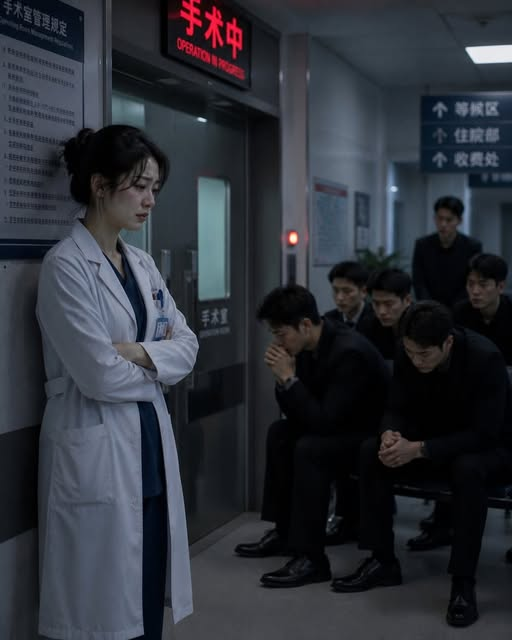
Adrian appeared at the registry office alone.
No Sophie.
No friends.
No lawyer.
He looked like he hadn’t slept.
When the final stamp came down, he stared at it for a long time.
“This wasn’t supposed to be real.”
I put the document inside my bag.
“It became real long before we signed anything.”
Outside, he handed me a small wooden box.
I opened it.
Inside was our son Elias’s memorial bracelet.
The one Adrian had refused to wear after the funeral because he said looking at it made it difficult to work.
“I went to the temple,” he said.
I said nothing.
“I changed the baby’s name.”
That surprised me.
“Sophie agreed?”
“No.”
He looked away.
“We argued.”
“What did you name him?”
“Samuel.”
I nodded.
Elias remained Elias.
Ours.
Nobody else’s replacement.
Adrian continued:
“I told all seven mothers I would financially support the children and take responsibility as their father.”
“But?”
“No more pretending any of those relationships were necessary because of heirs.”
I almost smiled.
“You finally realized children aren’t trophies.”
“Yes.”
Too late.
But yes.
Then he asked:
“Is there really no chance for us?”
I looked at the man who had once saved me when I was eighteen.
That mattered.
It always would.
But gratitude was not a marriage license.
“You saved my life once, Adrian.”
His eyes filled.
“I know.”
“And I spent years believing that meant I owed you the rest of it.”
I shook my head.
“I don’t.”
He looked down.
“No.”
“You don’t.”
That was the first truly selfless thing he had said in years.
I moved to Boston the following month.
Julian never pressured me.
We worked.
We argued about research budgets.
We ate terrible hospital cafeteria food at midnight.
And slowly, I remembered what it felt like to be treated as a physician instead of Adrian Cole’s infertile wife.
Six months later, I received test results from a genetics specialist.
The conclusion confirmed what I had already been told:
Adrian and I carried a combination of genetic variants that made pregnancy together unusually high-risk.
Neither of us was “defective.”
Neither was incapable of having healthy children with another partner.
For ten years, Adrian had allowed his family to call me barren.
Because the truth was less convenient than blaming me.
I sent him the report.
He replied three hours later.
Only four words:
I should have defended you.
I answered:
Yes.
Nothing more.
Two years passed.
Then Julian asked me a real question.
No jokes.
No research proposal.
No hospital corridor.
We were walking home after dinner when he stopped under a streetlamp.
“I’m not asking because you need rescuing.”
I looked at him.
“Good start.”
“I’m not asking because I waited.”
“Better.”
“I’m asking because the life I have with you already feels like the one I want to keep.”
Then he held out a ring.
“Claire Bennett, will you marry me?”
I cried.
Not because someone had finally chosen me.
Because for once, I was free enough to choose too.
“Yes.”
Adrian learned three months later.
He sent no angry messages.
No threats.
No flowers.
Only:
Congratulations.
Then another message arrived.
I mean it.
I believed him.
Our paths crossed occasionally because of the children he had with other women and because we worked in the same medical world.
Adrian became a different father than the husband he had been.
Present.
Responsible.
Almost obsessively careful with birthdays.
Perhaps some people only learn after losing the one person who kept absorbing the consequences of their failures.
I never became friends with Sophie.
But one day, years later, she approached me at a conference.
“I owe you an apology.”
“For what part?”
She winced.
“Most of it.”
I waited.
She looked down.
“I thought if Adrian chose me enough times, eventually I would become special.”
I understood that more than she expected.
“Did you?”
“No.”
She smiled sadly.
“I became number seven.”
Then she walked away.
Julian and I eventually had a daughter.
The pregnancy terrified me.
I checked everything twice.
Sometimes three times.
On the day she was born, Julian stood beside me the entire time.
When the nurse placed our daughter in my arms, he cried before I did.
We named her Rose.
No family demands.
No heir calculations.
No memorial names stolen from another child.
Just Rose.
Later that night, while Julian slept in the chair beside us, I looked at my daughter and remembered the woman I had been years earlier.
The woman who believed she owed Adrian everything because he had once rescued her.
The woman who attended seven births while being told her own body had failed.
The woman who accepted a divorce because her husband believed he could always register her again whenever he wanted.
I wanted to tell that woman one thing.
Being saved once does not mean you must spend the rest of your life being hurt in repayment.
Adrian protected me when I was eighteen.
I will always be grateful for that boy.
But the man he became later was not entitled to destroy me because the boy he once was had saved me.
The seventh baby was not the end of my marriage.
Neither was the divorce certificate.
The end came quietly three days earlier, when I woke from surgery, looked at the empty chair beside my bed and realized I no longer wanted Adrian to be the person sitting there.
By the time he handed me the divorce papers, he thought he was performing another temporary trick to keep another woman happy.
He had no idea he was giving me exactly what I finally needed.
A door.
And this time, when Adrian opened it for me,
I walked through before he could decide to close it again.
