Daniel discovered who I was forty-eight hours later.
Not through me.
Through NordTech.
At ten o’clock Wednesday morning, Qin Group hosted the final strategy meeting for the acquisition.
NordTech’s chairman joined by video from Stockholm.
Our investment team occupied one side of the conference table.
Across from us sat representatives from Shengheng Group.
And walking beside Olivia Lin was Daniel Shen.
The moment he entered the room and saw me sitting at the head of the table, he stopped.
Actually stopped.
Olivia almost walked into him.
“Daniel?”
He didn’t answer.
His eyes moved to the nameplate in front of me.
SOPHIE QIN — EXECUTIVE DIRECTOR, QIN GROUP
Then to Harris.
Then Lee.
Then the enormous Qin Group emblem behind my chair.
His face slowly lost color.
“You…”
I closed the document in front of me.
“Good morning, Mr. Shen.”
Everyone looked between us.
Olivia frowned.
“You know Director Qin?”
Daniel’s lips parted.
Nothing came out.
I smiled politely.
“We’re acquainted.”
Harris began the meeting.
For the next ninety minutes, Daniel sat twelve feet away from me and learned who his wife had been before she became Mrs. Shen.
I presented our financing model in fluent English.
Negotiated with NordTech’s chairman in Swedish-accented English without looking at notes.
Corrected a valuation assumption from memory.
Rejected a proposed adjustment from Shengheng’s banker.
And when Olivia interrupted me for the third time, I looked at her calmly.
“Ms. Lin, if you disagree with the numbers, challenge the numbers.”
The room went quiet.
“Personal interruptions don’t improve them.”
Her cheeks reddened.
Daniel stared at me.
Three years earlier, he had told me:
“You don’t need to work anymore. I can support you.”
I had thought it was love.
Now I understood how much easier his life had become once I stopped reminding him I had once been powerful without him.
After the meeting, Daniel waited outside my office.
“Sophie.”
I walked past him.
He followed.
“Why didn’t you tell me?”
I stopped.
“Tell you what?”
“That your family owns Qin Group.”
“My family doesn’t ‘own’ it like a house.”
“You know what I mean.”
“Yes.”
I turned.
“You mean why didn’t I tell you I had enough money and influence that slapping me might have consequences you couldn’t control?”
His face tightened.
“That’s not what I meant.”
“Then what did you mean?”
He couldn’t answer.
I entered my office.
He followed without permission.
Harris immediately stood.
I raised a hand.
“It’s fine.”
Daniel closed the door.
“What was our marriage to you?”
I almost laughed.
“You’re asking me?”
“You hid your identity for three years.”
“No.”
“I told you my mother ran an international company.”
“You said she worked in investment.”
“She does.”
“You never said Qin Group.”
“You never asked.”
His voice rose.
“How was I supposed to know?”
I looked at him.
“The same way you could have known Emma’s pediatrician.”
He went silent.
“The same way you could have known which school I attended.”
“Which company I worked for before marriage.”
“What job I gave up.”
“What my mother’s full name was.”
I tilted my head.
“Daniel, you didn’t know because those things stopped mattering to you the moment I became your wife.”
His expression changed.
That landed.
Then he remembered why he had come.
“Bring Emma home.”
“No.”
“She is my daughter.”
“Yes.”
“You took her internationally without consulting me.”
“I took her to a safe residence after you struck me in front of her.”
His face went pale.
“I lost control once.”
“Once was enough.”
“I already apologized.”
“No.”
“You called forty-seven times.”
“That isn’t an apology.”
He looked away.
Then said:
“Olivia told me you were planning to use Qin’s influence to keep Emma away from me.”
There it was.
Olivia.
Again.
I leaned against the desk.
“And you believed her.”
“She showed me messages.”
“What messages?”
Daniel pulled out his phone.
Screenshots.
A supposed conversation between me and Claire.
Once I reach London, Daniel will never see Emma again.
My family can bury him in court.
I stared at them.
Then started laughing.
Daniel frowned.
“What?”
“I never wrote these.”
His expression changed.
“They came from your account.”
“No.”
I held out my hand.
“Send them to Lee.”
“Why?”
“Because if you’re going to accuse me of threatening parental alienation, I’d prefer the evidence be examined properly.”
He hesitated.
That hesitation told me something important.
For the first time, Daniel was beginning to wonder whether Olivia’s tears and screenshots might not be sacred evidence.
I lowered my voice.
“You slapped me because she cried.”
“Now you sent me a legal threat because she sent screenshots.”
“How many times does she have to choose your reaction for you before you realize she is driving?”
His jaw tightened.
“I make my own decisions.”
I nodded.
“Then own them.”
I walked to the door and opened it.
“You hit me.”
“You sent the legal letter.”
“You believed her.”
“Those are your decisions.”
“Not Olivia’s.”
He left without another word.
Lee’s digital forensics team needed less than a day.
The screenshots were manipulated.
Not sophisticated.
The timestamps didn’t match.
Font rendering was inconsistent.
One message contained a punctuation style Claire never used.
More importantly, the alleged conversation had no corresponding server backup on my devices.
I forwarded the report to Daniel’s attorney.
No commentary.
Then we investigated the financial rumor.
That was more serious.
The article claiming a Qin executive had fled overseas with company funds originated from a shell media account.
Payment for the sponsored post came through a marketing agency.
That agency had worked repeatedly for Shengheng.
One approval email bore the initials:
O.L.
Olivia Lin.
Harris looked at me.
“Do you want to go public?”
“No.”
“Not yet?”
“Not unless necessary.”
He frowned.
“She attacked your reputation.”
“She also handed us evidence of competitor misconduct during a live acquisition.”
I looked at the file.
“Send it to NordTech’s compliance counsel.”
He smiled.
“That will hurt more.”
It did.
NordTech did not care that Olivia had spilled wine on me.
It cared deeply that one bidder appeared linked to a covert smear campaign targeting another bidder’s executive during a competitive transaction.
Shengheng was asked to explain.
Their board opened an internal review.
Olivia was removed from the NordTech negotiating team within forty-eight hours.
The rumor disappeared from the financial portal shortly afterward.
But the archived copy remained.
So did the payment trail.
I didn’t need to shout.
I didn’t need to retaliate publicly.
She had tried to make me look unstable and instead made herself look unreliable to a billion-euro target company.
Daniel called that night.
Only once.
I answered.
“The screenshots were fake,” he said.
“Yes.”
Silence.
Then:
“I’m sorry.”
“For which part?”
He didn’t defend himself.
“The legal letter.”
“And?”
“For believing her without asking you.”
“And?”
A long pause.
“The restaurant.”
I looked toward Emma’s bedroom.
She was asleep with one hand under her cheek.
Daniel continued:
“I shouldn’t have touched you.”
“No.”
“I don’t know why I did.”
“I do.”
He breathed in.
“Why?”
“Because you were more afraid Olivia would think you failed to protect her than you were afraid of humiliating your wife.”
Silence.
He didn’t deny it.
Then he said:
“I want to see Emma.”
That was the first request he made that mattered.
I replied:
“Through the lawyers, we’ll arrange it.”
“Sophie…”
“I’m not keeping her from you.”
His breathing changed.
“But you’re not bringing her back.”
“No.”
“Are you coming back?”
I looked around my Kensington apartment.
At the files on the coffee table.
At Emma’s tiny shoes beside the door.
At the London rain on the windows.
“No.”
This time he didn’t tell me to stop making drama.
He simply whispered:
“I understand.”
I wasn’t sure he did.
But at least he had stopped pretending my departure was temporary.
The divorce became more complicated because two countries were involved.
But not impossible.
I did not ask Qin Group to crush Daniel.
My mother offered once.
Only once.
She sat across from me at breakfast.
“If you want, I can make sure no Qin-affiliated company ever works with Shen Holdings again.”
I shook my head.
“No.”
She studied me.
“He hit you.”
“I know.”
“You’re protecting him?”
“No.”
I touched my coffee cup.
“I’m protecting myself from becoming someone who uses corporate power to settle a marriage.”
My mother said nothing for a moment.
Then nodded.
“Good.”
That was the last time she offered.
The restaurant supplied its surveillance footage.
Several witnesses provided statements.
The slap became part of the family-law proceedings and Daniel’s own legal team advised him not to minimize it again.
He stopped using the phrase:
I only lost control once.
Instead, during mediation, he said:
“I did it.”
That difference mattered.
Not enough to save the marriage.
But enough to begin making co-parenting possible.
The NordTech acquisition reached its final round three months later.
Shengheng remained a bidder, but weakened.
Not because I sabotaged them.
Because their financing was less secure and the compliance issue damaged trust.
Qin Group’s offer was not the highest.
That worried our directors.
Harris asked:
“Raise?”
I shook my head.
“No.”
“We could win by another fifty million.”
“Then we’d be buying victory instead of value.”
He smiled.
“You really came back.”
I knew what he meant.
The Sophie Qin who left three years earlier had lived by numbers, discipline and patience.
Mrs. Shen had slowly learned to wait for someone else’s decisions.
Now both women existed inside me.
But only one controlled the vote.
NordTech accepted Qin Group’s offer.
Not because we paid the most.
Because we offered better employee protections, retained the Swedish research division and committed to long-term investment rather than asset stripping.
When the announcement went public, our share price rose.
My mother sent me a message:
Your father would have bragged about this for six months.
I stared at it until my eyes filled.
For the first time since returning, success felt like mine again.
Not revenge.
Not proof to Daniel.
Mine.
Olivia’s situation collapsed more quietly.
Shengheng’s investigation found that she had authorized the smear campaign without full executive approval.
It also uncovered expense irregularities unrelated to me.
She lost her position.
Then she contacted Daniel.
I only know because he told me later.
She asked him to defend her publicly.
He refused.
She accused him of abandoning her because I had become “richer than expected.”
Daniel finally asked her the question he should have asked years earlier:
“Did you ever actually want me, or did you just need to win against Sophie?”
Apparently Olivia didn’t answer.
Their friendship ended soon afterward.
I felt nothing when I heard.
That surprised me.
For years I had imagined Olivia as the center of our problem.
She wasn’t.
She was simply the person Daniel repeatedly used as an excuse not to protect our marriage.
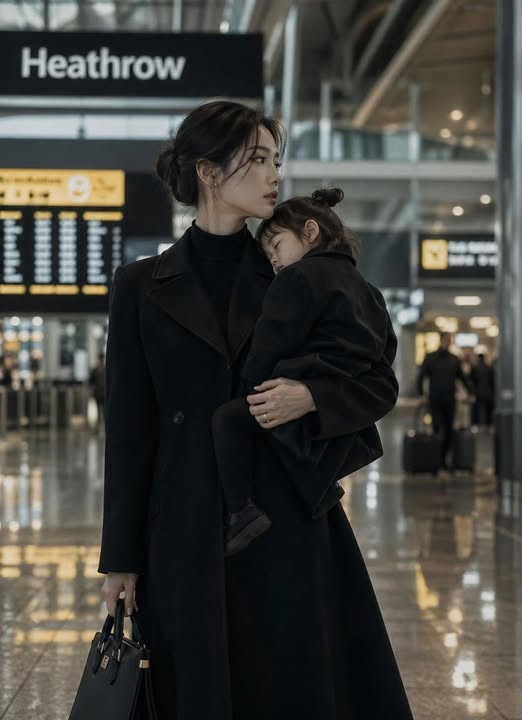
Four months after I left, Daniel came to London for his first extended visit with Emma.
We met at a family center recommended by both lawyers.
The moment Emma saw him, she froze.
Then whispered:
“Daddy?”
Daniel’s face broke.
He crouched.
“Hi, sweetheart.”
She stared at him.
Then ran into his arms.
I looked away.
Whatever happened between us, Emma loved him.
And I would never use her to punish him.
Their first afternoon together was awkward.
He brought too many toys.
Forgot her afternoon snack.
Didn’t know she hated having her hair tied tightly.
But he learned.
The second visit went better.
By the fifth, Emma stopped checking whether I was still in the room.
That was when I agreed to unsupervised daytime visits.
Daniel never thanked me for “allowing” him.
Instead, he said:
“I’ll bring her back at six.”
And he did.
Exactly at six.
Small things.
But after three years of broken promises, small reliability felt enormous.
One evening, after returning Emma, Daniel stood outside my apartment.
“She fell asleep in the car.”
“I’ll carry her.”
“No.”
He lifted her carefully.
“I’ve got her.”
Inside, he placed her in bed and pulled the blanket up.
Then he saw the framed photograph on her dresser.
Me at twenty-two.
Standing onstage in London.
Receiving a young executive award.
Daniel stared.
“What is this?”
“My old job.”
“You were twenty-two?”
“Yes.”
He looked at me.
“I never knew.”
“I know.”
“I thought you were just working in a regional office.”
“I ran international expansion for three markets.”
He sat slowly in the chair beside Emma’s bed.
“What else don’t I know about you?”
I almost laughed.
“A lot.”
He looked down.
“I thought I knew everything important.”
“No.”
“You knew what I cooked.”
“What time I woke up.”
“How I folded your shirts.”
“What made you comfortable.”
He looked at me.
“And I confused that with knowing you.”
“Yes.”
It was the most accurate thing he had said about our marriage.
When we returned to the hallway, he stopped.
“Did I ruin your career?”
“No.”
He seemed surprised.
“I paused it.”
“For you.”
“For the marriage.”
“That was my choice.”
I looked toward the bedroom.
“But I won’t make it twice.”
He nodded.
Then left.
Our divorce became final eleven months after the restaurant.
Daniel did not fight the end.
He fought only for a clear relationship with Emma.
We agreed.
London would remain her primary home for now.
Daniel would have scheduled visits, holidays and longer periods as she grew.
No secret removals.
No public war.
No using our daughter to transmit messages.
When we signed, Daniel looked at my name.
Sophie Qin.
Then he smiled sadly.
“I think I met Mrs. Shen and never really met Sophie Qin.”
I closed my pen.
“You had three years.”
“I know.”
Outside the courthouse, he asked:
“If I had never slapped you, would you still have left?”
I thought about it.
That question deserved the truth.
“Maybe not then.”
Hope appeared for half a second.
Then I continued:
“But eventually.”
His face changed.
“Why?”
“Because the slap didn’t create the marriage we had.”
“It revealed it.”
I looked at him.
“The late nights.”
“The calls with Olivia.”
“Every time you told me I was overreacting.”
“Every time you expected me to sacrifice and called it love.”
“The slap was only the first thing you did that I couldn’t explain away to myself.”
Daniel looked down.
“I’m sorry.”
“I know.”
And I did.
But regret is not a time machine.
Two years later, Daniel and I sat in the audience at Emma’s first school concert.
He flew in from Shanghai.
I came directly from a Qin Group strategy meeting.
Emma walked onto the small stage wearing paper butterfly wings.
She saw us.
“Mom!”
Then:
“Daddy!”
Half the audience laughed.
Daniel waved.
So did I.
Afterward, Emma ran between us and grabbed one hand each.
For a few seconds, we walked like that.
A family.
Just not a marriage.
At the parking lot, Daniel said:
“I heard Qin bought the remaining NordTech stake.”
“Yes.”
“Congratulations.”
“Thank you.”
He smiled.
“You would have hated the woman I met at Heathrow two years ago.”
“What woman?”
“The one who needed everyone to know she was powerful.”
I shook my head.
“I didn’t need everyone to know.”
“Only myself.”
He considered that.
Then nodded.
“Fair.”
Before leaving, he looked at my face.
The bruise had disappeared years ago.
Yet somehow both of us remembered exactly where it had been.
Daniel said quietly:
“That night is still the worst thing I’ve ever done.”
I answered:
“It doesn’t have to be the only thing you ever learn from.”
He looked toward Emma.
“No.”
“It won’t be.”
And I believed him.
Not enough to love him again.
Enough to trust him with our daughter.
That was a different kind of forgiveness.
One with boundaries.
People later told the story differently.
They said I fled to London after my husband slapped me.
Then returned to Qin Group and destroyed Olivia’s company.
That wasn’t what happened.
I didn’t destroy Shengheng.
I didn’t destroy Daniel.
I didn’t need to.
Olivia created her own evidence.
Daniel created his own consequences.
And I simply stopped standing between them and those consequences.
The forty-seven calls were never the important part.
The Bentley wasn’t important.
Neither was the Kensington apartment.
Or NordTech.
Or the Qin surname.
The important moment happened much earlier.
Inside a restaurant.
Emma crying in her stroller.
My cheek burning.
Daniel looking at his own hand as if it belonged to someone else.
That was when I finally understood something I had forgotten for three years:
Love is not supposed to require you to become smaller so another person can feel larger.
I had left London believing becoming Mrs. Shen was a new life.
I returned thinking becoming Sophie Qin again would restore the old one.
I was wrong about both.
I wasn’t going backward.
I was becoming someone new.
A mother who would teach her daughter that leaving after the first unforgivable line is not weakness.
A woman who could run a company without hiding it.
And a former wife who no longer needed Daniel to regret losing her before she could believe leaving had been right.
He called forty-seven times because he thought I was running away.
I wasn’t.
For the first time in three years,
I was going home.
