Nathan arrived in London four days later.
I knew because Margaret placed a copy of his emergency custody filing on my desk.
“He’s requesting an immediate order for Mia’s return.”
I kept reading the NordTech acquisition report.
“On what grounds?”
“That you removed her without his consent and are preventing contact.”
I looked up.
“Did he mention hitting me?”
Margaret’s mouth tightened.
“No.”
“Of course not.”
Then she placed another file beside it.
“There’s more.”
The financial attacks against Qin Group had intensified overnight.
Anonymous reports accused us of manipulating the NordTech acquisition.
Three suppliers had suddenly questioned old contracts.
And an article described me as an “unstable former executive using family influence to conduct a personal vendetta.”
I smiled.
“Serena.”
“Almost certainly.”
I closed the file.
“They’re frightened.”
Margaret studied me.
“Why?”
“Because NordTech isn’t merely an acquisition.”
I turned my laptop toward her.
Shengheng Group had borrowed heavily against its energy division.
NordTech controlled one of the technologies Shengheng desperately needed to complete a major European expansion.
If Qin acquired NordTech and refused licensing access, Serena’s family would face enormous losses.
But there was something even more interesting.
Nathan’s law firm had structured several of Shengheng’s financing agreements.
His name appeared everywhere.
“He wasn’t just Serena’s lawyer,” I said.
Margaret leaned closer.
“He was advising her father while married to you?”
“For at least two years.”
“And you never knew?”
“I stopped asking where he went at night.”
That sentence hurt more than I expected.
The next morning, NordTech’s final negotiation began.
Representatives from three competing buyers were present.
Shengheng’s delegation entered last.
Serena walked in wearing ivory.
Then Nathan followed her.
He stopped the moment he saw me at the head of the Qin delegation.
His expression went completely blank.
“Victoria?”
Serena turned toward him.
“You know her?”
I almost laughed.
Nathan stared at the nameplate in front of me.
VICTORIA QIN — EXECUTIVE DIRECTOR, QIN GROUP
His face changed again.
Not surprise now.
Understanding.
Three years of marriage rearranging themselves inside his head.
The apartment my parents supposedly “helped” me rent before marriage.
My education.
The international contacts I occasionally received calls from.
The offer in London I had abandoned for him.
He had never asked enough questions to put the pieces together.
Serena whispered:
“You said your wife was ordinary.”
Nathan looked at her.
“I thought she was.”
I leaned back.
“Shall we begin?”
The negotiations lasted six hours.
Shengheng offered more money.
We offered better infrastructure, regulatory access, and long-term investment.
Then came the decisive issue.
NordTech’s chairman asked:
“Would Qin Group allow Shengheng continued access to our battery patents after acquisition?”
I looked directly at Serena.
“No.”
Her face tightened.
“That is commercially unreasonable.”
“Not for us.”
She leaned forward.
“You’re doing this because of Nathan.”
I smiled.
“No.”
I tapped the documents.
“I’m doing it because Shengheng has repeatedly violated territorial licensing terms through subsidiaries in Southeast Asia.”
The room went silent.
Serena’s father turned sharply toward his advisers.
Nathan went pale.
He knew those contracts.
His firm had written them.
I continued.
“We have evidence.”
Serena stood.
“You’re bluffing.”
“Then challenge it.”
She didn’t.
Because Nathan’s expression had already confirmed enough.
NordTech selected Qin Group that evening.
Shengheng’s stock fell sharply the next morning.
That should have been the end.
It wasn’t.
Nathan came to my office.
He walked past reception before security could stop him.
“Victoria.”
I looked up.
“You have three minutes.”
“You knew about Shengheng.”
“I know now.”
“You’re destroying them.”
“No. Their decisions are destroying them.”
His jaw tightened.
“And Mia?”
There it was.
The only subject that mattered.
“You used your daughter as leverage in an emergency petition.”
“I want to see her.”
“You could have asked.”
“You changed your number!”
“After you hit me.”
He went silent.
I stood.
“You slapped me in public because Serena cried.”
His eyes lowered.
“I lost control.”
“You chose.”
“It happened once.”
“And once was enough.”
His voice cracked.
“I’m her father.”
“Yes.”
“And I love her.”
I looked at him.
“Then explain why you missed her preschool performance because Serena needed you at a dinner.”
His face froze.
“Why you left Mia’s birthday early because Serena called.”
“Why you knew Serena’s medication schedule but didn’t know your own daughter was allergic to kiwi.”
Nathan looked as though I had struck him.
“I didn’t realize…”
“That is the problem.”
He covered his face briefly.
Then asked:
“Are you trying to take her away forever?”
“No.”
His head lifted.
“I’m asking for primary custody.”
“And me?”
“You can be her father.”
I paused.
“But you will never again use being my husband as permission to control me.”
The custody case took three months.
The restaurant security footage mattered.
So did the witnesses.
So did Nathan’s travel records showing how often he had prioritized Serena’s affairs over his daughter.
I received primary custody.
Nathan received structured visitation.
The judge did not remove him from Mia’s life.
Neither did I.
Children should not be punished for adult failures.
Serena disappeared from Nathan’s life almost immediately after Shengheng’s collapse began.
Not because she suddenly developed a conscience.
Because her father blamed Nathan’s firm for failing to warn them about the licensing exposure.
Shengheng terminated his firm’s contracts.
Then investigators discovered something worse.
Several confidential documents involving Qin Group had been accessed using credentials connected to Nathan’s office.
He claimed Serena had requested them for “conflict analysis.”
That explanation cost him his partnership.
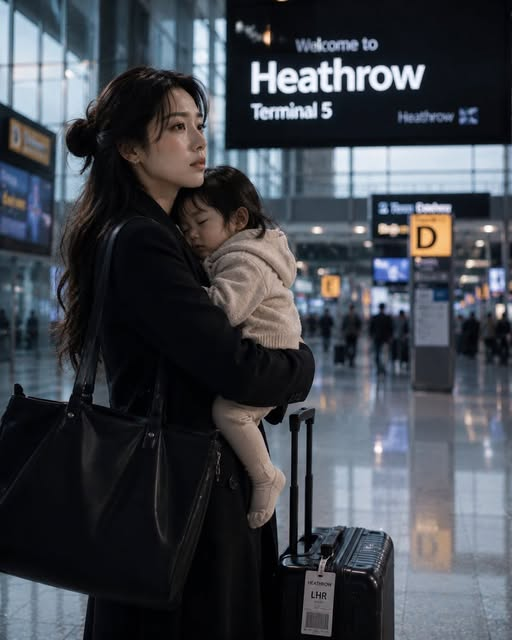
Six months later, he came to collect Mia from our London apartment.
No tailored suit.
No arrogance.
Just a father holding a pink backpack because his daughter had ordered him not to forget it.
Mia ran toward him.
“Daddy!”
He crouched and hugged her.
Then she turned back.
“Mom, Daddy says we’re going to the science museum.”
“He remembered?”
Nathan looked almost offended.
“I wrote it down.”
I smiled faintly.
Progress.
After Mia ran toward the elevator, Nathan stayed behind.
“Victoria.”
“Yes?”
“I used to think Serena needed me.”
I said nothing.
“She always had some crisis.”
“And I liked being needed.”
He looked toward the floor.
“You never acted helpless.”
“No.”
“So I convinced myself you didn’t need anything.”
His eyes met mine.
“I understand now that you needed a partner.”
“That would have helped.”
“I’m sorry.”
For the first time, I believed the apology.
But believing it did not mean returning.
“Thank you.”
He swallowed.
“Is there any chance for us?”
“No.”
Pain crossed his face.
Still, he nodded.
“I thought so.”
A year later, Qin Group completed NordTech’s integration.
I became head of European operations.
Mia started school in London and developed a British accent that amused my mother endlessly.
Nathan visited regularly.
He learned to show up on time.
To turn off his phone during Mia’s performances.
To remember allergies.
To be present without being praised for it.
We never remarried.
That was not a tragedy.
Sometimes growth comes after the relationship that required it has already ended.
The last time Nathan and I spoke about our marriage, he said:
“I thought you left because I hit you.”
I shook my head.
“I left because when your hand came down, I finally understood everything that had happened before it.”
The forgotten dinners.
The midnight calls.
The excuses.
The constant second place.
The slap was not the beginning.
It was simply the final sentence.
Nathan looked at me for a long time.
Then nodded.
And that was enough.
He once believed I had nowhere to go because I had given up London for him.
He learned too late that London had never disappeared.
Neither had my family.
Neither had my career.
And most importantly—
neither had the woman I had been before I became Mrs. Shen.
I did not fly to London to destroy Nathan.
I flew there because I had finally understood something far more important.
Leaving the man who treated me as second place was the first time in three years that I chose myself first.
