Alexander called again before the plane crossed Pennsylvania.
Then his father.
Then the family attorney.
I answered none of them.
Finally, Alexander sent a message.
Bella, please land somewhere safe. Ethan is not in danger. Nobody is going to hurt either child. Let me explain.
I stared at the words.
Not you misunderstood.
Not there is no Celeste.
Not I don’t have another daughter.
Only:
Let me explain.
That was confession enough.
I forwarded every message to my attorney.
Not the Whitmore attorney.
Mine.
Three years earlier, after Lily was born, my father had quietly insisted I keep an independent lawyer.
At the time I had laughed.
“Dad, Alexander worships me.”
My father had answered:
“Then a lawyer will never be necessary.”
That morning, I finally understood what he meant.
We landed in Boston.
My parents were waiting.
My mother took Lily.
My father hugged me without asking a single question.
Only when the children were asleep did I place the USB on the kitchen table.
“I took this from Alexander’s study.”
My father frowned.
“What is it?”
“Copies of our family documents. Medical authorizations. Ethan’s cord-blood storage records.”
I had begun keeping backups after discovering that Whitmore assistants routinely handled paperwork in my name.
For years, I considered it convenience.
Now my attorney considered it evidence.
By noon, she found the first problem.
The authorization for Ethan’s cord-blood collection contained my electronic signature.
But beneath it was another form.
Directed Compatibility Screening.
Recipient identified only by initials:
A.W.
I had never seen it.
Never signed it.
Never consented to my newborn son being tested against another patient.
My attorney looked at me.
“Do you know who A.W. is?”
I did not.
Alexander answered that question himself three hours later.
He arrived at my parents’ house.
Alone.
My father refused to let him inside.
So I went onto the porch.
Alexander looked as if he had not slept.
“Bella.”
“Who is A.W.?”
His face changed.
I knew immediately.
“Your daughter?”
He closed his eyes.
“Yes.”
“What is her name?”
“Amelia.”
Not Celeste.
Celeste was her mother.
Amelia Whitmore was nine years old.
She had a serious blood disorder.
Years of treatment had failed to produce a suitable family donor.
Then Alexander met me.
Healthy.
From a family with no known hereditary complications.
And, more importantly, according to preliminary genetic screening arranged before our marriage, unusually compatible with Celeste’s family line.
I felt sick.
“You tested me before we were married?”
Alexander did not answer.
“Answer me.”
“Yes.”
The word barely came out.
That was when I understood the opening line he had used seven years earlier.
You look like someone.
He had not simply noticed my face.
He had already been looking for a biological possibility.
“You chose me.”
His eyes reddened.
“At first.”
Two words.
Crueler than any denial.
“At first?”
“I was desperate.”
“So you courted me because you thought a child with me might help Amelia.”
“Yes.”
“And Lily?”
He swallowed.
“She wasn’t compatible.”
My knees nearly gave out.
My first baby.
My daughter.
They had tested her too.
Without telling me.
“So you tried again.”
Alexander whispered:
“Yes.”
I stepped back.
“Did you ever love me?”
Immediately:
“Yes.”
I laughed.
It sounded terrible even to me.
“You don’t get to turn seven years of manipulation into a love story because you developed feelings halfway through.”
“Bella, Amelia was dying.”
“And Ethan is my son.”
“He’s mine too!”
“Then why did you speak about him like medical inventory?”
Alexander’s face collapsed.
“I never saw him that way.”
“Your father did.”
I looked at him.
“And you stood there and let him.”
He could not deny it.
My lawyer moved quickly.
The hospital and cord-blood bank were notified that no material could be released without my explicit authorization while the consent dispute was investigated.
I did not destroy the unit.
I did not demand it be discarded.
Amelia was a child.
She had done nothing to me.
But I refused to let the Whitmores decide anything else behind my back.
The transplant specialists later contacted me through independent counsel.
They explained the situation properly.
Risks.
Alternatives.
Consent.
Privacy.
Everything I should have been told from the beginning.
After several days, I authorized the stored cord-blood unit to be used if the medical team determined it appropriate.
Alexander was stunned.
“After everything, you’re still allowing it?”
I looked at him.
“I am helping Amelia.”
“Not you.”
“Not your father.”
“A sick child.”
His eyes filled.
“Thank you.”
“Don’t mistake compassion for forgiveness.”
He nodded.
He finally understood the difference.
Then came the other investigation.
Richard Whitmore had been wrong about one thing.
He believed I knew nothing.
But the USB contained years of internal correspondence automatically synchronized with our household server.
Payments to private genetic consultants.
Confidential medical requests.
Messages instructing staff never to mention Celeste around me.
And one particularly ugly email from Richard:
Once the boy’s compatibility is secured, Alexander can unwind the marriage. Isabel should receive enough to discourage litigation.
Alexander had replied:
Do nothing until I decide.
Not a refusal.
Not outrage.
Just postponement.
That email ended whatever was left between us.
I filed for divorce.
Full custody proceedings followed.
And because Whitmore Group was preparing a major healthcare acquisition, the discovery that its chairman had used corporate resources for undisclosed private medical arrangements triggered an internal compliance review.
Richard resigned six weeks later.
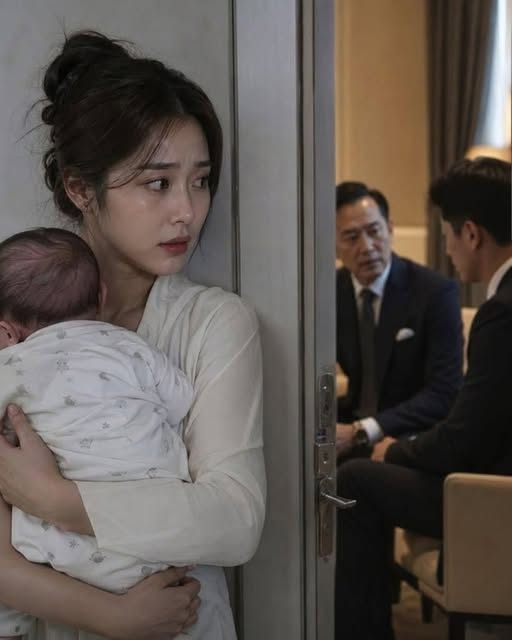
Not because I destroyed him.
Because boards dislike secret liabilities almost as much as wives dislike secret families.
Amelia’s treatment went forward.
Months later, I received a letter.
Not from Alexander.
From Celeste.
She wrote only a few lines.
She said she had never known the full truth about how I had been brought into Alexander’s life.
She apologized.
Then:
Amelia is recovering. I know “thank you” is too small, but she gets to wake up every morning because you chose not to punish a child for what adults did.
I cried after reading that.
The first time since leaving Manhattan.
Not for Alexander.
For myself.
For the twenty-four-year-old boutique worker who had believed extravagant attention was proof of extraordinary love.
The divorce was finalized the following year.
Alexander did not fight me over money.
He did fight for his children.
And, strangely, that was the one thing I respected.
He began seeing Lily and Ethan under an agreed schedule.
No cameras.
No Whitmore family performances.
Just their father showing up.
Sometimes people change only after losing the version of life that allowed them not to.
Whether Alexander became better was no longer my responsibility.
One afternoon, after returning the children, he stood at my door.
“Bella.”
I looked at him.
“If Amelia had never been sick, I would never have met you.”
I said nothing.
He continued:
“But if I could go back, I would still want to meet you.”
“That isn’t the question.”
He looked down.
I asked:
“If you could go back, would you tell me the truth before marrying me?”
A long silence.
Then:
“Yes.”
I nodded.
“That’s the only answer that matters.”
He understood there would be no second chance.
Three years later, Lily started school.
Ethan followed her everywhere.
My parents moved closer.
I returned to work, eventually opening a small design studio of my own.
No chauffeur.
No stylist waiting outside my bedroom.
No black card with no limit.
I had less luxury.
And more life.
Amelia remained healthy enough to return to school.
Once a year, I received a card from her.
I kept every one.
Not because she was part of Alexander’s secret.
Because she was proof that kindness does not require surrender.
For seven years, Alexander Whitmore called me his treasure.
But treasures are possessions.
They are protected.
Displayed.
Locked away.
And that was exactly what he had done to me.
He thought flowers, mansions and soft kisses could make a cage feel like love.
He was wrong.
The greatest thing I gave the Whitmore family was not a compatible cord-blood unit.
It was the chance to tell the truth before they lost me.
They wasted it.
And when I finally walked away, I took the only two heirs I had ever cared about protecting—
my children, and myself.
