I looked at Daniel.
Six years earlier, I had imagined this moment many times.
I imagined screaming.
Slapping him.
Asking whether he remembered calling his own child a bastard.
But when the moment finally came, I felt almost nothing.
“Six.”
Daniel’s face lost the little color it had left.
“Six?”
“Yes.”
“When is his birthday?”
I smiled faintly.
“You’re good at math, Daniel. Work it out.”
He took another step toward me.
“Laura…”
I moved back.
“No.”
“I need to know.”
“You needed to know six years ago.”
His jaw tightened.
“The doctors told me I couldn’t have children.”
“And I told you he was yours.”
Silence.
“You chose the doctor.”
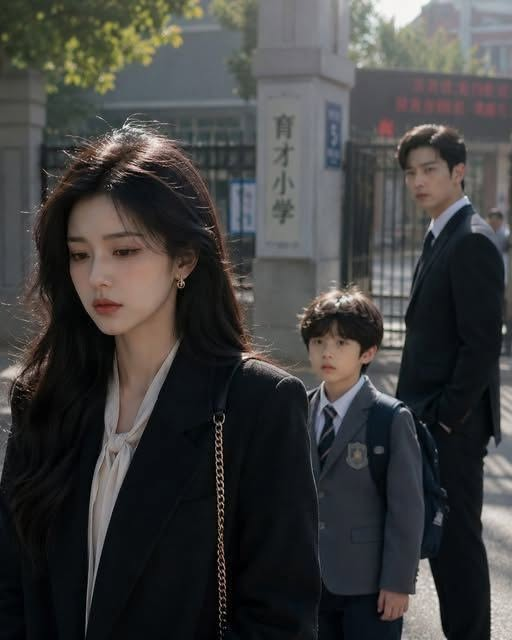
I looked toward the school entrance where Noah had disappeared.
“So I chose my son.”
Then I walked away.
Daniel followed me.
“Wait.”
I stopped only because we were outside a school and I did not want a scene.
“Why are you here?”
He glanced toward the Bentley.
“My sister’s daughter attends this school. I came for her orientation.”
Then his eyes returned to the gate.
“Does Noah know about me?”
“No.”
“You told people I was dead?”
My expression changed.
“How do you know that?”
He looked startled.
I realized I had said too much.
But it no longer mattered.
“Yes.”
My voice remained calm.
“To me, you were.”
That silenced him.
That afternoon, Daniel sent an email.
Not a message.
An email.
Apparently he remembered I had blocked everything else.
I want a DNA test. I will follow whatever legal process you require. I will not approach Noah without your permission.
I stared at those words for a long time.
At least six years had taught him one thing.
He no longer assumed he had the right to decide everything himself.
I contacted a lawyer.
Not because I wanted Daniel’s money.
Because Noah was no longer a baby I could hide from painful truths forever.
If Daniel was his biological father, my son had the right to know someday.
The test was performed through an accredited clinic.
Daniel did not touch Noah.
He did not introduce himself.
He sat on the other side of the waiting room while my son played with a puzzle and asked:
“Mom, why is that man looking at me?”
I answered:
“He thinks he knew me a long time ago.”
Noah accepted that.
Children trust simple answers until adults make them complicated.
Three days later, the report arrived.
Probability of paternity: 99.99%.
Daniel read the result twice.
Then covered his face.
I felt no triumph.
Only exhaustion.
After six years, science had finally answered the question he had refused to ask with kindness.
“He’s mine,” Daniel whispered.
I looked at him.
“He always was.”
Then came the second truth.
Daniel requested his old medical records.
The original report did not say sterile.
It said:
Severely reduced fertility. Natural conception considered unlikely, but not impossible. Further testing recommended.
He stared at the document.
“I was told impossible.”
“By whom?”
“My family doctor.”
The doctor had summarized the diagnosis for Daniel’s parents, who then repeated it to him as absolute infertility.
Daniel, twenty-eight and humiliated by the result, never returned for the recommended follow-up testing.
He simply believed the worst interpretation.
And when I became pregnant months later, that belief became more important to him than three years of knowing me.
I asked:
“Did you ever get tested again?”
His silence answered first.
“Daniel?”
“Four years ago.”
My chest went cold.
“And?”
“The specialist told me the same thing this report says. Very low fertility. Not zero.”
I stared at him.
Four years.
He had known for four years that Noah could have been his.
“Why didn’t you look for me?”
His eyes reddened.
“I tried.”
“When?”
“After that appointment.”
I laughed once.
“You waited two years before wondering whether the woman you accused of cheating might have been telling the truth.”
“I was ashamed.”
“No.”
I shook my head.
“You were afraid.”
He did not deny it.
“I had married by then.”
Of course.
The marriage he had announced during our last phone call.
I asked:
“Are you still married?”
“No.”
His wife had divorced him three years earlier.
No children.
The irony was almost too cruel to acknowledge.
Daniel looked at the paternity report again.
“I lost six years.”
I corrected him quietly.
“No.”
“You gave them away.”
He wanted to meet Noah immediately.
I refused.
“He is not a missed business appointment you can reschedule.”
Daniel flinched.
“You enter his life slowly.”
“With a child psychologist involved.”
“And if he becomes uncomfortable, you stop.”
He agreed to everything.
The first meeting happened in a park.
I told Noah the truth in language a six-year-old could understand.
“Remember the man from school?”
“Yes.”
“He is your biological father.”
Noah stared at me.
“I have a dad?”
My throat tightened.
“You have someone who helped make you. Whether he becomes your dad depends on what the two of you build from now on.”
Daniel was sitting twenty meters away.
Waiting.
For once in his life, waiting.
Noah looked at him.
Then asked:
“Why wasn’t he here before?”
I could have destroyed Daniel with the answer.
Instead:
“He made a very bad decision before you were born.”
Noah considered that.
“Does he know it was bad?”
I looked toward Daniel.
“Yes.”
“He knows now.”
Noah walked over.
Daniel stood too quickly.
Then stopped himself.
“Hi.”
“Hi.”
Noah studied his face.
Then touched his own eyebrow.
“You look like me.”
Daniel’s eyes filled.
“No.”
He smiled painfully.
“You look like me.”
That was how it began.
Not with forgiveness.
With resemblance.
Daniel did not become Father of the Year overnight.
He missed things at first.
He bought ridiculous gifts because he did not know what Noah liked.
My son rejected an expensive remote-control car and asked him instead:
“Can you come to my school science day?”
Daniel arrived forty minutes early.
He learned Noah hated tomatoes.
That he slept with one sock on and one off.
That he loved dinosaurs but was terrified of butterflies.
The ordinary information fathers usually collect without realizing it.
Daniel had to earn every piece.
He also began paying formal child support.
I resisted initially.
My lawyer stopped me.
“This is not money for you. It is his responsibility to his son.”
She was right.
So I accepted what belonged to Noah.
Not one dollar more.
One evening, after Daniel returned Noah from the park, he remained by my door.
“Laura.”
“Yes?”
“I owe you something too.”
“I don’t want money.”
“Not money.”
He swallowed.
“An apology.”
I waited.
“I accused you because believing you had betrayed me was easier than accepting that the diagnosis might be wrong.”
His voice shook.
“I called our son something no child should ever be called.”
“I blocked you.”
“I abandoned you.”
“And when I later learned I might have been wrong, I waited because I was terrified of discovering what I’d done.”
I said nothing.
Daniel continued:
“You raised him through everything I should have been there for.”
“Yes.”
There was no reason to comfort him.
He nodded slowly.
“I’m sorry.”
For years, I had imagined hearing those words.
They felt smaller than expected.
But not meaningless.
“I accept the apology.”
Hope appeared in his eyes.
So I added:
“I am not offering you another relationship.”
The hope disappeared.
“I know.”
This time, I believed him.
Three years later, Noah was nine.
Daniel was no longer “the man from school.”
He was Dad.
Not because a DNA report demanded it.
Because he showed up.
Every week.
Every birthday.
Every fever.
Every school meeting.
He never asked me to erase the six missing years.
He learned to live with them.
As for us, we never reunited.
People sometimes thought that was cruel.
They saw Daniel becoming a good father and assumed that automatically meant he deserved to become my partner again.
It didn’t.
A person can become better without being entitled to reclaim everyone they once hurt.
I eventually married someone else.
A kind man who never treated Noah as someone else’s child.
Daniel attended the wedding only because Noah wanted him there.
Before leaving, he approached me.
“You’re happy?”
“Yes.”
He smiled.
“Good.”
Then he looked toward our son.
“You were right to keep him.”
I stared at him.
“I never needed you to tell me that.”
He nodded.
“I know.”
And for once, there was no wound between us.
Only history.
Six years earlier, Daniel Harris heard the words I’m pregnant and decided three seconds were enough to judge my character, our relationship and his own child.
Six years later, one glance at Noah’s face destroyed the certainty he had built his life around.
But the DNA test was never the hardest truth.
The hardest truth was this:
Daniel had not lost six years because a doctor made a mistake.
He lost them because when love asked him to trust me, he chose pride instead.
Noah eventually gained a father.
Daniel eventually gained a son.
And me?
I gained something long before either of them found each other.
The certainty that being abandoned did not make my child unwanted—and being doubted never made me a liar.
