Michael stared at the budget.
Then at me.
“You prepared this before today?”
“Yes.”
His face changed.
“So you already planned to throw them out.”
“No.”
I closed the folder.
“I planned to stop pretending this arrangement was sustainable.”
Diane immediately started crying again.
“For fifteen years I treated you like family.”
I looked at her.
“Did you?”
She froze.
I did not raise my voice.
“Who took you to your cardiology appointments?”
Silence.
“Who organized George’s medications after his surgery?”
No answer.
“Who canceled work when you fell in the bathroom?”
Michael looked away.
I continued.
“Who paid for groceries, utilities, cleaning, transportation, and the modifications to this house so you could live comfortably?”
Diane’s lips tightened.
“You’re counting everything now.”
“No.”
I shook my head.
“If I were counting, there would be invoices.”
“There aren’t.”
I pointed toward the suitcases.
“There are only boundaries.”
George finally spoke.
“We gave Ethan more because he has always struggled.”
“I know.”
“And Michael is successful.”
“I know.”
“Then what is unfair?”
“Nothing.”
That confused him.
I smiled faintly.
“Your will is perfectly legal.”
Then I pointed to the budget.
“So is my decision.”
Ethan arrived forty minutes later.
Apparently Diane had called him from the bathroom.
He came in furious.
“What’s going on?”
His mother rushed toward him.
“Laura is throwing us into the street.”
I almost admired the speed with which Maple Grove became “the street.”
Ethan turned on me.
“They’re seventy-eight years old!”
“And they own a mortgage-free house.”
He stopped.
The Maple Grove property had belonged to George for nearly thirty years.
Three bedrooms.
Large garden.
Recently renovated kitchen.
They had simply preferred living in my home because it was closer to downtown and because I handled everything.
Ethan recovered quickly.
“That house is too far from their doctors.”
“Then they can sell it.”
His face changed.
“No.”
“Why?”
“Because Dad promised it would stay in the family.”
Ah.
I looked at him.
“Which member of the family?”
Silence.
Michael answered quietly:
“You.”
Ethan’s jaw tightened.
Of course.
The Maple Grove house was also expected to go to him eventually.
So the plan was simple.
I would house the parents.
I would pay their daily expenses.
I would provide the labor.
And Ethan would preserve every asset until inheritance day.
Suddenly even Michael looked uncomfortable.
I asked Ethan:
“If your parents need to remain downtown, will you take them?”
His face stiffened.
“My apartment is small.”
“Three bedrooms.”
“The children need space.”
“You have one child.”
“My wife works from home.”
“So do I.”
He looked away.
I continued:
“Will you contribute half their monthly expenses?”
“I have commitments.”
“Will you pay for a caregiver?”
“Laura, don’t make this about money.”
I laughed softly.
“It became about money the moment everyone decided mine was the only money that should be spent.”
Nobody answered.
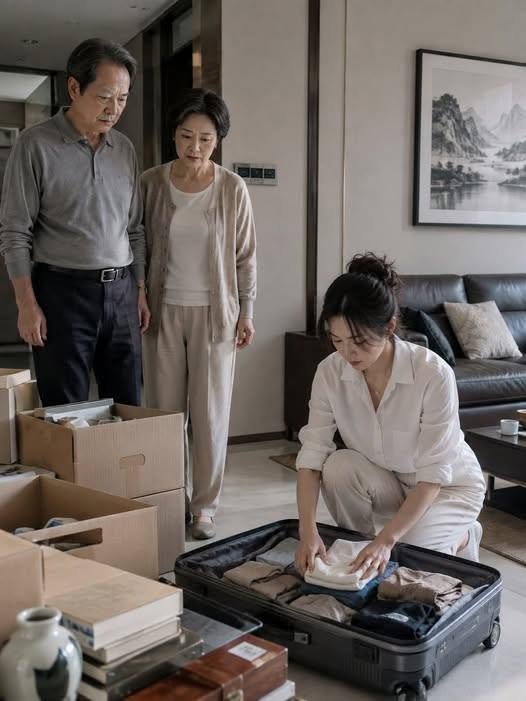
George and Diane did not leave that night.
I gave them thirty days.
Not because Michael demanded it.
Because fifteen years deserved a dignified ending even if gratitude had not come with it.
I arranged movers.
Transferred their medical records to a clinic closer to Maple Grove.
Prepared medication lists.
Even stocked the refrigerator for the first week.
Diane complained through all of it.
“The bathroom is smaller.”
“The hospital is farther.”
“The neighbors are old.”
Finally, on moving day, I looked at her.
“Diane, you are living in your own paid-off house with two hundred and forty thousand dollars in savings.”
She stared at me.
“You are not being abandoned.”
“You are being asked to use your own resources for your own life.”
That was apparently the cruelest thing anyone had ever said to her.
Michael did not forgive me.
At least not immediately.
For weeks, he accused me of being cold.
He drove to Maple Grove every weekend.
I never stopped him.
He paid for a part-time caregiver from his personal account.
I never objected.
Then something interesting happened.
After two months, Michael came home late one Sunday and sat at the kitchen table.
“I’m exhausted.”
I poured him water.
He stared at the glass.
“Dad called me six times today because the television remote wasn’t working.”
I said nothing.
“Mom wants me to drive her to three appointments next week.”
Still nothing.
He rubbed his face.
“I had no idea.”
I finally looked at him.
“No.”
“You didn’t.”
His eyes lifted.
“How did you do this for fifteen years?”
“I just did.”
He went silent.
Then:
“And work?”
“Sometimes I missed it.”
“And when the kids were younger?”
“I managed.”
“And your parents?”
“I visited them when I could.”
Michael looked down.
For the first time, he was experiencing the labor he had once described as “just helping Mom and Dad.”
I did not gloat.
I didn’t need to.
Reality was doing a better job than I ever could.
Three months later, Ethan came to our house.
Not angry this time.
Nervous.
“Can we talk?”
I let him in.
He placed a folder on the table.
Property tax.
Home insurance.
Repairs.
His parents’ expenses were rising.
“Dad says they may have to use some savings.”
“Yes.”
Ethan swallowed.
“That reduces what they planned to leave.”
I stared at him.
“You came here because your parents are spending their own money?”
“That’s not what I mean.”
“It is exactly what you mean.”
He leaned forward.
“If you let them move back here, everyone saves money.”
Everyone.
I almost smiled.
“No.”
His face hardened.
“You have room.”
“I also have a life.”
“They’re family.”
“So are you.”
That stopped him.
I pushed the folder back.
“If preserving their inheritance matters so much to you, you can fund their expenses yourself.”
He left without another word.
Six months after the will reading, Diane sold the downtown apartment she had planned to leave Ethan.
Not because I pressured her.
Because she needed liquidity for a better caregiver and easier transportation.
Ethan was furious.
George sold one of the collectible paintings too.
Then another.
For the first time, their assets were doing what savings were supposed to do:
support the people who owned them.
Diane called me afterward.
Her voice was quieter than usual.
“I think I understand now.”
I waited.
“We thought because you and Michael had more, asking you to carry more was natural.”
“It was.”
I agreed.
“For a while.”
She paused.
“But we never asked how much was too much.”
“No.”
“We just assumed you would keep giving.”
“Yes.”
There was a long silence.
Then she said:
“I’m sorry.”
Fifteen years condensed into two words.
They did not erase everything.
But they mattered.
My marriage nearly broke during that year.
Michael and I went to counseling.
He apologized for grabbing my wrist.
For calling me cruel.
For treating my labor as if it appeared automatically because I was his wife.
One evening he said:
“I thought being a good son meant never saying no to my parents.”
I answered:
“And I thought being a good wife meant absorbing the cost of that.”
Neither belief had helped us.
So we changed.
Slowly.
Not perfectly.
But genuinely.
George died four years later.
Diane followed two years after him.
Their final estate was far smaller than the original one.
Medical care had cost money.
So had living.
Ethan still received most of what remained.
I did not challenge it.
Neither did Michael.
At the lawyer’s office, Ethan looked almost embarrassed.
“You really don’t want anything?”
I smiled.
“No.”
He hesitated.
“After everything you did for them…”
“That was never a loan.”
I stood.
“And this was never my inheritance.”
When I returned home, I walked past the master bedroom.
My bedroom.
For years, I had almost forgotten that.
I opened the curtains.
Sunlight filled the room.
There were no medicine boxes on the dresser.
No extra television playing all afternoon.
No suitcase waiting under the bed.
Just space.
Mine again.
The Reeves family had believed generosity worked in one direction.
Their assets flowed toward the son they favored.
Their needs flowed toward the daughter-in-law who rarely complained.
They thought those were two separate decisions.
They weren’t.
They had every right to decide who received their inheritance.
And I had every right to decide what happened to my time, my money, and my home.
I never asked for a cent.
I never changed their will.
I never punished them for loving Ethan more.
I simply stopped financing the inheritance they had already decided would belong to someone else.
And that was the day everyone finally learned the difference between generosity—
and entitlement.
