For several seconds, I thought I had heard wrong.
Tran Tinh Huc stood there protecting Hua Tri Tri and repeated:
—Mom, Dad, apologize to her first.
My father’s face turned white with anger.
My mother stared at him.
—Tinh Huc, we are Van Dao’s parents.
—I know.
—And she is your legal wife.
His expression stiffened.
Around us, the whispers immediately changed.
Hua Tri Tri started crying harder.
—I knew this would happen. Everyone thinks I’m shameless.
I looked at her.
Then at Tran Tinh Huc.
Strangely, I was no longer angry.
Perhaps a person reaches a point where disappointment becomes so complete that there is nothing left to break.
I walked toward my parents.
—Dad. Mom.
My mother grabbed my arm.
—Van Dao, we didn’t insult her. We only asked whether yesterday’s wedding was real.
—I know.
Then I turned to Tran Tinh Huc.
—They will not apologize.
His eyes hardened.
—Van Dao, this is not the time to be stubborn.
—Correct.
I took out my phone.
—It’s time to call professionals.
I contacted hospital security and asked them to bring someone trained to handle the situation.
No arguing.
No shouting.
No promises made under pressure.
Within minutes, the crowd was moved back.
Medical staff took over speaking with Hua Tri Tri.
I did not approach her.
I did not need to.
Tran Tinh Huc looked at me as if I had betrayed him.
—You’re just going to stand there?
I looked at him.
—What do you want me to do?
—Say something to calm her down!
I almost laughed.
—Yesterday she married my husband.
—Today you ordered my parents to apologize to her.
I paused.
—Why exactly am I responsible for comforting her?
He opened his mouth.
Nothing came out.
Twenty minutes later, Hua Tri Tri was brought back inside safely for evaluation.
Only then did everyone finally breathe.
Tran Tinh Huc immediately followed her.
He walked three steps before realizing I wasn’t moving.
He turned.
—Are you not coming?
—No.
—Van Dao—
—I came for my parents.
I held my mother’s hand.
—And I’m taking them home.
His face changed.
Maybe he finally sensed something.
—We’ll talk tonight.
I smiled faintly.
—There won’t be anything left to talk about tonight.
On the way home, my mother cried.
Not loudly.
Quietly, staring out the window.
My father sat in the passenger seat, jaw clenched.
After almost ten minutes, he said:
—I’m sorry.
I looked at him through the mirror.
—For what?
—For always taking his side.
My mother wiped her eyes.
—Every time you complained that he was too close to Hua Tri Tri, we told you to be generous.
My father closed his eyes.
—We thought Tinh Huc was steady.
I looked at the road.
—So did I.
That afternoon, I met a lawyer.
I gave her everything.
The photographs from the wedding.
Messages proving Tran Tinh Huc had lied about his business trips.
Hotel records.
Flight history.
And the most useful thing of all:
The refund records from several “business trips” where company-paid reservations had been changed into private trips involving Hua Tri Tri.
My lawyer looked up.
—How long has this been happening?
—Apparently five years.
She was silent.
Then:
—Do you have access to the joint accounts?
—Yes.
The answer uncovered something worse.
For five years, Tran Tinh Huc had regularly transferred money to Hua Tri Tri.
Rent.
Tuition.
Medical bills.
Travel.
Even most of the wedding expenses.
Some came from his personal income.
But a considerable amount came from joint marital funds.
I stared at the total.
I had spent years thinking he was simply generous toward a “younger sister.”
He had built an entire second life and financed it while sleeping beside me.
My lawyer asked:
—Do you still want a quiet divorce?
I thought about yesterday.
About the wedding guests calling me an unreasonable sister.
About today.
About my husband ordering my parents to apologize.
—Yes.
She seemed surprised.
I continued:
—Quiet does not mean cheap.
Three days later, Tran Tinh Huc came home.
Or tried to.
His fingerprint no longer opened the door.
He called me immediately.
—Van Dao, why did you change the lock?
I was sitting inside with my lawyer.
—Because the house belongs to me.
Silence.
—Open the door.
—Your personal belongings have been packed.
—What?
—A moving company will deliver them to your parents’ house tomorrow.
His voice rose.
—You can’t just throw your husband out!
—Soon you won’t be my husband.
Another silence.
Then he laughed.
A strange, disbelieving laugh.
—You’re divorcing me because of that fake wedding?
I closed my eyes.
Even now.
Fake.
As if calling it fake erased the vows.
The guests.
The five-year relationship.
The woman standing in a bridal dress beside him.
—No.
I said quietly:
—I’m divorcing you because you have spent five years building a reality in which I am the only person expected to pretend nothing is happening.
His tone finally changed.
—Van Dao, open the door. We’ll discuss this face to face.
—I don’t need another explanation.
—Tri Tri’s parents died. I promised to care for her.
—Then care for her.
I paused.
—As a single man.
I ended the call.
The divorce was not as easy as Tran Tinh Huc expected.
At first, he refused to sign.
Then my lawyer presented the financial records.
He could explain emotional closeness however he liked.
The money was harder.
He had used marital assets to support Hua Tri Tri and finance a wedding ceremony hidden from his legal wife.
His parents tried to intervene.
His mother came to my house.
—Van Dao, Tinh Huc just made a confused mistake.
I looked at her.
—You attended the wedding.
Her face went pale.
—It was only to fulfill Tri Tri’s parents’ dying wish.
—Then why was I described to her relatives as his unreasonable older sister?
She couldn’t answer.
My father opened the door behind me.
—My daughter has listened to your explanations for five years.
He looked at them coldly.
—Now speak to her lawyer.
The door closed.
For the first time, my parents stood behind me instead of telling me to endure.
Tran Tinh Huc finally signed four months later.
The house remained mine because it had been my premarital property.
The joint assets were divided.
The money he had improperly transferred became part of the financial settlement.
I asked for nothing beyond what was legally mine.
Hua Tri Tri and Tran Tinh Huc did not immediately marry.
That was perhaps the most ironic part.
Once I disappeared from between them, their supposedly tragic love story lost its enemy.
There was nobody left to blame.
Nobody stopping them.
Nobody to call cruel.
And suddenly they had to face each other without me serving as the villain.
Within a year, they separated.
I heard about it from a mutual acquaintance.
I didn’t ask why.
By then, I had already renovated the house.
The wedding photograph came down.
The wall behind it was repainted.
I converted Tran Tinh Huc’s study into a reading room for my mother.
My father began coming over every Sunday for dinner.
One evening, almost two years later, I saw Tran Tinh Huc again.
At a restaurant.
He stood when he recognized me.
—Van Dao.
I nodded politely.
He looked older.
—Can we talk?
—For five minutes.
He stared at me for a while.
Then asked:
—Did you ever think about forgiving me?
I considered the question seriously.
—Yes.
Hope appeared on his face.
I finished:
—Then I realized forgiveness and reconciliation are two different things.
His eyes dimmed.
—I thought you would always be there.
I smiled.
—That was your biggest mistake.
He looked down.
—I lost everything.
I shook my head.
—No.
—You lost me.
I picked up my bag.
—Don’t turn that into everything. Build another life.
Then I left.
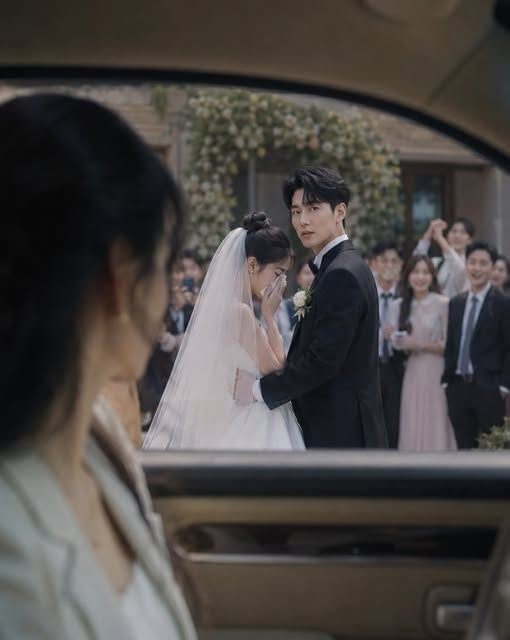
The day I accidentally drove past my husband’s second wedding, I thought the most humiliating thing in the world was sitting among strangers while they celebrated my replacement.
I was wrong.
The real humiliation would have been knowing the truth and still going home to wait for him.
Tran Tinh Huc spent five years telling another woman that I was the obstacle between them.
So eventually, I did the kindest thing I could.
I removed myself completely.
And only then did he discover that the person holding his life together had never been the woman he married in secret.
It had been the wife he was so certain would never leave.
