—Oliver, turn it off!
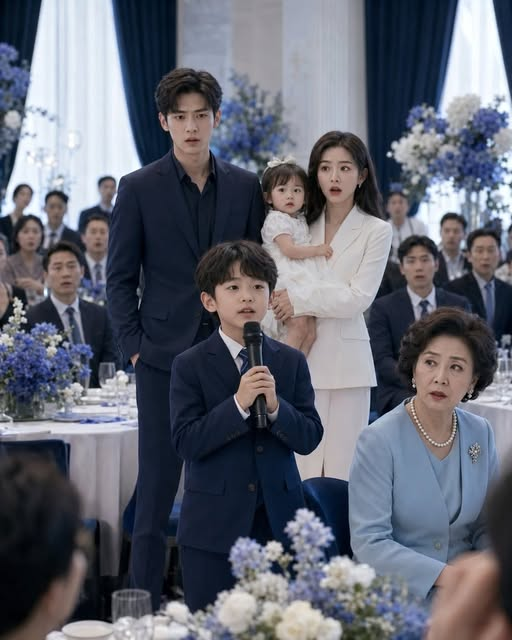
Richard rushed toward the stage.
I moved first.
Not toward him.
Toward my son.
I stepped between them and gently took the microphone from Oliver’s hands.
—That’s enough, sweetheart.
Oliver looked at me.
—But Mom—
—I know.
I squeezed his shoulder.
—You’ve done enough.
He was ten years old.
He should never have needed to defend me against his own father.
That realization hurt more than anything Richard had said that night.
I handed the microphone back to the presenter and led Oliver down from the stage.
But the screen remained on.
Because the documents were not Oliver’s.
They were mine.
Three days earlier, after discovering Richard’s second phone, I had copied everything and sent it to my lawyer.
Photographs.
Transfers.
Property records.
Statements from an account Richard apparently believed I had never noticed.
Oliver had accidentally seen the presentation file open on my laptop while helping me connect it to the ballroom system that afternoon.
He had asked:
—Mom, why is Dad giving money to that woman?
I had closed the computer.
—I’ll handle it.
Apparently Oliver had decided I had spent enough years “handling” things quietly.
Richard reached the control desk.
—Turn everything off!
Nobody moved.
Then Margaret finally spoke.
—Richard.
Her voice trembled.
—What account is that?
Richard stopped.
The screen showed repeated transfers to Vanessa over nearly five years.
Apartment rent.
School fees.
Luxury purchases.
And one particularly large payment made three months earlier.
Vanessa’s face had gone white.
Richard forced himself to laugh.
—Personal expenses. Nothing illegal.
I nodded.
—Possibly.
He turned toward me.
I continued:
—Which is why my attorneys will determine what belongs to you personally and what was paid from marital assets.
His expression changed.
—Attorneys?
I took an envelope from my handbag.
—You asked for a divorce.
—I’m accepting.
For the first time that evening, Richard seemed uncertain.
Then arrogance returned.
—Good.
He gestured around the ballroom.
—Then leave the Whitmore residence tomorrow. I’ll have someone arrange reasonable compensation.
I almost admired him.
Five years of deception had made him extraordinarily confident.
I asked:
—Which Whitmore residence?
He frowned.
—Our house.
—The one on Hawthorne Avenue?
—Obviously.
I smiled.
—Richard, have you ever read its deed?
He stared at me.
The screen changed.
This time I had not planned it.
Oliver had apparently queued the files in order.
A property deed appeared.
Registered owner: Clara Bennett Whitmore.
Margaret stood so quickly that her chair scraped the floor.
Richard’s face emptied.
I spoke calmly.
—My father purchased that property before our marriage and transferred it to me through a family trust.
—You renovated it.
—You entertained clients there.
—Your mother hosted dinners there.
I tilted my head.
—But it never belonged to you.
Someone near the back whispered:
—Oh my God.
Richard looked at the screen again.
Then at me.
—You never told me.
I almost laughed.
—You never asked.
For ten years, he had called it his house because everyone allowed him to.
Including me.
That ended tonight.
Vanessa pulled Richard’s sleeve.
—You said the house was yours.
He turned toward her.
—Not now.
Her eyes widened.
—You told me Ethan would have his own room there.
That sentence landed differently.
Margaret finally looked away from the little boy.
—You intended to move them into Clara’s house?
Richard snapped:
—Mother, please.
But Margaret was no longer listening.
Her birthday joy had disappeared.
Not because she suddenly loved me more.
Because humiliation had finally touched her too.
She looked at Vanessa.
Then at the boy.
Then at Richard.
—How long have you known about this child?
Richard remained silent.
Vanessa answered for him.
—Since before Ethan was born.
Margaret’s hand gripped the table.
—And you hid my grandson from me for three years?
Vanessa gave a bitter laugh.
—He hid us from everyone.
Then she looked directly at me.
—Well, almost everyone.
I understood.
—Who knew?
Vanessa’s gaze moved toward Margaret’s younger son, Thomas.
Thomas immediately stood.
—Don’t involve me.
Wrong answer.
Richard’s face darkened.
—Sit down.
Thomas remained standing.
And suddenly the Whitmore family began collapsing without any help from me.
Thomas admitted he had known for two years.
He had helped Richard arrange an apartment.
He had accepted money to keep quiet.
Two cousins knew.
One family accountant suspected.
Everyone had protected the family name.
Just not the family.
I looked at Oliver.
He was staring at his father differently now.
Not angry.
Disappointed.
That was when I stopped caring about the party.
—Oliver, we’re leaving.
Richard turned.
—You’re not taking him anywhere.
I looked at him.
—Watch me.
—He’s my son.
—Yes.
I lowered my voice.
—So start behaving like his father instead of using him as an audience while you introduce another family.
Richard stepped forward.
—Clara—
Margaret interrupted.
—Let them go.
Everyone turned toward her.
Her face looked twenty years older.
—Tonight has done enough damage.
For once, I agreed with her.
Oliver and I left.
No dramatic music.
No applause.
Just the sound of the ballroom doors closing behind us.
In the car, Oliver remained silent for nearly ten minutes.
Then he whispered:
—Mom, are you mad at me?
I pulled over.
—No.
—But I shouldn’t have shown the files?
I looked at my ten-year-old son.
—You shouldn’t have needed to.
His eyes filled.
—I heard Dad saying you couldn’t give him another son.
There it was.
The real wound.
I took his hand.
—Listen to me carefully.
—You are not less valuable because you are one child instead of two.
—You are not less valuable because another boy exists.
—And you never have to compete for someone’s love.
Oliver sniffed.
—Does Dad love Ethan more?
My heart hurt.
—I don’t know what your father feels.
I answered honestly.
—But I know his choices tonight were wrong.
I hugged him.
—And none of them were your fault.
The divorce began the next week.
Richard arrived at mediation expecting war.
Instead, I wanted clarity.
The house was mine.
The marital assets would be divided according to the law.
The questionable transfers would be reviewed.
And Oliver would never be used as leverage.
Richard fought hardest over custody.
At first, I thought it was because he was afraid of losing our son.
Then one sentence revealed something else.
—Oliver is the recognized Whitmore heir.
I stared at him.
—What did you say?
Richard realized too late.
I leaned forward.
—Your son is not a corporate title.
—He’s a child.
My lawyer ended the meeting shortly afterward.
That phrase changed the entire way I saw Richard.
He had accused me of failing to provide “another child.”
Margaret had celebrated Ethan as a male heir.
And somehow, through all their obsession with surnames and inheritance, nobody had stopped to ask what any of this was doing to Oliver.
So I did.
I found him a counselor.
I limited what adults discussed around him.
I refused every request from relatives who wanted him to “take sides.”
Richard was allowed to be his father.
But only his father.
Not his recruiter.
Not his messenger.
Not the future holder of a family empire.
Vanessa’s relationship with Richard began collapsing almost immediately.
I heard about it through lawyers because the financial disclosures affected the divorce.
Apparently she had believed Richard would marry her immediately.
Richard delayed.
Then Vanessa discovered something else.
The apartment she lived in was not in her name.
Neither was the car.
Neither was the investment account Richard had promised would secure Ethan’s future.
Everything remained under Richard’s control.
The woman who thought she was replacing me discovered she had never actually been given a secure place either.
She called me once.
—I understand now.
I remained silent.
—He told me you were cold.
—That you only cared about status.
—That the marriage had been dead for years.
I replied:
—You knew he was married.
She stopped.
I continued:
—Whatever he told you does not erase that.
—No.
Her voice became smaller.
—It doesn’t.
I did not become her friend.
I did not need to.
But when she asked whether I blamed her son, my answer was immediate.
—Never.
Ethan was three.
None of this belonged to him.
Richard and Vanessa separated before my divorce was even finalized.
That was not revenge.
It was simply what happened when a relationship built on secrecy was forced into ordinary daylight.
Margaret came to see me two months later.
No jewelry.
No driver.
No commanding voice.
She sat in my living room and looked around.
—You really are keeping the Hawthorne house.
I smiled faintly.
—Considering it belongs to me, yes.
She lowered her eyes.
Then said:
—I owe you an apology.
I waited.
—For the party?
—For ten years.
That surprised me.
Margaret folded her hands.
—I made you believe your value in this family depended on producing children.
—I treated Oliver like he was somehow insufficient because I wanted more grandchildren.
Her voice cracked.
—Then the moment Richard presented Ethan, I did it again.
I remembered her face.
My male grandson.
I said:
—Oliver heard you.
She closed her eyes.
That hurt her.
Good.
Not because I wanted revenge.
Because remorse should reach the place where harm was done.
—Can I apologize to him?
—When he is ready.
She nodded.
For once, she accepted a boundary without arguing.
The divorce became final eight months later.
Richard lost money.
Not everything.
Not his career.
Not his name.
He simply lost the protection of having a wife quietly absorbing every consequence of his decisions.
He moved into an apartment.
He established legal responsibility for Ethan.
He began seeing both boys on structured schedules.
And slowly, painfully, he learned something that should have been obvious from the beginning:
Fatherhood was not producing heirs.
It was showing up.
Years later, Oliver asked to invite Ethan to his birthday party.
I stared at him.
—Are you sure?
He shrugged.
—He’s my little brother.
That nearly broke me.
Children sometimes possess a generosity adults spend decades failing to learn.
Ethan came.
The boys played video games.
Argued over cake.
Then forgot what they were arguing about.
Richard arrived later to pick Ethan up.
He stood at my doorway watching the two boys laugh together.
His eyes reddened.
—Clara.
—Yes?
—Thank you.
I shook my head.
—Don’t thank me.
I looked toward our sons.
—Just don’t make them inherit our mistakes.
He nodded.
That became the closest thing to forgiveness we ever needed.
Years earlier, Richard had entered Margaret’s birthday party believing he was unveiling his new life.
A lover.
A secret son.
A divorce announced before an audience.
He expected me to leave humiliated while the Whitmore family welcomed his replacement.
Instead, my ten-year-old son picked up a microphone.
But Oliver’s sentence was never what destroyed Richard.
The truth did.
The hidden money.
The five-year affair.
The house Richard thought belonged to him.
The family members who had protected his lies.
And finally, the realization that the two boys he called “heirs” were not trophies in some Whitmore succession story.
They were children.
Richard spent years trying to build two families.
In the end, the only chance he had to keep either of his sons was to stop treating family like something a man could own—
and finally learn how to belong to one.
