The old woman beside me smiled.
—Looking for a doctor?
I nodded.
—Professor Ha Thanh Lan.
Her expression changed.
—Professor Ha? She retired years ago.
My fingers tightened around the folded address.
—Do you know where she is?
Before the woman could answer, a nurse passing by stopped.
—Are you Ta Nien An?
I looked up.
—Yes.
The nurse stared at me for a moment, then hurried toward an office.
Less than five minutes later, an elderly woman appeared at the end of the corridor.
Gray hair.
Thin shoulders.
A white coat that seemed too large for her.
Professor Ha Thanh Lan.
The moment she saw me, her eyes filled with tears.
—Nien An?
I stood.
She came toward me quickly and grabbed both my hands.
—You’re really out.
I tried to smile.
—Professor.
She looked at my face for several seconds.
Then her gaze dropped to the oncology file in my hand.
Her expression froze.
—What is that?
I didn’t answer.
She took it herself.
The silence that followed felt longer than four years.
Finally, she whispered:
—Why didn’t anyone tell me?
—There wasn’t much to tell.
Professor Ha looked furious.
—Stage four is “not much”?
Several people turned toward us.
I gently pulled her toward an empty consultation room.
Once the door closed, I placed an old USB drive on the table.
—Professor, I came because of this.
Her eyes fixed on it.
Four years earlier, I had been a graduate researcher under Professor Ha.
Our team was developing a new pharmaceutical compound.
Three days before the final validation, confidential trial data disappeared.
Soon afterward, it appeared inside a competitor’s submission.
Every digital trace pointed to me.
My access card.
My login.
My computer.
Even a transfer of two million yuan into an account opened in my name.
The evidence was perfect.
Too perfect.
I kept saying that.
Nobody listened.
Especially not Ta Hoai Canh.
Because the person who testified against me was our adopted sister.
Ta Minh Nguyet.
She told police she had personally seen me copying files.
She cried in my brother’s arms and said:
—Brother, I don’t want Nien An to go to prison either. But we can’t protect her because she’s family.
Three days later, Hoai Canh delivered the final evidence himself.
I was sentenced.
Professor Ha had always insisted something was wrong.
But before she could continue investigating, she suffered a stroke and disappeared from public life.
I pushed the USB toward her.
—I found this in the prison library computer three months ago.
She stared at me.
—How?
—Someone mailed me an old storage box after one of the laboratory buildings was cleared.
Inside was a backup drive belonging to our former systems engineer.
I couldn’t access most of it.
But there was one encrypted log.
Professor Ha inserted the USB into her computer.
Minutes passed.
Then her face changed.
—My God.
The original server records showed that my account had been duplicated.
Someone had cloned my credentials.
And the machine used to copy the research data had not been mine.
It belonged to an administrative office.
An office frequently used by Ta Minh Nguyet.
Professor Ha turned toward me.
—Why haven’t you submitted this?
I looked at my hands.
—Because I wanted you to see it first.
Her eyes reddened.
—Why me?
I smiled faintly.
—Because four years ago, when everyone called me a thief, you were the only person who said, “Nien An would never do this.”
My voice almost broke.
—I wanted you to know you weren’t wrong.
Professor Ha suddenly turned away.
Her shoulders shook.
Then she reached for her phone.
—I’m calling the police.
—Professor—
—No.
She looked at me.
—You lost four years.
Her voice hardened.
—We are not losing another day.
That afternoon, the case was formally reopened.
And somehow, Ta Hoai Canh found out within hours.
He arrived at the hospital just after sunset.
I was sitting outside Professor Ha’s office when he appeared.
He stopped in front of me, breathing hard.
—You found evidence?
I didn’t answer.
—Nien An, look at me.
I continued reading the medical brochure in my hands.
His voice cracked.
—Please.
That word again.
Please.
Four years ago, I had used it hundreds of times.
Now I finally understood how powerless it sounded when the other person had already decided not to believe you.
—Mr. Ta, the investigators will contact you.
He crouched in front of me.
—Why didn’t you tell me?
I looked at him.
—Would you have believed me?
His face went white.
He couldn’t answer.
The investigation moved quickly after that.
The cloned access records led to financial transactions.
The two million yuan deposited under my name had originated from a shell company linked to Minh Nguyet’s biological uncle.
Then investigators recovered deleted messages.
Minh Nguyet had known the competing pharmaceutical company wanted Professor Ha’s research.
She provided the data.
And when she discovered that the access logs could eventually lead back to her, she used my credentials.
But the cruelest discovery had nothing to do with money.
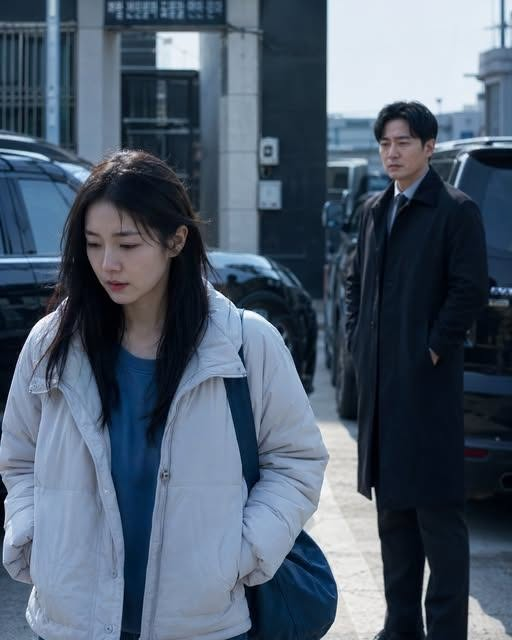
It was a message she had sent to her uncle:
“As long as Nien An disappears, Brother will only have me.”
When Hoai Canh read it, he collapsed into a chair.
Minh Nguyet was arrested pending prosecution.
My conviction was formally overturned.
The court issued an exoneration.
Four years too late.
Hoai Canh came to my hospital room afterward carrying the document.
His hands shook.
—Nien An.
I was thinner by then.
Treatment had begun, but the doctors had already explained that there were limits to what they could do.
He placed the exoneration paper beside me.
—You’re innocent.
I looked at it.
Then at him.
—I’ve always been innocent.
His eyes immediately filled with tears.
—I know.
—No.
I shook my head.
—You know now.
That difference destroyed him.
He covered his face.
—I thought I was doing the right thing.
—I know.
—I thought protecting the family meant not protecting you from the law.
—I know.
His voice broke completely.
—Why aren’t you angry?
I looked out the window.
Spring had started.
Small green leaves covered the trees outside.
—Because I don’t have enough time left to spend it hating you.
His head snapped up.
Professor Ha had apparently not told him everything.
—What does that mean?
I said nothing.
He grabbed the medical file.
The moment he saw the diagnosis, his entire body went still.
—No.
I closed my eyes.
—Don’t.
—We’ll go abroad.
—Hoai Canh—
—I’ll find specialists. Switzerland. America. Anywhere.
For the first time, I called him by his name instead of “Mr. Ta.”
—Hoai Canh.
He stopped.
—Four years ago, I begged you to give me one chance.
My voice remained quiet.
—I’m not going to spend what’s left begging life for one too.
He lowered his head beside my bed and cried.
I had imagined that moment many times in prison.
My brother discovering the truth.
Regretting everything.
Begging forgiveness.
I thought it would feel satisfying.
It didn’t.
It only felt late.
The following months, I stayed with Professor Ha.
Not at the Ta mansion.
Hoai Canh came almost every day.
Sometimes I let him sit with me.
Sometimes I didn’t.
I never called him brother again.
Trust does not return simply because truth finally arrives.
But one afternoon, when he brought me my father’s old photo album, I let him stay until sunset.
That was enough.
Before my health declined further, Professor Ha helped publish the research I had started four years earlier.
My name appeared first.
Ta Nien An.
No “convicted researcher.”
No “suspected thief.”
Just my name.
The day I received the journal copy, I ran my fingers across those three characters for a long time.
Four years earlier, they had taken away my freedom.
My career.
My reputation.
But they had failed to take away the truth.
Hoai Canh stood quietly by the window.
I closed the journal.
—Do one thing for me.
He turned immediately.
—Anything.
—The next time someone you love tells you they are innocent…
I looked directly at him.
—Investigate before you decide they are lying.
His eyes turned red.
He nodded.
This time, I believed him.
I had spent four years waiting for someone to prove I wasn’t guilty.
In the end, I realized something more important.
The truth had never needed my brother’s permission to exist.
And although he finally learned that his sister was innocent…
the one thing neither his money nor his regret could buy back was the time he had taken from her.
