I stared at Adrian’s message.
“But those children are also my children.”
For several seconds, anger was the only thing I felt.
Then Leo tugged gently at my sleeve.
“Mom, are we going?”
I turned off the screen.
“Yes.”
The assistant stepped in front of me again.
“Dr. Montes—”
“Move.”
Perhaps something in my voice finally convinced him.
He stepped aside.
I took my children home.
Adrián did not follow us.
That surprised me.
The old Adrián would have considered my refusal a challenge.
Apparently, six years had changed him too.
But not enough.
At seven the next morning, there was a black car outside my mother’s house.
Adrián stood beside it.
Alone.
No assistant.
No bodyguards.
No expensive coat protecting him from the cold.
Just him.
Leo saw him through the window.
“That’s the man from yesterday.”
“Yes.”
“Who is he?”
I closed my eyes.
There was no way to avoid it anymore.
“He’s your biological father.”
Emma dropped the spoon she was holding.
Leo became very still.
Neither child spoke for several seconds.
Then Emma asked:
“Why have we never met him?”
That was the question Adrián would eventually have to answer himself.
I opened the door.
He looked at me first.
Then at the children behind me.
His entire expression changed.
He had seen photographs.
But photographs were safe.
Standing three meters from two six-year-olds carrying his eyes, his nose, his expressions—
that was different.
“Lina.”
“You have ten minutes.”
His throat moved.
“Can I come inside?”
“No.”
So we spoke in the garden.
Adrián kept looking toward the window.
“I want a DNA test.”
I laughed.
“Of course you do.”
His jaw tightened.
“I need legal certainty.”
“No, Adrián.”
I stepped closer.
“You need control.”
His eyes returned to mine.
“The children were born six months after our divorce.”
“Yes.”
“You knew you were pregnant.”
“I found out three days after signing.”
Something changed in his face.
“You didn’t know before?”
“No.”
He went silent.
For six years, perhaps he had imagined I had deliberately hidden the pregnancy from him.
The truth was less convenient.
“You could have told me afterward.”
I smiled bitterly.
“I tried.”
His face froze.
“What?”
“I called you.”
Adrián stared at me.
“Three times.”
I remembered every one.
The first call was answered by his assistant.
Mr. Valdés was unavailable.
The second went unanswered.
The third connected.
But Isabella had answered.
“She told me you were with her.”
My voice remained calm.
“She said you didn’t want anything from your previous marriage following you into your new life.”
Adrián’s face slowly drained of color.
“She said that?”
“Yes.”
“I never told her that.”
“That doesn’t matter.”
“It matters to me!”
“And six years ago, what mattered to me?”
He stopped.
I continued.
“I was newly divorced, pregnant with twins, alone, and still stupid enough to think you might want to know.”
My voice softened.
“One humiliation was enough.”
I left for Boston two weeks later.
I rebuilt everything.
My Harvard offer had been deferred, not lost.
One of my former professors helped me return.
My mother sold a small property to help me through the first year.
After that, scholarships and research funding carried me.
I raised Leo and Emma while finishing the work I had once abandoned for Adrián.
He looked toward the window again.
“Do they know anything about me?”
“They know I was married before.”
“That’s all?”
“That was all they needed.”
His voice dropped.
“I want to know them.”
“They are not an acquisition.”
“I know.”
“Do you?”
He flinched.
I continued:
“You don’t get to send men to an airport and announce that children who have never met you must ‘return’ with you.”
His eyes lowered.
“That was wrong.”
I almost didn’t recognize him.
Adrián Valdés apologizing without defending himself.
Then he said:
“I panicked.”
“At what?”
“At realizing you might leave again before I could see them.”
I stared at him.
“You mean the way you left me?”
He had no answer.
The DNA test happened anyway.
Not because Adrián demanded it.
Because I wanted every future question settled legally.
99.99 percent.
Leo and Emma were his.
Adrián read the report alone.
Then, to my surprise, he did not file for custody.
He asked for supervised visits.
One hour.
Once a week.
The first meeting was painfully awkward.
Adrián arrived with enough toys to supply a kindergarten.
Leo looked at the mountain of boxes and asked:
“Are you trying to buy us?”
I almost choked.
Adrián looked at our son.
Then slowly put down the gift bags.
“Yes.”
Leo blinked.
“At least you’re honest.”
The next week, Adrián brought nothing.
They played chess.
Emma drew on one of his business documents.
He kept the drawing.
Weeks became months.
And gradually, the children stopped calling him “Mr. Valdés.”
One afternoon, Emma called him Dad by accident.
Adrián turned away immediately.
I knew why.
He was crying.
But while his relationship with the children improved, another truth came out.
Isabella visited me.
I almost refused to see her.
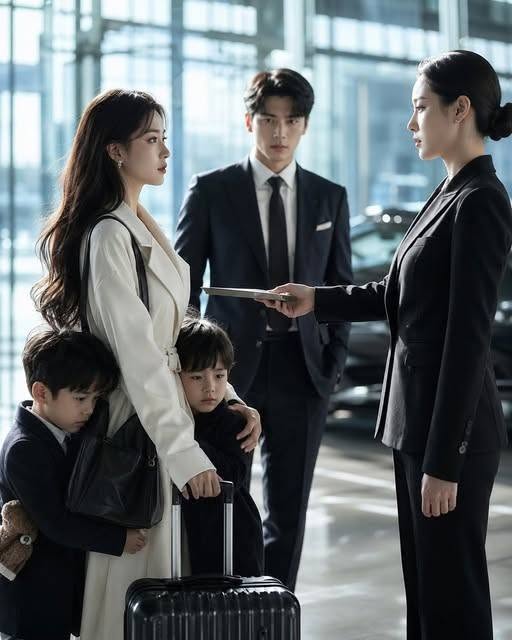
She looked nothing like the fragile woman from my memories.
She looked tired.
“Adrián told me you said I answered your call.”
“You did.”
Her lips tightened.
“Yes.”
At least she didn’t lie.
Then she said:
“But there’s something you never knew.”
I waited.
“Adrián didn’t divorce you because I asked him to.”
My heart tightened.
“He did it because his mother threatened to destroy your academic future.”
I stared at her.
“What?”
The Valdés family had been in the middle of a succession war.
Adrián’s marriage to an ordinary medical researcher weakened an alliance his mother wanted.
Isabella’s family offered political and financial support.
His mother gave him a choice.
Leave me voluntarily.
Or she would use the family’s influence to destroy the research program waiting for me abroad and bury my career before it began.
“He thought you’d take the settlement and start again,” Isabella said.
My hands became cold.
“He sacrificed our marriage for my career?”
“That’s how he justified it.”
I laughed.
Not because anything was funny.
“That idiot.”
Isabella lowered her eyes.
“He believed you would hate him temporarily and eventually understand.”
“He never told me.”
“No.”
“And then he went to you.”
She looked away.
“That part was his choice.”
There it was.
The important distinction.
Adrián may have been pressured.
But nobody forced him to treat me coldly.
Nobody forced him to drive away that night.
Nobody forced him to let three calls go unanswered.
And nobody forced him to spend the following six years without once checking whether I was alive.
When I confronted him, Adrián did not deny it.
“I thought staying away was the cleanest thing.”
“For whom?”
He closed his eyes.
“For me, probably.”
That answer mattered.
Because for the first time, he stopped dressing selfishness as sacrifice.
“I loved you,” he said.
“Maybe you did.”
“I still do.”
I looked at him calmly.
“But love wasn’t the thing missing between us.”
He knew.
“Respect.”
“Yes.”
He lowered his head.
We never remarried.
That was not the ending Adrián wanted.
But it became the ending he learned to accept.
He became a good father.
Not instantly.
Not perfectly.
But consistently.
He attended school events.
Learned Emma’s allergies.
Taught Leo chess.
And never again used power where patience was required.
Three years after my return, I accepted the position of director at the National Center for Pediatric Research.
At the ceremony, Leo and Emma sat in the front row.
Adrián sat several seats away.
Afterward, he approached me.
“You did everything you once told me you wanted to do.”
I smiled.
“Yes.”
“I’m sorry I made you believe loving me required giving it up.”
For once, the apology arrived without expectation.
“Thank you.”
He looked at me.
“Are you happy?”
I glanced toward our children.
Leo was arguing with Emma over who got the last piece of cake.
I laughed.
“Very.”
Adrián nodded.
There was sadness in his eyes.
But also peace.
Six years earlier, I thought he had destroyed my life by choosing Isabella.
I had been wrong.
He only destroyed the future I had imagined with him.
The life I built afterward was mine.
And when Adrián finally returned asking for his children, he learned the hardest lesson of all:
Being their father was his right by blood.
Being part of their lives was something he still had to earn.
And being loved by me again—
was no longer something he was entitled to at all.
