I looked at the woman outside the door.
White dress.
Long hair.
Gentle smile.
A bag of fruit in her hand.
Everything about her seemed harmless.
Then the little voice in my belly repeated:
“Mom, don’t let her fool you.”
I silently answered:
Why?
No response.
Apparently, my unborn child enjoyed giving warnings without explanations.
The woman smiled again.
“I’m Lin Wan.”
Before I could answer, footsteps sounded behind me.
Co Tham came out of his room.
The moment he saw her, his expression changed.
“Why are you here?”
Lin Wan’s smile became softer.
“I heard what happened to the company.”
She raised the fruit bag.
“I came to see you.”
“No need.”
His answer was immediate.
Her expression stiffened.
I stepped aside.
“You know each other?”
Co Tham said:
“Former employee.”
Lin Wan looked at him.
“Only a former employee?”
Interesting.
Very interesting.
The baby immediately whispered:
“Mom, don’t misunderstand! Dad doesn’t like her!”
I almost choked.
Nobody asked you.
The voice became indignant.
“I am protecting Dad’s reputation.”
I ignored it.
Lin Wan entered without waiting for an invitation.
She looked around the apartment.
Peeling walls.
Old furniture.
Tiny kitchen.
Then her eyes landed on my stomach.
The smile on her face froze for half a second.
“You’re pregnant?”
“Yes.”
“Mr. Co’s?”
Before I could answer, Co Tham said:
“Yes.”
Lin Wan tightened her fingers around the fruit bag.
Then she smiled again.
“Congratulations.”
But the baby whispered:
“She doesn’t mean it.”
That one I had already figured out.
Lin Wan stayed only ten minutes.
Before leaving, she finally revealed why she had come.
“My father heard you still own the South River land.”
Co Tham’s expression immediately cooled.
“So?”
“He’s willing to buy it.”
There it was.
I leaned against the table.
“How much?”
Lin Wan named a figure.
It was slightly higher than Mr. Chu’s offer.
Still ridiculously low.
Co Tham laughed.
“Your father and Mr. Chu discussed this beforehand?”
Her face changed.
“Of course not.”
The baby immediately shouted inside my head:
“Liar!”
I rubbed my forehead.
This child was going to exhaust me before being born.
Lin Wan continued:
“Mr. Co, you need cash now. Holding useless land won’t feed your family.”
I looked at her.
“Who told you it was useless?”
She turned toward me.
“Everyone in the industry knows that area has no development value.”
“Then why are so many people desperate to buy it?”
Silence.
Co Tham slowly looked at me.
Lin Wan’s smile disappeared.
I opened the door.
“Thank you for the fruit.”
She understood.
Before leaving, she looked at Co Tham.
“I hope you think carefully.”
Then she glanced at my stomach.
“After all, you have more responsibilities now.”
The door closed.
The apartment became silent.
I turned around.
“Former employee?”
Co Tham rubbed his forehead.
“She worked in strategic development.”
“Anything else?”
“No.”
The baby whispered:
“She liked Dad.”
I sighed.
Co Tham looked at me.
“What?”
“Nothing.”
I pointed toward the fruit.
“Don’t eat that.”
“Why?”
“I don’t like her.”
He stared at me for several seconds.
Then, without asking another question, he picked up the bag and put it outside.
That surprised me.
“You believe me?”
Co Tham looked back.
“You stayed when everyone else left.”
His voice was quiet.
“If I don’t believe you now, who should I believe?”
For some reason, my chest tightened.
Three days later, we discovered why Lin Wan had come.
The city government published a preliminary transportation development plan.
A new metro interchange was being considered.
One proposed route passed directly beside the South River land.
Nothing had been finalized.
But if approved, the land’s value could multiply.
Co Tham stared at the announcement on his laptop.
Then he looked at me.
“How did you know?”
I was cutting apples.
“I guessed.”
“You guessed?”
“Yes.”
“Ning Shu.”
“What?”
“You don’t even know how to read a corporate balance sheet.”
“That is unnecessarily insulting.”
“But you predicted the land.”
“Luck.”
“You also stopped me from selling the car too cheaply.”
“More luck.”
“And three weeks ago you suddenly decided not to leave.”
My knife stopped.
He looked directly at me.
“Was that luck too?”
The baby whispered:
“Mom, Dad is getting smarter.”
I answered silently:
Unfortunately.
I placed the knife down.
“Maybe your child brings good luck.”
Co Tham’s eyes immediately went to my stomach.
The suspicion disappeared.
Instead, his expression softened.
He actually accepted that explanation.
Men who had just gone bankrupt apparently became surprisingly superstitious.
The land saved us.
Not immediately.
There was no miraculous overnight fortune.
But its potential gave Co Tham leverage.
A small investment company contacted him.
Then another.
Instead of begging old friends for loans, he began rebuilding from what remained.
He registered a new company.
Tiny office.
Four employees.
Secondhand furniture.
On the first day, I visited with lunch.
I stood outside the door and stared at the handwritten company name.
Co Tham came beside me.
“It’s ugly.”
“Very.”
“The sign was cheap.”
“I can tell.”
He smiled.
It was the first real smile I had seen from him since the bankruptcy.
Then he handed me something.
An access card.
I looked at it.
“Why?”
“You’re a shareholder.”
I nearly dropped it.
“What?”
“Your savings kept us alive for three months.”
“That was living expenses.”
“You also stopped me from selling the land.”
“That was advice.”
“And you paid the registration fee for this company.”
“That was 800 yuan.”
“So?”
“So how did 800 yuan turn into shares?”
Co Tham answered calmly:
“Excellent investment skills.”
I stared at him.
Then laughed.
Inside me, the baby announced proudly:
“Dad is learning how to keep Mom.”
My smile vanished.
Keep your mouth shut.
Lin Wan returned two months later.
This time she didn’t bring fruit.
She brought documents.
Her father’s company wanted to invest.
Co Tham refused.
Then she offered something else.
Information.
Someone had deliberately accelerated the collapse of his old company.
Co Tham became still.
“What do you mean?”
Lin Wan placed several printed emails on the desk.
The financial crisis hadn’t been entirely accidental.
A supplier had suddenly demanded early payment.
Two creditors had withdrawn extensions on the same day.
A major client canceled its contract immediately afterward.
Someone had coordinated them.
“Who?”
Lin Wan hesitated.
“My father knows.”
“Why would he tell me?”
“He won’t.”
She looked at Co Tham.
“But I will.”
Then her eyes shifted toward me.
“If you agree to one condition.”
I almost laughed.
There was always a condition.
“What?”
Lin Wan looked directly at him.
“Leave Ning Shu.”
The room went silent.
I didn’t even have time to react before Co Tham stood.
“Get out.”
Lin Wan paled.
“You haven’t heard—”
“I heard enough.”
“This information could help you recover everything!”
Co Tham opened the office door.
“I lost everything once.”
His voice was frighteningly calm.
“I can rebuild it again.”
Then he looked at me.
“But there are things I won’t gamble with twice.”
The baby became unbearably excited.
“Mom! Did you hear that?”
Unfortunately, yes.
Lin Wan’s eyes reddened.
“You’ll regret this.”
Co Tham replied:
“No.”
She left.
That night, I finally asked him:
“Why?”
He was washing dishes.
“Why what?”
“Why refuse?”
He turned off the water.
“You really need me to explain?”
“Yes.”
He looked at me for a long time.
“When I had money, everyone said they would follow me anywhere.”
He dried his hands.
“When I lost it, they disappeared.”
Then he looked at my stomach.
“You were already standing at the door.”
My chest tightened.
“But you came back.”
I didn’t tell him why.
I couldn’t exactly say:
Because our unborn child started talking to me.
So I shrugged.
“I had three months of savings. It seemed wasteful not to use them.”
Co Tham laughed softly.
Then his expression became serious.
“Ning Shu.”
“Yes?”
“When the company succeeds again…”
I interrupted.
“If.”
“When.”
His confidence had returned.
Not the arrogance from before.
Something steadier.
“When it succeeds again, marry me.”
I stared at him.
“We’ve lived together for three years and this is your proposal?”
“No ring yet.”
“Terrible.”
“I’ll buy one later.”
“Rejected.”
He froze.
The baby shouted:
“Mom!”
I continued:
“Ask again when you can afford dinner somewhere that doesn’t use plastic stools.”
Co Tham stared at me.
Then slowly smiled.
“Fine.”
Six months later, the metro project was officially approved.
The South River land became the most valuable remaining asset from Co Tham’s former company.
But he didn’t sell immediately.
He partnered with another developer and exchanged part of the land rights for capital and long-term equity.
The new company grew.
Five employees became twenty.
Twenty became sixty.
The old business contacts who once refused his calls began calling him again.
Co Tham answered some.
Ignored others.
One afternoon, Mr. Chu himself arrived.
The man who had tried to buy the land cheaply now offered nearly eight times his original price.
Co Tham rejected him.
Mr. Chu became angry.
“You think you’re important again?”
Co Tham smiled.
“No.”
He looked toward me.
“I just learned not to sell valuable things because I’m frightened.”
I knew he wasn’t only talking about land.
The truth about his bankruptcy came out shortly before I gave birth.
Lin Wan’s father had been involved.
He and several investors had known about early transportation planning discussions.
They wanted the South River land.
So they pressured Co Tham’s already struggling company until he had no liquidity left.
The plan had been simple.
Force bankruptcy.
Buy the land cheaply.
Wait.
Profit.
Lin Wan had approached us because she wanted to separate me from Co Tham and believed the information would be enough to bargain with him.
It wasn’t.
Co Tham handed the evidence to his lawyers.
Months of investigation followed.
Some losses could be recovered.
Others couldn’t.
He didn’t care as much as I expected.
“The old company is dead,” he told me.
“Then why fight?”
“To make sure nobody thinks they can do it again.”
Fair enough.
Our daughter was born on a rainy morning.
The moment I heard her cry, I waited.
Nothing.
No little voice inside my head.
No commentary.
No warnings.
I looked at the tiny baby in my arms.
“So it really was you.”
Co Tham leaned closer.
“What?”
“Nothing.”
The baby opened her eyes.
Then, inside my head, one final familiar voice whispered:
“Mom.”
I froze.
“Dad still owes you a wedding.”
And then the voice disappeared.
Forever.
I stared at my daughter.
She yawned innocently.
Co Tham frowned.
“Why are you looking at her like that?”
“Your daughter talks too much.”
“She was born five minutes ago.”
“Exactly.”
He clearly decided not to ask.
Smart man.
A year later, Co Tham took me to dinner.
Real restaurant.
No plastic stools.
After dessert, he placed a ring on the table.
“I can afford dinner now.”
I looked at him.
“You remembered?”
“Everything you say.”
The words sounded familiar.
Once, when he had lost everything, he had been shocked that I remembered every detail he had ever told me.
Now he remembered mine.
“Marry me.”
This time I didn’t reject him.
But I didn’t immediately take the ring either.
“Co Tham.”
“Yes?”
“If you ever go bankrupt again, don’t kick me out.”
He smiled.
“Agreed.”
“If something happens, tell me.”
“Agreed.”
“And don’t decide by yourself that leaving me is somehow for my own good.”
His expression became serious.
“I won’t.”
Only then did I take the ring.
“Yes.”
Three years later, the company moved into a new headquarters.
Not as extravagant as the old one.
Co Tham deliberately kept it that way.
The South River project had become one of the most successful developments in that part of the city.
People began calling his comeback legendary.
They said he had extraordinary judgment.
That he had seen value where everyone else saw worthless land.
That he had rebuilt himself from nothing.
Only I knew the truth.
He hadn’t rebuilt himself from nothing.
He had rebuilt himself from one tiny apartment.
Three months of my savings.
A bowl of porridge.
A piece of land we refused to sell.
And a child who had started giving financial advice before she was even born.
One evening, I found Co Tham standing beside the window of our new home.
Our daughter was asleep against his shoulder.
He looked at me.
“Do you ever regret staying?”
It was the same question he had asked in that old apartment.
This time I didn’t avoid answering.
“No.”
He smiled.
“Neither do I.”
I walked over and took our daughter from him.
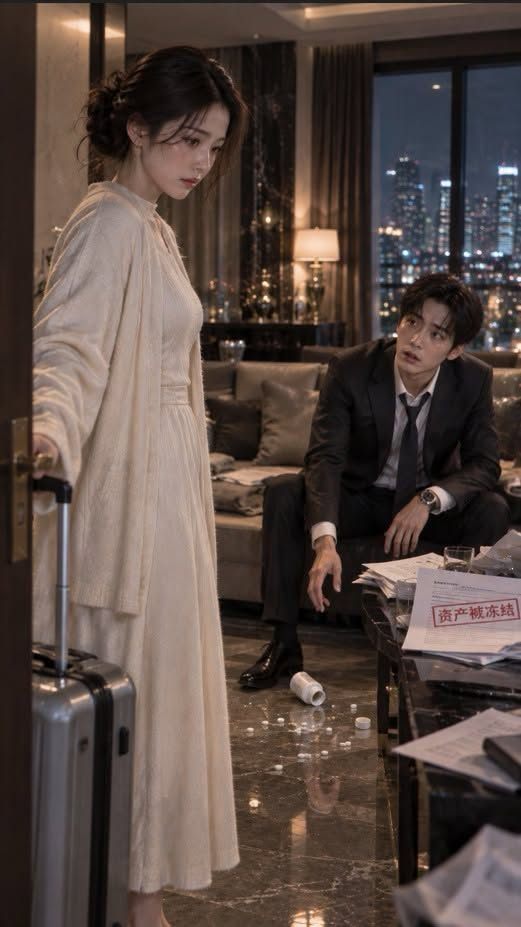
Years earlier, I had stood at a door with my suitcase, ready to leave a man who believed losing his fortune meant losing his right to have a future.
I stayed because a tiny voice told me he would rebuild everything.
The voice had been right.
But not completely.
Co Tham rebuilt the company.
He rebuilt his career.
He rebuilt his fortune.
What neither of us understood that day was that the most important thing he would rebuild wasn’t any of those.
It was himself.
And the little girl sleeping between us was the only person who had known it from the beginning.
