There was silence on the phone for so long that I thought Lu Chen had hung up.
Then he finally spoke.
“We haven’t divorced yet.”
“Thirty-day waiting period.”
“I know.”
“Then why are you behaving like we’re already strangers?”
I looked at the rental agreement on my laptop.
Because perhaps, for the first time, we were.
“We signed the papers a week ago.”
“I remember.”
“Good.”
I paused.
“So from now on, take care of your own meals.”
Before he could answer, I ended the call.
My hands were trembling.
Not because I regretted it.
Because after seven years, saying no to Lu Chen still felt unnatural.
For years, my days had revolved around tiny calculations concerning him.
What time would he wake up?
Would his stomach hurt?
Was it going to rain?
Had he remembered his umbrella?
What should I cook?
What did he need?
Meanwhile, the row of foreign-language dictionaries on my shelf had gone almost unnoticed by him for seven years.
That evening, I opened one.
Not because I needed it.
Because I wanted to remember who Jiang Wan had been before becoming Lu Chen’s wife.
I had graduated with a degree in translation.
Before marriage, I’d worked with publishing houses and international companies.
Afterward, I gradually reduced my workload.
Lu Chen became busier.
The house needed managing.
His stomach became worse.
Then came the pregnancy.
Then the loss.
Then the years afterward when I somehow forgot that my own life also deserved attention.
I opened my email.
There were seventeen unread messages related to translation work.
One came from Horizon International Publishing.
They were looking for a lead translator for a six-month literary project.
Remote work.
Excellent compensation.
And their editorial department happened to be in Ling City.
I replied.
The interview was scheduled for Thursday.
Three days later, Su Ruo contacted me.
Not Lu Chen.
Su Ruo.
Her message contained no greeting.
【Sister Jiang Wan, Brother Chen said you aren’t cooking recently.】
Another message arrived.
【My stomach hasn’t been very comfortable these days.】
Then:
【Could you prepare the chicken congee you made last month? Brother Chen said yours is better than the restaurants.】
I stared at the screen.
Then laughed.
Not bitterly.
Genuinely.
I finally understood how absurd my marriage had become.
I typed:
【Ask Brother Chen to make it.】
She replied almost immediately.
【He doesn’t know how to cook.】
I wrote:
【Then this is an excellent opportunity for him to learn.】
She stopped responding.
That evening, Lu Chen came home earlier than usual.
Seven forty.
I was packing books.
He stood at the bedroom door.
“Did Su Ruo contact you?”
“Yes.”
“Why did you answer her like that?”
I turned.
“How should I have answered?”
“She wasn’t ordering you around.”
“She asked.”
“And I refused.”
Lu Chen frowned.
Before, that expression would have made me immediately explain myself.
This time I continued packing.
“Jiang Wan.”
“Yes?”
“You’ve changed.”
I smiled.
“No.”
I placed another dictionary in the box.
“I’ve stopped doing everything you expect from me.”
He looked at the boxes.
“Why are you packing?”
“I’m moving.”
“When?”
“After the divorce is finalized.”
“To where?”
“Ling City.”
His face finally changed.
“Ling?”
“Yes.”
“That’s more than a thousand kilometers away.”
“I know.”
“What about your life here?”
I looked around the apartment.
“What life?”
He fell silent.
Then his eyes landed on my dictionaries.
“You’re taking those?”
“Obviously.”
“I thought they were decoration.”
My hands stopped.
Seven years.
He had lived beside me for seven years.
And he thought my working dictionaries were decoration.
“I translate professionally, Lu Chen.”
He stared at me.
“Since when?”
I almost couldn’t answer.
“Since before I met you.”
Something uncomfortable appeared in his expression.
“How much work do you do?”
“Enough.”
“Why didn’t you tell me?”
This time I laughed.
“I did.”
His brows tightened.
“When?”
“Many times.”
“You said you sometimes translated documents.”
“I told you about publishing projects.”
“I told you when my translation was shortlisted for an industry award.”
“I told you when a foreign publisher offered me a long-term contract.”
“You were busy.”
Every sentence made him quieter.
Finally, he asked:
“Why didn’t you remind me?”
That question broke whatever sadness remained inside me.
“Because I’m tired of reminding you.”
The garbage.
The balcony clothes.
Appointments.
Anniversaries.
My work.
My feelings.
Even our divorce appointment.
I had spent seven years reminding a man that I existed.
I wasn’t doing it anymore.
Thursday came.
I passed the interview.
Horizon offered me the position that afternoon.
I accepted.
Twenty-three days remained before the divorce could be finalized.
During those twenty-three days, something strange happened.
Lu Chen began noticing things.
There was no breakfast unless he made it.
No lunchbox waiting beside the door.
No clean shirt magically appearing before meetings.
No medicine replaced when it ran out.
No reminder that his mother had a medical appointment.
No birthday gift selected for his father.
None of those tasks had disappeared.
Only the person doing them had stopped.
One night, I returned home and smelled something burning.
Lu Chen was standing in the kitchen.
A pot of congee had turned into something resembling glue.
I looked at it.
He looked at me.
Neither of us spoke.
Then he said:
“I didn’t know it took this long.”
“What?”
“Cooking.”
I removed my coat.
“It doesn’t always.”
“But planning it does.”
He looked toward the refrigerator.
For years I’d labeled ingredients by date.
Prepared weekly menus.
Managed everything.
“I didn’t know.”
“I know.”
Those three words hurt him more than accusations.
The final day arrived.
This time Lu Chen reached the Civil Affairs Office before me.
When I arrived, he was sitting in the same row of chairs where I’d once waited alone for hours after he’d forgotten our first appointment.
He stood immediately.
“Jiang Wan.”
I nodded.
We completed the procedure.
When the documents were handed to us, Lu Chen stared at his copy.
Seven years of marriage had become several stamped pages.
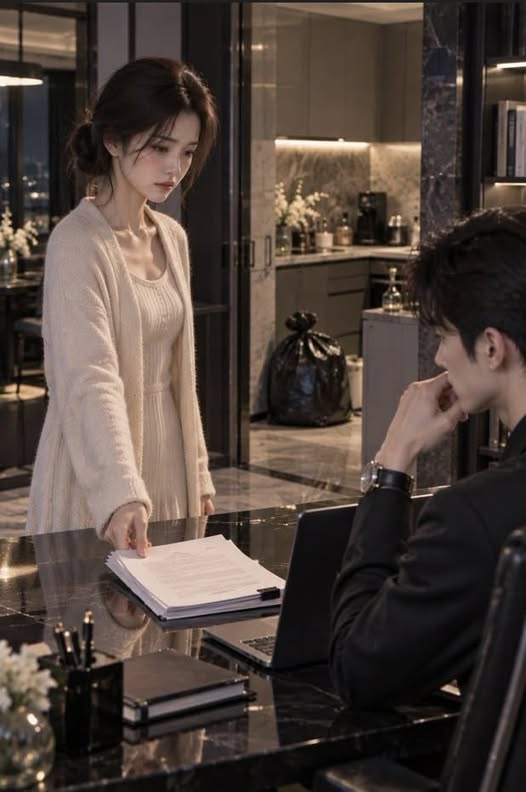
Outside, he suddenly asked:
“Can we talk?”
I agreed.
We sat in a nearby café.
He didn’t touch his coffee.
“Su Ruo resigned.”
I looked at him.
“Why are you telling me?”
“She said people in the department were talking.”
“About you two?”
“Yes.”
“Were they wrong?”
He immediately answered:
“Nothing happened between us.”
“I believe you.”
That surprised him.
“I never divorced you because I thought you were sleeping with Su Ruo.”
His expression became confused.
“Then why?”
“Because you gave her the attention you stopped giving your marriage.”
He lowered his eyes.
“There is a difference between physical betrayal and making your wife feel invisible.”
He remained silent.
“I thought helping her was normal.”
“It was.”
I nodded.
“Helping a colleague is normal.”
“Missing important moments in your own marriage repeatedly while always finding time for that colleague isn’t.”
He finally looked at me.
Then he said something I never expected.
“I remembered the hospital.”
My fingers tightened around the cup.
I said nothing.
He continued carefully.
“The day you went through that loss.”
I didn’t want details.
I didn’t need them.
He swallowed.
“I checked my old calendar.”
Of course.
He needed a calendar to remember one of the hardest days of my life.
“I was with Su Ruo’s project team.”
“I know.”
“You called me.”
“I know.”
“Four times.”
I looked through the café window.
“Lu Chen, don’t.”
His voice dropped.
“I thought there would always be another chance to make things up to you.”
That was perhaps the most truthful thing he’d ever said.
I turned back.
“There isn’t.”
He nodded slowly.
No argument.
No excuses.
Only understanding arriving years too late.
The following morning, I left Haicheng.
My best friend met me at Ling station.
She hugged me and immediately complained that I’d lost my ability to pack efficiently.
I laughed.
The apartment I’d rented was small.
Two bedrooms.
Old wooden floors.
A balcony overlooking gingko trees.
It was not luxurious.
But my name was on the lease.
Mine.
My first paycheck from Horizon arrived the following month.
Six months later, I became permanent lead translator.
A year after that, I translated a novel that won a major publishing prize.
At the ceremony, the editor introduced me:
“Jiang Wan has one of the most precise voices I’ve encountered in twenty years.”
I stood beneath the lights and suddenly remembered Lu Chen saying that staying home was practically the only thing I knew how to do.
Strangely, it no longer hurt.
Three years later, I returned to Haicheng for a publishing conference.
Lu Chen attended one of the panels.
He waited until afterward.
“You look well.”
“So do you.”
He smiled.
“I learned to cook.”
I laughed.
“Congratulations.”
“My congee is still terrible.”
“Then don’t open a restaurant.”
For a moment, we sounded like the people we’d once been.
Then he became serious.
“I owe you an apology.”
“You already apologized.”
“Not properly.”
I waited.
“I treated everything you did as though it happened automatically.”
He looked at me.
“And because you kept taking care of things, I convinced myself they didn’t require effort.”
I didn’t interrupt.
“I remembered everyone’s emergencies because I assumed you’d always be there.”
His voice became quieter.
“I didn’t understand that being dependable didn’t mean you needed less care.”
For once, Lu Chen had finally understood.
But understanding was not a time machine.
“I hope you remember that in your next relationship,” I said.
Pain crossed his face.
Then he smiled.
“I will.”
We said goodbye.
I walked away without turning around.
People sometimes think marriages end because of enormous betrayals.
Mine ended over a garbage bag.
But not really.
The bag was only the moment I finally saw everything clearly.
It sat there for three days while I repeatedly asked the person beside me to do one small thing.
And on the third day, I understood something.
I didn’t want to spend another seven years reminding someone to notice what was directly in front of him.
The trash.
The appointments.
My work.
My pain.
Me.
So I stopped reminding him.
And eventually, I left.
Years later, Lu Chen finally learned how much I had done for him.
But by then, that knowledge belonged to his future.
Not mine.
Because the most important thing I carried out of that marriage wasn’t anger.
It was the part of Jiang Wan I’d nearly forgotten existed.
And this time, I remembered her.
