That night, after Noah fell asleep, I sat alone in the living room.
Ethan was working in the study.
Light spilled beneath the door.
Once, seeing that light would have comforted me.
He’s home.
He’s finally home.
Now I understood something painful.
A person could return physically and still arrive too late.
I opened my phone and called Mia.
“I think I want to leave.”
She remained silent for several seconds.
Then she asked:
“Are you sure?”
“No.”
That was the truth.
“I don’t know if I still love him.”
“I don’t know whether I’m angry.”
“I don’t even know what I’m supposed to feel.”
Mia’s voice softened.
“Then don’t decide tonight.”
“Decide what you need first.”
That question changed everything.
Not what Ethan deserved.
Not what Grace needed.
Not what our families expected.
What did I need?
The following morning, Ethan appeared carrying another Black Forest cake.
I stared at the box.
“Ethan.”
“Yes?”
“I can’t eat that.”
He stopped.
“What?”
“My doctor told me to avoid sugar temporarily.”
His eyes dropped toward the cake.
“Since when?”
“Since Noah was born.”
His face changed.
Three months.
He had brought the same cake almost every day for three months.
And I had thanked him every time.
“Why didn’t you tell me?”
I looked at him.
“Why didn’t you ask?”
He had no answer.
I opened the refrigerator.
Inside was yesterday’s untouched slice.
“During pregnancy, this was my favorite.”
I closed the door.
“But I’m not pregnant anymore.”
Something in my voice finally frightened him.
That evening, Ethan didn’t enter the study.
He sat opposite me.
“Talk to me.”
So I did.
I told him about the positive pregnancy test I’d never managed to show him before Switzerland.
I told him about waiting through the first month.
Then the second.
About eventually stopping myself from checking flight schedules.
About the hospital.
About my mother’s repeated calls.
About waking after surgery and learning he still hadn’t been reached.
Ethan’s face gradually lost color.
“I didn’t know.”
“I know.”
That was exactly the problem.
He reached for my hand.
I moved it away.
“You keep saying you didn’t know.”
“How could you?”
“You weren’t here.”
His eyes reddened.
“Grace was seriously ill.”
“I know.”
“She had nobody.”
“I know.”
“I thought if I left—”
“I know.”
He stopped.
I looked at him calmly.
“I’ve spent almost a year understanding your reasons, Ethan.”
“I don’t need another explanation.”
“What do you need?”
Finally.
The right question.
“I need to know why her having nobody meant Noah and I had to have nobody.”
Silence filled the room.
Ethan lowered his head.
“I thought you were stronger.”
I laughed softly.
There it was.
The sentence women like me heard too often.
Strong.
Understanding.
Independent.
Words that sometimes meant:
You can be neglected without complaining.
“I was strong,” I said.
“I gave birth without you.”
“I survived surgery without you.”
“I brought Noah home.”
“I learned how to care for him.”
“I recovered.”
“I became strong enough that now I know I can live without you.”
His head snapped up.
“Don’t say that.”
“Why?”
“Because you’re my family.”
“Grace needed you, so you went.”
My voice remained steady.
“I needed you, and you assumed I’d manage.”
Ethan’s eyes filled.
“I made the wrong choice.”
“No.”
I shook my head.
“You made hundreds of choices.”
Every postponed return.
Every additional week.
Every time he accepted my “I’m fine” without looking deeper.
Every time he promised soon.
One mistake could be forgiven in a moment.
A pattern had to be rebuilt through time.
“I want us to separate.”
He became completely still.
“For how long?”
“I don’t know.”
“Do you want someone else?”
“No.”
“Do you hate me?”
“No.”
That seemed to hurt him more.
“I simply don’t trust you with my most vulnerable moments anymore.”
Three days later, I took Noah and moved into a small apartment near Mia.
Ethan didn’t stop me.
That surprised everyone.
His mother called.
Friends called.
Even Grace contacted me.
Her message was short.
She apologized.
She said Ethan had repeatedly talked about returning, but she’d been frightened and depended on him too much.
I read it once.
Then replied:
“I hope you’re healthy now.”
Nothing more.
Because Grace wasn’t my husband.
Ethan was responsible for Ethan’s choices.
For the first few months, we lived separately.
He saw Noah regularly.
And something unexpected happened.
Ethan stopped trying to impress me.
No cakes.
No expensive gifts.
No speeches.
He learned Noah’s routine.
He attended pediatric appointments.
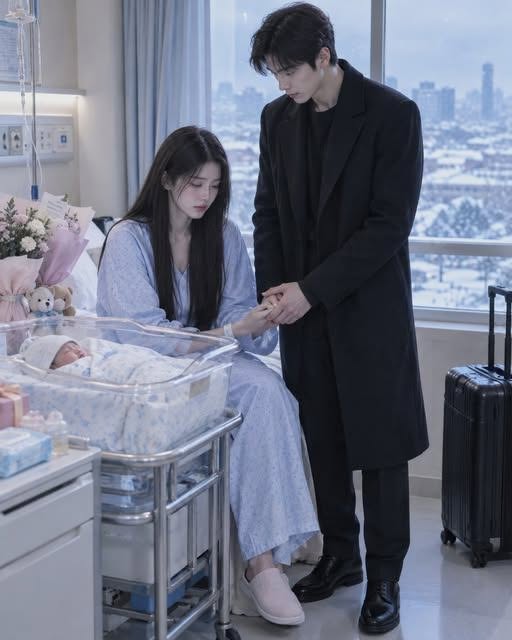
He knew which lullaby calmed him.
He learned what medicine was in the cabinet and where the emergency numbers were.
Most importantly, he stopped assuming I would manage everything simply because I could.
One rainy evening, nearly a year after I left, he brought Noah back after spending the afternoon with him.
Our son was asleep against his shoulder.
Ethan transferred him carefully into the crib.
Then he noticed an envelope on my table.
Divorce documents.
His face went white.
“So you’ve decided.”
“I think so.”
He sat down.
For a long time, neither of us spoke.
Then Ethan said:
“I spent the last year hoping that if I became good enough, you’d forget Switzerland.”
“I’ll never forget Switzerland.”
“I know.”
He looked toward Noah’s room.
“That’s what I finally understood.”
He didn’t beg.
Instead, he signed.
My hand trembled when I saw his name.
His didn’t.
Before leaving, Ethan stopped at the door.
“I loved you before I left.”
I looked at him.
“I believe you.”
That was the tragedy.
Love had existed.
Presence hadn’t.
Three years passed.
Noah grew into a cheerful little boy who asked approximately four hundred questions every morning.
Ethan remained part of his life.
A reliable part.
Never perfect.
But present.
We became good co-parents.
Nothing more.
People sometimes found that disappointing.
They wanted Ethan to earn me back.
They wanted a grand reconciliation.
But becoming a better father didn’t create a debt requiring me to become his wife again.
Then, on Noah’s fourth birthday, Ethan arrived early to help decorate.
He brought no Black Forest cake.
Instead, he placed a small fruit cake on the table.
I raised an eyebrow.
“You remembered.”
“You told me three years ago.”
He smiled faintly.
“I’ve become better at listening.”
“You have.”
There was no bitterness in my answer.
That surprised both of us.
After the party, Noah fell asleep surrounded by new toys.
Ethan and I stood on the balcony.
“Grace got married,” he suddenly said.
I looked at him.
“Congratulations to her.”
He laughed.
“That wasn’t the reaction I expected.”
“What did you expect?”
“I don’t know.”
He became serious.
“I wanted you to know something.”
I waited.
“I don’t regret helping her survive that period.”
I nodded.
“But I regret believing helping her required abandoning you.”
That distinction mattered.
For years, I’d secretly wondered whether asking him to stay would have made me selfish.
Now I understood.
It had never needed to be a choice between abandoning Grace and abandoning me.
There had been doctors.
Friends.
Professional caregivers.
Flights home.
Shared responsibilities.
Boundaries.
Alternatives.
Ethan had behaved as though only he could save her.
And in doing so, he had failed to see the family waiting for him.
“Thank you for finally understanding,” I said.
He smiled sadly.
Then he left.
Years later, Noah asked why his father didn’t live with us.
I didn’t tell him Ethan had chosen another woman.
That wasn’t the whole truth anyway.
I said:
“Your father and I loved each other very much.”
“But sometimes love isn’t enough to make two people good partners.”
Noah thought about that.
“Does Dad love me?”
“Very much.”
“Do you?”
“More than all the cakes in the world.”
He laughed.
That night, after putting him to bed, I found an old photograph.
Ethan and me.
Taken shortly before Switzerland.
My hand rested unconsciously against my stomach.
Neither of us knew Noah was already there.
For a moment, I remembered the woman I had been.
Thirty-two days from her wedding.
Pregnant.
Certain of her future.
She had begged Ethan not to leave because somewhere inside, she already understood what his departure meant.
I wished I could tell her:
You will survive this.
But survival won’t be the most important part.
One day, you’ll stop asking whether you were important enough for him to stay.
You’ll understand that someone else’s failure to choose you in a crucial moment does not determine your value.
And you won’t become your mother.
You won’t spend your life staring at a door.
You’ll open it yourself.
You’ll walk through it.
And when Ethan eventually learns how to come home, you’ll be able to look at him without anger and understand something neither of you knew before:
Sometimes a person returns too late to save the relationship—
but just in time to become the father his child deserves.
