Adrian stared at me as though the woman standing in our living room had replaced his wife while he wasn’t looking.
“You speak Russian?”
“Fluently.”
His whiskey glass remained suspended in his hand.
“Since when?”
“Since I was nineteen.”
He went pale.
That meant he understood exactly what I had heard.
Every word.
Katerina, you are the woman of my life.
My heart was always yours.
Marry me.
I pushed the silver USB drive toward him.
“Would you like to hear about your eight mistakes?”
“Victoria—”
“First.”
I raised one finger.
“You assumed silence meant ignorance.”
A second.
“You assumed staying home meant I stopped understanding the company.”
A third.
“You proposed to another woman while legally married.”
A fourth.
“You used company funds to pay for tonight’s anniversary celebration.”
His expression shifted.
A fifth.
“You charged Katerina’s apartment to Whitmore International as executive accommodation.”
Now he stopped breathing normally.
A sixth.
“You transferred consulting payments to her company for work she never performed.”
“That’s not—”
“Seven.”
I continued before he could interrupt.
“You attempted to restructure voting rights three months ago using an authorization bearing my electronic signature.”
His face emptied.
“And eight?”
I smiled.
“You never checked who actually owns Whitmore International.”
Adrian laughed.
It was forced.
Nervous.
“It’s my company.”
“No.”
“I’m CEO.”
“Yes.”
“I own forty-six percent.”
“You control forty-six percent of the ordinary voting shares.”
His confidence disappeared.
I sat opposite him.
“My father founded Hale Industries thirty-four years ago. When you became CEO, we renamed the operating company Whitmore International because you insisted investors preferred a unified brand.”
He remembered.
Of course he remembered.
What he had forgotten was the structure underneath.
“My mother’s family trust retained thirty-nine percent.”
“I know that.”
“Do you?”
I tilted my head.
“Because seven years ago, when my mother became ill, she transferred beneficial control to me.”
Adrian’s fingers tightened around the glass.
“That still doesn’t give you control.”
“Correct.”
I almost admired how quickly he calculated.
Then I delivered the part he didn’t know.
“My father left another sixteen percent in a dormant founder’s trust.”
Silence.
Adrian stared at me.
“That’s impossible.”
“The trust activates if a serving CEO attempts an unauthorized dilution or transfer of founder-family voting rights.”
His lips parted.
Three months earlier, Adrian had triggered it himself.
By trying to move shares carrying my authorization.
Thirty-nine plus sixteen.
Fifty-five percent.
Not his.
Mine.
He grabbed the USB drive.
“What is on this?”
“Records.”
I stood.
“Bank transfers. Board correspondence. Katerina’s consulting contracts. Your restructuring instructions. And recordings from tonight.”
His eyes snapped toward me.
“You recorded me?”
“The ballroom’s official event team recorded you.”
I smiled faintly.
“In four languages.”
He looked sick.
“You planned this.”
“No, Adrian.”
That was the part he couldn’t understand.
“I noticed it.”
The next morning, an emergency board meeting was called.
Adrian arrived with two attorneys.
I arrived alone.
He smirked when he saw me.
Then the doors opened behind me.
Three trustees entered.
His smile disappeared.
For ten years, Adrian had presented me to executives as the gracious wife who preferred domestic life.
Some board members barely knew my professional history.
So I introduced myself properly.
“Before my marriage, I worked in international acquisitions for Hale Industries.”
One director blinked.
Another looked at Adrian.
“I negotiated our first Eastern European distribution agreement.”
That was why I spoke Russian.
I had studied in St. Petersburg for eighteen months.
Adrian had never asked.
Not once.
He knew I spoke French because it looked elegant at dinners.
He knew I understood Spanish because we’d vacationed in Madrid.
Russian?
He had simply assumed there was no reason I would know it.
His first mistake had begun long before the anniversary.
He had stopped being curious about his own wife.
The independent audit took six weeks.
Not every suspicion became misconduct.
That mattered to me.
I wanted facts, not revenge.
But enough was confirmed.
Katerina had received substantial payments through a consulting company despite incomplete documentation of services.
Her apartment had been improperly classified as corporate accommodation.
Several personal expenses had passed through company accounts before later reimbursement.
And Adrian had initiated a voting-rights restructuring without disclosing his personal relationship with one of the beneficiaries of related contracts.
The board suspended him.
Then removed him as CEO.
Katerina called me afterward.
“Are you satisfied?”
“No.”
“You destroyed his career.”
“He made decisions. The board responded.”
“He loves me.”
“Then congratulations.”
My answer confused her.
“You don’t care?”
“About whether Adrian loves you?”
I thought about it.
“No.”
Her voice sharpened.
“You’re pretending.”
“Perhaps.”
I looked through my office window.
“But whether I’m hurt and whether I want him back are two different questions.”
She hung up.
The divorce became complicated.
Adrian demanded compensation for what he called “ten years spent building my family’s company.”
He was entitled to certain marital assets.
He was not entitled to my trusts.
The distinction infuriated him.
One evening he appeared outside my apartment.
“I gave that company everything.”
“So did I.”
“You stayed home!”
There it was again.
I looked at him for several seconds.
“Do you know why?”
He didn’t answer.
“When your first international expansion failed, someone had to manage the family crisis while you rebuilt.”
“When your mother had surgery, I handled both families.”
“When you traveled two hundred days a year, I maintained every relationship you called unnecessary until you needed it.”
I stepped closer.
“I didn’t stop working, Adrian.”
“I stopped receiving a salary.”
He looked away.
Then came the revelation even I hadn’t expected.
During the audit, investigators discovered Katerina’s consulting company wasn’t entirely hers.
Forty percent belonged indirectly to a holding entity controlled by her older brother.
That company had been quietly buying Whitmore International debt.
Her return to Adrian’s life had coincided almost perfectly with the purchases.
I didn’t accuse her of anything.
I let investigators follow the documents.
What they found was simpler than some grand conspiracy.
Katerina had genuinely loved Adrian once.
She may even have loved him again.
But her brother had recognized an opportunity.
Through Katerina’s access, he had obtained information about Adrian’s frustration with the founder-family trusts.
He encouraged Adrian’s restructuring plan while positioning his own company to profit if internal conflict weakened us.
Katerina knew part of it.
Not all.
Adrian was devastated.
“You knew they were buying our debt?” he demanded when she finally admitted it.
“I knew Viktor was investing.”
“In my company!”
“You were going to leave Victoria anyway!”
That sentence ended whatever fantasy remained between them.
Katerina left the country three months later.
Adrian never married her.
But that didn’t send him back to me.
There was no path back.
Our divorce became final eleven months after the anniversary party.
I returned to the company officially.
Not as Adrian’s replacement.
We hired an independent CEO.
I became chair of the strategic investment committee and restored the original Hale name alongside Whitmore’s commercial brand.
The first time I walked into an international meeting after ten years away, one elderly Russian investor stared at me.
Then he smiled.
“Victoria Hale?”
I answered in Russian.
“You remember me?”
He laughed.
“Some people are difficult to forget.”
For the first time in years, I remembered that I had once been one of them.
Two years later, Adrian requested a meeting.
He looked older.
Less polished.
Perhaps more human.
“I owe you an apology.”
“You’ve already apologized.”
“No.”
He shook his head.
“I apologized for Katerina.”
He looked directly at me.
“That wasn’t the worst thing I did.”
I waited.
“The worst thing was believing that because your work became invisible to me, it had stopped existing.”
That surprised me.
“I told people you sacrificed your dreams as if that made me grateful.”
His voice lowered.
“But I liked the sacrifice. It made my life easier.”
For once, there was nothing to argue with.
He had finally understood.
“I hope you do better with that understanding,” I said.
He smiled sadly.
“Is there really no chance for us?”
“No.”
He nodded.
And this time, he accepted the answer.
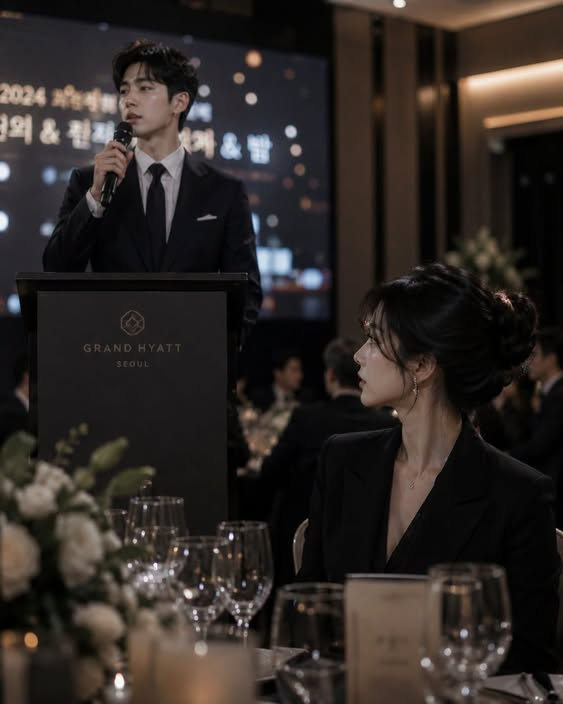
Years later, Whitmore-Hale celebrated its fortieth anniversary.
I stood in another ballroom beneath another set of crystal chandeliers.
But this time, nobody introduced me as Adrian Whitmore’s wife.
I was Victoria Hale.
Chairwoman.
Investor.
Former international acquisitions director.
Daughter of the founder.
And, most importantly, myself.
During dinner, someone asked about the famous anniversary scandal.
“Is it true Mr. Whitmore proposed to another woman in Russian because he thought you couldn’t understand him?”
I smiled.
“Completely true.”
“What did he say?”
I lifted my champagne.
“That part belongs to the past.”
The woman laughed.
Then she asked:
“And what was his biggest mistake?”
I thought about my list of eight.
The money.
Katerina.
The apartment.
The false consulting arrangements.
The shares.
The company.
None of them was actually the biggest.
“He stopped wondering who his wife was.”
That was all.
Ten years earlier, Adrian had married a multilingual international executive.
Then, little by little, he reduced her in his mind to a quiet woman in an ivory dress.
By the night of our anniversary, he was so certain of the version of me he’d invented that he stood meters away and confessed his love to another woman in a language he believed I couldn’t understand.
He had been wrong.
I understood every word.
I understood the contracts.
I understood the company.
And, finally, I understood him.
That was why, when Adrian lost everything he thought belonged to him, I didn’t feel victorious.
I simply picked up the life I’d put down ten years earlier—
and continued exactly where I’d left off.
