At 2:13 in the morning, the train stopped.
Not at Rosehaven.
At a small station called Bellmere, nearly two hundred kilometers north of it.
I woke to three soft knocks on my cabin door.
My entire body went rigid.
“Miss Hayes?”
I didn’t answer.
The conductor spoke again.
“You need to come with me.”
My first thought was Ethan.
Of course it was Ethan.
Five years of marriage had trained my body to recognize danger before my mind understood it.
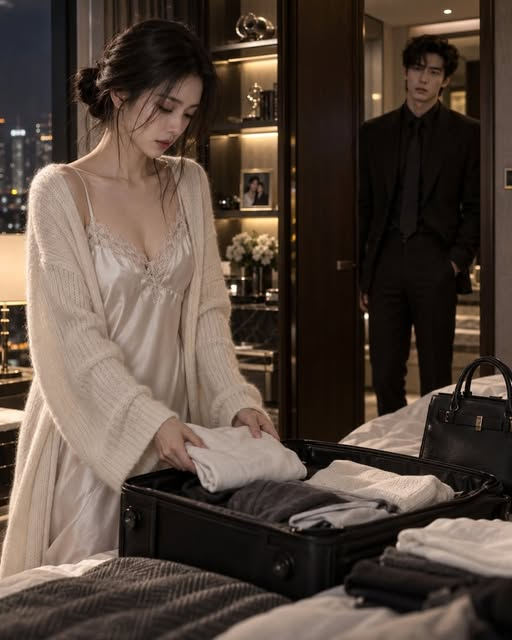
I reached for my suitcase.
The conductor opened the door slightly.
Then I saw the receptionist from the hotel standing behind him.
The same young woman who had taken my jade pendant.
Except now she wasn’t wearing a hotel uniform.
She wore a black coat.
“We have six minutes,” she said.
I stared at her.
“How did you—”
“Your husband found the Rosehaven route.”
My blood went cold.
“He knows?”
“He knows Clara Hayes is traveling south.”
She emphasized the name.
Then she smiled.
“But Clara Hayes doesn’t exist.”
I understood.
Rosehaven had never been the destination.
It was bait.
“Who are you?”
She looked at me for a moment.
“Someone who owed your mother a favor.”
Everything inside me stopped.
“My mother is dead.”
“Yes.”
She handed me my jade pendant.
“But before she died, she made arrangements in case you ever needed to disappear.”
Her name was Evelyn Shaw.
My mother had known her twenty years earlier.
She didn’t explain everything that night.
There wasn’t time.
She took me through a service exit, into a waiting car, and before Ethan’s people reached Rosehaven, I was already traveling west.
No phone.
No credit cards.
No Clara Hayes.
At sunrise, we arrived at a coastal town I’d never heard of.
Evelyn handed me a key.
“Your mother owned a house here.”
I stared at her.
“No.”
“She did.”
“My mother left me nothing.”
“She left you something better than money Ethan could trace.”
We stopped in front of a small blue house facing the sea.
Jasmine grew over the fence.
My knees almost gave way.
My mother had loved jasmine.
That was why I had taken the flower from the Whitmore mansion.
Evelyn unlocked the door.
Inside were white walls, old wooden furniture and a photograph.
My mother.
Young.
Laughing.
Standing on that exact porch.
I touched the frame.
“Why didn’t I know?”
“Because your marriage happened too quickly.”
I turned.
Evelyn’s expression had changed.
“Your mother didn’t trust the Whitmores.”
Three days later, Ethan arrived in Rosehaven.
I learned this months afterward.
He shut down nothing officially—he wasn’t a king, despite occasionally behaving like one—but money bought private investigators, lawyers, drivers and access.
He had people checking hotels.
Train stations.
Airports.
He found the gray car.
He found the false name.
He found the train.
Then he found an empty cabin.
On the bed was the hat I’d been given.
Nothing else.
Apparently Ethan stood there for nearly ten minutes.
Then he called the butler.
“What exactly did she say before leaving?”
The old man repeated my words.
“Our paths will not cross again.”
“And?”
“What was buried must remain buried.”
That was when Ethan stopped speaking.
Because he knew what I meant.
I didn’t.
Not yet.
Evelyn gave me the answer.
My marriage to Ethan had not begun with love.
Not really.
Five years earlier, my father had died deeply in debt.
I had been twenty-four, alone and overwhelmed.
Ethan appeared like salvation.
He paid creditors.
Protected what remained of my family’s reputation.
Married me six months later.
I thought he’d rescued me.
But Evelyn placed a folder on the kitchen table.
“Read.”
Inside were old financial documents.
Company names.
Transfers.
Loan agreements.
And my father’s signature.
I didn’t understand until I reached the final pages.
My father hadn’t simply lost everything through bad investments.
A Whitmore-controlled company had acquired his debt shortly before his collapse.
Then assets were purchased for a fraction of their former value.
One of those assets was intellectual property belonging to my mother’s family business.
I looked up.
“Ethan knew?”
“I don’t know what he knew at the beginning.”
Evelyn paused.
“But he knew before he married you.”
I couldn’t breathe.
Suddenly, five years made sense.
The strange prenuptial agreement.
The restrictions.
The way Ethan handled every account.
The way he disliked me meeting lawyers alone.
The way he’d once told me:
“Your family affairs are finished. Stop digging through graves.”
What was buried must remain buried.
I had said it as a farewell.
Ethan had heard it as a threat.
That was why he was hunting me.
Not because he couldn’t lose his wife twice.
Because he didn’t know what his wife knew.
The answer was:
Not enough.
So I learned.
For six months, I disappeared.
Actually disappeared.
I rented no luxury apartment.
Opened no account under a false identity.
Posted nothing online.
I lived in my mother’s little house.
I learned to take buses.
I learned to cook for one.
I learned that expensive silence and peaceful silence were completely different things.
And with an attorney Evelyn trusted, I began reconstructing my family’s history.
Piece by piece.
Meanwhile, Ethan searched.
He contacted friends I hadn’t spoken to in years.
Former classmates.
Doctors.
Neighbors.
He even visited my father’s grave.
But he never found me.
Because Ethan knew Mrs. Whitmore.
He knew the woman who wore neutral dresses, attended dinners, smiled at donors and asked permission before changing the flowers in her own bedroom.
He didn’t know me.
To be fair, neither did I.
Seven months after my disappearance, I contacted him.
One email.
One sentence.
“Stop looking for me.”
His response arrived in forty-three seconds.
“Tell me where you are.”
I stared at it.
Then another came.
“I need to know you’re safe.”
And another.
“I won’t force you to return.”
I almost believed that one.
Then:
“We need to discuss your father’s documents.”
There it was.
I replied:
“So you did know.”
No response came for eleven minutes.
Then my phone rang.
I answered.
Neither of us spoke.
Finally Ethan said:
“How much have you found?”
“Enough.”
“It’s more complicated than you think.”
“That’s what people say when the simple version makes them look terrible.”
“Your father was already insolvent.”
“And your family profited.”
“My father did.”
“You signed documents.”
Silence.
“Ethan?”
“Yes.”
The word nearly broke something in me.
“When did you know?”
“Before our wedding.”
I closed my eyes.
“Why did you marry me?”
His answer came quietly.
“Because I loved you.”
I laughed.
It sounded ugly.
“You controlled my money.”
“To protect you.”
“You discouraged me from working.”
“You didn’t need to work.”
“You decided who I saw.”
“You were vulnerable.”
“You made me dependent on you and called it protection.”
He breathed heavily.
“Where are you?”
“No.”
“I just want to see you.”
“No.”
“Please.”
That word sounded unnatural coming from Ethan Whitmore.
I almost felt sorry for him.
Almost.
Then he said:
“You don’t understand what happened five years ago.”
“So explain.”
“My father wanted your family’s remaining assets.”
“And you?”
“I wanted you.”
I became still.
“Those aren’t opposites, Ethan.”
He had no answer.
I hung up.
The next time we saw each other was eleven months after the divorce.
Not because Ethan found me.
Because I chose the place.
A lawyer’s conference room.
Neutral territory.
Two attorneys present.
Ethan entered wearing the same kind of dark suit he’d worn throughout our marriage.
But he looked different.
Thinner.
Tired.
For several seconds he only stared at me.
My hair was shorter.
My skin darker from walking beside the sea.
I wore the ivory linen dress.
The one I’d arrived in Harbor City wearing.
The one I’d left in.
“Hello, Ethan.”
His throat moved.
“You’re alive.”
“Yes.”
His eyes became wet.
I hadn’t expected that.
“You thought I was dead?”
“For a while.”
“No.”
He looked away.
“I thought you might have chosen to become impossible to find forever.”
“I considered it.”
That hurt him more.
Good.
Not because I wanted revenge.
Because truth was finally allowed in the room.
My attorney placed the settlement documents on the table.
The Whitmore family agreed to compensate me for specific assets connected to my parents’ estate.
There would be no public scandal.
Not because I wanted to protect Ethan.
Because I didn’t want to spend the next five years living inside another Whitmore battle.
I wanted what could be documented as mine.
Then I wanted out.
Ethan signed.
When everyone else left, he asked:
“Five minutes?”
I nodded.
He looked at my dress.
“You wore that when we first met.”
“Yes.”
“And when you left.”
“Yes.”
His eyes moved to the sandalwood hairpin.
“Did none of the things I gave you matter?”
I thought about it.
“They mattered while I believed they were gifts.”
His face tightened.
“What are they now?”
“The furniture in a beautiful cage.”
He looked down.
Then he asked:
“Who helped you disappear?”
I smiled.
“You still think you’re entitled to know.”
He understood.
“I suppose I do.”
“Yes.”
He sat quietly.
Then:
“I went to Rosehaven myself.”
“I heard.”
“I searched every hotel.”
“I know.”
“I thought if I found you, I could explain.”
“And if I refused to return?”
He didn’t answer.
That was the most honest answer he could have given.
Before I left, Ethan called my name.
I turned.
“There was something else,” he said.
“What?”
“The children.”
My stomach tightened.
The young lady and young gentleman.
Ethan’s niece and nephew, whom we’d raised in the mansion after his sister died.
They had called me Aunt Emma at first.
Eventually, simply Emma.
I loved them.
That had been the hardest part of leaving.
“They know now,” Ethan said.
“About the divorce?”
“Everything appropriate for their age.”
I nodded.
“My nephew asked why you didn’t say goodbye.”
I closed my eyes.
That hurt.
“I couldn’t.”
“I know.”
Ethan reached into his coat and placed two envelopes on the table.
Letters.
One from each child.
“I didn’t give them your address because I don’t have it.”
He almost smiled.
“But if you want them…”
I took the envelopes.
“Thank you.”
He nodded.
That was the closest we ever came to reconciliation.
And it was enough.
Three years later, jasmine covered almost the entire fence of my mother’s house.
I kept the place.
I used part of the settlement to restore it.
The rest went into investments under my own name.
I started working with a small foundation that helped women rebuild financial independence after controlling marriages.
Not because every marriage resembled mine.
But because I knew what it felt like to stand outside a mansion with a suitcase and suddenly realize you didn’t know how to buy a train ticket.
The children visited eventually.
With boundaries.
With arrangements.
Without Ethan.
We ate by the sea.
They asked difficult questions.
I answered the ones that belonged to me.
I refused to make them hate their uncle.
Freedom had taught me that leaving someone’s control did not require controlling how everyone else saw them.
As for Ethan, I heard about him occasionally.
He never remarried.
But I did not turn that fact into romance.
A man’s loneliness is not proof that a woman should return to him.
One spring morning, I found the old jasmine flower pressed inside the white handkerchief at the bottom of my suitcase.
Dry.
Brown.
Almost weightless.
Beside it was the jade pendant Evelyn had returned to me.
I held both in my palm.
Five years earlier, I had entered the Whitmore mansion believing Ethan had saved me.
Years later, I had left believing someone else needed to help me disappear.
Both beliefs had been wrong in the same way.
Other people had helped.
My mother had prepared a door.
Evelyn had opened it.
Lawyers had protected it.
But I had walked through.
That mattered.
Ethan once said:
“No one loses my wife twice.”
He had been right about one thing.
He didn’t lose his wife twice.
He lost her once.
The second woman—the one who stepped off that train before Rosehaven, learned the truth about her family, built her own life and stopped mistaking possession for protection—
was never his to lose.
