Professor Hayes signed beneath my name.
“Welcome to the project, Mia.”
“Thank you.”
“When do you need to be in Santa Fe?”
“Three days.”
He raised an eyebrow.
“That’s fast.”
“I know.”
“What about your wedding?”
I looked at the contract.
“There isn’t one anymore.”
He studied me for a moment, but didn’t ask.
I appreciated that.
For five years, I’d explained Adrian.
He’s just tired.
He’s under pressure.
He’s not expressive.
He doesn’t mean it.
He loves differently.
I’d translated his indifference so many times that I’d almost forgotten love wasn’t supposed to require an interpreter.
That afternoon, I canceled the reception.
Then the flowers.
The photographer.
The hotel.
The cake.
Every vendor asked some version of the same question.
“Are you sure?”
“Yes.”
The wedding planner sounded horrified.
“But Miss Carter, the ceremony is in twelve days.”
“I know.”
“You’ll lose some deposits.”
“That’s fine.”
Losing money was cheaper than losing another five years.
The dress was last.
I called the shop.
“Please cancel the order.”
The manager hesitated.
“Miss Carter, because alterations have already begun—”
“I understand.”
“And Mr. Frost approved additional modifications yesterday.”
“I know.”
That hurt more than the deposit.
Adrian hadn’t simply allowed Sophie to comment on my dress. He’d let her try it on, reshape it and cover it with the silver butterflies she loved.
My wedding dress had become another place where I was expected to make room for her.
I canceled it anyway.
Then I went home and packed.
Adrian returned after ten.
Sophie wasn’t with him.
I was wrapping one of my restoration tools when he entered the bedroom.
He loosened his tie.
“Did you eat?”
“Yes.”
“Why didn’t you answer my messages?”
“Busy.”
His gaze fell on the suitcase.
He frowned.
“Where are you going?”
“Santa Fe.”
“What?”
“I accepted Professor Hayes’s offer.”
He stared at me.
“That restoration project?”
“Yes.”
“For how long?”
“Initially one year.”
His expression changed.
“One year?”
“Possibly longer.”
“Mia, we’re getting married.”
“No.”
He went still.
“What?”
“We’re not.”
For several seconds, there was no sound.
Then he laughed.
Not because anything was funny.
Because he didn’t believe me.
“Are you still angry about the dress?”
“No.”
“Sophie was trying to help.”
“I know.”
“You can’t cancel a marriage because someone altered a dress.”
“I didn’t.”
His patience snapped.
“Then what exactly are you doing?”
I zipped the suitcase.
“Leaving.”
He grabbed my wrist.
“Mia.”
I looked at his hand.
He released me.
“When is our new Civil Registry appointment?”
“There isn’t one.”
His face changed.
“What do you mean?”
“I canceled yesterday’s appointment.”
“When?”
“Last night.”
He stared.
“Before Sophie came here?”
“After you left to pick her up.”
His jaw tightened.
“So this whole thing was planned.”
“Yes.”
“Because of a contact name?”
There it was.
Not:
Because I abandoned you when you were afraid.
Not:
Because I treat Sophie with tenderness I refuse to give you.
Not:
Because I let another woman wear your wedding dress.
A contact name.
Something small enough to make me look ridiculous.
I opened the drawer.
His spare phone was inside.
I placed it on the bed.
“I’m not leaving because you saved me as ‘Annoyance.’”
“Then what?”
“I’m leaving because it was accurate.”
He frowned.
“You’ve treated me like an annoyance for years.”
His lips parted.
“When I was followed at night, I called you because I was terrified. You told me to call the police.”
“That was different.”
“Why?”
“You were safe in a store.”
“And Sophie was safe in her apartment with a sprained ankle.”
He looked away.
“When I hurt my ankle, you called me clumsy.”
“Mia—”
“When Sophie hurt hers, you crossed the city at midnight.”
“She was alone.”
“So was I.”
Silence.
“When I burned my hand last night, you saw it.”
His eyes flickered.
“You picked up a napkin.”
He remembered.
“I thought you were going to give it to me.”
My voice almost broke there.
“But you wiped Sophie’s mouth.”
His face slowly lost color.
“You blew on the soup I made for our wedding day so she wouldn’t burn herself.”
“Mia…”
“And when she said she was afraid, you told her, ‘I’m here.’”
I smiled.
“I spent five years waiting to hear those words.”
He took a step toward me.
“I didn’t realize.”
“That is the problem.”
I picked up my suitcase.
“You didn’t have to consciously hate me.”
My hand tightened around the handle.
“You just had to stop noticing me.”
He blocked the doorway.
“Don’t go.”
“No.”
“We can talk.”
“We have talked.”
“Then I’ll apologize.”
“For what?”
He stopped.
That was almost funny.
“Tell me.”
I looked at him.
“What exactly are you apologizing for?”
His mouth opened.
Nothing came out.
He wanted to stop me from leaving.
But he still didn’t understand why I was leaving.
So I walked around him.
This time, he didn’t stop me.
The next morning, Adrian discovered the wedding had disappeared.
The venue called first.
Then the photographer.
Then his mother.
Then the hotel.
At eleven, my phone began vibrating.
ADRIAN.
ADRIAN.
ADRIAN.
I didn’t answer.
Then:
“Why did you cancel everything?”
“Mia, answer me.”
“You had no right to cancel the reception without discussing it with me.”
That message made me laugh.
No right.
Interesting.
A minute later:
“Where are you?”
Then:
“Sophie says you’re doing this because of her.”
Then:
“She feels terrible.”
Of course she did.
Even my canceled wedding somehow became Sophie’s emotional emergency.
I blocked him.
I flew to Santa Fe two days later.
The first month was difficult.
Not because I missed Adrian.
I missed the habits.
There is a difference.
At seven, my hand would reach for my phone because I used to remind him about breakfast.
At eight, I’d remember his meetings.
On Thursdays, I’d automatically think about picking up his dry cleaning.
At supermarkets, I’d reach for his preferred coffee.
My life had been built around anticipating another person’s needs.
Removing Adrian left enormous empty spaces.
At first, they frightened me.
Then I filled them.
Work.
Friends.
Sleep.
Museums.
Long walks.
Books I’d postponed reading.
Meals I liked.
I discovered I hated the coffee Adrian preferred.
Five years.
I’d been drinking it too.
That realization made me cry harder than the canceled wedding.
Not because coffee mattered.
Because I couldn’t remember when I’d stopped asking myself what I liked.
Three months later, Sophie called from an unfamiliar number.
I almost hung up.
Then she said:
“Mia, please.”
“What?”
“Adrian and I aren’t together.”
“I didn’t ask.”
“He thinks you believe—”
“I don’t care.”
Silence.
That answer seemed to confuse her.
“Mia, nothing happened between us.”
I leaned against the restoration table.
“Maybe.”
“It didn’t.”
“Okay.”
“You don’t believe me.”
“Sophie.”
I closed my eyes.
“You could tell me you slept together every night for five years or swear he never touched you once.”
My voice stayed calm.
“Neither answer changes why I left.”
She became quiet.
“He loved you.”
“Maybe.”
“He still does.”
“Maybe.”
“Then why—”
“Because love isn’t useful if someone consistently makes you feel unwanted.”
She didn’t answer.
I continued:
“You weren’t the reason my relationship ended.”
“But—”
“You were evidence.”
Silence.
“Adrian showed me, through you, that he was capable of patience.”
“Gentleness.”
“Concern.”
“Protection.”
“Apologies.”
I swallowed.
“All the things I had spent years believing simply weren’t part of his personality.”
My fingers tightened around the phone.
“Then I watched him give them to you effortlessly.”
Sophie’s voice became small.
“I didn’t know.”
“I believe you.”
And I did.
She’d been selfish.
Inconsiderate.
Far too comfortable depending on an engaged man.
But Adrian was the one who had promised me a marriage.
Not Sophie.
“I have to go.”
“Mia.”
“Yes?”
“He isn’t doing well.”
I looked at the nineteenth-century wooden panel beneath my hands.
“That isn’t mine to fix anymore.”
I hung up.
Adrian came to Santa Fe six months later.
I found him waiting outside the restoration workshop.
He looked thinner.
For one dangerous second, my body remembered him before my mind did.
Five years doesn’t disappear because you’ve learned better.
“Mia.”
“Adrian.”
He looked around.
“So this is where you work.”
“Yes.”
“You look…”
He stopped.
“What?”
“Happy.”
“I am.”
Pain crossed his face.
“I brought something.”
He handed me a box.
Inside was my original wedding dress.
Not the altered one.
The simple satin design I’d chosen.
I stared at it.
“I had the shop restore it to the original pattern.”
“Why?”
“I thought…”
He stopped.
Then smiled bitterly.
“I don’t know what I thought.”
I closed the box.
“I don’t need it.”
“I know.”
“Then take it back.”
His eyes reddened.
“Mia, I deleted that name.”
I almost felt sorry for him.
“Adrian.”
“Your contact says Mia now.”
He took out his phone as if he could prove something.
I didn’t look.
“That’s good.”
“I was angry one day when I changed it. You kept calling because I was in meetings.”
“How long ago?”
He became quiet.
“How long?”
“About two years.”
Two years.
He had looked at the word “Annoyance” every time I called for two years.
And never thought to change it.
“I was wrong.”
“Yes.”
“I treated you badly.”
“Yes.”
“I didn’t understand until you left.”
“I know.”
He stepped closer.
“Sophie isn’t in my life anymore.”
I sighed.
“You’re still talking about Sophie.”
His face stiffened.
“Because I thought that was why—”
“It wasn’t.”
“I know that now.”
“Do you?”
He became quiet.
Then he reached into his coat.
This time, it wasn’t a ring.
It was a folded piece of paper.
A list.
Breakfast.
Dry cleaning.
Medication.
Calendar.
Gifts for his parents.
Insurance renewals.
Flight bookings.
Restaurant reservations.
Household supplies.
Appointments.
His tie.
His mother’s birthday.
His father’s prescriptions.
His work dinners.
His clothes.
Dozens of things.
“What is this?”
“Everything you used to do.”
I looked at him.
“I started writing it down after you left.”
His voice cracked.
“Every time I discovered something you’d been handling without telling me, I added it.”
I didn’t speak.
“I thought you were demanding.”
He laughed once.
“I thought you called too much.”
His eyes were wet.
“I thought you were always there.”
Finally.
There it was.
Not Sophie.
Not the contact name.
Not the wedding dress.
The real problem.
He had mistaken constancy for obligation.
“You made loving you look easy,” he whispered.
“So I convinced myself it cost you nothing.”
That hurt.
Because it was true.
I had hidden the cost too well.
“I was wrong,” he said.
“Yes.”
“Can we start over?”
“No.”
He closed his eyes.
“I expected that.”
“Then why come?”
“Because you deserved an apology that didn’t ask you to return.”
That answer made me look at him differently.
For the first time since I’d left, Adrian was giving me something without immediately asking for something back.
So I listened.
“I am sorry I made your fear inconvenient.”
His voice shook.
“I’m sorry I called your needs drama.”
“I’m sorry I allowed another woman into spaces that belonged to our relationship.”
“I’m sorry about the dress.”
“And I’m sorry it took losing you for me to notice how much of yourself you’d been giving me.”
Tears filled his eyes.
“You weren’t an annoyance.”
I shook my head.
“No.”
“I know.”
He swallowed.
“You were my family.”
I looked away.
Once, that sentence would have brought me home.
Now it simply made me sad.
“You should have treated me like it.”
“I know.”
He left that evening.
I kept neither the dress nor the list.
But I kept the apology.
Not physically.
Just somewhere inside me.
Some apologies don’t rebuild relationships.
They simply allow the ruins to stop feeling haunted.
The Santa Fe project was supposed to last one year.
I stayed for four.
Professor Hayes promoted me to lead conservator during the second.
By the third, I was overseeing restoration teams across three historic sites.
I learned that preservation wasn’t about forcing damaged things to look untouched.
That destroys history.
Good restoration respects what happened.
It stabilizes the damage.
Preserves what remains.
And refuses to fake an original condition that no longer exists.
Perhaps that was why I became so good at it.
I saw Adrian again five years after our canceled wedding.
A museum in our old city had hired my team for a restoration project.
At the opening reception, I spotted him across the gallery.
He was talking to someone.
Older.
Calmer.
When our eyes met, he smiled.
Then waited.
He didn’t walk over until I nodded.
“Mia.”
“Adrian.”
“I heard you’re directing the entire conservation program now.”
“Yes.”
“Congratulations.”
“Thank you.”
We talked for ten minutes.
Work.
Family.
Mutual acquaintances.
Sophie had moved abroad and married someone else.
Adrian hadn’t married.
He didn’t tell me that dramatically.
It came up naturally.
And I didn’t interpret it as devotion.
Sometimes people simply take different amounts of time to rebuild.
Before leaving, he asked:
“Do you ever regret canceling it?”
I knew exactly what he meant.
The registry appointment.
The wedding.
Us.
I thought about the night my broken phone had shown me the word he’d chosen for my name.
Five years together reduced to “Annoyance.”
Then I remembered the moment I’d pressed cancel and realized that his “little princess” already had someone willing to comfort her, while his “annoyance” was finally choosing to stop bothering him.
“No.”
I smiled.
“I regretted staying long enough to need that night.”
He lowered his eyes.
Then nodded.
“Fair.”
I watched him walk away.
My heart didn’t break.
That was how I knew it had healed.
People sometimes ask why I never gave Adrian another chance.
After all, he apologized.
He changed.
Perhaps he genuinely became a better man.
I hope he did.
But another person’s growth does not create an obligation for you to return.
Sometimes you’re the lesson.
Someone else receives the improved version.
That isn’t unfair.
That’s life.
Adrian learned too late that I wasn’t asking for extraordinary love.
I wanted the same tenderness he’d offered Sophie without being asked.
The same patience.
The same instinct to protect.
The same soft voice saying:
“I’m here.”
For five years, I kept waiting.
Then one night, my phone broke.
And because it broke, I saw what he’d named me.
Annoyance.
Funny.
That phone was the easiest broken thing I ever repaired.
I replaced the screen.
Adrian and I were different.
Some things shouldn’t be restored simply because restoration is possible.
My work taught me that too.
Preservation isn’t about returning everything to what it once was.
Sometimes the most honest thing you can do is acknowledge the fracture, preserve what it taught you and stop pretending the original still exists.
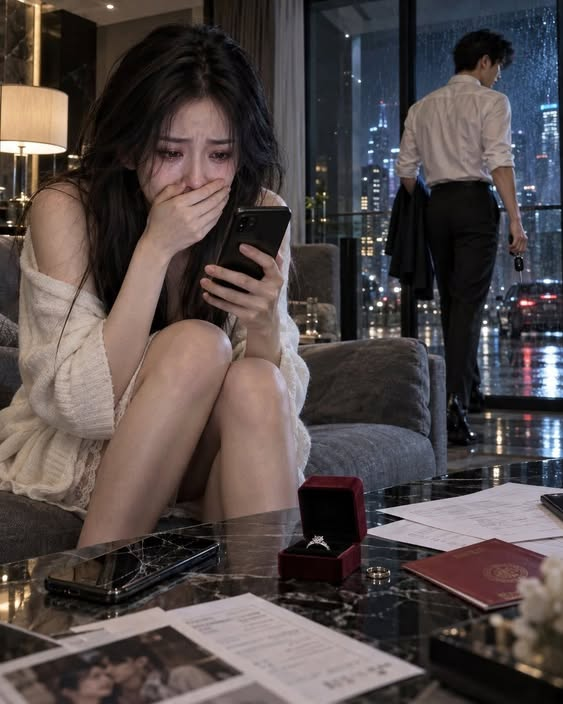
The night before our wedding, Adrian thought he was leaving his annoying fiancée at home while he went to rescue someone more fragile.
He didn’t know that by the time he returned, his fiancée was already gone.
Not physically.
Not yet.
But the woman who had spent five years waiting, adapting and convincing herself that coldness was simply his way of loving had finally disappeared.
Three days later, I followed her.
And for the first time in five years, I wasn’t late.
I was exactly on time.
