Adrian reached the parking garage before I could start the engine.
He slammed his palm against my window.
“Elena! Get out.”
I lowered the window halfway.
His tie was crooked.
His face was pale.
Ten minutes earlier, he had been drinking with Claire beneath the company’s logo while hundreds of employees applauded.
Now his hands were shaking.
“Did you hear me?”
“Yes.”
“Then get out!”
“No.”
He stared at me as if the word itself offended him.
“You sold technology developed inside NovaMed!”
“No.”
I opened the folder on my passenger seat.
“I sold technology I developed before NovaMed acquired its conditional license.”
“The company paid for that research!”
“The company funded later commercialization.”
I pulled out the ownership certification.
“The original patent application predates that funding.”
His eyes moved across the page.
I watched the exact moment he understood.
Five years ago, Adrian had known every detail.
Then NovaMed grew.
Investors arrived.
Money arrived.
Claire arrived.
And somewhere along the way, my husband began confusing access with ownership.
He grabbed his phone.
“I’ll have Legal invalidate this.”
“They reviewed it three weeks ago.”
“What?”
“OceanCross isn’t stupid.”
I smiled.
“Neither is my lawyer.”
His face became terrifyingly still.
“You’ve been planning this.”
“Yes.”
“For how long?”
“Since you transferred sixty million out of my project without consulting me.”
“That was a business decision.”
“So was mine.”
His jaw tightened.
“Elena, NovaMed could collapse.”
“Then perhaps you shouldn’t have built its valuation around an asset you didn’t own.”
He leaned toward the window.
“Do you understand how many people could lose money?”
“Did you understand how many years of my work you were gambling with when you told investors Claire’s project was the company’s technological future?”
“Claire has nothing to do with this!”
I laughed.
For the first time that evening, I genuinely laughed.
“Of course.”
I reached into the folder.
“Then this should be easier.”
I handed him another document.
Adrian glanced at the first page.
His expression changed.
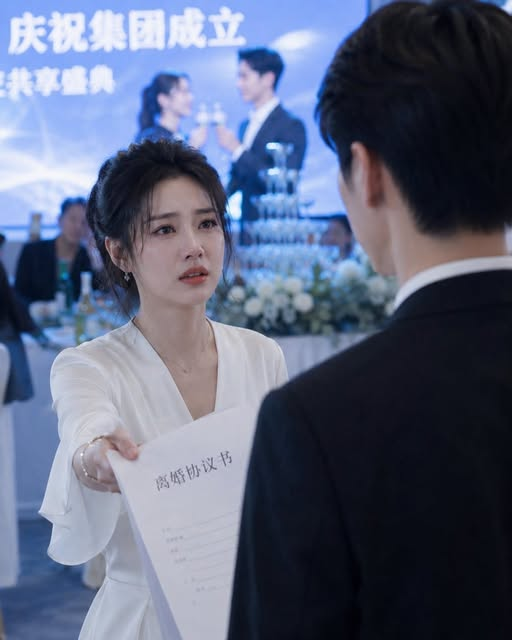
Divorce petition.
For several seconds, the collapsing stock price seemed forgotten.
“What is this?”
“You can read.”
“You’re divorcing me?”
“Yes.”
“Because I drank with Claire?”
“No.”
I looked through the windshield.
“I’m divorcing you because you think this is about one glass of wine.”
He went silent.
I continued.
“It wasn’t one dinner.”
“Or one watch.”
“Or the Maybach.”
“Or one budget transfer.”
“It was every time you introduced me as your wife when you needed stability and treated me like an inconvenient researcher when I disagreed with you.”
His lips tightened.
“The car was a company reward.”
“Then put the company logo on it.”
“Elena.”
“The diamond watch?”
“Performance bonus.”
“The hotel suite in Shenzhen?”
He froze.
That was enough.
I nodded.
“Exactly.”
“Nothing happened.”
“Maybe.”
That surprised him.
“I don’t need to prove you slept with her.”
I tapped the divorce papers.
“I only need to know I no longer want to be married to you.”
For once, Adrian Cheng had nothing to say.
His phone rang.
He ignored it.
Then again.
And again.
Finally, he answered.
The CFO’s voice was loud enough for me to hear.
Trading pressure.
Investor calls.
Emergency board meeting.
Questions about whether management had misrepresented NovaMed’s control of the technology.
Adrian closed his eyes.
“I’ll be upstairs.”
He hung up.
Then looked at me.
“Come with me.”
“No.”
“Elena, they need you.”
“No.”
“I need you.”
That sentence came six years too late.
I started the engine.
“Call Claire.”
His face hardened.
“This isn’t the time to be jealous.”
I looked at him calmly.
“I’m not jealous.”
That hurt him more.
“Goodbye, Adrian.”
I drove away.
The next morning, NovaMed issued an emergency clarification.
The company still owned manufacturing infrastructure, secondary patents and other product lines.
But the market had understood the problem.
Its most heavily promoted next-generation platform depended on technology it no longer controlled.
The seventy-six-billion-yuan intraday loss wasn’t money I had personally taken from Adrian.
It was the market repricing his promises.
And promises, I had learned, could be very expensive.
Claire called me two days later.
“Dr. Wen.”
I nearly hung up.
Then she said:
“I didn’t know.”
“About what?”
“The patent.”
I smiled.
“Neither did you know about my marriage, apparently.”
Silence.
Then:
“Adrian and I aren’t what you think.”
“Claire, I’m going to save us both some time.”
I looked out over the balcony of the small apartment I’d rented.
“I don’t care what you are.”
She stopped speaking.
“You can keep the car. The watch. The linked-arm drinking. The company celebrations.”
“Adrian isn’t included in the divorce settlement.”
Her voice sharpened.
“You think you’ve won because you sold one patent?”
There it was.
The Claire I recognized.
I answered softly:
“No.”
“I won because I stopped needing to compete.”
Then I ended the call.
The divorce took seven months.
Adrian fought it at first.
Not over property.
Over me.
Flowers arrived.
Then jewelry.
Then handwritten letters.
Then the Maybach.
I sent the car back.
He came to my apartment one night carrying no gifts.
That was when I finally let him speak.
“I ended Claire’s employment.”
“That’s your business.”
“I shouldn’t have let things become inappropriate.”
“Correct.”
“I never slept with her.”
“I believe you.”
He looked startled.
“Then why won’t you come home?”
I studied him.
Because that was still the question he couldn’t understand.
“Adrian, fidelity isn’t the highest standard I have for a husband.”
He went quiet.
“You humiliated me.”
“You dismissed my work.”
“You let an employee behave like my replacement in public while treating me as if my only value was keeping your laboratory productive.”
His eyes reddened.
“I was proud of you.”
“No.”
I shook my head.
“You were proud when my brilliance increased your valuation.”
“That’s different.”
He sat down.
For the first time, Adrian looked tired rather than powerful.
“Can I fix it?”
“No.”
“Why?”
“Because I’ve already fixed my part.”
He looked up.
“What does that mean?”
“I left.”
The divorce became final.
I kept what was legally mine.
Adrian kept NovaMed.
And OceanCross kept the technology it had paid 2.8 billion yuan to acquire.
I did not join them.
That surprised everyone.
For almost a year, I did exactly what I’d told Laura.
I rested.
I slept eight hours.
I visited my parents.
I learned pottery badly.
I traveled without attending conferences.
And for the first time since my twenties, I allowed myself to exist without converting every hour into productivity.
A year later, I founded a small research laboratory.
My first rule was simple:
Scientists would retain clearly defined rights to what they created.
No blurred ownership.
No marital assumptions.
No handshake replacing a contract.
Three years later, I attended an industry conference.
Adrian was there.
NovaMed had survived.
Smaller.
More cautious.
Still significant.
We passed each other near the auditorium.
He stopped.
“Elena.”
“Adrian.”
He glanced at my badge.
Founder and Scientific Director.
He smiled faintly.
“You finally built your own company.”
“No.”
I corrected him.
“I finally built my own life.”
He nodded.
Then, almost reluctantly:
“You look happy.”
“I am.”
For a moment, neither of us spoke.
Then he asked:
“Do you regret selling it?”
I knew what he meant.
The patent.
The technology that had cost me five years.
The decision that had cost him billions in market value.
“No.”
“Do you regret us?”
That answer took longer.
“I regret how long it took me to understand that being someone’s wife shouldn’t require becoming smaller.”
His eyes lowered.
I walked away.
Years earlier, Adrian had believed my greatest invention was a diagnostic platform.
He was wrong.
My greatest invention was the woman I became after I stopped asking him to recognize my worth.
The patent sold for 2.8 billion.
NovaMed lost seventy-six billion in market value that night.
But the most valuable thing Adrian Cheng lost couldn’t be measured on any financial screen.
It was the woman who had spent years building beside him.
And by the time he finally understood that I had never belonged to his empire…
I had already built one that belonged entirely to me.
