For several seconds, no one in the courtroom moved.
The traffic-camera image remained frozen on the screen.
Nora stood beside the damaged car with both feet planted firmly on the pavement. Her hospital gown, wheelchair, trembling hands, and fragile expression belonged to the performance she had prepared for court.
On the night of the collision, she had walked without difficulty.
She had even bent down to retrieve something from the road before running away.
The judge turned toward the prosecutor.
“Were you aware of this footage?”
The prosecutor looked stunned.
“No, Your Honor. The file originally provided to our office ended twenty-three seconds before this frame.”
My lawyer, Daniel Brooks, raised another folder.
“That was not an accident. The original recording was altered after police obtained it.”
The judge’s expression sharpened.
“By whom?”
“We intend to show that members of the Walker family pressured an evidence technician to replace the complete file.”
My father stood so abruptly that his chair scraped the floor.
“This is outrageous.”
The bailiff moved toward him.
The judge struck the gavel.
“Mr. Walker, sit down.”
My father obeyed, but his eyes burned with the same fury he used whenever I refused to sacrifice something for Nora.
My mother leaned toward Ethan.
“What did she find?”
Ethan did not answer.
He was staring at the photograph of Nora’s university identification card.
For the first time, he seemed to understand that the story they had controlled inside our home now belonged to the court.
Nora suddenly pressed both hands against her chest.
“I can’t breathe.”
My mother rushed toward her wheelchair.
“She needs a doctor.”
A court medic was called.
He checked Nora’s pulse, blood pressure, and oxygen level.
Then he quietly addressed the judge.
“Her vital signs are normal.”
Nora’s breathing slowed immediately.
The victim’s mother watched her with a look that had changed from grief to disbelief.
“You killed my son,” she whispered.
Nora shook her head.
“No.”
Her voice was no longer delicate.
It was sharp.
Desperate.
“I wasn’t driving.”
The courtroom reacted instantly.
My lawyer turned toward her.
“You just apologized to Emma for the accident.”
“I apologized because she went looking for me.”
“Then who was driving?”
Nora looked toward Ethan.
That single glance told me more than any answer.
My brother stood.
“You should advise your client not to speculate,” his attorney said quickly.
Until that moment, Ethan had not officially been represented.
The fact that a lawyer was now speaking for him meant my family had expected this possibility.
Daniel placed another item on the evidence table.
A black key fob.
“The vehicle belonged to Ethan Walker.”
My brother’s face went pale.
The prosecutor looked toward him.
“Mr. Walker, did you lend the vehicle to Nora?”
“I don’t remember.”
“You don’t remember who had your car on the night a man was killed?”
Ethan clenched his jaw.
“My family shared vehicles.”
I stared at him.
He had always been Nora’s protector.
When she stole my identity, he restrained me.
When I tried to contact Brighton University, he smashed my phone.
When I threatened to report the fraud, he told me no one would believe a jealous sister with no academic record.
Now I finally understood why he had worked so hard to keep me quiet.
He had not simply protected Nora.
He had participated.
My lawyer asked the court’s permission to play an audio recording.
The judge approved.
Daniel pressed a button.
My mother’s voice filled the courtroom.
“It has to be Emma.”
Then my father answered:
“She has no future anyway.”
My stomach tightened even though I had already heard the recording dozens of times.
It had been captured on a small device hidden in the family study.
For four years, I had recorded conversations whenever I returned to the house.
Not because I expected justice.
Because I needed proof that I was not imagining their cruelty.
The recording continued.
Ethan’s voice came next.
“If Nora’s identity is exposed, the university will revoke everything. Her degree, the internship, all of it.”
My mother said:
“Emma can plead guilty. She has no job, no degree, nothing to lose.”
Then Nora spoke.
Not crying.
Not weak.
Calm.
“If Emma refuses?”
My father replied:
“She won’t.”
Nora asked:
“And if she does?”
There was a pause.
Then Ethan said:
“We remind her what happened the last time she tried to fight us.”
The recording ended.
Every eye in the courtroom turned toward me.
The last time.
Four years earlier, after Nora stole my admission and identity, I had gone to the police.
Before I could file a report, Ethan found me outside the station.
He forced me into his car.
At home, my father locked me in the basement for three days.
They took my phone, destroyed my documents, and told neighbors I was suffering from a breakdown.
When they finally let me out, my mother had arranged an evaluation with a private doctor.
The medical report described me as paranoid, unstable, and obsessed with harming Nora.
The doctor never asked what had happened.
He only wrote what my parents paid him to write.
That document followed me for years.
It was why the first police officer I contacted about the identity theft dismissed my complaint.
It was why universities refused to discuss the stolen admission.
It was why my family believed I would accept prison without resistance.
They had already buried my credibility once.
The judge looked at Daniel.
“How did you obtain this recording?”
“My client made it legally in a home where she resided.”
He then introduced emails between my parents and the private doctor.
Payments.
Instructions.
Draft language for the false psychological report.
My mother began sobbing.
“We only wanted to protect Nora.”
The victim’s mother stood.
“Protect her from what? The consequences of killing my son?”
My mother looked at her helplessly.
“Nora is sick.”
The court medic glanced toward the wheelchair.
“With respect, I found no evidence of an immediate medical crisis.”
Daniel requested permission for Nora’s current medical records to be reviewed.
Her attorney objected.
The judge granted a limited review because Nora’s claimed disability had influenced the investigation and court proceedings.
The records revealed that Nora had no condition requiring a wheelchair.
She had been treated for minor bruising after the crash.
The hospital gown had not come from a recent admission.
It had been borrowed from a private clinic owned by one of my father’s business partners.
The performance collapsed piece by piece.
The prosecutor requested a recess.
When court resumed, Nora no longer sat in the wheelchair.
She stood beside her lawyer, her face stiff with anger.
The judge addressed me again.
“Ms. Walker, where were you at the time of the collision?”
My lawyer produced security footage from a bus terminal more than eighty miles away.
At the time Nora hit the victim, I had been waiting for an overnight bus.
The timestamp was clear.
So was my face.
The prosecutor looked toward his notes.
“Why were you traveling?”
I answered honestly.
“I had learned Nora was using my identity at Brighton University. I was going there to confront the administration the next morning.”
Nora’s head snapped toward me.
She had not known that.
Neither had my family.
I had never reached Brighton.
Police arrested me at the bus station using a warrant issued under my name.
The license plate found near the accident scene was registered to “Emma Walker.”
The university records showed “Emma Walker” living near the crash.
Every digital trail pointed toward me because Nora had spent four years building her life inside my identity.
My lawyer displayed another set of records.
Traffic-camera footage showed Nora entering a bar before the collision.
She used my identification.
She signed the receipt as Emma Walker.
She paid with a scholarship debit card issued in my name.
Then she left driving Ethan’s car.
The bartender identified her.
So did two students from Brighton.
One had seen her drink several cocktails.
The other heard her complain that a man had threatened to expose her real identity.
That man was the victim.
His name was Michael Reyes.
He had been a junior employee at the law firm where Nora interned.
Michael discovered that the academic documents attached to her application did not match the woman working in the office.
He contacted the university and planned to report her.
The night he died, Nora arranged to meet him.
She told my family he was blackmailing her.
But the recovered messages showed something different.
Michael had not asked for money.
He had written:
Tell the truth yourself, or I will. Emma Walker deserves her life back.
Nora met him outside the bar.
Witnesses saw them argue.
Michael left on foot.
Minutes later, Nora drove after him.
The traffic footage showed the vehicle accelerating before impact.
This had not been a random drunken accident.
She had aimed the car at him.
When that evidence appeared, Nora lost control.
“He was going to ruin everything!”
Her lawyer grabbed her arm.
“Nora, stop speaking.”
But four years of being protected had taught her that someone else would always absorb the consequences.
She pointed at me.
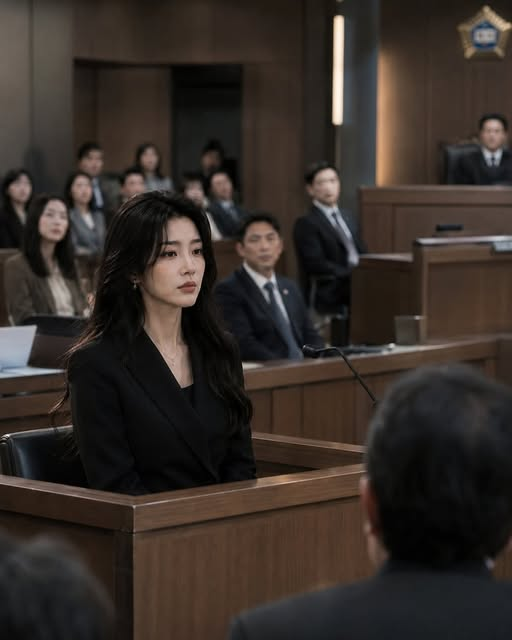
“She was doing nothing with that name!”
The courtroom fell silent.
“I used it better than she ever would have,” Nora continued. “I got into graduate school. I worked at a real firm. I made the family proud.”
My mother covered her face.
Nora looked toward the victim’s photograph.
“Michael wanted to destroy my entire future over paperwork.”
“Paperwork?” I repeated.
She turned toward me.
“A name is just a name.”
“No,” I said. “It was my education. My record. My freedom.”
“You could have started over.”
“That is what all of you told me every time you stole something.”
The judge ordered Nora to remain silent.
The prosecutor requested that she be taken into custody immediately on suspicion of vehicular homicide, identity theft, evidence tampering, and obstruction.
Two officers approached.
Nora looked at my parents.
“Mom?”
My mother rose halfway.
The bailiff blocked her.
“Dad, do something.”
My father remained frozen.
For the first time in Nora’s life, he had no lie large enough to protect her.
Then she looked at Ethan.
“You promised Emma would take the blame.”
The courtroom erupted.
Ethan’s attorney tried to silence her.
Too late.
The judge ordered Ethan’s detention pending investigation into conspiracy and evidence tampering.
My brother stared at Nora as officers placed him in handcuffs.
“You idiot,” he whispered.
Those were the last words they exchanged before being led through separate doors.
My mother began screaming at me.
“You destroyed this family!”
I looked at her.
“No. I stopped letting you destroy me for it.”
The charges against me were dismissed that afternoon.
The judge formally cleared the record and ordered the court to notify every agency that had listed me as the driver.
But walking out of the courthouse did not immediately return what had been taken.
I was twenty-seven years old.
My classmates from four years earlier had already graduated.
Some were working at firms, clerking for judges, or building careers I should have had the chance to pursue.
I could not recover those years.
I could only decide what happened next.
Brighton University opened its own investigation.
Administrators discovered that several employees had ignored inconsistencies in Nora’s documents because my father had made donations through a family foundation.
The university revoked Nora’s admission, degrees, scholarships, and internship credits.
Then its dean requested a meeting with me.
He apologized.
Not vaguely.
Not through a press statement.
He sat across from me and listed every institutional failure that had allowed another woman to study under my name.
“We cannot restore four years,” he said. “But your original admission was valid.”
He offered me a place in the next entering class, full tuition, housing assistance, and access to counseling.
I stared at the new admission letter.
For years, that piece of paper had represented everything stolen from me.
Now it felt different.
It was no longer permission to escape my family.
It was a choice.
“I accept,” I said.
Nora’s trial began eight months later.
The prosecution used the traffic footage, bar records, messages, and her own courtroom outburst.
The evidence technician admitted Ethan had paid him to shorten the original video.
My father had transferred the money.
My mother helped prepare Nora’s false medical condition.
The private doctor pleaded guilty to falsifying records and testified against them.
Nora was convicted of vehicular homicide, identity theft, fraud, and obstruction.
Ethan was convicted of conspiracy, evidence tampering, and unlawful restraint connected to what he had done to me years earlier.
My father received a prison sentence for bribery, fraud, and conspiracy.
My mother avoided a long sentence by cooperating, but she lost the family home and most of the assets purchased through the foundation.
During sentencing, she asked to speak to me.
“I loved both of you,” she said.
I looked at her through the courtroom divider.
“No. You protected one of us and used the other.”
“I thought Nora needed more.”
“So you taught her she could take everything.”
Tears ran down her face.
“Can you forgive me?”
I did not answer immediately.
Forgiveness was not another thing she could demand because I was the older daughter.
“I may stop carrying the anger one day,” I said. “That is not the same as giving you access to my life.”
Michael Reyes’s mother attended every hearing.
After the verdict, she approached me outside the courthouse.
For a moment, neither of us knew what to say.
Her son had died trying to return my name to me.
“I wish I had known him,” I said.
She touched the photograph she always carried.
“He believed rules should protect people who had less power.”
I created a scholarship in his name after graduating from Brighton.
It supported students whose education had been disrupted by identity theft, family coercion, or financial abuse.
Four years after the trial, I stood before the state bar admissions committee using the only name I had ever wanted.
Emma Walker.
Not Nora’s alias.
Not my family’s sacrifice.
Mine.
When I passed the bar, I visited Michael’s grave.
I placed my admission letter beside the stone for a few minutes.
“You were right,” I whispered. “I deserved my life back.”
Then I took the letter with me.
I no longer needed to bury proof of who I was.
My family had spent four years telling me that Nora’s future mattered more because hers looked promising.
They believed my life was already ruined, so prison would cost me less.
But a life does not become worthless because someone delays it, steals from it, or forces it off course.
Nora used my name to enter university.
She used it to gain status.
She used it after killing a man.
And my family tried to place that stolen name on a prison sentence.
They failed.
Because the day the judge asked whether I pleaded guilty, I finally did the one thing they had trained me never to do.
I chose myself.
I took back my name.
I took back my future.
And the people who had treated my freedom as disposable finally learned that responsibility could not be transferred by changing the name on a document.
