Sebastián remained silent on the phone.
Behind him, I could hear dozens of voices colliding.
Someone shouted that the warehouse could not release orders.
Another person said payroll data was unavailable.
A third warned that several delivery trucks had been stopped because the system could not verify inventory.
Then Sebastián lowered his voice.
“Valeria, come back.”
It was not an apology.
It was an order disguised as desperation.
“I no longer work for the company.”
“You built this system.”
“Yes.”
“Then you are responsible for fixing it.”
I almost laughed.
“Yesterday, you said no one knew what I did.”
“I made a decision based on incomplete information.”
“You humiliated me based on incomplete information.”
He exhaled sharply.
“This is not the time to discuss feelings.”
“That is convenient.”
Another voice appeared in the background.
It belonged to Vice President Arturo Vargas.
“Put her on speaker.”
A click followed.
“Miss Torres,” Vargas said, “the company considers this an intentional attack.”
I looked through my apartment window.
Below, people crossed the street carrying coffee, backpacks, and umbrellas. Their morning continued normally while the building I had supported for eight years had stopped breathing.
“No data has been deleted,” I said. “No server has been damaged. Your systems entered protective mode because the only authorized technical custodian was terminated without a transition plan.”
“That sounds like a threat.”
“It is an explanation.”
“You created a secret mechanism.”
“I created an emergency continuity safeguard, documented under the infrastructure-risk section approved by Martín Vega five years ago.”
Silence followed.
Martín had signed every architectural protocol.
Legal had reviewed them.
The board’s technology committee had received annual summaries.
The problem was not that the safeguard was secret.
The problem was that men like Vargas never read documents written by people they considered beneath them.
Sebastián spoke again.
“How long until the systems unlock automatically?”
“They will not.”
“What do you want?”
That question told me he finally understood the power had shifted.
“I want all communication in writing.”
“Valeria—”
“And I want the board informed that I was dismissed without a technical handover, risk assessment, or continuity audit.”
Vargas interrupted.
“You are in no position to make demands.”
“Then replace me.”
I ended the call.
Seven minutes later, the company’s legal director contacted me.
Unlike Sebastián, she did not shout.
Her name was Alicia Ramos, and she had spent years warning executives that technical infrastructure could not be managed through pride.
“Valeria,” she said, “I have reviewed the continuity documents.”
“And?”
“The protocol is legitimate.”
I leaned against the kitchen counter.
“Sebastián is accusing me of sabotage.”
“He is accusing everyone of everything.”
“Will you put your findings in writing?”
“Yes.”
“Then send them to my lawyer.”
There was a pause.
“You already have a lawyer?”
“I hired one this morning.”
That was not entirely true.
I had called my university friend Elena Serrano after hanging up on Sebastián. Elena specialized in technology contracts and employment disputes.
By the time Alicia contacted me, Elena had already reviewed my employment agreement, the infrastructure architecture, and the termination notice.
Her conclusion was simple:
The company had fired the only person authorized to maintain several critical systems without activating the required transition procedure.
The collapse was not caused by my departure.
It was caused by Sebastián’s decision to pretend my departure had no consequences.
At ten thirty, the board called an emergency meeting.
Martín attended remotely.
So did I.
Not as an employee.
As an external technical witness represented by counsel.
The screen displayed twelve directors, Sebastián, Vargas, Alicia, the chief financial officer, and several frightened managers.
Sebastián looked as though he had aged overnight.
His perfect tie had disappeared.
His shirt collar was open.
Behind him, the glass walls of the conference room revealed employees waiting in tense groups.
The board chair, Beatriz Salcedo, began without ceremony.
“Miss Torres, did you disable company systems?”
“No.”
“Did you remove or alter data?”
“No.”
“Can you explain what occurred?”
I shared a diagram.
The deepest parts of the company’s architecture relied on a rotating authorization system designed to protect financial, customer, and operational data.
As long as an approved custodian remained active, the systems communicated normally.
If that identity was removed suddenly without reassignment, sensitive functions entered restricted mode.
“The purpose,” I explained, “is to prevent a terminated administrator, stolen credential, or unauthorized executive from taking control during a leadership transition.”
Sebastián leaned toward the camera.
“You created a system that depends entirely on you.”
“No. I created a system that requires the company to follow its own transition rules.”
I displayed the succession list.
It contained four positions that could have received temporary authorization.
Two had been eliminated during Vargas’s restructuring.
One manager had resigned six months earlier and had never been replaced.
The final position belonged to me.
I looked directly at Sebastián.
“You did not remove one replaceable employee. You removed the last active custodian.”
The chief financial officer frowned.
“Why was the board never warned?”
“You were.”
I opened eight years of reports.
Each contained the same risk.
CRITICAL DEPENDENCY: INFRASTRUCTURE KNOWLEDGE CONCENTRATED IN ONE ROLE. ADDITIONAL STAFFING REQUIRED.
Every year, I had requested a second systems architect.
Every year, Finance rejected the cost.
One denial bore Vargas’s digital signature.
Another contained a note from his office:
Current specialist appears capable. No need to duplicate salary.
Beatriz read the line aloud.
Then she looked at Vargas.
“You knew the company depended on Miss Torres.”
Vargas adjusted his glasses.
“I knew she performed maintenance.”
“You refused funding for backup personnel because she was capable of doing everything alone.”
“That was an operational decision.”
“It was a financial shortcut,” I said.
Sebastián’s expression changed.
He turned toward Vargas.
“You told me her salary was unjustified.”
“It was high for her title.”
“Did you review her actual responsibilities?”
Vargas hesitated.
That hesitation was enough.
He had selected the names Sebastián was expected to remove.
The new director believed he was proving authority on his first day.
In reality, he had been used to eliminate employees loyal to Martín.
My dismissal was political.
The disaster was collateral damage.
Beatriz addressed me.
“Can you restore operations?”
“Yes.”
The relief on several faces was almost embarrassing.
“But I will not do it as a dismissed employee receiving orders from Mr. Cruz.”
Sebastián’s hands tightened.
“What are your terms?”
Elena appeared beside me on screen.
“My client will provide emergency recovery services under an independent contract. The rate reflects the scale, legal exposure, and urgency.”
The number appeared.
It was more than Sebastián had mocked me for earning in an entire year.
He stared at it.
“This is extortion.”
Elena remained calm.
“No. Extortion would involve creating the crisis. Your own documentation establishes that management created it.”
Vargas laughed bitterly.
“You expect us to pay that?”
I looked at the board.
“Every hour of downtime costs approximately eight hundred thousand dollars in delayed orders, contractual penalties, and lost transactions.”
The chief financial officer corrected me.
“Closer to one million now.”
The room fell silent.
My fee suddenly looked small.
The board approved the contract.
Sebastián voted against it.
His vote did not matter.
Before reconnecting the systems, I required written authorization, legal protection, and the presence of an independent cybersecurity auditor.
I was not going to enter the network while the director continued calling me a criminal.
At twelve fifteen, I arrived at the company.
The same security guard who had watched me leave with a cardboard box opened the glass doors.
Employees turned as I crossed the lobby.
I did not wear a dramatic suit.
I wore jeans, a black shirt, and carried the laptop Sebastián had once dismissed as part of an administrator’s boring routine.
Mía hurried toward me.
For a moment, she looked ready to hug me.
Then she stopped, glancing toward the executives.
I opened my arms.
She embraced me.
“I’m sorry,” she whispered. “Yesterday I wanted to help, but he looked at me and I got scared.”
“I know.”
“I should have done it anyway.”
“Yes.”
I did not say it cruelly.
Fear explained silence.
It did not erase its consequences.
Sebastián waited inside the operations center.
When I entered, he immediately approached.
“Fix it first. We can discuss everything afterward.”
I held up the signed agreement.
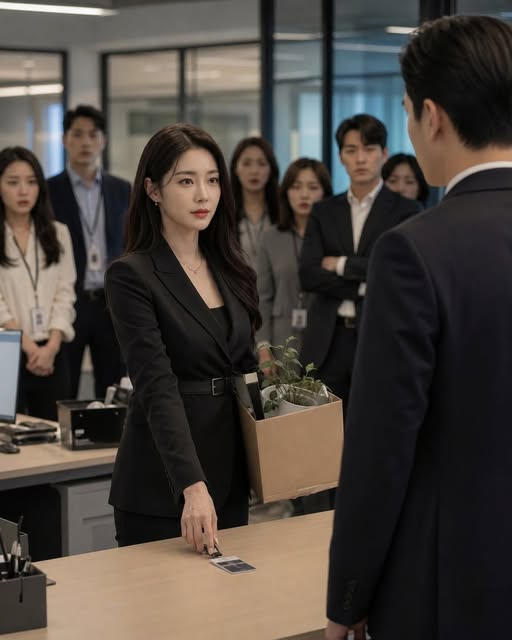
“We already discussed it.”
His eyes moved toward the independent auditors accompanying me.
“You brought outsiders into my infrastructure.”
“The board authorized them.”
“This is still my company.”
Beatriz’s voice came from behind him.
“No, Sebastián. It is the shareholders’ company.”
The board chair had arrived in person.
So had Alicia and three directors.
Sebastián stepped aside.
I sat at the central terminal.
The system had done exactly what it had been designed to do.
It had preserved the databases, isolated sensitive credentials, and frozen transactions that could not be safely verified.
I began the restoration process.
Not with a magical button.
Not with a secret phrase.
With documentation, validation, and controlled authorization.
Every action was observed and recorded.
Finance returned first.
Then customer records.
Inventory followed.
At two forty, the call center resumed operations.
At three fifteen, warehouse gates opened.
By four, the company was functioning again.
Applause began somewhere behind me.
It spread through the operations center.
I did not turn around.
I was too tired.
Eight years of work had been mocked in ten minutes.
It took an entire day of failure for people to see it.
When the final validation completed, I closed the laptop.
Sebastián stood near the door.
His arrogance had not disappeared completely.
But it had cracked.
“Valeria,” he said, “the board wants us to speak privately.”
“No.”
He looked surprised.
“No?”
“Anything you say to me can be said in front of Legal.”
Alicia remained beside us.
Sebastián lowered his voice anyway.
“I misjudged your position.”
“You misjudged me.”
“I had been given incorrect information.”
“You chose to use it publicly without verifying it.”
His jaw tightened.
“I was trying to establish discipline.”
“You were trying to establish fear.”
Several employees nearby pretended not to listen.
He knew they heard every word.
“I can reinstate you,” he said.
The sentence was meant to sound generous.
I shook my head.
“No.”
“You want more money?”
“No.”
“A new title?”
“You still think this is about what you can give me.”
For the first time, he had no immediate answer.
The board’s investigation began that evening.
They reviewed every dismissal Sebastián had made.
They examined Vargas’s messages.
They discovered that the vice president had intentionally targeted experienced employees linked to Martín, not because they lacked value, but because they knew too much about decisions made during the previous two years.
My firing had exposed a larger problem.
Vargas had approved software purchases from a consulting company owned by his brother-in-law.
The new systems were overpriced, incomplete, and never fully implemented.
I had repeatedly prevented those tools from accessing the company’s main databases because they failed security reviews.
That made me dangerous to him.
He needed me gone before the board discovered why millions had been spent on technology no one could safely use.
Sebastián had been chosen because he was ambitious, impatient, and eager to prove he was not controlled by the previous administration.
Vargas gave him a list.
He called it modernization.
In reality, it was cleanup.
Three days after the shutdown, the board suspended Vargas.
A week later, forensic auditors found altered invoices, false implementation reports, and payments routed through shell vendors.
The police investigation began soon afterward.
Sebastián was not accused of participating in the fraud.
He had arrived too recently.
But innocence did not mean competence.
The board reviewed the recording of his first meeting.
They heard him call employees parasites.
They watched him fire me without consulting Technology, Legal, or Operations.
They reviewed the losses caused by his decision.
His “wolf mentality” had cost the company more than twelve million dollars in one day.
He was removed as director before completing his second week.
When the announcement reached the office, no one celebrated openly.
But several people smiled at their screens.
Sebastián requested one final meeting with me.
We met in a café across from the building.
He looked different without the company surrounding him.
Smaller.
More human.
“I was arrogant,” he said.
“Yes.”
“I believed leadership meant making quick decisions.”
“Leadership means knowing which decisions require patience.”
He looked down at his coffee.
“Vargas told me you were protected by Martín because of a personal relationship.”
I almost laughed.
“Martín protected my work because he understood it.”
“I should have asked.”
“You should have read.”
He nodded.
“I’m sorry.”
It was the first real apology he had offered.
I accepted that he meant it.
I did not offer him comfort.
“What will you do now?” he asked.
“I have three offers.”
The shutdown had revealed my work to every director, vendor, and executive connected to the company.
One competitor offered me a chief technology position.
Another wanted me to lead its infrastructure modernization.
The third offer came from Beatriz.
She wanted me to return to the company as Chief Systems Officer, reporting directly to the board.
It included a team, a budget, succession planning, and authority matching the responsibility I had carried unofficially for years.
“Are you going back?” Sebastián asked.
“I haven’t decided.”
“I suppose you want to watch the company struggle without you.”
“No.”
I looked through the window at the tower.
“I spent too many years keeping it alive to enjoy watching innocent employees suffer.”
That was what men like Sebastián and Vargas misunderstood.
Power did not always mean destroying what depended on you.
Sometimes it meant refusing to let people use your responsibility as a chain.
I accepted Beatriz’s offer under strict conditions.
My department would no longer be hidden beneath vague titles.
No critical system could depend on one person.
Every role required documented succession.
Technical staff would have direct access to the risk committee.
And no executive could terminate a critical employee without an operational-impact review.
Mía became the first person I promoted.
Not because she was my friend.
Because she understood the systems, admitted what she did not know, and never pretended confidence was the same thing as expertise.
Martín remained retired.
When I told him about my appointment, he laughed.
“Chief Systems Officer. It took them eight years to put the correct name on your work.”
“It took one day without me.”
Months later, I walked into the same meeting room where Sebastián had fired me.
This time, my name appeared on the screen beside the other executives.
New employees filled the chairs.
I told them about redundancy, documentation, and the danger of invisible labor.
Then I placed my old employee card on the table.
I had kept it.
Not because I missed the title.
Because it reminded me how easily a company could depend on someone while refusing to understand them.
“One person should never support an entire company alone,” I said. “Not because that person is weak, but because the company becomes weak when it mistakes sacrifice for a system.”
No one laughed.
No one called the work boring.
The Dead Sea Protocol was eventually replaced by a stronger, transparent continuity structure managed by an entire team.
I did not need a hidden exit anymore.
I had authority.
Resources.
And people trained to keep the company alive whether I was present or not.
Sebastián had fired me because he believed my quietness meant I lacked value.
He believed an impressive résumé gave him permission to judge eight years of work in eight minutes.
The next morning, the company showed him the truth.
I had never been the parasite feeding on the system.
I was the person who had kept it breathing while executives took credit for the pulse.
And when they finally asked what it would cost to bring me back, I did not request revenge.
I requested something far more threatening to people who survive through ignorance:
A title they could not minimize.
A team they could not erase.
And enough authority to ensure that no silent employee would ever again have to let the entire company collapse just to prove they had been holding it up.
