I stayed beside Lily until nearly three in the morning.
She drifted in and out of sleep while rain tapped against the hospital windows.
Every few minutes, her fingers tightened around mine.
She could not speak.
But she was trying to tell me something.
At 3:18 a.m., a campus police officer finally appeared.
Officer Marcus Reed looked barely older than some of the students I had seen outside the emergency department. He carried a thin folder containing three pages.
Three.
My daughter had been found unconscious on a university campus, and their investigation fit inside something thinner than a restaurant menu.
“Mr. Mercer,” he began, “we’re treating this as an assault by an unknown individual.”
“Where was she found?”
“Behind Dalton Science Hall.”
“What time?”
“Approximately ten forty.”
“Approximately?”
“A student called security.”
“Who?”
He looked at his notes.
“Anonymous.”
I stared at him.
“Students don’t anonymously call campus security from personal phones.”
His eyes shifted.
“I’d have to check.”
“What about cameras?”
“There was a technical problem.”
There it was.
The first piece that did not fit.
“What kind of technical problem?”
“Several cameras near Dalton were offline.”
“How many?”
He hesitated.
“Four.”
“Four cameras failed on the same night?”
“Apparently.”
“And the surrounding buildings?”
“We’re reviewing everything.”
I leaned back.
“Who controls that footage?”
“Campus security.”
“Who has administrative access?”
His jaw tightened.
“Mr. Mercer, I understand you’re upset.”
“No.”
I looked toward Lily.
“You understand that I’m asking questions.”
He stopped talking.
Then Lily moved.
Her hand slipped from mine and pointed weakly toward the evidence bag containing her blue hoodie.
I stood.
“What is it, sweetheart?”
She pointed again.
The officer moved closer.
I opened the bag only after asking permission from the nurse.
The hoodie was stained and torn, but something bulged inside the front pocket.
A nurse removed it carefully.
A small silver pendant.
Not Lily’s.
I knew everything my daughter wore.
This belonged to someone else.
Stamped on the back were two Greek letters.
Officer Reed recognized them immediately.
His expression changed.
“What?”
He answered too quickly.
“Nothing.”
“What fraternity?”
Silence.
I held his gaze.
“Officer.”
“Delta Rho.”
I had seen the letters before.
On banners around campus.
On social media.
And on a photograph Lily had sent me three weeks earlier.
She had been standing beside a young woman outside a student event.
Behind them were several men wearing black jackets with the same silver symbol.
“Who are they?”
Reed slowly closed the folder.
“One of the oldest fraternities on campus.”
“And?”
He exhaled.
“The university president’s son is a member.”
Now I understood why the folder was so thin.
By sunrise, I had learned more from Lily’s phone than campus security seemed willing to tell me.
She had received seventeen messages during the previous week from her roommate, Hannah Cole.
Most were normal.
Classes.
Food.
Plans.
Then, two nights before the attack, Hannah wrote:
I’m serious, Lily. Drop it.
Lily responded:
He hurt her and everyone knows it.
Hannah:
His father owns half the new science building. You can’t win this.
Lily:
Then someone should lose loudly.
I closed my eyes.
That sounded exactly like my daughter.
I kept reading.
The conversation referred to another student.
Sophie Grant.
Three weeks earlier, Sophie had abruptly withdrawn from the university.
The official explanation was “personal reasons.”
Lily apparently did not believe it.
At 7:12 a.m., I called Hannah.
She answered on the second ring.
The moment I said my name, she started crying.
“I told her not to go.”
“Go where?”
Silence.
“Hannah.”
“To meet Tyler.”
“Tyler who?”
“Tyler Whitmore.”
The university president’s son.
My chest tightened.
“Why was she meeting him?”
“Because Lily had a video.”
“What video?”
Hannah lowered her voice.
“Something that happened at the fraternity house.”
I sat completely still.
“She said she was going to give Tyler one chance to tell the truth before she took it to the police.”
“Did anyone know she had it?”
“Yes.”
“Who?”
Another pause.
“Almost everyone in Delta Rho.”
I looked toward Lily’s hospital room.
“Why didn’t you tell the police?”
“I tried.”
“What happened?”
“Dean Caldwell came to our dorm before midnight.”
That name was familiar.
Vice President of Student Affairs.
“What did he say?”
“He said Lily had been involved in an altercation and that rumors could damage the university’s reputation.”
My jaw tightened.
“She was lying unconscious in a hospital.”
“I know.”
Hannah began crying again.
“He told us not to post anything. He said the university was handling it.”
There was the second piece.
Not silence.
Management.
By nine that morning, Lily underwent her first procedure.
While she was in surgery, I drove to campus.
Not to confront anyone.
To preserve what they had missed.
Dalton Science Hall stood at the edge of a wide pedestrian courtyard.
Four black security cameras faced the walkway.
All useless, apparently.
But universities had more cameras than official security systems.
Doorbell cameras.
Lab equipment monitoring.
Delivery docks.
Parking garages.
I walked around the building.
Behind the chemistry loading area was a vending machine maintained by a private company.
Above it sat a tiny camera.
Not campus property.
I photographed the company name and called the number printed on the machine.
Thirty minutes later, an operations supervisor confirmed the camera stored footage remotely for theft prevention.
“Does your system keep recordings from last night?”
“For thirty days.”
My heart began pounding.
“Do not delete anything.”
“Sir, who are you?”
“My daughter was attacked twelve feet from that machine.”
Everything changed after that.
The supervisor contacted police.
Real police.
Not campus administration.
By noon, a detective from the Peoria Police Department was sitting beside me watching the footage.
At 10:16 p.m., Lily appeared.
Blue hoodie.
Backpack.
Phone in her hand.
Tyler Whitmore walked toward her from the science building.
He was not alone.
Two other Delta Rho members followed him.
They argued.
No audio.
But Lily repeatedly pointed toward her phone.
Tyler reached for it.
She pulled away.
Then a fourth person entered the frame.
Dean Caldwell.
The university administrator.
I felt my stomach turn.
The detective paused the video.
“He was there?”
“Yes.”
The footage resumed.
Caldwell spoke to Lily.
She shook her head.
Tyler moved closer.
Then the group disappeared beyond the loading dock wall.
Seven minutes later, Tyler and the two fraternity members reappeared.
Lily did not.
Dean Caldwell came back three minutes after them.
He was carrying Lily’s phone.
The detective froze the image.
That single frame changed the investigation.
At 1:40 p.m., President Richard Whitmore arrived at the hospital.
Expensive suit.
Perfect hair.
Concerned expression.
He introduced himself before I could stop him.
“Mr. Mercer, I am devastated by what happened to Lily.”
I looked at him.
“Are you?”
“Of course.”
He lowered his voice.
“Our institution considers your daughter part of our family.”
I nearly laughed.
“Your family has a strange way of treating people.”
His expression tightened.
“I understand emotions are high.”
I hated that phrase.
It was what powerful people said when they wanted facts to sound irrational.
He continued.
“We would like to cover Lily’s medical expenses.”
“Why?”
“As a gesture of support.”
“Before anyone has determined liability?”
He stopped.
Then I asked:
“Where was your son at ten sixteen last night?”
His face changed.
Only slightly.
But enough.
“I don’t appreciate the implication.”
“I didn’t make one.”
I stepped closer.
“I asked where he was.”
President Whitmore stared at me.
Then the elevator doors opened behind him.
Two detectives stepped out.
His confidence disappeared.
“Richard Whitmore?”
One detective held up identification.
“We need to speak with your son.”
Whitmore turned toward me.
“What did you do?”
“Nothing.”
I looked him directly in the eyes.
“Someone found a camera you didn’t control.”
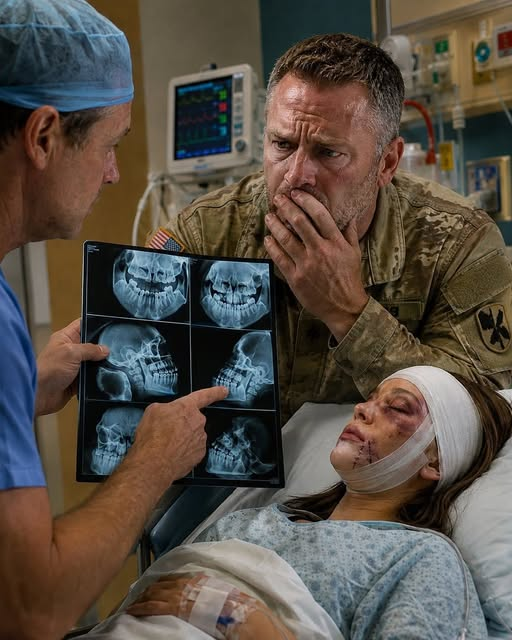
Tyler Whitmore was questioned that afternoon.
So were the other fraternity members.
So was Dean Caldwell.
At first, everyone told different versions.
Then police recovered Lily’s phone.
Caldwell had dropped it into a storm drain behind the administration building.
He had deleted files before doing so.
But the backups remained in Lily’s cloud account.
One video showed Sophie Grant crying in a fraternity hallway while several students argued around her.
The footage did not show every detail of what had happened, but it showed enough to prove Sophie had been in distress and that Tyler had been present during the incident university officials later claimed had never occurred.
More important was a voice recording Lily made before meeting Tyler.
She had learned from her mother that conversations with powerful people were best documented.
At 10:13 p.m., Lily activated the recorder.
Tyler’s voice appeared first.
“Delete the video.”
“No.”
“You don’t understand what you’re doing.”
“I understand Sophie left school because everybody protected you.”
“She left because she’s unstable.”
Then Dean Caldwell.
“Lily, this can still be resolved quietly.”
“Quietly for who?”
Caldwell’s voice hardened.
“You have a scholarship here.”
My blood went cold.
Lily had worked for years to earn that scholarship.
“Are you threatening me?”
“I’m explaining consequences.”
Lily answered:
“Then explain them to the police.”
After that came movement.
Raised voices.
Then the recording stopped.
Police now had motive.
Witnesses.
Video.
And evidence of an attempted cover-up.
The silence on campus began to collapse.
Sophie Grant’s family came forward the following day.
Then another student.
Then another.
None accused Tyler of exactly the same misconduct.
But all described the same system.
Complaints disappearing.
Meetings with administrators.
Warnings about scholarships.
Pressure to protect the university.
Parents being told they misunderstood.
Students being advised to “think carefully about their futures.”
Dean Caldwell had not created the problem.
He had maintained it.
President Whitmore insisted he knew nothing.
Then investigators discovered emails.
One from Caldwell sent eight months earlier.
Another Delta Rho issue. I’ll contain it.
Whitmore had replied:
Keep my son’s name away from this.
That was enough to destroy his claim of ignorance.
He resigned before the board could remove him.
Caldwell was fired and later charged in connection with evidence tampering and obstruction.
Tyler and two other students faced criminal charges related to Lily’s attack.
The cases took time.
Lawyers argued.
Witnesses changed statements.
Money tried to make uncertainty look like innocence.
But the camera behind a vending machine had given the truth a starting point.
And Lily had given it everything else.
She came home six weeks later.
Her recovery was slow.
Eating hurt.
Speaking was difficult at first.
The doctors warned us that healing would take patience.
So we learned patience.
One morning, I found her sitting at the kitchen table staring at the rain.
“You don’t have to go back,” I told her.
She looked at me.
“Back to school?”
“Yes.”
Her voice was still soft.
“Do you want me to quit?”
“No.”
“I thought soldiers hated retreating.”
I smiled.
“Leaving a place that failed you isn’t retreat.”
She thought about that.
Then she said:
“I want to go back.”
“Why?”
“Because I still have chemistry on Tuesdays.”
I stared at her.
She smiled carefully.
“And because they don’t get to decide where I belong.”
That was Lily.
She returned the following semester.
Not because everything was fixed.
It wasn’t.
But changes had begun.
The university created an independent reporting system outside Student Affairs.
Several administrators were replaced.
Delta Rho lost campus recognition.
A review uncovered years of disciplinary failures.
Sophie eventually returned too, but to a different university.
She and Lily stayed in contact.
The two of them later helped create a student advocacy organization focused on making sure complaints could not disappear simply because the accused person had money, influence, or the right last name.
At the first public meeting, Lily asked me to sit in the back.
“Don’t do the dad thing.”
“What dad thing?”
“The stare.”
“I don’t have a stare.”
She gave me the look only daughters can give fathers.
I sat in the back.
When Lily stepped onto the stage, the room became quiet.
She did not describe what had happened to her in detail.
She did not need to.
She simply said:
“People kept asking why nobody saw what happened.”
Then she looked across the audience.
“People saw. The problem was that too many of them had been taught that silence was safer than truth.”
I felt something tighten in my chest.
For years, I had believed courage looked like combat.
I was wrong.
Sometimes courage was a nineteen-year-old woman walking back onto a campus that had failed her.
Sometimes it was her roommate admitting she had been afraid.
Sometimes it was a stranger at a vending machine company refusing to delete footage.
Sometimes it was students deciding the next person who spoke would not have to speak alone.
Afterward, Lily found me outside.
“Well?”
“You were good.”
“Just good?”
“I’m trying not to embarrass you.”
She smiled.
Then she hugged me.
I held her carefully.
Even months later, I was still afraid of hurting her.
She noticed.
“Dad.”
“What?”
“I’m okay.”
I nodded.
But she pulled back.
“No. Look at me.”
I did.
“I’m okay.”
Not unchanged.
Not untouched.
But here.
Still herself.
That night, I thought back to the hospital.
Six fractures.
An evidence bag.
A doctor who could not tell me who had done it.
I had believed the hardest question was:
Who hurt my daughter?
It wasn’t.
The harder question was:
How many people knew enough to stop it before she ended up in that hospital?
The answer changed a university.
It changed families.
It changed me.
I had spent years believing my job as Lily’s father was to protect her from every threat.
Eventually, she taught me something better.
A father cannot build a world where his daughter will never face danger.
But he can stand beside her while she forces that world to stop looking away.
