Aunt Colleen opened the door before I knocked.
She looked exhausted.
“Where’s Dany?”
“With my friend Sarah.”
“Good.”
That answer made my stomach tighten.
Colleen led me into the dining room.
A battered wooden box sat on the table.
My father’s name was written across the lid.
Inside were folders.
Bank statements.
Insurance records.
A small digital recorder.
And one sealed envelope addressed to me.
LUCY — IF I CAN’T EXPLAIN THIS MYSELF
I looked at Colleen.
“What is this?”
“Your father gave it to me two months after his stroke.”
“Why didn’t you tell me?”
“He asked me not to unless your mother crossed a line he predicted she eventually would.”
I almost laughed.
“What line?”
Colleen looked at me sadly.
“Making Dany understand that she doesn’t consider him family.”
I stopped breathing.
Dad knew.
I opened the letter first.
My father’s handwriting had become uneven after the stroke, but it was unmistakably his.
He wrote that he had watched my mother favor Chelsea for years.
He had tolerated too much because confrontation exhausted him.
But after Dany came into my life, he began noticing something different.
Birthday invitations that “forgot” to include him.
Christmas gifts with Carter’s name embroidered while Dany received whatever was left.
Photographs removed from the refrigerator.
My mother correcting strangers whenever they called both boys her grandsons.
Dany had joined my family through adoption when he was eleven months old.
To me, that fact had never required explanation.
He was my son.
Dad apparently agreed.
One line was underlined twice.
A child does not become less ours because love brought him here instead of blood.
My vision blurred.
Colleen pushed a tissue box toward me.
“There’s more.”
Of course there was.
The bank statements covered the eight months since Dad’s stroke.
I recognized my transfers immediately.
$1,200.
$850.
$2,000.
Money I had sent for rehabilitation bills, medication, transportation, and home modifications.
But many of those expenses had already been paid by Dad’s insurance.
I frowned.
“Where did my money go?”
Colleen slid another sheet toward me.
Transfers from my mother’s account.
To Chelsea.
Furniture.
Carter’s private-school tuition.
A family vacation deposit.
Credit-card payments.
Almost eighteen thousand dollars.
My throat went dry.
“She used the money I sent for Dad?”
“Some of it.”
I stared at the papers.
“And Dad knew?”
“He discovered it three months ago.”
“Why didn’t he tell me?”
“Because he was ashamed.”
That hurt worse than the money.
My father had been lying in rehabilitation, struggling to regain movement and speech, feeling ashamed because the people around him were taking advantage of the daughter keeping his care organized.
Colleen pointed toward the recorder.
“He wanted you to hear this.”
I pressed play.
For several seconds there was only breathing.
Then Dad’s voice.
Slow.
Strained.
But clear enough.
“Lucy… if you’re listening, I probably waited too long again.”
I covered my mouth.
“I kept thinking your mother would become kinder if life scared her enough.”
A pause.
“She didn’t.”
Another breath.
“I kept thinking Chelsea would grow up.”
I almost smiled through my tears.
“She didn’t.”
Then his voice became firmer.
“You have spent your whole life doing the work and letting other people receive the thanks.”
I looked down.
“No more.”
I stopped the recording.
I couldn’t listen.
Not yet.
Colleen reached across the table.
“Finish it.”
So I did.
Dad explained that before his stroke, he had placed several assets into a trust.
The house.
His retirement investments.
A small rental property I had never known he owned.
My mother could remain in the house for the rest of her life.
But she could not sell it.
Borrow against it.
Or transfer it.
After both parents were gone, the property would not pass directly to Chelsea or me.
Instead, most of it would fund two education trusts.
One for Carter.
One for Dany.
Equal amounts.
Blood had nothing to do with it.
Then came the part that explained my mother’s midnight calls.
Dad had also changed his healthcare and financial power of attorney.
Mom was no longer the primary agent.
Neither was Chelsea.
Colleen was first.
I was second.
And the change had become active that morning after his doctor formally documented that he needed temporary assistance managing complex financial decisions.
Mom had discovered it only hours after the barbecue.
That was why she suddenly couldn’t remember anything.
She could remember.
She simply no longer had access.
I drove to the rehabilitation center that afternoon.
Dad was sitting beside a window.
His left hand rested in his lap.
His speech was still slower than before, but his eyes were sharp.
I sat beside him.
“You knew.”
He gave me a tired smile.
“About… fries?”
I laughed despite myself.
“Colleen told you already?”
“She calls.”
I took his hand.
“Dad, why didn’t you tell me about the money?”
His face changed.
“Embarrassed.”
“You had nothing to be embarrassed about.”
“I let it happen.”
I shook my head.
“No. Mom took advantage of the situation.”
He looked at me for a long moment.
Then said:
“Like… she takes advantage… of you.”
That silenced me.
Dad squeezed my fingers.
“Stop.”
One word.
Exactly the one I needed.
Mom arrived twenty minutes later.
Chelsea was with her.
Neither expected me to be there.
Mom immediately began.
“Lucy, thank God. Your father’s pharmacy won’t speak to me, the bank froze my access, and Colleen is pretending she controls everything.”
Dad’s expression hardened.
Colleen stepped from the hallway behind them.
“I’m not pretending.”
Mom turned.
“You had no right—”
Dad struck the arm of his wheelchair once with his good hand.
Everyone stopped.
He looked at Mom.
“My choice.”
She stared at him.
“You’re letting Lucy poison you against your own family?”
Dad’s face went red.
I stood.
“Don’t.”
Mom looked at me.
“You stay out of this.”
“No.”
For once, I didn’t raise my voice.
“I spent eight months handling Dad’s medication, appointments, and bills.”
Chelsea crossed her arms.
“Nobody asked you to martyr yourself.”
I pulled the bank statements from my bag.
“No. You just spent the money.”
Her face changed.
Mom went still.
I placed the pages on the table beside Dad.
“Eighteen thousand dollars.”
Chelsea recovered first.
“Mom gave me that.”
“With money I sent for Dad.”
“I didn’t know where it came from.”
Mom snapped:
“It was family money.”
“No.”
I looked at her.
“It was money I sent for medical care.”
“You have plenty.”
There it was.
Not denial.
Entitlement.
Dad closed his eyes.
Mom continued.
“And after everything we’ve done for you—”
I actually laughed.
“What have you done for Dany?”
She stopped.
Chelsea sighed dramatically.
“Are we seriously back to the fries?”
I turned toward her.
“No.”
I pointed toward Dad.
“We’re talking about why your father changed his entire estate plan.”
That wiped the expression from her face.
“What estate plan?”
Mom looked at Dad.
He looked back calmly.
I told them.
The trust.
The house.
The restrictions.
The equal education funds for Carter and Dany.
Chelsea’s face went pale.
“Equal?”
“Yes.”
“But Carter is his biological grandson.”
Dad’s hand tightened.
Then, slowly, he said:
“Both… grandsons.”
Chelsea stared at him.
Mom looked horrified.
“You cannot possibly mean that.”
Dad’s eyes moved to her.
“I do.”
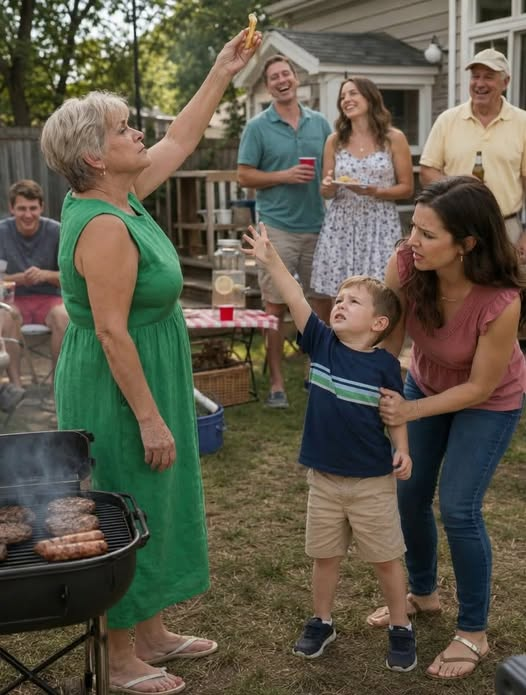
For the first time in my life, my mother had nothing to say.
She called me selfish afterward.
Ungrateful.
Vindictive.
She said I had manipulated a sick man.
Colleen’s attorney handled that accusation quickly.
Dad’s trust had been created before his stroke.
The later power-of-attorney changes had been witnessed, medically evaluated, and properly documented.
Nobody had manipulated him.
He had simply prepared for the possibility that the people he trusted least would someday reveal exactly why he had been right not to trust them.
The missing medical money was repaid.
Not all at once.
Chelsea had to sell the luxury SUV she had purchased six months earlier.
Mom returned money from savings.
I did not ask for interest.
I did not want revenge.
I wanted the boundary restored.
Money given for Dad would be used for Dad.
Nothing else.
My relationship with Mom changed permanently.
She was still allowed to visit my father.
She was still his wife.
But she no longer controlled his care or finances.
And Dany?
I stopped bringing him anywhere he was treated as optional.
No more holidays where Carter opened twelve gifts while Dany received one.
No more photographs where someone mysteriously asked him to stand at the edge.
No more “jokes” about real family.
Months later, Mom called before Christmas.
“Are you bringing Dany?”
I paused.
“Why?”
“Because I bought presents for both boys.”
“Equal?”
Silence.
Then:
“Yes.”
We went.
Not because I had forgotten.
Because boundaries are not always walls.
Sometimes they are doors with locks.
And this time, I had the key.
Dad recovered enough to return home the following spring.
He walked slowly with a cane.
His speech never returned completely to normal.
But his humor did.
The first Sunday he was home, we had another barbecue.
I nearly refused to attend.
Dad insisted.
When lunch was served, Carter ran toward the fries.
Dany hesitated.
I saw it.
So did Dad.
He took the serving bowl.
Placed it directly between the two boys.
Then said:
“Grandsons first.”
Dany smiled.
Carter grabbed three handfuls.
Dad laughed.
Mom looked down at her plate.
Nobody else laughed at Dany.
Nobody moved the food.
It should never have required paperwork, arguments, or a stroke for such a simple thing to happen.
But sometimes families do not change because you explain your pain perfectly.
They change because the old arrangement stops being comfortable.
Years later, when Dad died, we opened the trust exactly as he had written it.
Equal education accounts.
Equal recognition.
No hidden punishment.
No final act of revenge.
Just one grandfather making sure both boys knew they had belonged to him.
Inside Dad’s personal papers, I found one more note.
Only three sentences.
Lucy, you were never difficult to love.
You were simply useful to people who forgot love required giving something back.
Teach Dany the difference.
I framed that note.
Dany keeps it now.
He is old enough to understand the story behind the barbecue.
He once asked me:
“Mom, did Grandma really say I wasn’t her real grandson?”
I hated that question.
But I answered honestly.
“Yes.”
He thought for a moment.
Then asked:
“What did Grandpa say?”
I smiled.
“He said you were his.”
That was enough for him.
And eventually, it became enough for me too.
My mother thought that afternoon was about a plate of fries.
It wasn’t.
The fries simply revealed a truth I had spent years refusing to see.
I had been treated like the dependable daughter because I kept giving.
Dany had been treated like the lesser grandchild because he had no power to demand better.
The moment I stopped cooperating, everything changed.
When Mom called me that night expecting another rescue, I answered with one word:
Remember.
Remember the laughter.
Remember the plate you pulled away.
Remember the child you taught, for one terrible second, to question whether he belonged.
And most of all—
remember that the people you treat as less important may eventually stop carrying everything you refuse to carry yourself.
