My phone rang twelve times before I answered.
I was sitting beneath the stone archway at Sterling University, my suitcase beside me and my admission folder resting across my knees.
My brother’s name flashed across the screen.
I answered on the thirteenth call.
“Clara?”
His voice was breathless.
“Where are you?”
“At school.”
“What school?”
I looked up at the silver letters above the entrance.
“Sterling University.”
Silence.
Then:
“What are you talking about?”
“I was admitted.”
Another pause.
“But your flight—”
“I’m not taking it.”
“You can’t just decide that!”
I almost smiled.
“I decided months ago.”
Behind him, I heard my mother asking what was happening.
Then Anna’s voice.
Soft.
Distressed.
My brother lowered his voice.
“Clara, this isn’t funny. Dad already rented an apartment for both of you.”
“I never asked him to.”
“You’re supposed to study here.”
“I never applied there.”
That finally silenced him.
“What?”
“I never filled out an application. Never submitted transcripts. Never attended an interview.”
“But Dad said—”
“Dad assumed.”
My brother sounded genuinely confused.
For the first time, I understood something.
My family had planned my entire future without once checking whether I had agreed to live it.
My mother took the phone.
“Clara, stop this immediately.”
“Hello, Mom.”
“You left the ticket at home.”
“Yes.”
“And the bank card.”
“Yes.”
“Do you understand how much money that ticket cost?”
“I didn’t ask you to buy it.”
Her breathing sharpened.
“You’re being ungrateful.”
There it was.
The word people use when kindness comes with ownership attached.
“I thanked you for the ticket.”
“Then why aren’t you using it?”
“Because gratitude doesn’t mean obedience.”
She went quiet.
Then my father came on the line.
His voice was colder.
“You have ten minutes to explain yourself.”
“No.”
“What did you say?”
“I don’t have to explain a decision you never asked me about.”
“Clara, we brought you back into this family.”
I closed my eyes.
Brought me back.
As though I were a lost suitcase.
Not a daughter they had spent seventeen years without finding.
“And I tried very hard to belong.”
“You caused Anna tremendous emotional pressure.”
“I existed.”
“That’s not fair.”
“No.”
I looked across the campus where students were carrying boxes into dormitories.
“It wasn’t.”
He lowered his voice.
“Come abroad. We’ll discuss Sterling next semester.”
“No.”
“You have no money.”
“I have a scholarship.”
Silence.
“My tuition is covered. My dorm is covered. I’ve been working weekends for six months. I have enough saved for food and transportation.”
My father sounded stunned.
“When did you arrange all of this?”
“While everyone was arranging Anna’s life.”
That answer hurt him.
I could hear it.
Then Anna began crying somewhere behind him.
My mother immediately said:
“Look what you’re doing to her.”
Something inside me became very still.
For almost two years, every emotion Anna experienced had somehow become my responsibility.
If Anna felt insecure, I had to disappear.
If Anna felt jealous, I had to give something up.
If Anna cried, I was expected to apologize.
Not anymore.
“I hope Anna feels better.”
My mother snapped:
“That’s all you have to say?”
“Yes.”
Then I ended the call.
My hands were shaking.
I hated that.
Freedom sounded powerful in your imagination.
In reality, sometimes it looked like sitting alone beside a suitcase, wondering whether choosing yourself made you cruel.
A woman stopped beside me.
“Clara?”
I looked up.
Professor Helen Morris.
She had interviewed me for Sterling’s scholarship program.
“You made it.”
I stood.
“Yes.”
She smiled.
“I was beginning to worry.”
Nobody in my family had said they were proud of me.
This woman barely knew me.
Yet those four words almost made me cry.
Professor Morris helped me carry my suitcase to the dorm.
That night, my phone filled with messages.
My brother:
You should have told me.
My mother:
Anna hasn’t stopped crying.
My father:
Call me when you are ready to behave like an adult.
Then, nearly midnight, another message appeared.
From Anna.
I almost ignored it.
Instead, I opened it.
I expected anger.
What I received was:
Did you really get into Sterling?
I replied:
Yes.
Three dots appeared.
Then:
Congratulations.
I stared at the screen.
A minute later, another message arrived.
I didn’t know they were sending you on another flight.
I sat upright.
What?
Anna called.
Her voice was barely above a whisper.
“Clara…”
“What do you mean you didn’t know?”
“They told me you wanted to travel earlier.”
My stomach tightened.
“They said being around me was too difficult for you.”
I said nothing.
“They said the separate apartment was your idea too.”
“No.”
Anna started crying.
“I thought you hated me.”
I closed my eyes.
“All this time?”
“Yes.”
The truth was uglier than jealousy.
Our parents had been managing both of us.
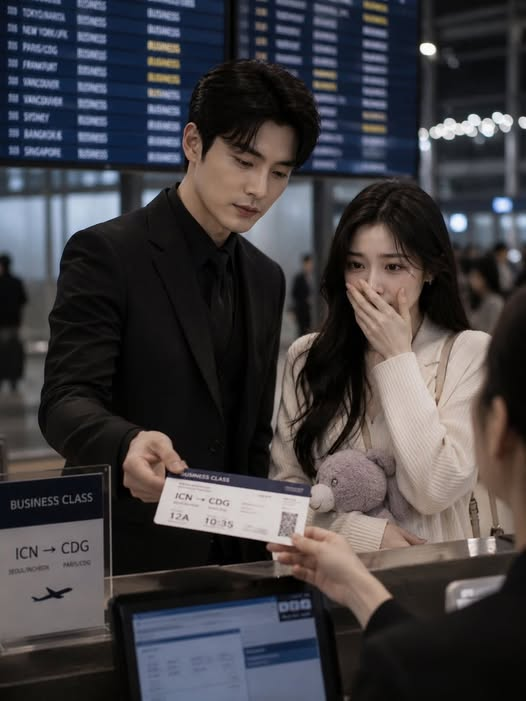
Protecting Anna by making me disappear.
Protecting themselves by telling Anna that I wanted to disappear.
“Why?” she whispered.
I knew the answer.
Because admitting they had failed one daughter would threaten the perfect family they had built around the other.
So instead, they made us compete for space.
Three weeks later, my brother flew back alone.
He appeared outside my dorm carrying the white envelope that had once contained my plane ticket.
“I found something.”
Inside were copies of my adoption records.
Letters.
Dozens of them.
Written by my foster mother over the years.
Updates about my school.
Photographs.
Addresses.
Requests asking whether my biological parents wanted contact.
My hands went cold.
“They knew where I was?”
My brother looked sick.
“Since you were nine.”
I couldn’t breathe.
For years, I had believed they lost me as a toddler and only found me again at seventeen.
That was the story they told everyone.
But the letters proved otherwise.
My brother continued.
“Dad replied twice.”
I opened one.
The handwriting was unmistakable.
My father had written:
Our current family situation is delicate. Contact may cause emotional harm to our daughter. Please wait until circumstances improve.
Our daughter.
Anna.
I had been eleven.
Another letter was dated three years later.
Again, they asked for more time.
My brother looked at me with tears in his eyes.
“They didn’t fail to find you.”
I folded the letter carefully.
“No.”
My voice sounded strangely calm.
“They chose not to bring me home.”
My brother cried.
I didn’t.
I had spent too many years mourning parents who had supposedly searched for me.
Now I was mourning something else.
The fact that they had known exactly where I was.
That night, I sent photographs of the letters to our family group.
Then I typed:
You asked why I chose another destination. This is why. You had my address for years. This time, I’m choosing where I belong.
Dad called immediately.
I blocked him.
Mom sent paragraph after paragraph explaining that Anna had been fragile as a child.
I blocked her too.
Not forever.
Just long enough to hear my own thoughts without theirs telling me what I owed.
I remained at Sterling.
I studied until dawn sometimes.
I made friends.
I joined a research program.
I stopped checking whether my achievements inconvenienced anyone.
Anna and I began speaking privately.
Slowly.
For the first time, neither of us had our parents translating the other’s feelings.
She apologized for the things she had done.
I apologized for assuming every cruel decision had come from her.
Years later, Anna would admit that leaving the country forced her to see something she had never understood:
She had been favored.
But she had also been controlled.
My parents eventually returned.
By then, I no longer lived in their house.
When Mom asked whether we could “start again as a family,” I gave her the only honest answer I had.
“Maybe.”
Her eyes filled with tears.
“But starting again doesn’t mean pretending the first time never happened.”
Dad struggled with that more.
He wanted forgiveness to restore authority.
It didn’t.
My brother understood first.
Anna understood second.
My parents took years.
And me?
I graduated from Sterling with honors.
At commencement, Professor Morris sat in the audience.
My foster mother sat beside her.
My brother came.
Anna flew home too.
My parents were invited.
But this time, I decided where everyone sat.
After the ceremony, Mom hugged me and whispered:
“We should have chosen you sooner.”
I stepped back gently.
“No.”
I looked at the people who had shown up because they wanted to be there, not because biology demanded it.
“You should have realized you never needed to choose between daughters.”
For years, my family believed I would accept whatever seat they gave me.
The guest room.
The separate flight.
The distant apartment.
The future arranged around someone else’s comfort.
They were wrong.
I didn’t miss the plane they bought for me.
I finally boarded the life I had chosen for myself.
