Evelyn turned the brass key inside the hidden clasp.
A narrow compartment opened beneath the leather lining.
Inside was a second flash drive.
Claire stopped moving outside the glass.
That was the first thing I noticed.
Not Dad’s attorney.
Not my mother gripping the hospital blanket.
Claire.
For someone who supposedly had no idea what Grandma had done, she looked terrified.
Evelyn noticed too.
“Interesting,” she said.
Mom whispered:
“What is on it?”
Evelyn looked at me.
“Your grandmother made two recordings.”
“Why two?”
“One for the family.”
She lifted the second drive.
“And one for law enforcement.”
The room went silent.
My ribs hurt every time I breathed deeply, but suddenly the pain felt far away.
Evelyn connected the first drive to her laptop.
Grandma appeared on the screen.
She was sitting in the sunroom at the old house.
Same blue cardigan.
Same silver hair.
Same carved wooden chair where she used to drink coffee every morning.
The timestamp showed the recording had been made four years earlier.
Her voice was steady.
“If you are watching this, Harold has probably challenged the ownership of the house.”
Mom covered her mouth.
I stared at the screen.
Grandma continued.
“My son has spent most of his adult life believing that my property will eventually solve his financial problems.”
Dad.
Even hearing Grandma describe him so plainly felt strange.
“I have told him repeatedly that the house will not be sold to cover his business debts.”
Evelyn paused the video.
I looked at her.
“What debts?”
She opened another section of the folder.
Loan statements.
Court notices.
Construction liens.
Dad’s company had been failing for years.
Much longer than I knew.
He had borrowed against equipment.
Against future contracts.
Against property he did not own.
Then Evelyn showed me one document that made my stomach tighten.
A draft agreement.
Grandma’s address appeared at the top.
Dad had tried to use the house as collateral.
Without her permission.
“When was this?” I asked.
“Five years before she died.”
Mom sat down.
“He told me she agreed.”
“She didn’t,” Evelyn said.
The recording resumed.
Grandma looked directly into the camera.
“Harold believes family loyalty means everyone else should surrender what they have when he demands it.”
My throat tightened.
That sounded exactly like him.
Then Grandma said:
“I transferred the house to Morgan because she was the only person who never asked me for it.”
I closed my eyes.
Morgan.
Me.
Claire’s voice suddenly came from the hallway.
“This is ridiculous!”
The nurse told her to step away from the door.
She ignored her.
“Grandma was manipulated!”
Evelyn paused the recording again.
Then she smiled.
“She expected that accusation.”
Of course she did.
The next document was a competency evaluation.
Then another.
Then a recorded statement from Grandma’s physician.
All completed before the deed transfer.
Grandma had made sure nobody could later claim she was confused.
Evelyn held up the certified deed.
“Three years before her death, she transferred the house outright to you.”
I stared at my name.
Not through the will.
Not after probate.
Years earlier.
Dad and Claire had been arguing over an inheritance that technically no longer existed.
“The will never controlled the house,” I whispered.
“Correct.”
“Then why did everyone think it did?”
“Because your grandmother asked me not to tell them.”
Mom looked at Evelyn.
“Why?”
Evelyn’s face hardened.
“Because she wanted to know what they would do if they thought the property was still available.”
A chill ran through me.
Grandma had set a test.
And Dad had walked straight into it carrying a baseball bat.
The second recording was worse.
Grandma appeared again.
This time, she looked tired.
“Evelyn told me not to record this alone, so she is in the next room.”
She took a breath.
“Claire came to see me yesterday.”
My sister’s face outside the hospital room went completely white.
I looked toward the glass.
She backed away.
Evelyn pressed play.
Grandma continued.
“Claire asked me to sign a document giving Harold authority to negotiate a sale.”
Mom whispered:
“No.”
“She told me the house was becoming too expensive for me.”
Grandma gave a small, humorless smile.
“It is fully paid for.”
I felt sick.
“She also told me Morgan would eventually sell it anyway because the Navy had made her selfish and distant.”
I looked down.
Nine years earlier, when I chose the Navy over Dad’s company, Claire had told me Grandma understood.
Apparently, Claire had been telling Grandma something very different.
Then Grandma leaned closer to the camera.
“If Claire says later that she knew nothing about Harold’s plans, do not believe her.”
Outside, Claire started pounding on the hospital-room door.
“That’s edited!”
Security stepped between her and the glass.
Evelyn did not even look up.
Grandma’s voice continued.
“I have kept copies of the messages she sent her father.”
Evelyn opened another envelope.
Printed text messages.
Claire:
IF MORGAN STAYS AWAY LONG ENOUGH, GRANDMA WILL HAVE TO LEAVE THE HOUSE TO SOMEONE PRACTICAL.
Dad:
SHE’LL COME AROUND.
Claire:
DON’T PUSH TOO HARD UNTIL THE PAPERWORK IS SIGNED.
I read the last line twice.
My hands began shaking.
This had not started the night Dad hit me.
It had been planned for years.
Not the assault.
The pressure.
The property.
The expectation that I could be cornered into signing away a house they had already decided belonged to them.
Mom started crying.
“I didn’t know.”
I looked at her.
For years, those words had followed every disaster.
I didn’t know.
I didn’t realize.
I thought he would calm down.
But Grandma had known enough to prepare.
That difference mattered.
Dad’s attorney finally asked to speak with Evelyn privately.
She refused.
“Anything relevant to Morgan’s property can be discussed through counsel.”
He looked annoyed.
“My client believes the deed may have been executed under undue influence.”
Evelyn slid the competency reports across the table.
“Then your client is free to spend money proving otherwise.”
The attorney read the first page.
Then the second.
His expression changed.
“And the recording?”
“Time-stamped, witnessed, and duplicated.”
His jaw tightened.
Claire shouted from the hallway:
“She manipulated Grandma!”
Evelyn looked toward her.
“Ms. Hart, you should probably stop speaking.”
Claire ignored her.
“I was supposed to get half!”
I stared at her.
There it was.
Not grief.
Not concern about Grandma’s wishes.
Half.
“You knew about the transfer?” I asked.
Claire froze.
The attorney closed his eyes.
Too late again.
Evelyn leaned back.
“That sounded remarkably specific.”
Claire started crying.
“Grandma told me she was changing things.”
“When?”
No answer.
“Claire.”
She finally whispered:
“A few weeks before she signed it.”
I felt something inside me go cold.
“You knew for years.”
“She said you deserved stability.”
“And you still came to the house today demanding a sale.”
Claire’s face twisted.
“Because it isn’t fair!”
I almost laughed.
Fair.
She had lived twenty minutes from Dad.
She attended holidays.
She worked for his company.
She stayed inside the family system I left.
I spent nine years being called disloyal because I chose a different life.
Now suddenly fairness meant I owed them the one thing Grandma had chosen to give me.
“Grandma didn’t leave you out accidentally,” I said.
Claire’s eyes filled with anger.
“No.”
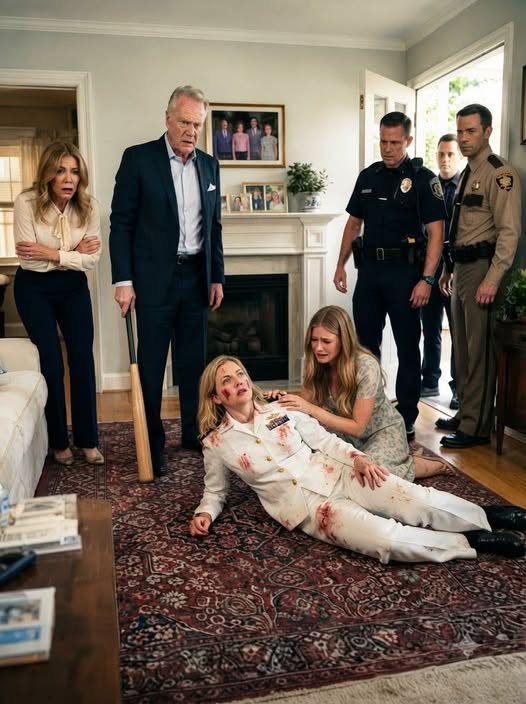
Evelyn answered for me.
“She left you out deliberately.”
The criminal case against Dad moved faster than the property dispute.
The neighbor’s camera showed him carrying the bat into the house.
Audio from another camera captured Claire saying:
“Don’t leave until she signs.”
Neither recording showed enough to prove Claire expected violence.
But it proved the confrontation was not spontaneous.
Dad eventually accepted a plea agreement.
He was ordered to stay away from me.
For the first time in my life, a piece of paper told Harold Hart that my boundaries were not optional.
Claire challenged the deed.
She lost.
Grandma had prepared too carefully.
The court found that the transfer had been completed while she was competent, independently represented, and fully aware of the consequences.
Dad’s creditors tried next.
They lost too.
The house had never belonged to him.
There was nothing to seize.
Then came the brass key.
I had almost forgotten it.
Six weeks after leaving the hospital, I returned to Grandma’s house with Evelyn.
My ribs were healing.
The bruises had faded.
The rug had been cleaned.
I stood in the living room staring at the fireplace.
“Where does the key go?”
Evelyn smiled.
“Your grandmother hoped you’d remember.”
I didn’t.
Then I saw the old naval photograph above the mantel.
My commissioning day.
Grandma had framed it after Dad refused to attend.
Behind the frame was a tiny brass keyhole.
I inserted the key.
A narrow compartment opened inside the wall.
There was no money.
No jewelry.
No secret fortune.
Just letters.
Dozens of them.
All addressed to me.
Some had dates from my deployments.
Others from birthdays.
One envelope said:
FOR THE DAY YOU THINK LEAVING THEM MEANT YOU STOPPED BEING FAMILY.
My eyes blurred.
I opened it.
Grandma’s handwriting filled two pages.
She wrote that choosing the Navy had never disappointed her.
That Dad’s anger came from losing control, not from losing me.
That strength did not mean enduring whatever family demanded.
And near the bottom was one sentence I read three times:
“A home is not the place where people are allowed to hurt you because they share your blood.”
I sat on the floor and cried.
Not from pain.
Not from anger.
Because Grandma had understood years before I did.
She had not transferred the house to reward me.
She had given me somewhere nobody in the family could legally throw me out of.
A year later, I retired from active service.
Not because of Dad.
Not because of the house.
It was simply time.
I returned to Grandma’s place permanently.
The first thing I changed was the lock.
The second was the name on the mailbox.
MORGAN HART.
No rank.
No family business.
Just mine.
Mom visited sometimes.
Our relationship was complicated.
She eventually left Dad.
I never asked her to.
I also never pretended decades of silence disappeared because she finally walked away.
Some things heal slowly.
Claire sent one letter apologizing.
Then another explaining why she thought Grandma had been unfair.
That second letter told me the first apology was not ready yet.
I stopped answering.
One autumn afternoon, Patrolman Ellison visited while passing through the county.
He was a chief by then.
He stood on the porch looking uncomfortable.
“Captain.”
“Former captain.”
He smiled.
“Still sounds wrong.”
I brought him coffee.
He looked around.
“Beautiful place.”
“It is.”
“Your grandmother knew what she was doing.”
I glanced toward the leather folder on the bookshelf.
“Yes.”
For years, I wondered what Grandma had known.
Had she predicted Dad would attack me?
No.
I don’t think so.
She knew something simpler.
More important.
She knew Harold believed love entitled him to control.
She knew Claire believed inheritance meant entitlement.
She knew Mom might not protect me when pressure came.
And she knew I would keep trying to be strong enough to endure all of them.
So three years before she died, Grandma did what nobody else had done.
She made endurance unnecessary.
She gave me legal protection before I knew I needed it.
The deed.
The recordings.
The letters.
The brass key.
Dad thought the house was the inheritance.
Claire thought the deed was the victory.
They were both wrong.
Grandma’s real gift was proof that leaving a family that hurts you does not make you disloyal.
Sometimes it is the first honest thing you ever do for yourself.
