The next morning, I left my parents’ house at 7:10.
Mom was waiting in the kitchen.
“Where are you going?”
“Back to Manhattan for a few hours.”
Her smile tightened.
“You shouldn’t be driving alone right now.”
“I’ll be fine.”
“Fay.”
She touched my arm.
“Dr. Voss thinks you’re under enormous emotional strain.”
There it was.
The setup.
I looked at her hand.
Then at her face.
“Did he say I was incompetent?”
Her fingers immediately loosened.
“No one said that.”
Not yet.
I smiled.
“Good.”
Then I walked out.
James Whitfield’s office overlooked Bryant Park.
He closed the door, placed a thick binder in front of me, and said:
“Nathan expected this.”
I stared at him.
“My family?”
“Not specifically.”
He opened the binder.
“He expected someone might try to exploit you after his death.”
Nathan had created a trust eighteen months earlier.
The cash.
The six Manhattan lofts.
Investment accounts.
Everything substantial.
But the important part was not what the trust owned.
It was how it worked.
I was the sole beneficiary.
And while I had full rights to income and distributions, no guardian appointed without a court’s independent review could simply seize control of the assets.
Nathan had also appointed James as independent trustee for a limited transition period.
My parents couldn’t walk into court, produce one friendly doctor, and suddenly take over $8.5 million.
James leaned back.
“Nathan added another provision.”
“What?”
“If anyone attempts to obtain control of the trust through fraud, coercion, or an unsupported incapacity claim, distributions to that person are permanently barred.”
I stared at him.
“My family isn’t receiving anything anyway.”
“No.”
James looked grim.
“But your mother called my office four months ago.”
My stomach dropped.
“What?”
“She asked whether Nathan had updated his estate plan.”
“Before he died?”
“Yes.”
I felt cold.
“What did you tell her?”
“Nothing.”
He slid a printed email toward me.
Patricia had written:
We’re only trying to understand what happens if Fay cannot manage her affairs.
Four months earlier.
Nathan had still been alive.
This had not started after the funeral.
I took out my phone.
“I recorded them yesterday.”
James listened without interrupting.
Mom discussing Dr. Voss.
Dad asking about the estate.
Chloe saying she should become guardian.
When the recording ended, James remained silent for several seconds.
Then:
“Make three copies.”
“Already did.”
For the first time since Nathan died, somebody smiled at me.
“Good.”
I almost cried.
Nathan had always said I underestimated myself because my family had spent years making obedience look like kindness.
Apparently he had been right about that too.
The trap closed faster than I expected.
That afternoon, Mom called.
“Dr. Voss wants to see you again.”
“No.”
Silence.
“Fay, don’t be difficult.”
“I’m grieving. I want my own doctor.”
Her tone changed.
Sharp.
“You’re not thinking rationally.”
I wrote down the exact words.
Then I said:
“I’ll come back tonight.”
I heard relief in her voice.
They thought I was cooperating.
I was.
Just not with them.
When I arrived, Dr. Voss was already there.
So was Chloe.
She rushed toward me.
“Oh, Fay.”
She huggedged me tightly.
Then whispered:
“We’re only trying to protect you.”
I looked over her shoulder.
“From what?”
She pulled back.
“From making mistakes.”
“Like what?”
Her eyes flicked toward Mom.
Mom answered.
“Selling property. Moving money. Making emotional decisions.”
I sat down.
Dad placed a folder on the coffee table.
“There are temporary papers.”
I looked at them.
A petition seeking emergency authority over my finances.
Already drafted.
Chloe’s name listed as proposed guardian.
My sister picked up a pen.
“If you cooperate, it’ll be easier.”
I stared at her.
“You want me to sign something saying I can’t make decisions?”
“Temporarily.”
“And you’ll make them for me?”
“Until you’re better.”
Mom sat beside me.
“You trust us, don’t you?”
That sentence almost made me laugh.
Instead, I placed my phone on the coffee table.
Then I pressed play.
Her own voice filled the room.
She’ll cry for a week. Then she’ll sign whatever we put in front of her.
Nobody moved.
Dad’s face changed first.
Chloe went pale.
Mom whispered:
“You recorded us?”
“Yes.”
Dr. Voss stood immediately.
“I think I should leave.”
I looked at him.
“Please stay.”
The front door opened.
James entered.
Behind him were two other people.
One was my own physician.
The other was an investigator from a firm Nathan had retained for estate protection.
James looked at Dr. Voss.
“We’d like to discuss your proposed incapacity evaluation.”
The room collapsed into chaos.
Dr. Voss denied everything.
Then James showed him the emails.
Mom had contacted him before Nathan’s death.
She had repeatedly asked what would be necessary to establish that grief had impaired my financial judgment.
Not treat me.
Not help me.
Establish incapacity.
Dr. Voss claimed he had never agreed to falsify anything.
Maybe that was true.
But he had allowed himself to become part of a process that had nothing to do with my well-being.
He left quickly.
My parents were less lucky.
James placed another document on the table.
“Nathan also created a letter of instruction regarding family interference.”
Mom looked at me.
“What did he write?”
James read it.
Fay has spent most of her life being told that obedience is proof of love. It is not. If her family attempts to control her after my death, help her understand that she owes them nothing in exchange for peace.
My vision blurred.
I could hear Nathan’s voice in every word.
Dad stood.
“This is ridiculous. We’re her parents.”
James looked at him.
“That does not give you authority over an adult woman’s inheritance.”
Chloe snapped:
“We were trying to keep outsiders from taking advantage of her.”
I finally looked at my sister.
“You mean outsiders like Nathan’s lawyer?”
She didn’t answer.
“Or outsiders like the husband whose funeral you skipped?”
Her face hardened.
“I had my engagement fitting.”
There it was.
Even now.
I stood.
“Nathan died.”
Chloe opened her mouth.
I stopped her.
“And none of you came.”
The room went quiet.
“You weren’t worried whether I could handle grief when I was choosing his coffin alone.”
Mom looked away.
“You weren’t worried when I signed hospital paperwork.”
Dad lowered his eyes.
“You weren’t worried when I stood beside a grave with fourteen people and three empty family seats.”
My voice shook.
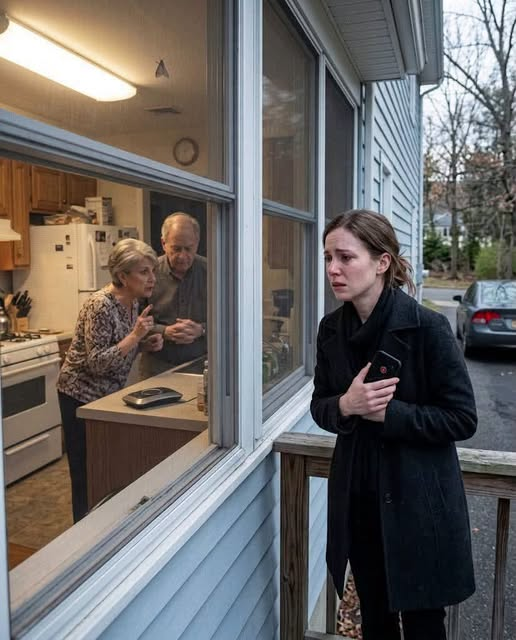
“But the second there was money, suddenly I was too fragile to make decisions.”
Nobody defended themselves.
Because there was nothing left to say.
I did not stay that night.
James arranged a hotel.
The following morning, I changed every emergency contact.
Every password.
Every authorization my parents had ever known.
I moved my important documents.
And for the first time in my adult life, I removed my mother from the list of people allowed to speak for me.
It felt cruel for about five minutes.
Then it felt peaceful.
The guardianship petition was withdrawn before it reached a hearing.
Once my recording, independent medical evaluation, and Nathan’s trust documents existed in one place, the plan became impossible to defend.
Dr. Voss later lost his relationship with my family’s law firm and faced professional scrutiny over how he had handled the situation.
I never needed revenge.
I needed distance.
My parents gave me plenty of reasons to keep it.
Chloe called three weeks later.
“You destroyed this family.”
I almost smiled.
“I recorded three adults planning to take control of my life.”
“You could have handled it privately.”
“You were going to handle me privately.”
Silence.
Then she said:
“Mom is devastated.”
“Nathan is dead.”
Another silence.
I continued.
“You still haven’t asked how I’m doing.”
That ended the call.
The six lofts changed my life less than people might think.
I sold one.
Kept two as investments.
Converted another into long-term housing for families staying in Manhattan during medical treatment.
Nathan would have liked that.
The remaining properties stayed in the trust.
The money gave me security.
But it also taught me something uncomfortable.
My family had spent years calling me irresponsible whenever I chose differently from them.
Nathan had spent years quietly watching me manage budgets, negotiate contracts, care for him during illness, and rebuild our life after setbacks.
He trusted me with everything.
They trusted me with nothing.
That difference mattered more than the inheritance itself.
Six months after Nathan’s funeral, I returned to Ridgewood.
Not to reconcile.
To collect one box from my childhood bedroom.
My mother met me at the door.
She looked older.
“Are you really never going to forgive us?”
I thought about it.
“Maybe.”
Hope appeared.
Then I continued.
“But forgiveness and access are different.”
Her face fell.
“I’m your mother.”
“Yes.”
“That should mean something.”
“It does.”
I looked at her.
“That’s why what you did hurt so much.”
She cried.
I didn’t.
I had already spent enough tears on people who appeared only when my life became valuable to them.
A year later, I visited Nathan’s grave.
I sat beside the headstone with coffee.
“I finally understand why you set up that trust,” I whispered.
The wind moved through the trees.
For once, I didn’t feel angry that he had known my family better than I did.
I felt loved.
Not because he left me millions.
Not because he left me property.
Because before he died, Nathan had looked at the woman I was and predicted the moment when grief might make everyone else believe they could speak over me.
So he made sure I would still have a voice.
I came home from my husband’s funeral believing the biggest surprise waiting for my family was an $8.5 million inheritance and six Manhattan lofts.
I was wrong.
The real surprise was mine.
I learned that the people who called themselves my protectors had been planning to control me.
And the man I had just buried—
was still the one protecting my freedom after he was gone.
My family wanted Nathan’s fortune.
But the most valuable thing he left me was something they could never put into a guardianship petition.
The proof that I was capable of standing on my own.
