My attorney, Daniel Hayes, closed the front door behind him.
He did not sit down.
Instead, he placed the folder on my kitchen table and looked from Melissa to my mother.
“What exactly were you discussing?”
Melissa gave an irritated laugh.
“Family matters.”
Daniel’s expression didn’t change.
“Interesting.”
He pushed the folder toward me.
“Because this became a legal matter yesterday.”
My stomach tightened.
“What happened?”
“Read the first page.”
I opened the folder.
At the top was the address of my house.
Below it was a document titled:
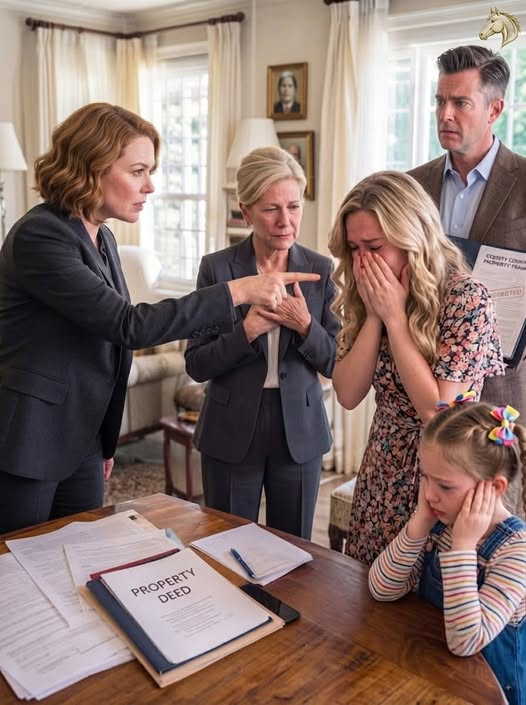
TRANSFER-ON-DEATH DEED — DRAFT
My name appeared as the property owner.
Melissa’s daughter was listed as the beneficiary.
I stared at it.
For several seconds, I couldn’t understand what I was seeing.
Then I noticed something worse.
At the bottom was a signature.
Mine.
Except I had never signed it.
I slowly looked at my sister.
Her face had gone pale.
“Melissa?”
Mom immediately intervened.
“Claire, don’t overreact.”
That was all I needed.
“You knew about this?”
Mom tightened her lips.
“It was only preparation.”
“Preparation for what?”
“For the future.”
I stood.
“My future?”
Nobody answered.
Daniel pulled out another page.
“This document was submitted to a title company for preliminary review three days ago.”
Melissa finally spoke.
“It wasn’t filed.”
“Because the title company flagged the signature,” Daniel replied.
Her eyes snapped toward him.
So she knew exactly what had happened.
I felt something cold spread through me.
“You tried to transfer my house?”
“No!”
Melissa stood.
“I was making sure my daughter would be protected if anything happened to you.”
“I’m forty-one.”
“People die at forty-one.”
The words landed hard.
My mother looked down.
I stared at both of them.
“What exactly are you expecting to happen to me?”
Silence.
Then Daniel quietly removed one more document.
A letter from an estate-planning firm.
The firm had been contacted by Melissa.
She had claimed that I was suffering from “increasing cognitive instability” and might soon be unable to manage my property.
I read the sentence twice.
Then a third time.
My hands began trembling.
“You told a lawyer I was mentally incompetent?”
Melissa crossed her arms.
“I said you’ve been under stress.”
“You said I might become unable to manage my own affairs.”
“Because you’ve been acting strangely.”
I laughed.
“When?”
“You work too much.”
“That makes me incompetent?”
“You live alone.”
“So?”
“You forget family events.”
“I work emergency shifts.”
Mom finally put down her coffee.
“Claire, your sister was only trying to plan responsibly.”
I turned toward her.
“By declaring me unstable?”
“She never declared anything.”
“Then why is my forged signature on a deed?”
Mom said nothing.
The room became completely still.
My niece was staring at us from the doorway.
She was only eight.
None of this was her fault.
I forced my voice to soften.
“Sweetheart, could you go watch television in the living room for a few minutes?”
She looked at Melissa.
Her mother nodded.
After she left, I closed the kitchen door.
Then I faced my sister.
“Tell me everything.”
Melissa’s jaw tightened.
“There is nothing to tell.”
Daniel spoke calmly.
“Then perhaps we should discuss the home-equity inquiry.”
Melissa froze.
I looked at him.
“What inquiry?”
He opened another page.
Someone had contacted a lender using information about my property.
Not to borrow yet.
To ask whether a future beneficiary could obtain financing against an expected inheritance.
My mother whispered:
“Melissa…”
That was the first moment I realized Mom hadn’t known everything.
Melissa turned toward her.
“It was just a question.”
I stared at my sister.
“You weren’t planning security for your daughter.”
My voice became quiet.
“You were already calculating how to borrow against my house.”
“No.”
“Then explain it.”
Melissa’s face twisted.
“My divorce destroyed me financially!”
There it was.
Finally.
The truth.
Her ex-husband had stopped covering several expenses.
Melissa’s credit cards were nearly maxed out.
She had fallen behind on rent.
Private school tuition was due.
And apparently, instead of telling me she needed help, she had decided my house was her solution.
“I would have asked you,” she said.
“When?”
“Eventually.”
“Before or after forging my signature?”
“I didn’t forge it.”
I stared at her.
“Then who did?”
Her eyes moved toward Mom.
My mother’s face crumpled.
I stopped breathing.
“Mom?”
She began crying.
“Claire, I thought it was just to see whether the paperwork was possible.”
My chest tightened.
“You signed my name?”
“I’ve known your signature your whole life.”
For one second, I genuinely couldn’t speak.
My own mother.
The woman who had taught me never to sign documents without reading them.
The woman who had watched me work double shifts for twelve years to pay for this house.
She had copied my signature because she believed Melissa’s daughter deserved my property more than I deserved control over it.
Daniel stepped closer.
“Claire?”
I raised one hand.
“I’m fine.”
Mom reached toward me.
“Please understand. Your sister has a child.”
I stepped back.
“And I don’t.”
“That isn’t what I meant.”
“It’s exactly what you meant.”
My voice broke.
“For years, every decision in this family has been measured against the fact that Melissa became a mother and I didn’t.”
Mom shook her head.
“No.”
“Yes.”
Christmas?
Melissa chose the schedule because she had a child.
Vacations?
Melissa chose the destination.
Dad’s belongings after he died?
Melissa received most of them because someday they would “pass to the next generation.”
I never complained.
Because I loved my niece.
But somewhere along the way, my family had started treating childlessness as proof that nothing I owned needed to remain mine.
Melissa’s expression hardened.
“What are you going to do with this place anyway? Grow old here alone?”
Daniel’s jaw tightened.
I looked at her.
“That sentence just cost you whatever sympathy I had left.”
I asked them to leave.
Mom cried.
Melissa shouted.
My niece looked confused when they gathered their coats.
I knelt beside her.
“None of this is because of you.”
“Am I not getting the house?”
My heart broke.
Not because of the question.
Because someone had already taught her to expect it.
I touched her cheek.
“This house belongs to me.”
She nodded slowly.
“Okay.”
Simple.
An eight-year-old understood in three seconds what two grown women had refused to accept.
They left.
Daniel remained.
For several minutes, I stood in the kitchen staring at the chair where my mother had been sitting.
Finally, I asked:
“What happens now?”
“We protect the property first.”
He had already prepared fraud alerts with the title company.
Additional verification would be required before any transfer involving my house could proceed.
Then he looked at me carefully.
“And you decide how far you want to take the forged document.”
I closed my eyes.
My mother had signed my name.
There was no version of that sentence that didn’t hurt.
“I need time.”
“You have it.”
Two weeks later, Melissa called from a number I hadn’t blocked.
“Mom’s sick.”
My stomach tightened.
“What happened?”
“She’s been crying constantly. Her blood pressure is high.”
I remained silent.
Then Melissa added:
“You did this.”
Something inside me became very calm.
“No.”
“You threw her out.”
“From my house.”
“You threatened legal action.”
“After she forged my signature.”
“She was helping me!”
“Exactly.”
Silence.
Then Melissa changed tactics.
“I’m going to lose my apartment.”
I closed my eyes.
“Why didn’t you just tell me?”
Her voice cracked.
“Because you would have judged me.”
“No.”
“I know you.”
“You knew me well enough to copy my signature but not well enough to ask for help?”
She started crying.
I continued:
“I might have paid your rent for six months.”
Silence.
“I might have helped with school expenses.”
More silence.
“But you didn’t want help.”
I finally understood.
“You wanted ownership.”
Melissa hung up.
A month later, I changed my estate plan.
Not because I hated my niece.
Quite the opposite.
I established an education trust for her.
Enough to help with college someday.
But the house?
I made a different decision.
Years earlier, when I was a new emergency-room nurse, I had met women who remained in dangerous homes because they had nowhere else to recover after leaving.
So I created instructions that, after my death, the property would be sold and the proceeds donated to a local transitional-housing program for women and children rebuilding their lives.
When Daniel reviewed the documents, he looked at me.
“Are you certain?”
“Yes.”
“What about family expectations?”
I smiled.
“I think we’ve established how I feel about those.”
Mom came to see me three months later.
She stood on the porch.
I didn’t immediately invite her inside.
She looked smaller.
Older.
“I’m sorry.”
I waited.
She swallowed.
“I thought because Melissa had a daughter…”
She stopped herself.
“Say it.”
Tears filled her eyes.
“I thought she needed the house more than you did.”
There it was.
Not pretty.
But honest.
“And because I don’t have children?”
“You always seemed so capable.”
I almost laughed.
“That was my punishment?”
She shook her head.
“No.”
“But you thought I would manage.”
“Yes.”
That answer hurt.
Because I finally understood the pattern.
Melissa needed help, so everyone protected her.
I appeared strong, so everyone took from me.
My time.
My money.
My holidays.
Eventually, apparently, my house.
“Mom.”
She looked at me.
“Being capable doesn’t mean I exist to absorb everyone else’s consequences.”
She began crying.
“I know that now.”
I believed she did.
But understanding did not erase what happened.
“I love you.”
Her face crumpled.
“I love you too.”
“But you’re not getting a key again.”
She nodded.
“I understand.”
That was how we started rebuilding.
Slowly.
With boundaries.
Not pretending.
Melissa took much longer.
She moved into a smaller apartment.
Her daughter changed schools.
She blamed me for both.
For almost a year, we barely spoke.
Then one Saturday morning, my niece appeared at my door with Melissa standing several steps behind her.
My niece held a small potted plant.
“Aunt Claire?”
“Yes?”
“This is for your house.”
I smiled.
“What is it?”
“Jasmine.”
She looked back at her mother.
“Mom says I should apologize.”
I looked at Melissa.
Her eyes were red.
My niece continued:
“I told my friends I was getting your house someday.”
She lowered her head.
“But it’s yours.”
I hugged her.
“Yes.”
Then she whispered:
“Can I still visit?”
My throat tightened.
“Of course.”
When I stood again, Melissa was crying.
“I’m sorry.”
I waited.
She didn’t mention rent.
She didn’t mention inheritance.
She didn’t mention how difficult her life had become.
She simply said:
“I treated your life like it mattered less because you didn’t build it the way I built mine.”
For the first time, she understood.
I stepped aside.
“Come in.”
Not because everything was forgiven.
But because genuine apologies deserve somewhere to begin.
Years later, the jasmine plant became enormous.
My niece was seventeen when she helped me move it into a larger pot.
She glanced around the kitchen.
“Do you remember when Mom told me this house would be mine?”
I laughed.
“I remember.”
She groaned.
“I was awful.”
“You were eight.”
“Still embarrassing.”
I handed her the soil.
“You weren’t the problem.”
She became quiet.
Then she asked:
“What are you actually going to do with the house someday?”
I smiled.
“Something useful.”
“You’re still not telling me?”
“No.”
She laughed.
“Fair.”
I looked around the home I had bought with thousands of hours spent under hospital lights.
The walls I painted.
The mortgage I paid.
The garden I planted.
The life I built.
For years, my family thought property only mattered because of who inherited it next.
They were wrong.
A home has value while you are alive.
In the mornings you wake there.
In the nights you return exhausted.
In the privacy of knowing the key belongs in your hand.
And that afternoon when Melissa promised my house to her daughter, I finally learned something I should have understood years earlier:
People who love you can still become dangerously comfortable deciding what you should sacrifice.
Sometimes the only way to remind them where the boundary is…
is to make them stand on the other side of it.
My mother thought the house should “stay in the family.”
She was right about one thing.
It did.
Because I finally remembered that I was family too.
