Elena was admitted before midnight.
The doctor took one look at her fever, dehydration, and recent surgery and ordered immediate treatment.
Noah was examined too.
He was cold and hungry, but safe.
I sat beside Elena’s bed with my son asleep against my chest and watched the New Year arrive through a hospital window.
At 12:03, my mother sent me a photograph.
She, Rachel, and Rachel’s husband Mark were standing beside a rooftop pool in Miami, holding champagne.
“Happy New Year! Wish you were here!”
I stared at the picture.
Then I opened my banking app.
The cards I had frozen were already producing alerts.
$1,870 declined at the hotel.
$640 declined at a nightclub.
$3,200 declined at a designer store.
Then my phone rang.
Mom.
I answered.
“Daniel! Something is wrong with the cards.”
Not How is Elena?
Not How is Noah?
The cards.
“I canceled them.”
Silence.
Then she laughed nervously.
“Why would you do something stupid like that?”
I looked at my wife sleeping beneath hospital blankets.
“Where is the fourteen thousand dollars?”
Mom stopped laughing.
“What money?”
“The money I sent for Elena and Noah.”
“Oh, that.”
My jaw tightened.
“Yes. That.”
She sighed.
“We had expenses.”
“You had one job.”
“Daniel, don’t be dramatic. Elena is an adult. She can feed herself.”
“She had emergency surgery.”
Rachel’s voice suddenly appeared in the background.
“Is he seriously blaming us?”
Then Mark shouted something about the hotel needing another card.
I ended the call.
At sunrise, I went back to the apartment.
Our building had cameras in the lobby, hallways, and elevator.
I asked management for the footage covering the weeks after Elena came home from the hospital.
The first recordings made me sick.
My mother arrived almost every morning.
But she rarely stayed longer than twenty minutes.
Rachel came twice.
Mark never came to help at all.
Then I saw why they kept visiting.
Boxes left the apartment.
Groceries.
Baby supplies.
The expensive recovery foods I had ordered.
Even the small space heater I bought because Elena was always cold after surgery.
My mother carried it out herself.
I called Elena.
“Did Mom take the heater?”
There was a pause.
“She said Rachel needed it.”
“And the groceries?”
“She said some of them would expire.”
“Elena.”
Her voice broke.
“She told me you said I should stop acting helpless.”
I closed my eyes.
“I never said that.”
“I know that now.”
Then I found the apartment’s door-camera recordings.
One clip changed everything.
My mother stood in the hallway talking to Rachel.
Rachel asked:
“What if Daniel checks the account?”
Mom laughed.
“He won’t. He’s overseas. By the time he comes home, Elena will have figured things out.”
Rachel lowered her voice.
“And the Miami trip?”
“He always pays for family vacations. We’re just taking ours early.”
Then Mark stepped into frame.
“Fourteen thousand should cover everything.”
My mother answered:
“Unless his useless wife spends it first.”
I stopped the video.
There was nothing left to misunderstand.
I called my bank.
Then my attorney.
Then military legal assistance.
By noon, the records showed exactly where the money had gone.
The fourteen thousand dollars was only the beginning.
While I had been overseas, my mother had used the authorized card I gave her for household emergencies to charge nearly $38,000.
Resort reservations.
Flights.
Restaurants.
Designer clothing.
Cash advances.
Rachel and Mark had used additional cards connected to my account.
And one week before Noah was born, my mother had transferred $9,500 into her personal account labeled:
“Family care reimbursement.”
Reimbursement for what?
Leaving my recovering wife alone?
Taking food from my newborn son?
At 2:16 that afternoon, my attorney asked one question.
“Did you authorize any personal spending?”
“No.”
“Do you want to formally dispute it?”
I looked at Elena.
She was awake now.
Noah slept beside her.
“Yes.”
That single word changed the rest of their vacation.
The hotel contacted them first because their incidentals could no longer be charged.
Then the bank froze several transactions.
Then investigators began asking questions about cash advances and transfers.
By evening, my mother had called twenty-six times.
I answered number twenty-seven.
She screamed immediately.
“Do you know what you’ve done?”
“Yes.”
“We’re stranded!”
“You have return tickets.”
“The hotel says we owe money!”
“Then pay it.”
“With what?”
I almost laughed.
“Your own money.”
She went silent.
Then her voice changed.
Soft.
Manipulative.
The voice she had used on me since childhood.
“Daniel, sweetheart, family helps family.”
I looked toward Elena.
“That’s exactly what I thought when I sent you fourteen thousand dollars.”
Mom’s tone hardened again.
“You’re choosing that woman over your own mother.”
“No.”
I spoke slowly.
“I’m choosing my wife and my son over people who left them without food while spending their money beside a pool.”
Rachel grabbed the phone.
“Elena turned you against us!”
I heard Mark behind her.
I said:
“Elena begged me not to confront you.”
That silenced them.
“She protected you even after you abandoned her.”
Nobody answered.
Then I told them about the cameras.
Rachel whispered:
“What cameras?”
Mom hung up.
They came back to New York two days later.
Not triumphantly.
Not with vacation photographs.
They came back to lawyers.
My mother arrived at my apartment before I did.
I watched her through the new door camera as she punched in her old access code again and again.
It no longer worked.
When I finally arrived, she was furious.
“You changed the lock?”
“Yes.”
“This is my son’s home!”
“My wife’s too.”
Rachel stood behind her.
Mark stayed near the elevator.
Mom lowered her voice.
“We need to discuss the bank situation privately.”
“There’s nothing private anymore.”
My attorney stepped out of the apartment.
Mom went pale.
He handed her an envelope.
It contained notice that her access to my accounts was permanently revoked, along with documentation concerning disputed transactions.
Rachel began crying.
“Are you trying to get us arrested?”
I stared at her.
“You spent emergency money meant for a woman recovering from surgery and an eleven-day-old baby.”
“It was supposed to be temporary!”
There was that word again.
Temporary.
As if theft became generosity when you planned to replace it later.
Mark finally spoke.
“It wasn’t even all your money. Your mother helped you for years.”
I looked at him.
“Then she can show the bank which charges were hers.”
He shut up.
My mother stepped closer.
“You would destroy your own family over money?”
I shook my head.
“No.”
Then I opened the apartment door.
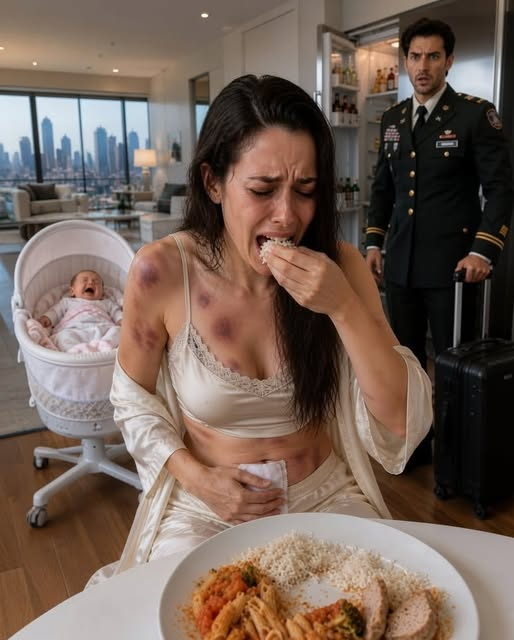
“You destroyed this family over money.”
Elena was sitting inside with Noah.
Mom saw her.
For one moment, I thought she might apologize.
Instead she said:
“You look better.”
Elena stared at her.
Then answered quietly:
“Because someone finally fed me.”
My mother’s face changed.
That sentence ended any possibility of pretending.
I stepped between them.
“You need to leave.”
Mom looked at me as though I were a stranger.
“You’re throwing your mother out?”
“Yes.”
She pointed toward Elena.
“She will leave you eventually.”
I looked at my wife.
Then back at the woman who had raised me.
“Maybe.”
Mom seemed surprised.
“But if she ever does, it won’t make what you did acceptable.”
I closed the door.
The investigation continued for months.
Not every charge became a criminal matter, but the bank recovered thousands through disputed transactions and repayment agreements.
My mother was required to return the money she had transferred to herself.
Rachel and Mark sold several of the luxury purchases from Miami to cover what they owed.
The vacation photographs disappeared from social media.
So did most of their interest in speaking to me.
Mom told relatives I had become cruel after deployment.
Then someone sent the family the hallway recording.
After that, the story became much harder for her to control.
Elena recovered slowly.
I took family leave.
For the first time since Noah’s birth, she slept while someone else handled midnight bottles.
I learned how to swaddle badly.
How to warm formula without overheating it.
How a newborn could produce more laundry than an infantry platoon.
And every time Elena apologized for needing help, I reminded her:
“You had surgery. You don’t have to earn care.”
Three months later, my mother wrote me a letter.
Not an apology.
An explanation.
She said she believed Elena was “too dependent.”
She said she wanted to teach her independence.
She said she assumed I would forgive her because I always had.
That last sentence was probably the only honest one.
I never responded.
Rachel eventually apologized.
A real apology.
No excuses.
No request for money.
No demand that I forgive her immediately.
I allowed her to see Noah gradually.
Mark was not welcome in our home.
My mother refused to apologize for another eight months.
By then, she had missed Noah’s first laugh.
His first tooth.
His first Christmas.
Finally, she asked to meet me alone.
We sat in a coffee shop.
She looked older.
“I made a terrible mistake,” she said.
“No.”
Her eyes lifted.
“You made many decisions.”
She began crying.
“I thought you would always choose me.”
I understood then.
That had been the real problem.
She had never believed I would hold her accountable.
“I love you, Mom.”
Hope appeared in her face.
Then I finished.
“But loving you does not require trusting you.”
Her smile disappeared.
She was allowed back into our lives eventually.
Slowly.
With boundaries.
No keys.
No bank cards.
No unsupervised decisions about Noah.
Trust was no longer something she received because she was my mother.
She had to earn it.
A year after that New Year’s Eve, Elena and I stayed home.
No luxury hotel.
No party.
No champagne rooftop.
Just the three of us.
At midnight, Noah woke crying.
I lifted him from his crib.
Elena smiled sleepily.
“Happy New Year.”
I kissed her forehead.
Then I thought about the previous year.
I had come home believing my family had failed Elena because they were careless.
The evidence showed something worse.
They had made choices.
They chose Miami.
They chose champagne.
They chose my money.
And they chose to believe the woman recovering from surgery would remain silent because she had nowhere else to turn.
They were wrong.
I had spent years trusting my mother because I thought family meant giving people endless chances.
That New Year taught me something different.
Family is not the person who has access to your money, your home, or even your blood.
Family is the person who protects the people you love when you cannot be there.
My mother failed that test.
And the moment I came home two days early, she finally discovered that being my mother did not make her immune to the consequences.
