The elevator doors opened.
Hanh Xuyen stood directly in front of me.
Beside him was Lam Nhuoc.
She was pushing a luxury stroller.
Inside was the same baby from the videos.
For half a second, nobody moved.
Then Nhuoc looked down at my daughter.
Her smile became strangely sweet.
“Oh. So this is your baby.”
Your baby.
Not Hanh Xuyen’s daughter.
Not his child.
Just mine.
Hanh Xuyen frowned.
“What are you doing here?”
I almost laughed.
“This is a hospital.”
“You brought the baby by yourself?”
“Yes.”
His expression hardened as though I had done something wrong.
“I told you I was busy.”
Before I could answer, the baby in Nhuoc’s stroller began crying.
Hanh Xuyen immediately bent down.
His entire face changed.
“Come here.”
He lifted the little boy carefully.
The same man who had never held our daughter even once began rocking another baby against his chest with practiced movements.
I looked at him.
Then at Nhuoc.
Then at the amethyst bracelet on her wrist.
Exactly the bracelet from the photograph posted before my daughter was born.
I finally asked:
“Is that your son?”
Hanh Xuyen’s body stiffened.
Nhuoc answered first.
“Yes.”
I looked at him.
“And his?”
Silence.
That silence told me everything.
Nhuoc lowered her eyes.
“Hanh Xuyen wanted to tell you at the right time.”
“The right time?”
My voice was almost calm.
“Before or after he threatened to divorce me?”
Hanh Xuyen became irritated.
“Don’t make a scene in the hospital.”
I looked around.
Nobody was watching us.
“I haven’t made one.”
I pointed at the child in his arms.
“How old is he?”
Nhuoc whispered:
“Seventeen days.”
My daughter was fifteen days old.
Two days.
Their children had been born two days apart.
Suddenly the deleted social-media post made perfect sense.
3.3 kilograms. Mother and baby safe.
He had posted about Nhuoc’s child from the wrong account.
Then someone warned him.
And he deleted it before his wife could understand that another woman had given birth to his son two days before I gave birth to his daughter.
I looked at Hanh Xuyen.
“You were there when he was born?”
He didn’t answer.
Nhuoc smiled faintly.
“He stayed all night.”
I felt something inside me become completely still.
Because while I had walked into the delivery room alone—
my husband had been upstairs becoming someone else’s perfect father.
I did not cry.
I simply took out my phone.
Hanh Xuyen’s eyes narrowed.
“What are you doing?”
“Calling a lawyer.”
His expression changed immediately.
“For what?”
I looked at him.
“The divorce you keep threatening me with.”
He gave a short laugh.
“You’re being emotional because you just had a baby.”
“No.”
I shook my head.
“I’ve finally stopped being emotional.”
That frightened him more.
He stepped toward me.
“You’re not divorcing me over this.”
“Over what?”
I asked gently.
“Your affair?”
“Your son?”
“Leaving me alone through pregnancy?”
“Lying about the VIP room?”
“Missing my appointments?”
“Or pretending my daughter didn’t exist while you played father to someone else’s child?”
His face darkened.
“Our daughter is mine too.”
I looked at the stroller.
“Then tell me her name.”
He froze.
Nhuoc turned toward him.
I almost felt sorry for him.
Almost.
“What is your daughter’s full name, Hanh Xuyen?”
Nothing.
He had never asked what I registered her as.
He had never seen the birth certificate.
He did not even know the name of the child he claimed was “his too.”
I smiled.
“That’s what I thought.”
Then I pushed the stroller past them.
The lawyer met me that afternoon.
I brought everything.
The deleted screenshot.
The messages.
The videos Nhuoc sent me.
The hotel-style VIP care-center receipts I later found on our shared financial statement.
And something even more useful:
six months of transfers from our marital account to Nhuoc.
Not small amounts.
Rent.
Medical expenses.
A maternity package.
Baby furniture.
A car.
While I had been told the VIP ward was “sold out,” Hanh Xuyen had paid for Nhuoc’s room upstairs.
While I had taken taxis to appointments, a driver had been assigned to her.
While he complained that my pregnancy was affecting his luck—
he had been preparing another woman’s nursery.
My attorney looked through the records.
“Did you authorize these transfers?”
“No.”
“Did you know about them?”
“No.”
She closed the folder.
“Then we document everything and deal with it properly.”
For the first time in months, I felt like I could breathe.
That evening, I returned to the care center.
Not home.
I asked the nurse to watch my daughter for twenty minutes.
Then I went back to the doctor.
I told her about the pain I had been ignoring.
She examined me and arranged treatment and follow-up.
Nothing dramatic.
Nothing that required me to collapse before someone finally believed me.
But when the doctor asked why I had waited, I could not answer.
The truth was embarrassing.
I had become so used to being treated as an inconvenience that I had started treating myself the same way.
That stopped that day.
Hanh Xuyen discovered the divorce filing the next morning.
He arrived at the care center furious.
“You filed without talking to me?”
I was feeding our daughter.
“Lower your voice.”
He looked at the baby.
For several seconds, something like guilt crossed his face.
Then he said:
“Nhuoc and I made one mistake.”
I laughed.
“One?”
He sat across from me.
“She came back when we were having problems.”
“We were having problems because you kept choosing her.”
“That’s not true.”
“You spent my pregnancy with her.”
“She was alone.”
“So was I.”
Silence.
“She was scared.”
“So was I.”
Nothing.
“She needed me.”
I looked down at our daughter.
“So did we.”
That finally shut him up.
Then he tried another approach.
“Nhuoc’s child is a boy.”
I slowly raised my eyes.
He realized too late what he had said.
There it was.
Not love.
Not responsibility.
A son.
His parents had always wanted a grandson.
During my pregnancy, when the scan showed I was having a girl, his mother’s enthusiasm had disappeared almost overnight.
Suddenly Nhuoc’s pregnancy made even more sense.
I asked:
“Did your family know?”
He said nothing.
I understood.
Everyone knew.
Except me.
His mother called that evening.
“Don’t rush into divorce. Men make mistakes.”
I listened quietly.
Then she added:
“Nhuoc gave birth to a boy. The child cannot grow up without his father.”
I looked at my daughter sleeping beside me.
“And mine?”
Silence.
“She’s a girl. She will naturally stay closer to her mother.”
That sentence ended the conversation.
I replied:
“Then your son can be the father he has already chosen to be.”
I hung up.
The financial review became ugly.
Hanh Xuyen had spent a significant amount of marital money supporting Nhuoc without my knowledge.
My lawyer did not promise me some fantasy where I took everything.
We simply traced what belonged to the marriage, documented what had been diverted, and negotiated accordingly.
The apartment purchased during our marriage was divided under the settlement.
The undisclosed transfers became part of the financial accounting.
I received primary physical custody of our daughter, with a structured parenting arrangement for Hanh Xuyen.
At first he protested.
“I’m her father.”
My attorney asked him:
“When was her last pediatric appointment?”
He didn’t know.
“What formula is she using?”
Silence.
“What time does she usually sleep?”
Nothing.
He looked at me angrily.
As though I had somehow embarrassed him by knowing our own child.
I said nothing.
He had done that himself.
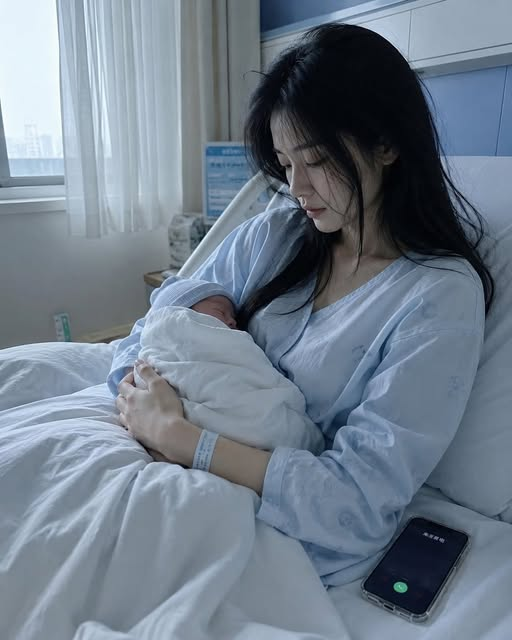
Then something happened I did not expect.
Nhuoc left him.
Four months after our divorce proceedings began.
She discovered that Hanh Xuyen was no longer willing to fund the same lifestyle after accountants and attorneys began reviewing everything.
Apparently being the cherished mother of his son was less romantic once every expense had to come from his own clearly separated income.
She sent me one final message:
You won.
I stared at it.
Then replied:
No. Our children lost enough already. There was never anything to win.
I blocked her.
I had no interest in becoming the woman who celebrated another child losing stability.
The little boy had done nothing wrong.
Neither had my daughter.
The adults had.
Hanh Xuyen came to see me several weeks later.
He looked tired.
“Nhuoc left.”
“I heard.”
“She took the baby to her mother’s house.”
I nodded.
He waited for sympathy.
I had some.
Just not for the reason he wanted.
“I hope you remain involved in your son’s life.”
He stared at me.
“You don’t hate him?”
“The baby?”
“No.”
I shook my head.
“Why would I?”
His face changed.
“He didn’t betray me.”
That sentence landed harder than anything else I said.
Hanh Xuyen lowered his head.
“I made a mess of everything.”
“Yes.”
“I thought you would always stay.”
“I know.”
“Even when I threatened divorce…”
“You expected me to panic.”
He nodded.
“Why didn’t you this time?”
I looked at my daughter playing with my finger.
“Because one day I realized you had threatened me with freedom so many times that eventually I stopped being afraid of receiving it.”
He looked away.
Our divorce became final when my daughter was almost one year old.
By then, Hanh Xuyen had started learning how to be her father.
Slowly.
Awkwardly.
Under clear boundaries.
The first time he came for a supervised visit, he brought an expensive gold bracelet.
I looked at it.
“For a baby?”
He seemed embarrassed.
“I didn’t know what to buy.”
“Bring diapers next time.”
He did.
Then bottles.
Then a picture book.
Eventually, he stopped trying to purchase fatherhood and started showing up for it.
I did not take him back.
But I was glad my daughter gained something from his regret.
On her second birthday, Hanh Xuyen came early.
He sat on the floor helping her build blocks.
She knocked down his tower and laughed.
He laughed too.
For one strange second, I remembered the video Nhuoc had once sent me.
Hanh Xuyen holding another baby.
Looking like an exemplary father.
Back then, that image nearly destroyed me.
Now I understood something.
A photograph can show a perfect family for one second.
It cannot show who waits through the night.
Who attends appointments.
Who knows the medicine.
Who remembers the favorite toy.
Who stays after the camera turns off.
Before leaving, Hanh Xuyen stopped beside me.
“I’m sorry I wasn’t there when she was born.”
I looked at him.
“So am I.”
He swallowed.
“I can never fix that.”
“No.”
For once, I did not soften the truth.
“But you can decide what kind of father you are from now on.”
He nodded.
Then left.
The day my daughter was born, I posted only four words:
Mother and child are safe.
At the time, Hanh Xuyen thought my silence was punishment.
It wasn’t.
I was exhausted.
I had finally run out of energy to beg a man to notice the family waiting for him.
He had accidentally posted another woman’s baby first.
Deleted it.
Ignored me.
And assumed I would still be there whenever he finished playing husband somewhere else.
He was wrong.
The deleted post gave me the truth before he was ready to admit it.
But the most important thing that disappeared that day was not his social-media status.
It was the version of me who still believed being chosen second was better than leaving.
My daughter was born without her father beside me.
But she gave me something much greater than the marriage I lost.
She gave me a reason to build a home where neither of us would ever have to wonder whether we mattered.
And when Hanh Xuyen finally learned his daughter’s name, her routine, her favorite stories, and the sound of her laugh—
he was no longer my husband.
He was simply learning, far too late, how to become her father.
