The phone rang three seconds after I sent:
Who is that?
I answered.
Chu Duy’s breathing was unsteady.
“Wife, don’t scare me.”
I started the car.
“Why would you be scared?”
“The photos were a misunderstanding.”
“What photos?”
Silence.
He knew immediately that pretending not to understand would only make things worse.
“Lin Yao was just helping host the annual party.”
“The employees misunderstood.”
“And the necklace?”
Another pause.
“Company reward.”
I almost laughed.
Last month, our family supposedly couldn’t afford to fix a leaking ceiling.
But his secretary could receive diamonds as a “company reward.”
Then Chu Duy said the sentence he clearly believed would calm me.
“Anyway, the company shares are still in your name.”
My fingers tightened slightly around the steering wheel.
I answered:
“Not anymore.”
Silence.
Absolute silence.
Then his voice exploded.
“What do you mean?”
I looked at the morning traffic.
“Exactly what I said.”
“Where are you?”
“Driving.”
“Turn around. Come to the company immediately.”
“No.”
His breathing became heavier.
“Xu Qing, stop joking. You hold fifty-one percent of Duyuan Technology.”
“Held.”
The line went quiet again.
This time, I smiled.
Chu Duy and I had started the company together seven years earlier.
People remembered him because he was the one standing on stages.
I had been the one standing behind bank counters.
When his first investor withdrew, I sold an apartment my father had left me.
When payroll was short, I mortgaged another property.
When clients refused to trust a company with six employees, I used my own industry connections to introduce them.
At incorporation, Chu Duy held forty-nine percent.
I held fifty-one.
He wanted it that way.
Back then he hugged me and said:
“I want you to feel secure forever.”
For years, I believed those shares represented love.
Later, I understood they represented something else.
Responsibility.
Every time the company needed a guarantee, my name appeared.
Every time Chu Duy wanted to borrow, he reminded the bank that his wife was the controlling shareholder.
Every time his parents criticized me for not being “supportive enough,” they forgot that the company they bragged about at family dinners had been built partly on my assets.
Yet at home, Chu Duy slowly became the man who called me “too cautious.”
“Too domestic.”
“Out of touch with business.”
Two years earlier, after Noan Noan started school, I stopped participating in daily operations.
Lin Yao entered the company around the same time.
Young.
Efficient.
Always available.
And apparently very comfortable wearing my husband’s hand around her waist.
What Chu Duy didn’t know was that six months earlier, I had started cleaning up my finances.
Not because I suspected an affair.
Because our accountant called me about a company loan application carrying my personal guarantee.
I had never approved it.
When I confronted Chu Duy, he laughed.
“The bank only needed your signature as procedure.”
“My signature?”
“I had the finance team use the previous authorization.”
I stared at him.
“You reused my authorization?”
“Don’t make it sound serious.”
That night, I called a lawyer.
Quietly.
From then on, I began separating myself from every obligation that depended solely on being Chu Duy’s wife.
The fifty-one percent shareholding was the hardest.
I didn’t sell it to a competitor.
I didn’t give it away.
I transferred my shares into a family holding company created for Noan Noan and me, with professional voting procedures and restrictions preventing anyone—including Chu Duy—from using them as collateral without written approval.
Legally, I no longer held those shares personally.
The holding company did.
And the transfer had been registered the previous afternoon.
The year-end party happened that night.
Perfect timing.
Chu Duy didn’t know any of that.
He shouted:
“You transferred the shares without telling me?”
“They were mine.”
“We’re husband and wife!”
“Yes.”
“And you hosted another woman as your wife last night.”
“She wasn’t hosted as my wife!”
“Then why did twenty-seven employees call her that?”
“Nobody dared correct them because you didn’t.”
He became quiet.
I continued:
“And why was she wearing a necklace worth more than what you told me the company could afford for my birthday?”
“It was a reward.”
“Fine.”
“Then Finance can explain the approval.”
Another silence.
Interesting.
He arrived home before me.
When I opened the door, he was standing in the living room.
Still wearing yesterday’s shirt.
His eyes were red.
On the table lay printouts from the corporate registry.
“You actually did it.”
“Yes.”
He slapped the papers.
“You moved fifty-one percent into Qing Holdings.”
“Yes.”
“Who controls Qing Holdings?”
“I do.”
His shoulders loosened slightly.
“Then nothing has changed.”
I looked at him.
“You still don’t understand.”
“What?”
“You used to be able to say, ‘My wife will sign.’”
“You used to be able to tell banks, vendors and your parents that the controlling shareholder was your spouse.”
“Now, every major decision involving those shares goes through formal corporate approval.”
His face changed.
“No more verbal promises.”
“No more recycled authorizations.”
“No more using my name because you assume I’ll forgive you afterward.”
Then his phone rang.
Lin Yao.
He rejected it immediately.
Too late.
I had already seen.
I asked:
“Are you sleeping with her?”
“No.”
Immediate.
Too immediate.
I nodded.
“Good.”
He stared at me.
“That’s it?”
“Yes.”
“You believe me?”
“No.”
His expression tightened.
“I just don’t need a confession before making decisions about my own life.”
That hurt him more.
He stepped closer.
“You’re my wife.”
“I know.”
“We have a daughter.”
“I know.”
“Then why are you acting like one stupid party can destroy seven years?”
I looked toward the ceiling.
The water stain was still there.
A year after he promised to fix it.
“One party didn’t.”
I turned back to him.
“It just gave me a photograph of what our marriage already looked like.”
That afternoon, the finance director called me.
Not Chu Duy.
Me.
“Mrs. Xu, we need clarification regarding several executive expenses.”
I already knew what was coming.
Lin Yao’s necklace had been paid through the company.
Not as a performance bonus.
As “client relationship expenditure.”
There were also hotel rooms.
Luxury dinners.
Clothing.
A car allowance far above her position.
Nothing proved an affair by itself.
But it proved something more relevant to the company.
Chu Duy had been using corporate funds for personal favoritism.
I requested an independent review.
Not because I wanted revenge.
Because if I remained the controlling party through my holding company, I had a duty to know what was happening.
Chu Duy called immediately.
“You brought auditors into my company?”
“Our company.”
He stopped.
I almost smiled.
Apparently ownership mattered again.
The review lasted three weeks.
The result was ugly but not catastrophic.
The company was still healthy.
Employees would not lose their jobs.
Clients remained.
But several expenses had been improperly approved.
Lin Yao had received benefits no comparable employee received.
And Chu Duy had authorized them personally.
The board required repayment of some expenses and removed his unilateral authority over executive compensation and major discretionary spending.
Lin Yao was transferred out of his direct reporting line pending HR review.
She resigned instead.
Before leaving, she sent me a message.
We never slept together.
I stared at it.
Then she added:
But he let everyone think I was special because he enjoyed being admired. I enjoyed it too. I’m sorry.
That answer felt believable.
Maybe there had been no physical affair.
By then, it hardly mattered.
Chu Duy had allowed another woman to occupy my public place because he liked what it did for his ego.
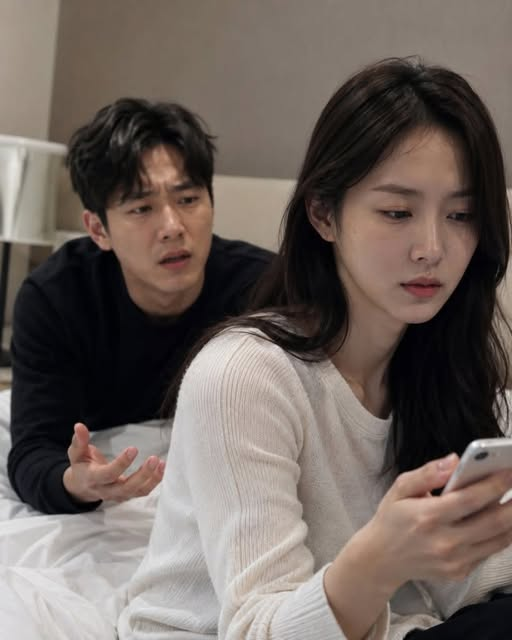
And when the photographs reached me, his first fear had not been losing his wife.
It had been losing my shares.
That told me enough.
I filed for divorce.
He refused to believe me at first.
“You’re divorcing over photographs?”
“No.”
“Over Lin Yao?”
“No.”
“Then what?”
I looked at him.
“Because when I stopped answering my phone, you called 137 times.”
His face changed.
I continued:
“But during the previous year, when I told you I was lonely, how many times did you listen?”
He looked away.
“When Noan Noan asked why you missed her school performance, what did you say?”
“Work.”
“When I asked you to fix the ceiling?”
Silence.
“When I asked you to come home for dinner?”
More silence.
“You knew how to panic when something you valued might disappear.”
I took the divorce agreement from my bag.
“You just didn’t panic when it was me.”
He cried.
That surprised me.
Not dramatically.
He simply sat at the dining table, covered his eyes and said:
“I thought you would always be there.”
I believed him.
That was exactly the problem.
I had become furniture in his life.
Essential.
Reliable.
Taken for granted.
Like the house.
Like the shares.
Like the wife who woke at 6:20 every morning, packed breakfast, took their daughter to school and never made scenes.
He mistook consistency for permanence.
Our divorce took months.
The company did not collapse.
I did not take everything from him.
Chu Duy kept his forty-nine percent.
My fifty-one percent remained in Qing Holdings, structured partly for my daughter’s long-term protection.
The board hired an experienced chief operating officer.
Chu Duy remained involved, but with controls he once considered insulting and later admitted were necessary.
Strangely, he became a better executive after losing the ability to treat the company like an extension of his mood.
Too late for our marriage.
But useful for hundreds of employees.
One evening, while exchanging Noan Noan, he looked at me and asked:
“Do you still own the necklace I gave you when we started the company?”
I smiled.
“The cheap silver one?”
“Yes.”
“I do.”
He looked relieved.
Then I added:
“It means more than the expensive one you bought Lin Yao.”
His expression collapsed.
I wasn’t trying to hurt him.
It was simply true.
That silver necklace had cost him eighty yuan when we had almost nothing.
He saved for two weeks.
The diamond necklace for Lin Yao cost far more.
But company money had paid for it.
One represented sacrifice.
The other represented vanity.
Price and value had never been the same thing.
Two years later, Noan Noan asked why her father and I lived separately.
I told her:
“Sometimes two people can care about each other and still stop being good partners.”
She considered that.
“Did Dad do something bad?”
“Adults made mistakes.”
“Did you?”
“Yes.”
“What?”
I smiled sadly.
“I stayed quiet too long.”
She nodded as if this made perfect sense.
Then asked for ice cream.
Children are excellent at refusing unnecessary drama.
I learned from her.
I eventually moved out of the apartment with the leaking ceiling.
Not because I hated it.
Because I wanted a home that did not feel like a waiting room for promises.
Before selling it, I finally hired someone to repair the water damage.
The contractor finished in one afternoon.
I stood under the clean white ceiling and laughed.
A year.
I had waited a year for Chu Duy to do something that took four hours and one phone call.
That might have been our marriage in miniature.
People still remember the year-end party.
The red dress.
His hand at Lin Yao’s waist.
Twenty-seven comments calling her “the owner’s wife.”
But the photograph itself was never the most important part.
The most important part happened the following morning.
Chu Duy called me in panic and said:
“The company shares are still in your name.”
As though fifty-one percent of a company were supposed to compensate me for being publicly erased from my own marriage.
I answered:
“Not anymore.”
He thought those words meant I was destroying him.
They didn’t.
I protected the company.
Protected my daughter.
Protected my own finances.
And finally stopped allowing marriage to serve as authorization for everything Chu Duy assumed he could do.
That night, everyone at his party called another woman the hostess.
I didn’t drive there.
I didn’t throw wine.
I didn’t fight for the title.
I turned off my phone and went to sleep.
Because by morning, I understood something very simple:
If your place in someone’s life has to be defended in public, it may already be empty in private.
So I didn’t fight to become Mrs. Chu again.
I became Xu Qing—
the woman who finally stopped confusing being needed with being loved.
