Ms. Liu Shufen arrived in Nanjing that afternoon with two suitcases and enough anger for the entire family.
The moment Tong Tuyet entered the apartment after evening self-study, her mother-in-law was already sitting in the living room.
“Tuyet, come here.”
Tong Tuyet stopped while changing her shoes.
“What is it?”
“My son has a heart problem and needs hospitalization. How can you still go to school?”
Tong Tuyet looked at Luc Kien Quan.
He suddenly felt uncomfortable.
His mother continued:
“No job is more important than your husband. Tomorrow you go to the school and ask for leave.”
Tong Tuyet put down her bag.
“Mom, last year when I had surgery, how many days did you stay with me?”
Ms. Liu froze.
“That was different.”
“How?”
“Your operation was successful.”
Tong Tuyet smiled faintly.
“You knew it was successful only after it was over.”
The room became quiet.
Ms. Liu’s expression hardened.
“I had back pain. Besides, your sister was there.”
Tong Tuyet nodded.
“Exactly.”
She turned toward Luc Kien Quan.
“Someone was there for me.”
Then she looked at his mother again.
“So someone can also be there for him.”
Ms. Liu slapped the armrest.
“You are his wife!”
Tong Tuyet’s expression did not change.
“And when I was sick, he was my husband.”
Luc Kien Quan opened his mouth.
Nothing came out.
His mother looked at him, waiting for him to defend her.
For twenty-five years, he usually would have.
That night he couldn’t.
Because suddenly he remembered the photograph Tong Tuyet had mentioned.
Blue sea.
White sand.
A beer in his hand.
He had posted it on the second day after her surgery.
At the time he had told himself there was no reason to rush back.
The doctor had said the procedure went well.
Her sister was there.
Work had already taken him to the province anyway.
What difference could two extra days make?
Now, facing possible hospitalization himself, he understood exactly what difference they made.
He didn’t want a competent nurse.
He wanted his wife.
And last year, his wife had wanted him.
He just hadn’t gone.
“Mom.”
Ms. Liu turned.
“Don’t pressure her.”
Her mouth fell open.
“What?”
“Tuyet has work.”
His mother stared at him as if the heart condition had already damaged his brain.
“You’re protecting her?”
“No.”
He looked toward his wife.
“I think I’m finally stopping myself from asking her for something I refused to give.”
Tong Tuyet looked at him.
For perhaps two seconds, something changed in her eyes.
Then it disappeared.
“I’m going to sleep.”
She entered the guest room and closed the door.
The next morning, Luc Kien Quan was admitted to the hospital.
His mother came with him.
Within six hours, he realized something else.
The woman who always said she loved her son most did not actually know how to care for him.
She forgot where she put his documents.
Complained about hospital food.
Asked nurses the same questions repeatedly.
Then called Tong Tuyet.
“Where is Kien Quan’s insurance card?”
Tong Tuyet answered.
“Second drawer of his study.”
“What medicine does he usually take?”
“I don’t know. Ask him.”
“What does he eat in the morning?”
“Whatever he wants.”
Ms. Liu became irritated.
“What kind of wife doesn’t know these things?”
There was a pause.
Then Tong Tuyet replied:
“The kind who has slept in another room for eighteen years.”
Luc Kien Quan heard every word through the speaker.
His mother hung up angrily.
He stared at the white hospital ceiling.
Eighteen years.
He had always described it casually.
His wife slept lightly.
He snored.
Their schedules were different.
It was more convenient.
That was what he told friends.
But suddenly he remembered the actual night she moved out of the master bedroom.
Their son, Jun, had been seven.
He had been sick for several days.
Tong Tuyet had asked Kien Quan to come home early because she had barely slept.
He promised.
Then a contractor invited him to dinner.
One drink became several.
He returned after midnight.
Jun was already asleep.
Tong Tuyet was carrying blankets into the guest room.
He had laughed.
“What, are you angry?”
She answered:
“No. You sleep better alone.”
He thought she would return after a few nights.
She never did.
He never asked why.
Because, if he was honest, separate rooms had been convenient for him too.
No questions when he came home late.
No one complaining about cigarette smoke on his clothes.
No expectation of conversation.
He had mistaken the absence of conflict for a successful marriage.
Three days after admission, their adult son arrived.
Jun was twenty-five now, working in another city.
He walked into the room, saw his grandmother peeling fruit and his father lying in bed, and asked:
“Where’s Mom?”
Ms. Liu snorted.
“At school. Your father is hospitalized and she still says she’s busy.”
Jun’s face changed.
“Grandma.”
“What?”
“Don’t say that.”
She stared at him.
Jun put his backpack down.
“Last year, when Mom had cancer surgery, Dad wasn’t there.”
Luc Kien Quan closed his eyes.
His son continued:
“I was.”
He looked at his father.
“I took the first train back.”
Luc Kien Quan whispered:
“I know.”
“No, Dad. You don’t.”
Jun sat down.
“The night after surgery, Mom couldn’t sleep. Then she saw your vacation photos.”
His father froze.
“She stared at them for a long time.”
Jun swallowed.
“Then she turned the phone over and told me, ‘Don’t call your father. He finally has time to relax.’”
Something squeezed painfully inside Luc Kien Quan’s chest.
Not the illness.
Something worse.
Jun continued:
“I asked if she was angry.”
“What did she say?” Luc Kien Quan whispered.
“She said she was too old to be angry anymore.”
That sentence stayed with him.
Too old to be angry.
He had thought Tong Tuyet’s calmness was coldness.
Perhaps it was simply what remained after anger had been used up.
The examination confirmed that Luc Kien Quan needed treatment.
The procedure went well.
When he woke afterward, his mother was sleeping in the chair.
Jun had gone downstairs to buy food.
Tong Tuyet was not there.
He had known she wouldn’t be.
Still, disappointment came.
Then he hated himself for feeling it.
A year earlier, she had awakened after surgery without him too.
The difference was that she hadn’t spent the next year demanding an apology.
She had simply stopped expecting anything.
During recovery, Luc Kien Quan returned home and discovered that living there was different once he could no longer pretend not to notice things.
Tong Tuyet still made breakfast.
Still went to school.
Still paid her share of household expenses.
Still reminded him when hospital paperwork arrived.
But she did all of it with the politeness of a colleague.
Not a wife.
One evening, he stood outside her room.
He knocked.
She opened the door.
It had been years since he had entered.
The room was small.
Neat.
Books stacked beside the bed.
A desk covered with student essays.
Photographs of Jun.
Photographs of her sister.
Her mother.
School trips.
Graduating classes.
There was only one photograph of Luc Kien Quan.
Their wedding picture.
It was inside a drawer.
Not displayed.
He stared at it.
“When did you put this away?”
Tong Tuyet continued grading.
“I don’t remember.”
“How can you not remember?”
“Because not every ending happens on a memorable day.”
He sat across from her.
“Tuyet.”
“Yes?”
“Do you still love me?”
Her pen stopped.
For a long time, she said nothing.
Then she looked at him.
“I don’t know.”
His face changed.
She continued calmly:
“For many years, I thought I hated you.”
“At least hatred meant I still cared what you did.”
She looked back down at the papers.
“Then one day you forgot my birthday again, and I realized I wasn’t angry.”
“The next year, you missed my mother’s funeral.”
“I still wasn’t angry.”
“When I had surgery and you went to the island…”
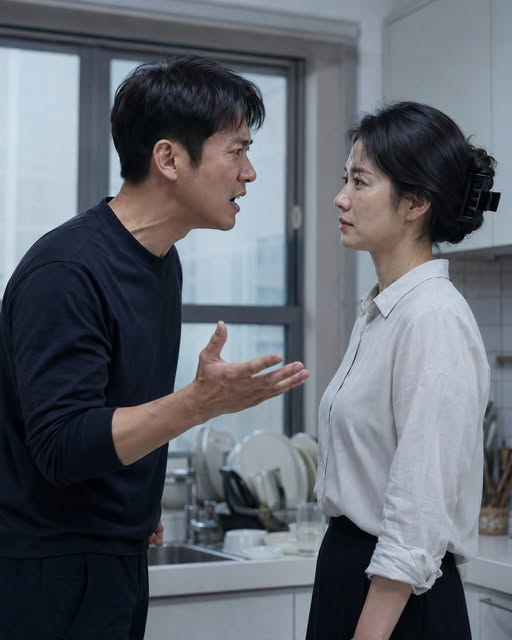
Her voice paused.
“I felt sad for about an hour.”
“Then even that passed.”
Luc Kien Quan’s throat tightened.
“That’s why you’re doing this now?”
“Doing what?”
“Being cold to me.”
Tong Tuyet looked genuinely confused.
“I’m not being cold.”
That hurt more than if she had shouted.
“I’m treating you exactly the way I learned to live with you.”
Silence.
He finally asked:
“Can we start again?”
“No.”
The answer came too quickly.
He stared at her.
Tong Tuyet opened another drawer.
She removed an envelope.
“I was going to wait until Jun came home next month.”
She placed it on the desk.
Divorce agreement.
Luc Kien Quan felt as if someone had pushed all the air from the room.
“You prepared this before I got sick?”
“Yes.”
“When?”
“After my surgery.”
He looked up.
Tong Tuyet’s expression remained calm.
“I lay in the hospital for a week and thought about our marriage.”
“I realized that if something happened to me, I would regret spending whatever time I had left living like a roommate who still cooked breakfast for her legal husband.”
His eyes reddened.
“Tuyet, I can change.”
“I believe you.”
That answer surprised him.
She continued:
“You nearly had a heart attack. Maybe you really will change.”
“Then why divorce?”
“Because your change is something you owe yourself.”
Her voice softened.
“It is not a debt I have to reward by staying.”
He lowered his head.
“I didn’t know you were this unhappy.”
For the first time, frustration appeared on her face.
“You did know.”
He looked up.
“You just thought I could tolerate it.”
The divorce was not finalized immediately.
Luc Kien Quan asked for six months.
Not to force reconciliation.
He said he wanted time to recover and arrange the finances properly.
Tong Tuyet agreed.
During those months, he changed.
At first, partly because he wanted her back.
He stopped unnecessary drinking.
Came home on time.
Learned to cook three dishes.
Went with Jun to visit Tong Tuyet’s mother’s grave, something he had never done before.
On her birthday, he bought a cake.
Tong Tuyet thanked him.
Nothing more.
One night he finally said:
“None of this matters to you, does it?”
She looked at him.
“It matters.”
Hope appeared in his face.
Then she added:
“It just arrived too late to repair what you think it should repair.”
He understood.
Change could make him a better person.
It could not force her heart to return to where it had once lived.
Six months later, they signed the divorce papers.
Twenty-five years of marriage ended in less than twenty minutes.
Outside the registration office, Luc Kien Quan stood beside her.
“What will you do now?”
Tong Tuyet smiled.
“I applied for a transfer.”
“Where?”
“A school closer to Jun.”
He nodded.
Then asked:
“Were you waiting for me to stop you?”
“No.”
She adjusted the strap of her bag.
“I stopped waiting for you a long time ago.”
That sentence hurt.
But this time, Luc Kien Quan did not defend himself.
He only said:
“I’m sorry.”
Tong Tuyet looked at him.
Not coldly.
Not warmly.
Just peacefully.
“I know.”
Then she left.
Years passed.
Luc Kien Quan did not become a tragic old man abandoned by his wife.
Life was less dramatic than that.
He kept working, though fewer hours.
He learned how to manage his health.
He called Jun regularly.
He took his mother to appointments instead of automatically asking Tong Tuyet.
When Ms. Liu once complained:
“If Tuyet hadn’t divorced you, you wouldn’t have to do all this yourself.”
He answered:
“If I had done more of it myself years ago, maybe she wouldn’t have divorced me.”
His mother never mentioned it again.
Three years after the divorce, Tong Tuyet retired from teaching.
Jun invited his father to the retirement dinner.
Luc Kien Quan hesitated.
Then went.
The banquet hall was filled with former students.
One after another, they came to hug her.
“Teacher Tong, you stayed after school when my parents were divorcing.”
“Teacher Tong, you paid for my exam registration when my father lost his job.”
“Teacher Tong, you remembered every birthday in our class.”
Luc Kien Quan sat at the back and listened.
For twenty-five years, he had thought his wife was simply quiet.
Ordinary.
Always there.
That evening, he realized how much of herself she had given to everyone.
And how little he had bothered to know about her.
After dinner, he approached.
“You looked happy tonight.”
“I was.”
He smiled.
“I’m glad.”
Tong Tuyet studied him.
“You look better too.”
“I am.”
Then Luc Kien Quan laughed softly.
“It took a heart problem for me to learn how to live.”
She smiled.
“And it took cancer for me to realize I wanted to.”
There was no bitterness in her voice.
That was the strangest part.
They walked together to the parking lot.
At her car, he stopped.
“Tuyet.”
“Yes?”
“If I had come back from that trip last year…”
She thought for a moment.
“Maybe we would have divorced later.”
He laughed sadly.
She did too.
Because by then, both of them understood.
The island had not destroyed their marriage.
Neither had the heart attack.
Those were only moments when the truth became impossible to ignore.
The marriage had been disappearing quietly for eighteen years.
Every missed birthday.
Every unanswered call.
Every time he chose a project, dinner, colleague or convenience and assumed his wife would still be waiting in the next room.
He had always believed Tong Tuyet’s silence meant she understood him.
Only when he became sick did he discover the truth.
She had understood him perfectly.
That was why she had stopped asking.
He once thought her heart had become cold.
It hadn’t.
It had simply learned, after eighteen years of waiting, to stop keeping a place warm for someone who never came home.
