Ethan opened the hospital envelope because my name was printed beside his.
Emergency contact: Ethan Blake.
He thought it was an old bill.
Then he read the first page.
Diagnosis: malignant lymphoma.
Further examinations required.
Treatment recommended without delay.
His hand stopped moving.
The date at the top was three months earlier.
Exactly three months before our divorce.
Exactly when I had asked a lawyer to prepare the papers.
There was another document beneath it.
A treatment schedule.
And on the last page, a handwritten note from the doctor:
Patient wishes to postpone informing spouse until treatment plan is confirmed.
Ethan called me immediately.
My phone was off.
He called again.
Nothing.
Then he called my lawyer.
“Where is Claire?”
My lawyer refused to tell him.
“We’re divorced, Mr. Blake.”
“She’s sick.”
Silence.
“You knew?”
“My client’s medical information is private.”
Ethan’s voice broke.
“Please.”
The man who could command boardrooms, dismiss executives and negotiate billion-dollar deals was suddenly begging someone to tell him where his ex-wife had gone.
My lawyer only said:
“She asked me to tell you one thing if you ever discovered the truth.”
Ethan gripped the phone.
“What?”
“She did not leave because she stopped loving you.”
His breathing stopped.
“She left because she believed you deserved the freedom to choose your own life without becoming her caretaker.”
Then the call ended.
Ethan sat on the edge of our bed.
The bed we had shared for seven years.
And suddenly he remembered everything.
Three months earlier, I had started sleeping badly.
I became thinner.
Sometimes I disappeared for entire afternoons and said I had appointments.
Once he found me sitting in the bathroom with my forehead against the wall.
He asked:
“Are you sick?”
I smiled.
“Just tired.”
He accepted the answer because accepting it was easier than paying attention.
Around that same time, Lily had entered his life.
Lily needed help.
She asked questions.
She laughed at his jokes.
She looked impressed when he fixed a broken shelf in the restaurant.
Beside her, Ethan felt useful.
Important.
Wanted.
At home, I had stopped asking him for anything.
He had mistaken my silence for indifference.
Now he understood.
I had not stopped needing him.
I had stopped believing I was allowed to.
Three days after our divorce, Ethan found me.
Not because anyone told him.
Because he remembered the hospital name.
I was sitting alone near a window when he entered the oncology department.
For a second, neither of us spoke.
Then I saw the envelope in his hand.
My heart sank.
“You opened it.”
“Yes.”
“You shouldn’t have.”
“I know.”
His eyes were red.
I had never seen Ethan cry.
Not when his father died.
Not when his company nearly collapsed.
Not even when we signed the divorce.
But now his voice trembled.
“How long?”
“Three months.”
“And you said nothing?”
“I was going to.”
“When?”
I looked away.
“Before I saw you with Lily.”
He closed his eyes.
“Claire…”
“Don’t.”
He came closer.
“You prepared our divorce because of this?”
“Partly.”
“Why?”
I laughed softly.
“You told me the answer yourself.”
His expression tightened.
“You said you loved someone else.”
“That happened after.”
“I know.”
I looked at him.
“When the doctor told me treatment could take months, maybe longer, I went home and watched you working until two in the morning.”
“You already looked exhausted.”
“You had spent years carrying your company.”
“I thought about what would happen if I became another responsibility.”
Ethan stared at me.
“You were my wife.”
“Yes.”
“And I wanted you to stay because you wanted me.”
My voice cracked.
“Not because you felt guilty leaving a sick woman.”
He sat opposite me.
“Did you really think I would abandon you because you were ill?”
I held his gaze.
“No.”
That surprised him.
“I thought you would stay.”
His face changed.
“And that frightened me more.”
I continued quietly:
“You are loyal when responsibility is clear.”
“If I told you, you would have stayed.”
“You would have taken me to every appointment.”
“You would have canceled meetings.”
“You might even have convinced yourself it was love.”
I swallowed.
“And I would never know whether you wanted me or simply couldn’t bear being the man who left.”
Ethan lowered his head.
Then whispered:
“And instead I became exactly that man.”
I said nothing.
Because he had.
Not knowingly.
But painfully.
He had walked away just before discovering I was fighting something much larger than our marriage.
“I’m ending things with Lily,” he said.
I shook my head.
“No.”
His eyes lifted.
“What?”
“Don’t do that because of me.”
“Claire, I don’t love her.”
“You told me you did.”
“I thought I did.”
“That is your problem to understand.”
He stood.
“I want to take care of you.”
“No.”
His face tightened.
“You can’t stop me from caring.”
“I can stop you from turning my illness into a reason to recreate our marriage.”
Silence.
“I signed the divorce.”
“So did you.”
He looked destroyed.
For once, I felt no satisfaction in winning an argument.
Only exhaustion.
“Go home, Ethan.”
He did.
But he came back the next day.
Not into my room.
He left a bag with the nurse.
Inside were comfortable clothes, a charger and the tea I liked.
No note asking me to return.
The next week, another package appeared.
Books.
Then noise-canceling headphones.
Nothing expensive enough to feel like a grand gesture.
Just useful things.
I told the nurse:
“You don’t need to accept these.”
She smiled.
“He asked first.”
That mattered.
For the first time, Ethan was helping without deciding for me what help should look like.
My treatment lasted months.
Some weeks were easier than others.
I lost work.
Lost weight.
Lost patience.
But slowly, the results improved.
And Ethan stayed at a distance I had chosen.
He did not force himself into appointments.
He did not tell anyone we were reconciling.
He did not post dramatic declarations.
He simply sent one message every Friday:
Do you need anything practical this week?
Sometimes I answered no.
He accepted it.
Sometimes I asked him to collect medicine.
He did.
Once I asked him to drive me home after an appointment.
The entire ride passed in silence.
When we reached my apartment, he asked:
“Can I say something?”
I nodded.
“I’m sorry I made you feel like being sick would make you a burden.”
I looked at him.
“You didn’t.”
He seemed confused.
“You made me feel alone long before I was sick.”
That hurt him.
But this time, he did not defend himself.
“I understand.”
“No.”
I opened the car door.
“You’re beginning to.”
That was enough.
Lily contacted me once.
I almost ignored the message.
Then I read it.
I didn’t know you were ill.
I replied:
That isn’t your fault.
A few minutes later:
Ethan and I are not together.
I stared at the screen.
Then:
He told me he thought he loved me because around me he could be the person who helped. With you, he said he had stopped noticing how much you carried because you made it look easy.
That sentence stayed with me.
Ethan had not fallen in love because Lily was better.
He had fallen in love with how he felt beside someone who visibly needed him.
Meanwhile, I had spent years becoming so self-sufficient that he stopped seeing the cost.
That did not excuse him.
But it finally explained something.
Nearly a year after the diagnosis, my doctor told me the treatment had worked.
I sat in my car afterward and cried.
Then I called the person who had waited through every appointment without demanding to be inside them.
Ethan answered immediately.
“Claire?”
“The results are good.”
There was silence.
Then I heard him breathe out.
“Good.”
His voice broke.
“God, good.”
He did not ask to see me.
Did not say this changed everything.
He simply said:
“I’m happy for you.”
That night I invited him to dinner.
He looked nervous.
“You don’t owe me anything.”
“I know.”
We ate in a quiet restaurant.
Not Lily’s.
I wanted somewhere without ghosts.
After dessert, Ethan said:
“I need to ask once.”
I already knew.
“If the answer is no, I won’t ask again.”
I waited.
“Is there any chance we could start over?”
Years earlier, I would have given anything to hear him ask that question.
Now I looked at the man across from me and felt something gentler than love.
Gratitude.
Sadness.
Memory.
But not marriage.
“No.”
Ethan closed his eyes.
Then nodded.
“Okay.”
“You changed.”
“I’m trying.”
“I know.”
“That matters to me.”
Hope flickered before I finished.
“But change doesn’t always lead back to the person you hurt.”
Sometimes it simply means you hurt the next person less.
He smiled sadly.
“That sounds fair.”
“It isn’t about fair.”
I looked through the restaurant window.
“It’s about truth.”
We left separately.
Two years later, Ethan and I still spoke occasionally.
Birthdays.
Holidays.
Sometimes he sent me a photograph from a place we once planned to visit.
I built a new life.
Not a spectacular one.
A peaceful one.
I returned to work gradually.
Moved into an apartment with enormous windows.
Started painting badly on Sunday mornings because I had spent seven years forgetting that hobbies did not need to produce anything useful.
And eventually, quiet afternoons stopped frightening me.
That was perhaps the greatest recovery of all.
Years later, Ethan admitted something when we met by chance.
“The day I told you I loved Lily, I thought I was choosing honesty.”
“You were.”
“No.”
He shook his head.
“I was only being honest about the last few months.”
“I wasn’t honest about the seven years before that.”
He looked at me.
“I stopped seeing you long before I stopped loving you.”
That sentence finally explained our marriage better than anything else had.
I smiled.
“Now you know.”
“Yes.”
“And so do I.”
The secret Ethan discovered three days after our divorce did not bring us back together.
It did something more important.
It stripped away the lies we had both told ourselves.
I had told myself leaving without explaining was noble.
Sometimes it was fear.
Ethan had told himself falling for another woman meant our marriage had simply run its course.
Sometimes it was neglect.
I recovered from my illness.
He learned how to live with regret.
And neither of us got the ending we once imagined.
But we finally got the truth.
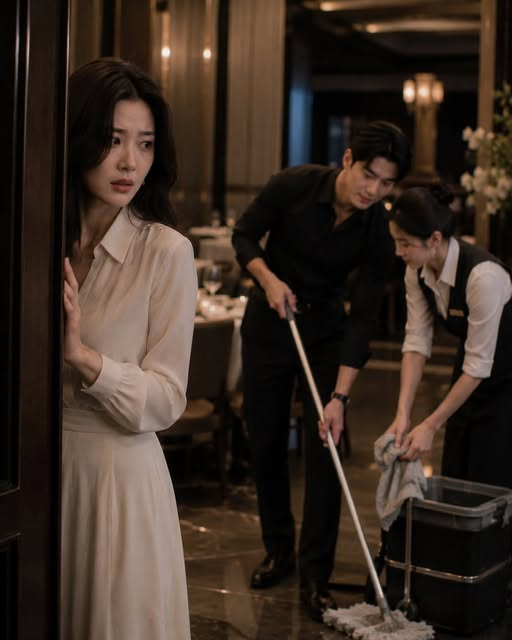
The worst day of my marriage had begun quietly, behind the glass of a restaurant.
For years afterward, I thought silence was what destroyed us.
I was wrong.
Silence only hid what had already happened.
What destroyed us was everything we had stopped saying while we still had time.
And by the time Ethan finally learned my secret,
I had already learned the one truth that mattered most: surviving did not mean I had to return to the life I survived.
