Adrian stared at the plane ticket.
Then at the lease.
Then back at me.
“You arranged all of this before the accident?”
“Yes.”
His face changed.
The ticket was dated three days after my scheduled follow-up appointment.
Destination: Seattle.
The lease belonged to a small apartment near the design firm that had offered me a senior position two months earlier.
I had not accepted immediately.
Because accepting meant leaving Adrian.
And for a long time, I had still been trying to convince myself that what we had could be repaired.
He tightened his grip on the papers.
“You were going to leave without telling me?”
“I was going to tell you on our anniversary.”
Silence.
That was why I had chosen the restaurant.
Why I bought him the watch.
Why I had rehearsed what I wanted to say.
I had planned to give him one final choice.
Not between me and Valeria.
Between continuing our relationship seriously or letting me leave without asking me to keep waiting.
Instead, before the appetizers arrived, Valeria called.
And Adrian left.
He looked at me.
“You were going to break up with me that night?”
“I didn’t know.”
“What does that mean?”
“It means I wanted to see whether there was still something worth staying for.”
I glanced at the watch on his wrist.
“You answered that question before dinner.”
His face tightened.
“Clara, you can’t make a life decision because I helped someone who was injured.”
“No.”
I nodded.
“That would be unreasonable.”
He seemed relieved too quickly.
Then I continued:
“I’m making it because for two years, whenever I needed you, you taught me not to ask.”
His expression fell.
I opened the door.
“Good night, Adrian.”
He did not leave.
“Who is going to take care of you?”
I almost laughed.
“The same people who have been doing it for seven days.”
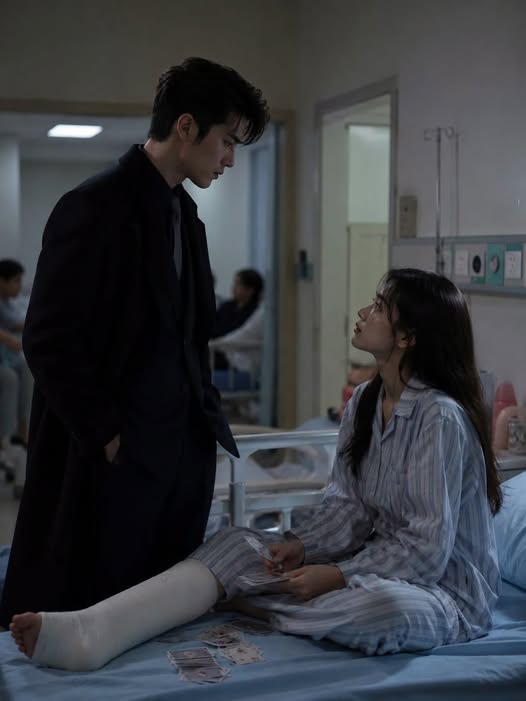
His eyes dropped to my leg.
“I’m an orthopedic surgeon.”
“And you’re not my doctor.”
That sentence hurt him.
Good.
Not because I wanted revenge.
Because for once, he needed to understand that expertise did not automatically give him access to me.
The following morning, he returned at seven.
Breakfast in one hand.
Medication schedule in the other.
He had apparently spoken to my hospital physician—with my permission limited only to discharge instructions—and created a recovery plan.
I looked at the papers.
Then at him.
“Why?”
He seemed offended.
“Because you’re injured.”
“I had fevers before.”
His expression changed.
“You told me there was nothing an orthopedist could do.”
He lowered the papers.
“That was cruel.”
“Yes.”
“I didn’t realize how cruel.”
“That doesn’t surprise me.”
For the next three weeks, Adrian tried.
He drove me to appointments when I allowed it.
Brought food.
Installed a temporary handrail in the bathroom.
Called before coming.
For once, he noticed what I needed before I begged.
But every kind thing arrived with a painful question:
Why only now?
One afternoon, Valeria called while Adrian was helping me carry a box.
He looked at the screen.
Did not answer.
The phone rang again.
I said:
“Take it.”
“No.”
“Adrian.”
He looked at me.
“I’m serious.”
He finally answered on speaker.
Valeria sounded irritated.
“My back hurts again. Can you come by?”
Adrian looked at me, then said:
“Call your treating physician.”
There was silence.
“But you always check it.”
“I shouldn’t have.”
Her voice became colder.
“Is Clara making you say this?”
I almost smiled.
Adrian did not.
“No.”
“I’m saying it because I should have set this boundary years ago.”
Valeria gave a small laugh.
“So now I’m suddenly inappropriate?”
“You’re not my patient.”
“You’re my friend.”
“And I kept treating your every discomfort like an emergency while neglecting my own relationship.”
Valeria went silent.
Then she said:
“You chose to do that.”
Adrian froze.
I did too.
Because she was right.
Not kind.
Not innocent.
But right.
Valeria had called.
Adrian had gone.
Again and again.
She did not possess some magical power over him.
He had simply enjoyed being indispensable to her.
After the call ended, Adrian stood motionless.
Finally he whispered:
“She’s right.”
“Yes.”
“I kept blaming her.”
“I know.”
He sat down.
“When you needed me, I felt pressured.”
“But when she needed me, I felt important.”
There it was.
The truth.
I had never heard him describe it so clearly.
I leaned back.
“And that is why I’m still leaving.”
His eyes snapped toward me.
“I’m changing.”
“I see that.”
“Then why?”
“Because change does not create a debt.”
He stared at me.
“You are becoming better.”
“I hope you continue.”
“But I don’t have to stay as your reward.”
He looked down.
A week later, I received clearance to travel with appropriate assistance.
Adrian drove me to the airport.
I let him.
Not because we were reconciling.
Because endings did not need to be cruel simply to be final.
At departures, he placed my suitcase beside the wheelchair.
Then he looked at the ticket.
“You’re really going.”
“Yes.”
“For how long?”
“I don’t know.”
He swallowed.
“Do you love me?”
That question almost broke me.
I answered honestly.
“Yes.”
His eyes filled with hope.
I stopped it immediately.
“But I don’t trust the life we built together.”
The hope disappeared.
“I thought love was enough for a long time.”
“It isn’t.”
He nodded slowly.
Then pulled something from his pocket.
The watch I had given him.
“I should give this back.”
“No.”
“Why?”
“Because it was a gift.”
I smiled faintly.
“And because I don’t want to spend another year reclaiming things I chose to give.”
He looked down at it.
Then whispered:
“I’m sorry I ruined our anniversary.”
“You didn’t ruin an anniversary.”
I looked directly at him.
“You revealed a pattern.”
My boarding group was called.
Adrian moved aside.
He did not grab the wheelchair.
Did not ask me to stay.
Did not announce that he would fly after me tomorrow.
He simply said:
“I hope Seattle is good to you.”
For the first time in two years, I heard him say something that contained no hidden request.
“Thank you.”
Then I left.
Seattle was difficult.
My leg still required rehabilitation.
The apartment was smaller than the one Adrian and I had shared.
I knew almost nobody.
But I had coworkers who brought groceries without calling me needy.
A neighbor who helped carry packages upstairs and never treated it like a heroic act.
A physical therapist who celebrated every small improvement.
And slowly, I healed.
Not dramatically.
Just one ordinary day after another.
Six months later, I walked without crutches.
On the same afternoon, I received a message from Adrian.
I hesitated before opening it.
It contained no photograph.
No romantic paragraph.
Only:
Valeria moved to Los Angeles.
We don’t speak much anymore.
I’ve been thinking about something you said.
I spent years calling you independent when what I really meant was convenient.
I’m sorry.
I read it twice.
Then answered:
That is probably the most accurate thing you’ve ever said about us.
He did not ask me back.
A year later, we met again at a medical charity event in Chicago.
Adrian looked different.
Not physically.
Quieter.
He came over.
“You’re walking normally.”
I laughed.
“That is generally what happens after rehabilitation.”
He smiled.
“Still sarcastic.”
“Unfortunately.”
For a moment, it almost felt like before.
Then he asked:
“Are you happy?”
“Yes.”
His expression softened.
“Good.”
I asked the same.
He thought.
“I’m better.”
That was enough.
Before leaving, he said:
“I used to think the worst thing you did was hide the fracture from me.”
I raised an eyebrow.
“And now?”
“Now I think the worst thing I did was make hiding it feel easier than calling me.”
I stayed silent.
He continued:
“You were injured badly enough to need surgery, and your first thought was still, ‘Don’t bother Adrian.’”
His voice broke slightly.
“That didn’t happen in one week.”
“No.”
“I taught you that.”
“Yes.”
He nodded.
No argument.
No defense.
Then he left.
Years later, I barely remembered the pain of the fracture.
What I remembered was the hospital doorway.
Adrian standing there furious that I had not needed him.
For two years, he had told me not to depend on him.
Then he was shocked when I learned how.
That was the irony.
He thought my independence was punishment.
It wasn’t.
It was practice.
Practice for sleeping alone.
For making decisions alone.
For traveling alone.
For building a life where asking for care did not make me feel ashamed.
Adrian eventually became the kind of man who might have loved me well.
But I had stopped believing that every improved version of someone automatically deserved access to the person they had hurt.
Sometimes people change.
Sometimes you forgive them.
And sometimes you still leave.
Because healing does not always mean putting the relationship back together.
Sometimes it means realizing you can finally walk away without crutches.
