On the morning of the first day of Tet, I woke up to the sound of waves.
My father was already outside wearing the ridiculous floral shirt he had packed.
My mother was arranging fruit on the table.
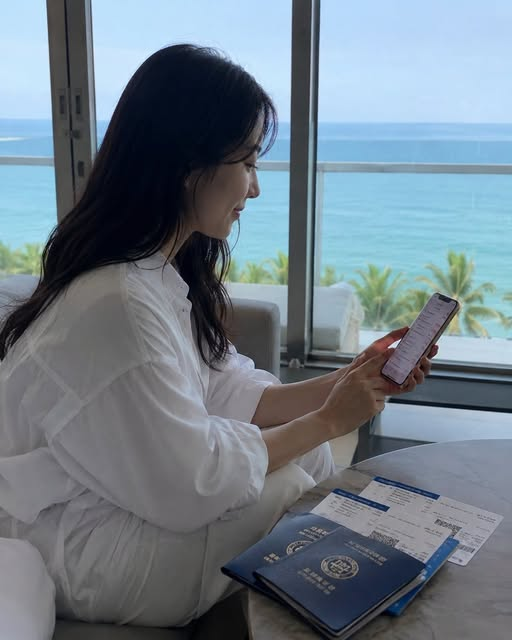
I stretched, opened the curtains, and finally turned on my phone.
It vibrated so violently that I almost dropped it.
117 missed calls.
Thirty-eight from Truong Hao.
Twenty-six from my mother-in-law.
The rest came from Truong Dinh, Kien Quan, and several relatives who had rarely called me in five years.
The “Happy Family” group had 286 unread messages.
I opened it.
The latest one was from my mother-in-law.
Lam Vi, answer the phone immediately! This concerns the family’s demolition compensation!
I smiled.
So they had finally discovered it.
Four years earlier, the old Truong house had almost been lost.
The roof leaked.
There was an unpaid renovation debt.
Part of the property documents had never been properly updated after my father-in-law inherited the house.
At that time, everyone talked beautifully about being family.
But when money was needed, everyone disappeared.
Kien Quan had just bought an apartment.
Truong Dinh said her husband controlled their finances.
Truong Hao had savings, but his husband controlled their finances.
Truong Hao had savings, but his mother said:
“Your money must be kept for your own small family.”
Then everyone looked at me.
I paid 680,000 yuan.
Most of it came from savings I had accumulated before marriage.
The rest came from my first large annual bonus.
I had not wanted anything in return.
But my father-in-law had refused.
He said:
“Xiao Vi, kindness between relatives is one thing. Property is another. If you put your own money into saving this house, your rights must be written clearly.”
So an agreement was signed.
The ownership registration was corrected.
Thirty-five percent of the compensated property interest was recorded under my name.
My mother-in-law signed.
Truong Hao witnessed it.
At the time, nobody cared.
The old house was worth little.
My mother-in-law even laughed:
“We’re all family. Why make the paperwork so serious?”
Now the district was being redeveloped.
Suddenly, the worthless old house had become valuable.
And apparently everyone had forgotten that the paperwork existed.
I called Truong Hao back.
He answered before the first ring finished.
“Lam Vi!”
“Happy New Year.”
“Where are you?”
I looked at the sea.
“Sanya.”
“I know you’re in Sanya!”
His voice became desperate.
“Why didn’t you tell me your name was on the old house?”
I took another sip of coconut water.
“I did.”
“When?”
“Four years ago.”
Silence.
Then:
“That doesn’t count.”
I nearly laughed.
“What doesn’t count?”
“I mean… nobody remembered.”
“That sounds like a family problem.”
“Lam Vi, the compensation office came this morning. They said part of the payment requires your signature.”
“Yes.”
“Mom already promised how the money would be divided.”
“I saw.”
He lowered his voice.
“She promised my brother money for his son’s apartment.”
“Yes.”
“And Dinh Dinh is counting on her share.”
“Yes.”
“Then what are we going to do?”
I looked at my parents laughing beside the pool.
“We?”
Truong Hao went silent.
“My thirty-five percent will remain mine.”
His breathing became heavier.
“Wife, don’t calculate like this during Tet.”
That sentence finally made me laugh.
“Truong Hao.”
“What?”
“Your family told me there wasn’t even a chair for me at New Year’s dinner.”
“But now there’s suddenly room for my signature?”
Silence.
Then my mother-in-law snatched his phone.
“Lam Vi!”
Her voice was loud enough that I moved the phone away from my ear.
“What kind of daughter-in-law behaves like this?”
I calmly replied:
“The kind you told not to come home for Tet.”
“I already explained! There weren’t enough seats!”
“I understood perfectly.”
“You’re deliberately taking revenge!”
“No.”
I looked toward the beach.
“I’m on vacation.”
“Come back immediately.”
“No.”
“The compensation cannot be processed without you.”
“Then process it after I return.”
“You expect the entire family to wait for you while you enjoy yourself?”
“Yes.”
She gasped.
I added:
“I waited five years for your family to remember I was also a person. A few days should be manageable.”
Then I hung up.
My father looked at me.
“Trouble?”
“Nothing serious.”
He nodded toward the ocean.
“Then put your phone away. Your mother wants photographs.”
My mother shouted from behind him:
“I said one photograph! Your father has taken sixty-seven!”
For the first time in years, New Year’s morning felt light.
No cooking from dawn.
No washing dishes after twenty relatives.
No mother-in-law inspecting my gifts.
No Truong Dinh asking why my bonus was so large while simultaneously expecting me to pay for dinner.
Just my parents.
Sea.
Sunlight.
And my father wearing a shirt covered in giant pink flowers.
By noon, Truong Hao sent another message.
Mom says if you transfer your property share to me, I can sign for both of us. It will be easier.
I stared at it for several seconds.
Then replied:
No.
His next message arrived immediately.
You don’t trust me?
This time I did not answer.
Because the real question was not whether I trusted him with the money.
It was why, after five years of marriage, my husband’s first instinct was still to make me surrender something so his mother would stop complaining.
On the third day, Truong Hao came to Sanya.
I was genuinely surprised.
He appeared outside our villa carrying one suitcase.
For half a second, something inside me softened.
Perhaps he had finally chosen me.
Then he spoke.
“Wife, can we go somewhere private? I brought the transfer documents.”
That softness disappeared.
I looked at the folder in his hand.
“You flew here for my signature.”
He froze.
“No. I also missed you.”
“Which reason made you buy the ticket?”
Silence.
That was enough.
I walked toward the garden.
He followed.
“Lam Vi, listen to me. My mother is under enormous pressure.”
“From whom?”
“Everyone.”
“Because she promised money that didn’t belong entirely to her?”
He frowned.
“Why do you have to say it like that?”
“Because that is what happened.”
He lowered his voice.
“We are husband and wife. What belongs to you also belongs to our small family.”
“Exactly.”
I turned toward him.
“Our small family.”
“Not your brother.”
“Not your sister.”
“Not your mother’s promises.”
He looked away.
I continued:
“For five years I paid half the house deposit.”
“I paid for renovations.”
“I bought your car.”
“I bought gifts for your parents.”
“When your sister got married, I gave her fifty thousand.”
“When your mother needed dental surgery, I paid.”
“Did I ever ask your family to repay me?”
“No.”
“Then why is the first thing everyone thinks when I legally own something, ‘How do we make Lam Vi give it up?’”
He had no answer.
After a long silence, he whispered:
“Mom is just used to you being generous.”
I smiled sadly.
“That is exactly the problem.”
Generosity had become obligation.
My willingness had become expectation.
And once people became accustomed to receiving, saying no suddenly looked like cruelty.
Truong Hao sat down.
“I know my family hasn’t treated you fairly.”
“Then why didn’t you say anything in the group?”
His face tightened.
“I did.”
I remembered.
That tiny sentence.
Mom, this isn’t very nice…
Almost inaudible behind his mother’s voice.
I looked at him.
“You whispered.”
“What?”
“You have spent five years whispering when I needed a husband.”
He went still.
“When your mother gave away the supplements I bought, you said nothing.”
“When Dinh Dinh took the shoes I bought you, you said, ‘Forget it.’”
“When your relatives joked that I was the outsider who earned too much and thought too highly of herself, you told me to be understanding.”
“And when your mother announced there was no seat for me at Tet…”
I paused.
“You whispered.”
His eyes reddened.
“I didn’t want everyone fighting.”
“So you let only me lose.”
That ended the conversation.
I did not sign the transfer.
I did not block the demolition process forever either.
After the holiday, my lawyer reviewed everything.
My thirty-five percent was paid directly according to the registered agreement.
The remaining portion went to the other legal owners to divide however they wished.
I took exactly what belonged to me.
Nothing more.
My mother-in-law called it selfish.
Truong Dinh said I had destroyed the family atmosphere.
Kien Quan complained that his son now had less money for an apartment.
I answered only once:
I did not reduce anyone’s share. I simply stopped donating mine.
Then I left the family group.
The silence afterward was wonderful.
The bigger decision came a month later.
I asked Truong Hao for a divorce.
He stared at the agreement for a long time.
“Because of one New Year?”
“No.”
“Because of five years.”
He looked devastated.
“I went to Sanya.”
“With documents.”
“I was going to stay afterward.”
“That is exactly how our marriage always worked.”
He frowned.
“You did whatever your family wanted first.”
“Then you came back to me afterward.”
He grabbed the agreement.
“I can change.”
“I hope you do.”
“But I don’t want to spend another five years waiting to see whether you will.”
For the first time, Truong Hao became angry with his mother.
Really angry.
He moved out of the family house.
He returned the car I had bought him and bought one within his own budget.
When his sister demanded money, he said no.
When his mother complained, he stopped apologizing for every boundary.
Those were good changes.
But they came after I had stopped wanting the marriage.
Sometimes growth comes too late to save the relationship that forced it.
The divorce was finalized quietly.
We divided our jointly owned apartment properly.
I kept my demolition compensation.
He kept what belonged to him.
No revenge.
No one left penniless.
Just clear boundaries for the first time in years.
The following Tet, my mother called me in December.
Her voice sounded suspiciously cheerful.
“Daughter.”
“What?”
“Your father bought another floral shirt.”
I closed my eyes.
“Stop him.”
“Too late.”
From the background, Dad shouted:
“This one has pineapples!”
I laughed.
“Where are we going?”
My mother hesitated.
“Your father wants Sanya again.”
“Again?”
“He says the coconut water tastes better there.”
I knew perfectly well he drank beer the entire trip.
“Fine.”
This time, I booked three tickets.
Not because anyone had thrown me out of somewhere else.
Because I wanted to go.
Years later, I occasionally heard news about the Truong family.
They survived.
Of course they did.
Families do not collapse because one daughter-in-law stops paying bills.
They simply learn how much work that daughter-in-law had quietly been doing.
Truong Hao eventually apologized to me.
A real apology.
He said:
“I thought keeping peace meant never confronting my mother.”
I answered:
“No. You kept peace with everyone except me.”
He nodded.
“I understand now.”
I believed him.
But understanding did not require reunion.
The year his family told me there was no chair for me at the New Year’s table, they expected me to feel humiliated.
Instead, they gave me my first peaceful Tet in five years.
They expected me to sit at my parents’ small table and think about everything I had been excluded from.
Instead, I took my parents to the sea.
And on the first morning of the new year, when more than a hundred calls appeared on my phone, I finally understood why everyone suddenly remembered my name.
They had never lacked space for me completely.
There had always been room—
for my money,
my gifts,
my labor,
my patience,
and finally, my signature.
There just hadn’t been a seat for me.
So I stopped asking for one.
And once I did, I discovered something much better:
I could choose my own table.
