Adrian read my note twice.
Then a third time.
His assistant later told Rachel that he stood in the empty hospital room holding the paper as if it were written in another language.
Finally he called me.
I answered because I wanted to hear the first sentence out of his mouth.
“Eliana, where are my children?”
Not:
How are you?
Not:
Are the babies healthy?
Not even:
I’m sorry.
I closed my eyes.
“They’re safe.”
“You took three premature babies and disappeared?”
“No.”
My voice was calm.
“Their physicians approved a transfer to another medical facility. Rachel arranged it. Every document was signed.”
“Tell me where.”
“No.”
His voice hardened.
“I am their father.”
“Yes.”
“And you’re going to have the opportunity to act like one through the proper process.”
He went silent.
Then:
“Is this because of Vanessa?”
“No, Adrian.”
I looked through the glass wall of the neonatal unit where Noah, Caleb and Lily were being monitored.
“This is because when your three children were being born, you knew where I was.”
“And you chose to be somewhere else.”
He exhaled sharply.
“Vanessa was having a crisis.”
“There were doctors with her.”
“She asked for me.”
“And I asked for you.”
Silence.
That was the whole marriage in two sentences.
Vanessa asked.
Adrian went.
I asked.
Adrian assumed I would understand.
He lowered his voice.
“Come home. We’ll discuss this privately.”
“No.”
“Don’t turn one terrible week into a war.”
I almost laughed.
“One week?”
I had evidence going back almost two years.
The apartment.
Transfers.
Travel.
Company expenses.
Messages.
And one particularly useful chain of emails between Adrian and his chief financial officer concerning a luxury apartment rented through a Whitmore subsidiary.
The CFO had asked:
Business purpose?
Adrian replied:
Executive hospitality. Don’t complicate it.
Vanessa had lived there for eleven months.
“Speak to Rachel,” I said.
“Eliana—”
“I’m hanging up.”
For the first time in our marriage, I did.
The next morning, Adrian learned what I meant by court.
Rachel had filed for temporary orders concerning custody, access to marital funds, preservation of financial records and restrictions against moving significant shared assets while the divorce was pending.
I had not secretly “frozen his empire.”
I couldn’t.
A judge could, under appropriate circumstances, preserve disputed marital assets while both sides disclosed what existed.
That was what we asked for.
Adrian arrived at the first hearing with four lawyers.
I arrived with Rachel.
He looked at me as though he barely recognized me.
Maybe he didn’t.
For years, Adrian had known Mrs. Whitmore.
She organized charity dinners.
She smiled when his mother interrupted her.
She never discussed legal strategy at the table because Adrian once said:
“I work enough. I don’t need a wife cross-examining me at home.”
Eliana Brooks had been different.
Eliana Brooks had graduated near the top of her class.
Handled commercial disputes.
Negotiated settlements.
Built a career before anyone called her Mrs. Whitmore.
She had simply been asleep for a while.
The judge did not reward me because Adrian had been a bad husband.
Courts do not exist to punish adultery with dramatic speeches.
The discussion centered on the children.
Their medical needs.
Their location.
My ability to care for them.
Adrian’s ability to participate.
His absence during and immediately after their birth.
His request for immediate equal physical custody was not granted.
Neither was my request to exclude him.
Instead, while the babies remained medically fragile, their primary residence stayed with me near their care team, with structured access for Adrian according to medical guidance.
When they became stronger, the arrangement would be reviewed.
That was reasonable.
Adrian hated it.
Outside court he came toward me.
“You planned all of this while I was away.”
“Yes.”
“You were just waiting for an excuse.”
I stopped.
“No.”
“I was waiting for you.”
His expression changed.
“In the delivery room.”
“In the hospital.”
“For three days.”
I looked at him.
“You didn’t come.”
“So eventually I stopped waiting.”
He had no answer.
Then came the financial discovery.
That was where Adrian’s confidence began to crack.
Vanessa’s apartment had cost far more than I knew.
There were also private flights.
Jewelry.
A vehicle.
Restaurant bills.
A supposed “consulting retainer” paid to a company Vanessa controlled.
Rachel slid the contract across the table during mediation.
“What services did Ms. Lane provide?”
Adrian’s attorney answered:
“Brand advisory.”
Rachel looked at the invoices.
“Deliverables?”
Silence.
“Reports?”
Nothing.
“Campaigns?”
Nothing.
The payments did not automatically become mine simply because I disliked them.
But some had been made through accounts containing marital income, and others were tied to a public company whose board believed the expenses were commercial.
That created a second problem.
Not for the divorce court.
For Whitmore Holdings.
The board opened its own review.
Adrian blamed me.
“You went after my company.”
“No.”
I looked at him across the mediation table.
“Your accountants found expenses because your lawyers had to disclose financial records.”
“That is not the same thing as me trying to ruin you.”
He clenched his jaw.
“You knew what would happen.”
“Yes.”
That was true.
I knew transparency would hurt him.
But I also knew hiding the records to protect his image would mean becoming Mrs. Whitmore again.
I was finished doing that.
The board eventually concluded that several personal expenses had been improperly routed through corporate accounts.
Adrian reimbursed the company.
He temporarily lost authority over certain discretionary expenditures.
He remained a major shareholder.
The business survived.
His reputation did too.
Just not untouched.
The newspapers that had once called him a devoted “family-first executive” suddenly discovered that his wife had given birth to triplets while he was in another city with Vanessa Lane.
I gave no interviews.
Not one.
When reporters called Rachel, she said:
“My client is focused on her children.”
That was all.
Adrian’s carefully purchased image did not collapse because I attacked it.
It collapsed because reality no longer matched it.
Vanessa called me six weeks later.
I almost didn’t answer.
“Eliana.”
“What?”
Her voice was smaller than I remembered.
“I didn’t tell him to miss the birth.”
I said nothing.
“I knew you were in the hospital, but he said the doctors had everything under control.”
I closed my eyes.
Of course he had.
“Why are you telling me this?”
“Because everyone thinks I dragged him away.”
“Did you ask him to come to Harbor City?”
Silence.
“Yes.”
“Did you know I was expecting three babies?”
“Yes.”
“Then we’re finished.”
She hurried:
“But he could have said no.”
That stopped me.
Because she was right.
For months I had imagined Vanessa as some powerful force controlling Adrian.
Maybe that had been easier.
But Adrian was not a helpless man.
He ran a multinational company.
Negotiated acquisitions worth billions.
Dismissed executives without blinking.
He knew how to say no.
He simply rarely said it to her.
“I agree,” I said.
Vanessa became quiet.
Then:
“Do you hate me?”
“No.”
She seemed shocked.
“I don’t have enough room in my life for that anymore.”
I hung up.
I never spoke to her again.
Her relationship with Adrian ended several months later.
I didn’t ask why.
By then, Noah had learned to roll over.
Caleb laughed whenever someone sneezed.
Lily had decided sleep was a personal insult.
I had more important things to think about.
Adrian did begin showing up.
At first awkwardly.
He arrived for visits with absurdly expensive baby clothes in three identical boxes.
I handed them back.
“They need diapers.”
He blinked.
“I brought clothes.”
“They own clothes.”
He looked toward the babies.
“How many diapers?”
I almost smiled.
“A lot.”
The next week he arrived carrying enough diapers to supply a daycare.
He learned slowly.
Which bottle belonged to whom.
That Noah liked being held upright.
That Caleb fell asleep to low music.
That Lily screamed if her blanket was tucked too tightly.
One evening, after the babies had all fallen asleep, Adrian sat on the opposite side of the room.
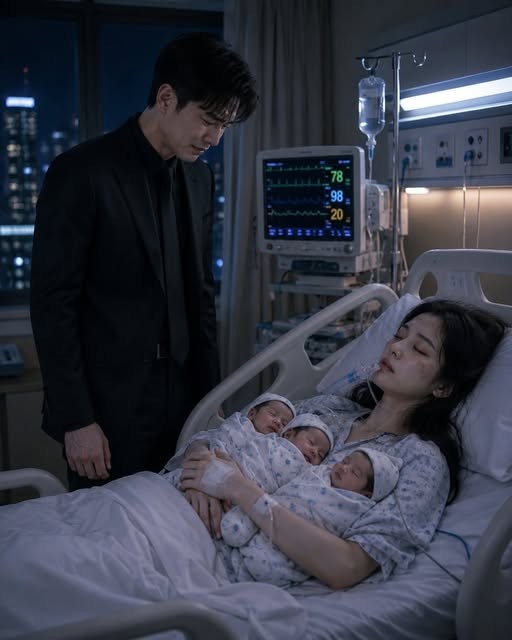
“I missed everything.”
I looked at him.
“You missed the beginning.”
His eyes reddened.
“That’s worse.”
“Yes.”
He swallowed.
“Can I fix it?”
“With them?”
“Yes.”
“If you keep showing up.”
He hesitated.
“And with you?”
“No.”
His face tightened.
“You answered too quickly.”
“Because I already spent months answering slowly.”
That ended the conversation.
The divorce became final fourteen months after the triplets were born.
The financial settlement accounted for our shared assets, the documented marital funds spent outside the marriage, and the property each of us had brought in.
No one walked away with everything.
No one was destroyed.
The children had a formal parenting plan that expanded Adrian’s time as their health and routines stabilized.
He became, surprisingly, a decent father.
Not perfect.
But present.
I never used the children to punish him.
They were not evidence.
They were not trophies.
They were three little people who deserved whatever good their father was still capable of giving.
As for me, I returned to law.
At first, only part-time.
Rachel gave me research work I could do around the babies’ schedules.
Then one client meeting.
Then another.
The first time I stood in a conference room again and someone said:
“Ms. Brooks, what do you recommend?”
I almost cried.
Not because the question was extraordinary.
Because someone was asking what I thought.
Three years later, my name appeared on the door:
MONROE, BROOKS & KLINE
Rachel took a photograph.
“Look at you.”
I looked at the lettering.
“Eliana Brooks.”
“Who?”
I laughed.
“Someone I used to know.”
“No.”
Rachel shook her head.
“Someone you finally remembered.”
Adrian and I spoke privately one final time when the triplets were four.
Their preschool had held a family afternoon.
Noah was painting.
Caleb was arguing about whether dinosaurs could wear shoes.
Lily had somehow collected three desserts despite being allowed one.
Adrian stood beside me.
“You look happy.”
“I am.”
He nodded.
Then:
“I used to think you left because I chose Vanessa that week.”
“I did.”
He looked surprised.
“But that wasn’t the whole reason.”
I watched Lily hide a cookie behind her back.
“You had been choosing everyone else for years.”
“Work.”
“Your mother.”
“Vanessa.”
“Your image.”
“Your convenience.”
“And because I was always there, you assumed I was the one person who could safely come last.”
His eyes lowered.
“I thought you were stronger than everyone else.”
I smiled sadly.
“I was.”
“That didn’t mean I needed less.”
He nodded.
Then said:
“I know that now.”
I believed him.
That was enough.
He glanced toward the children.
“If I had come that night…”
I interrupted gently.
“Don’t.”
He looked at me.
“There is no version of the past where we keep changing one decision until we get the ending you want.”
He was quiet.
Then smiled faintly.
“You still talk like a lawyer.”
“I am a lawyer.”
“Yes.”
He looked embarrassed.
“I think I forgot.”
“So did I.”
Then Caleb ran toward us shouting:
“Dad! Mom! Lily stole my cupcake!”
Lily shouted from across the room:
“I FOUND IT!”
Adrian laughed.
I did too.
And for one moment, we were simply their parents.
Nothing more was necessary.
Years earlier, Adrian had arrived at the hospital carrying expensive flowers and a carefully prepared apology.
He expected to find his wife waiting.
Instead, he found an empty room.
For a long time he believed that was the moment I disappeared.
He was wrong.
I had been disappearing for years.
Case by case.
Decision by decision.
Every time I swallowed an opinion.
Every time I accepted second place.
Every time he told me he was “taking care of me” while quietly taking pieces of my life away.
The day I left the hospital with Noah, Caleb and Lily was not the day I disappeared.
It was the day I came back.
Not as Mrs. Whitmore.
Not as Adrian’s abandoned wife.
As Eliana Brooks.
And by the time Adrian finally arrived ready to choose his family—
I had already chosen mine.
