The six words reached Lucas at 8:17 the next morning.
You don’t have to divorce for me anymore.
He called immediately.
My phone was already in airplane mode.
By then, I was sitting beside a window thirty thousand feet above the city we had shared for eight years.
The engagement hall was empty.
The flowers had been canceled.
The joint account was frozen pending division.
And the key to the apartment was inside an envelope on the kitchen table.
Lucas arrived home twenty minutes later.
According to Marcos, he ran from room to room shouting my name.
My clothes were gone.
My photographs were gone.
The ring box was gone.
On the table were three things:
His apartment key.
A copy of the engagement cancellation.
And a letter from my attorney.
That letter frightened him more than my message.
Because for the first time, Lucas understood that I had not left in anger.
I had left prepared.
The company was not mine.
I had never secretly owned seventy percent of it.
There was no billionaire grandfather waiting to destroy Lucas.
The truth was simpler.
And more embarrassing for him.
When I sold my grandmother’s apartment years earlier, part of that money went toward clearing Lucas’s business debt.
Later, when the company needed working capital, I provided a shareholder loan through a small investment vehicle my accountant had created.
Every year, Lucas asked me to renew it.
Every year, I did.
Because we were getting married.
Because what was his would eventually become ours.
Because I believed supporting him meant supporting our future.
The renewal date was three weeks away.
My attorney’s letter stated only this:
Ms. Miller will not renew the loan facility or continue as personal guarantor for future borrowing. Existing obligations will be honored according to contract.
Nothing illegal.
Nothing vindictive.
I was simply finished financing a future I was no longer part of.
Lucas called my lawyer fourteen times.
My lawyer answered once.
“Mr. Reed, Ms. Miller’s position is final.”
Lucas shouted:
“She can’t pull out now!”
“She can decline a new agreement.”
“We already budgeted around that money.”
“Then your company should arrange alternative financing.”
“She knows what this will do.”
My lawyer replied calmly:
“Mr. Reed, perhaps you should have considered that before legally marrying someone else.”
Then he hung up.
Lucas found financing.
Eventually.
At worse terms.
He had to postpone expansion and sell one nonessential asset.
The company survived.
But the myth did not.
For years, Lucas had told investors that he had built everything through instinct and determination.
Now he had to explain why a major source of patient capital had disappeared.
And why the woman behind it had vanished the day after he married someone else.
Marcos told me later that Lucas stopped laughing when people mentioned my name.
Good.
I had no interest in destroying him.
I only wanted to stop carrying him.
Clara’s mother did not die that week.
She stabilized.
That was the first complication Lucas had never planned for.
The second was that the marriage was not “fake” merely because he had intended it to be temporary.
They had registered it legally.
There were documents.
Rights.
Obligations.
Families informed afterward.
And Clara’s mother, once she recovered enough to understand what had happened, asked a question that apparently silenced the room.
“You married because of me?”
Clara cried.
Lucas said nothing.
Her mother looked at him.
“Did your fiancée agree?”
Again, silence.
Then she understood.
According to Clara, her mother became furious.
Not grateful.
Not moved.
Furious.
“I wanted to see my daughter happy,” she said.
“Not to have another woman betrayed in my name.”
That was the moment their noble sacrifice stopped looking noble.
Clara later admitted something else.
Her mother had never specifically asked her to marry Lucas.
She had only said she was afraid she would never see Clara settled with someone who truly loved her.
Clara interpreted it.
Lucas offered.
And both of them convinced themselves that I would absorb the damage.
Because Sofia always understood.
Sofia always waited.
Sofia never left.
Until I did.
Three weeks after I disappeared, Lucas found me.
Not physically.
Through email.
The subject line said:
Please give me ten minutes.
I almost deleted it.
Instead, I opened it.
He had written nearly three pages.
He said the marriage was already being legally dissolved.
He said Clara had moved back with her mother.
He said they had never lived together as husband and wife.
He said he had made the worst mistake of his life.
Then came the sentence that made me stop reading.
I never thought you would really leave.
That was the entire problem.
I replied with one line.
I know.
Nothing else.
I stayed away for six months.
I had accepted a position in another city with a firm that had tried to recruit me twice before.
Both times, I had refused because Lucas said long-distance would hurt our relationship.
How funny.
I had protected a relationship he considered indestructible enough to survive his marriage to another woman.
My new life was smaller.
Quieter.
Mine.
I rented an apartment with ugly kitchen cabinets and a balcony overlooking a park.
I bought furniture slowly.
I stopped checking Lucas’s company news.
I stopped asking Marcos what was happening.
I stopped measuring my life by whether Lucas regretted losing me.
That was harder than leaving.
Regret can become another kind of attachment.
Eventually, even that faded.
Lucas appeared outside my office eight months later.
He looked older.
Not ruined.
Not broken.
Just less certain.
“Sofia.”
I stopped.
“Hello, Lucas.”
He stared at me as though hearing his name in my voice hurt.
“I’m divorced.”
“I heard.”
“Clara and I ended everything.”
I nodded.
“I heard that too.”
He stepped closer.
“I did what I said.”
“No.”
His face tightened.
“What?”
“You said you would divorce her and come back to me.”
“You divorced her.”
“But I am no longer the place you come back to.”
He looked stunned.
Then desperate.
“Sofia, it was one mistake.”
“No.”
“It was one decision made from eight years of smaller decisions.”
His eyes reddened.
“What smaller decisions?”
“Every time Clara called and I came second.”
“Every time our wedding moved because something else mattered more.”
“Every time my money became useful but my needs became inconvenient.”
“Every time you told yourself I would understand.”
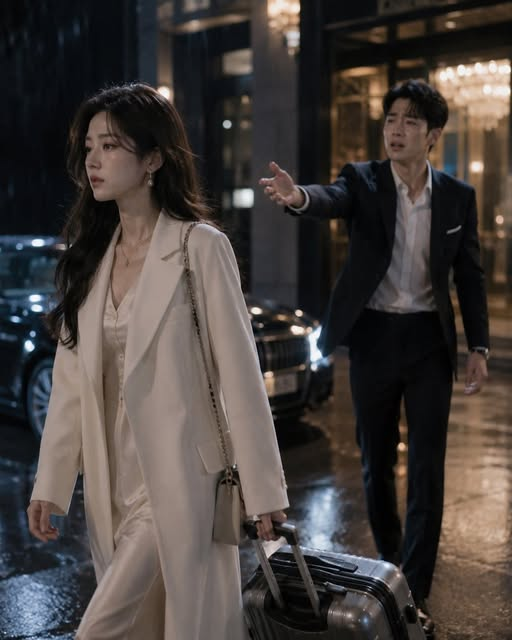
I looked at him.
“The marriage certificate was only the first time you made your certainty official.”
He whispered:
“I loved you.”
“I know.”
That surprised him.
I continued:
“That’s why it hurt.”
“You loved me.”
“You just respected my boundaries less than you trusted my loyalty.”
He looked down.
Then he said:
“I’ll wait.”
I almost smiled.
“For what?”
“For you to forgive me.”
“I may forgive you.”
Hope flashed across his face.
“But don’t confuse forgiveness with returning.”
It disappeared.
He swallowed.
“Is there someone else?”
“No.”
“Then why can’t we try again?”
Because he still thought another man had to exist to justify my refusal.
I shook my head.
“Lucas, I don’t need a replacement to leave you.”
“I just need a reason not to come back.”
“And you gave me one.”
He stood silent for a long time.
Finally:
“What am I supposed to do with eight years?”
That question hurt.
Because I had asked myself the same thing.
I answered honestly.
“Keep the good parts.”
“Learn from the bad ones.”
“And stop using the length of a relationship as proof that someone owes you the rest of her life.”
He closed his eyes.
Then nodded.
For once, he did not argue.
Two years later, I saw him again at Marcos’s wedding.
Clara was there too.
With someone else.
We greeted each other politely.
No drama.
No secret glances.
Lucas had rebuilt his company on more conservative financing.
He had also become far less proud about telling people who had helped him at the beginning.
When someone congratulated him on being self-made, he corrected them.
Apparently he said:
“No one is.”
I heard that secondhand.
It made me smile.
Not because I wanted him back.
Because perhaps losing me had finally taught him something useful.
At the reception, Lucas approached.
“You look happy.”
“I am.”
He nodded.
Then said:
“I used to think the biggest mistake was marrying Clara.”
I waited.
“It wasn’t.”
“What was?”
“Believing you would absorb any mistake I made because you loved me.”
For the first time, he described it correctly.
I smiled.
“Now you understand.”
“Yes.”
He lifted his glass slightly.
“To finally understanding too late.”
I laughed.
“To understanding anyway.”
Then we walked in opposite directions.
One day before our engagement, Lucas married another woman because he believed eight years of loyalty had made me incapable of leaving.
He thought love worked like accumulated credit.
That the more I had invested, the less likely I was to walk away.
He was wrong.
Eight years did not make leaving impossible.
They only made the decision more expensive.
I lost time.
Money.
Plans.
A version of myself who believed patience would eventually be rewarded.
But I did not lose everything.
The moment I canceled that engagement, I recovered one thing Lucas had stopped believing I possessed:
the ability to choose.
He married another woman believing I would wait for him to return.
By the time he came back—
there was no one waiting.
