Alejandro stared at the surgeon.
“No.”
His voice was barely audible.
The doctor did not move.
“General, I’m sorry.”
“No.”
This time it came out harder.
Like an order.
Like death itself might retreat because Alejandro Rivas had commanded it to.
He crossed the corridor in three steps.
“I want to see her.”
The surgeon blocked the door.
“You need to wait.”
“I said I want to see my wife.”
Behind him, Isabel began trembling.
“Alejandro…”
He didn’t even look at her.
That was the first time.
She reached for his sleeve.
He pulled away.
And I watched from the doorway.
Strangely calm.
Hours earlier, I would have given anything for him to choose me once.
Now his choice meant nothing.
The chief surgeon held out a form.
“Before anything else, I need an explanation.”
Alejandro stared at him.
“What explanation?”
“The blood reserved for Mrs. Rivas was removed under your authority.”
Alejandro’s face changed.
“I was told she was stable.”
“She was a high-risk pregnant patient with a gunshot injury.”
The doctor’s voice hardened.
“There was nothing stable about her condition.”
Isabel whispered:
“I was dizzy…”
The surgeon turned toward her bandaged arm.
Then looked back at Alejandro.
“You diverted emergency resources from your wife to a patient who was conscious and medically stable.”
Alejandro’s lips parted.
For the first time, he looked at Isabel’s injury properly.
Not as a promise to a dead friend.
Not as something fragile he had sworn to protect.
Just as what it was.
Minor.
Then he looked toward the operating-room door.
Too late.
“Camila signed a waiver,” he said suddenly.
The surgeon’s expression became colder.
“What waiver?”
Alejandro produced the document.
The paper was stained and wrinkled.
My fingerprint was on the bottom.
The doctor looked at it for several seconds.
Then at Alejandro.
“She signed this while being prepared for emergency surgery?”
Silence.
“Was she conscious enough to understand it?”
Alejandro said nothing.
“Was there a lawyer?”
Nothing.
“An independent witness?”
Nothing.
The surgeon placed the paper on the counter.
“This is not protection, General.”
His eyes narrowed.
“This is evidence.”
Isabel stepped backward.
“Alejandro, let’s leave.”
He finally turned toward her.
And I saw the beginning of fear in her face.
Because the man who had protected her from every consequence was looking at her differently now.
“Why did you bring the gun?”
She froze.
“What?”
“At dinner.”
His voice was quiet.
“Why did you bring it?”
Her eyes filled instantly.
“I was scared.”
“Of Camila?”
“She hated me.”
I almost laughed.
Isabel had spent years entering my home whenever she wanted.
Calling my husband late at night.
Sitting beside him at family dinners.
Touching his arm while calling me unreasonable.
And somehow she had always been the frightened one.
Alejandro asked again:
“Why did you shoot her?”
Isabel began crying.
“I lost control.”
He stared at her.
Then he asked the question he should have asked before carrying her away from me.
“Did she touch you?”
Isabel stopped crying.
Silence.
“Did Camila threaten you?”
Nothing.
“Did she attack you?”
Her lips trembled.
“No.”
Alejandro staggered backward.
I watched something collapse inside him.
But regret did not resurrect people.
And realization did not erase choices.
By midnight, the military police arrived.
The surgeon had reported everything.
So had two nurses.
And my brother, who had been at the dinner, had already handed investigators a recording from the dining room security system.
It showed Isabel raising the weapon.
It showed me doing nothing.
It showed Alejandro rushing to me afterward.
And later, it showed him ordering the medical staff to prioritize Isabel.
Then came the document.
The waiver.
The one he had forced my injured hand onto.
Alejandro had believed his position could make anything disappear.
Instead, every order had created another witness.
Every signature had created another record.
Every attempt to protect Isabel had built the case against them.
Isabel was detained first.
She screamed Alejandro’s name.
“Tell them it was an accident!”
He stood motionless.
“Alejandro!”
She reached toward him.
“You promised her husband you would protect me!”
That sentence echoed through the corridor.
He closed his eyes.
Then answered:
“I promised to protect you.”
His voice broke.
“Not to let you destroy everyone around me.”
Isabel laughed hysterically.
“Now you care about her?”
She pointed toward the operating room.
“She’s dead!”
Alejandro flinched.
Even I felt the words.
Then Isabel said the cruelest thing of all.
“You chose me.”
He looked at her.
And she smiled through her tears.
“When it mattered, you chose me.”
Alejandro said nothing.
Because she was right.
For the next several weeks, my death became impossible to bury.
The military region opened an investigation.
Hospital records were preserved.
Doctors testified.
The family-dinner guests gave statements.
The forged waiver was rejected as evidence of consent.
Alejandro was suspended from command.
Not because he had loved the wrong woman.
Because he had abused authority to interfere with medical care and attempted to shield the person responsible for shooting his wife.
Isabel’s defense collapsed quickly.
She had claimed panic.
Then accident.
Then provocation.
But the witnesses contradicted her.
The weapon had been brought intentionally.
Her messages, recovered later, were worse.
Weeks before the dinner, she had written to a friend:
“If Camila gives him a son, I’ll disappear from his life forever.”
Another:
“She thinks pregnancy makes her untouchable.”
And finally:
“I wish there were some way to make that baby disappear.”
Alejandro read those messages alone.
I stood across the room.
He couldn’t see me.
That had become my strange punishment.
I could watch him learn every truth only after none of it mattered.
He covered his face.
“Camila…”
My name sounded different now.
Not impatient.
Not cold.
Not irritated.
Broken.
“I’m sorry.”
I looked at him.
And felt nothing.
Months passed.
Isabel was convicted for the shooting and other offenses connected to the cover-up.
Alejandro lost his command permanently.
The case against him continued separately.
The great General Rivas, whose name once opened doors throughout the province, began entering buildings through side entrances to avoid cameras.
His medals remained in a box.
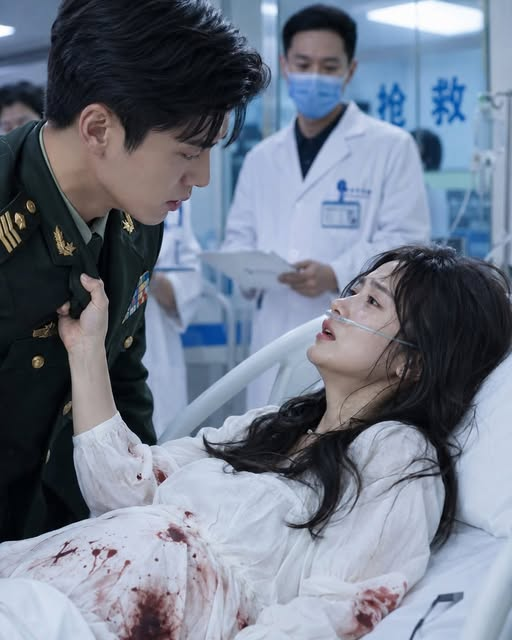
His uniform stayed in a closet.
His house became silent.
My mother visited once.
She carried a small wooden box.
Alejandro opened the door and immediately lowered his head.
“Mrs. Navarro…”
“Don’t call me that.”
He stepped aside.
She did not enter.
She opened the box.
Inside was a tiny knitted hat.
The one she had made for my son.
Alejandro stopped breathing.
“Camila asked me to bring it to the hospital when the baby was born.”
His eyes filled.
My mother looked at him without sympathy.
“She defended you for years.”
“I know.”
“No.”
My mother’s voice trembled.
“You know now.”
That sentence cut deeper than anything else.
“You knew she cried after you left dinners with Isabel.”
“You knew she waited for you.”
“You knew she was afraid that you loved someone else more.”
“You knew she was pregnant and needed you.”
“But knowing something and caring about it are not the same thing.”
Alejandro couldn’t lift his head.
My mother placed the box on the doorstep.
“I don’t want your apology.”
She turned to leave.
Alejandro whispered:
“Did she hate me?”
My mother stopped.
For several seconds she said nothing.
Then:
“No.”
His face crumpled with relief.
And my mother finished:
“That was the tragedy.”
Then she walked away.
For the first time since my death, I wanted to hug her.
I followed her all the way to the cemetery.
There were two names on the stone.
Mine.
And beneath it:
OUR SON, LOVED BEFORE HE WAS KNOWN.
My mother placed flowers there.
“You can rest now, my girl.”
The wind moved softly through the trees.
I looked behind me.
Alejandro stood far away.
He had followed.
He did not approach my mother.
He waited until she left.
Then he came to the grave alone.
He placed no expensive flowers.
No medals.
No grand gesture.
Only his wedding ring.
He sat on the ground.
“I spent years thinking love meant responsibility.”
His voice trembled.
“I thought because her husband died saving me, I owed Isabel everything.”
He looked at my name.
“And somehow, while paying a debt to the dead, I destroyed the living.”
He covered his face.
“I thought you would always forgive me.”
There it was.
The truth.
Not Isabel.
Not duty.
Not guilt.
Alejandro’s greatest cruelty had grown from certainty.
He believed I would always be there.
Always angry.
Always jealous.
Always waiting.
He mistook my pain for permanence.
He thought love made me impossible to lose.
He whispered:
“If I could go back…”
I wanted to answer him.
For the first time since leaving my body, I truly wanted him to hear me.
Not because I wanted revenge.
Because I finally knew what I would say.
You cannot go back.
You can only become someone who would never make the same choice again.
Alejandro suddenly lifted his head.
For one impossible second, I thought he had heard me.
Then the wind moved through the trees.
The small knitted hat inside the wooden box shifted slightly.
And something inside me became quiet.
Alejandro eventually accepted responsibility in court.
He did not blame Isabel.
He did not blame the doctors.
He did not present himself as another victim.
Whatever punishment followed belonged to the living world.
I stopped watching.
That was the last thing I needed to understand.
Justice did not mean Alejandro suffering forever.
Justice meant the truth no longer belonged to him.
He could no longer call what happened an accident.
Could no longer call Isabel fragile.
Could no longer call me jealous.
Could no longer rewrite our son into something he had tried his best to save.
The records remained.
The witnesses remained.
My mother remembered.
And Alejandro remembered most of all.
The night I died, he believed there would always be another conversation.
Another apology.
Another morning when I would still be his wife.
He believed he had time.
He didn’t.
That was his sentence long before any judge spoke.
Because the last time Camila Rivas reached for her husband, he chose someone else.
And when he finally came back—
there was no wife left to forgive him.
