Gabriel’s car stopped in front of the house where Valeria and I had spent half our childhood.
My hands immediately went cold.
“You said you were taking me somewhere safe.”
“I am.”
Then I saw her through the window.
Valeria.
She was sitting in the living room.
Older.
Thinner.
Different.
I grabbed the door handle.
“I’m leaving.”
Gabriel locked the car.
“Just listen first.”
“You had no right to bring me here.”
“I know.”
“Then unlock the door.”
He did.
That surprised me enough that I stopped.
Gabriel looked straight ahead.
“If you walk away, I won’t stop you.”
I opened the door.
Then Valeria appeared at the entrance.
She looked at me for several seconds.
And said:
“Sofia, I need you to help me send Adrián to prison.”
I froze.
Of all the things I imagined hearing from her, that had never been one of them.
Gabriel got out.
I did too.
But I stayed near the car.
“What are you talking about?”
Valeria swallowed.
“I lied during your trial.”
My heartbeat changed.
Gabriel stepped between us slightly.
Not protecting one sister from the other.
Creating space.
Valeria continued.
“I didn’t lie about what you did to me.”
I nodded.
“Good.”
“I didn’t lie about the affair either.”
Another nod.
“But I lied about Adrián.”
My throat tightened.
“How?”
She looked down.
“He wasn’t just cheating on you.”
“He was using both of us.”
I said nothing.
Valeria explained slowly.
A year before I caught them, Adrián’s business was already drowning in debt.
He had hidden it from me.
Then he discovered that the apartment I owned outright could solve part of his problem.
There was only one obstacle.
Me.
He began telling Valeria that our marriage was practically over.
That I controlled everything.
That I humiliated him.
That I would eventually leave him with nothing.
Valeria believed him because she wanted to.
She admitted that.
“I was in love with him,” she said.
“I wanted his version of you to be true.”
That hurt.
But not like four years ago.
Now pain arrived differently.
Slower.
Cleaner.
“What does that have to do with prison?”
Valeria’s hands tightened.
“After your arrest, Adrián convinced me to sign statements saying you had always been unstable.”
“I remember.”
“I also testified that you had threatened me before.”
I stared at her.
That part had always confused me.
Because it had never happened.
“You invented that.”
“Yes.”
Gabriel closed his eyes.
Valeria continued:
“Adrián said it would guarantee a longer sentence.”
“Why?”
“Because while you were incarcerated, he intended to claim money he said you owed him from the divorce.”
A bitter laugh escaped me.
“We were never divorced.”
“No.”
“He started the process after your arrest.”
She took out a folder.
“There were documents.”
My signature appeared on several pages.
Except it wasn’t mine.
Property authorizations.
Bank instructions.
An agreement supposedly allowing Adrián to recover money from the sale of my apartment.
My stomach turned.
“I sold that apartment myself to pay compensation.”
“I know.”
“So he got nothing.”
“Not what he expected.”
Valeria looked at me.
“And when that happened, he disappeared.”
That was why.
Not heartbreak.
Not shame.
The plan had failed.
She continued:
“Two years ago, I discovered money missing from the account used for my rehabilitation expenses.”
I looked at her.
“Adrián?”
“Yes.”
“He had access.”
“And you protected him?”
“At first.”
Her voice cracked.
“Because admitting the truth meant admitting what I destroyed my friendship for.”
The room went quiet.
I looked away.
There it was.
Valeria had lost a great deal because of me.
I had lost years because of my own crime.
And both of us had let Adrián turn our anger toward each other while he walked away.
That did not make us equal.
It did not erase what I had done.
But it made the picture uglier.
Valeria said:
“He came back three months ago.”
My stomach tightened.
“Why?”
“Money.”
Of course.
“He contacted me because he believed I had received a larger settlement from you than I actually did.”
“What did you tell him?”
“That I wanted nothing to do with him.”
“And?”
“He threatened to release private messages and claim I had helped frame you alone.”
I looked at Gabriel.
He nodded.
“We already have a lawyer.”
Valeria pushed the folder toward me.
“I need to correct my testimony.”
My hands stayed at my sides.
“Then correct it.”
“I need you to confirm that those earlier threats I described never happened.”
I laughed once.
“You need the woman you helped send to prison to help establish that you lied?”
Tears appeared in her eyes.
“Yes.”
The honesty stopped me.
She did not ask me to forgive her.
Did not tell me she had suffered enough.
Did not say we had both made mistakes.
She simply said:
“Yes.”
I sat down.
For the first time since leaving prison, I felt the old walls around me.
Courtrooms.
Statements.
People deciding what kind of woman I was.
Gabriel crouched several feet away.
“Sofia.”
I looked at him.
“You don’t have to decide today.”
But I already knew.
“I’ll tell the truth.”
Valeria covered her mouth.
I continued:
“Not for you.”
She nodded quickly.
“I know.”
“And not because what happened to you was deserved.”
Her eyes filled.
“I know.”
“I’ll do it because I’m finished allowing lies to decide what happens to my life.”
Two weeks later, I gave a formal statement.
I admitted everything I had already admitted years earlier.
I attacked Valeria.
I caused permanent harm.
I had served the sentence for it.
Then I addressed what had been false.
I had never threatened her before that night.
I had never agreed to give Adrián control over my property.
I had never signed those financial documents.
Valeria corrected her testimony too.
The investigation into Adrián took months.
There was no dramatic raid.
No instant punishment.
Just records.
Signatures.
Bank transfers.
Messages.
The dull machinery of consequences.
Investigators eventually established enough evidence to charge him over forged financial documents and misappropriated funds.
He returned through lawyers.
And for the first time since the night everything broke, I saw him again.
In court.
Adrián stared at me across the hallway.
“Sofia.”
I kept walking.
He followed.
“You destroyed my life.”
I stopped.
Then turned.
Four years earlier, those words would have detonated something inside me.
Now I only felt tired.
“No.”
His face hardened.
“You attacked Valeria.”
“Yes.”
“You sent me running from everything.”
“No.”
I looked directly at him.
“I committed my crime.”
“You committed yours.”
“That is the only connection between them.”
He laughed bitterly.
“So now you’re the victim?”
“No.”
That confused him.
I continued:
“I don’t need to become innocent to tell the truth about you.”
He had no response.
That became one of the most important lessons of my life.
I had spent years believing there were only two roles available.
Monster.
Victim.
But people were more complicated.
I had been betrayed.
I had also committed a serious act of violence.
Valeria had betrayed me.
She had also lived permanently with the consequences of what I did.
Adrián had manipulated us both.
And none of those truths canceled the others.
Eventually, he accepted responsibility in the financial case.
The punishment was not mine to design.
I did not attend the final hearing.
I was working.
A real job.
My first after prison.
A restoration company hired me to manage inventory and scheduling.
It was not glamorous.
I loved it.
The first paycheck made me cry in a supermarket parking lot.
Not because it was large.
Because it had my name on it.
A name attached to something other than a criminal case.
Gabriel never pushed me.
That mattered.
He did not tell me I deserved happiness.
He did not insist that I forgive myself.
He gave me a room in the old family house until I could afford my own place.
He helped me recover identification documents.
Drove me to interviews when employers refused me.
And every Sunday, just like the letters, he left coffee outside my door.
Three months after my release, I finally asked:
“Why did you really keep writing?”
Gabriel thought for a moment.
“Because everyone else started talking about you as if that night was your entire life.”
He looked at me.
“I remembered the years before it.”
My throat tightened.
“And Valeria?”
“She’s my sister.”
“Doesn’t helping me betray her?”
“No.”
His answer was immediate.
“Loving her means acknowledging what happened to her.”
“Caring about you means acknowledging you are still a person.”
He shrugged.
“I refuse to lie for either of you.”
That was why I trusted him.
Not because he chose me.
Because he refused to turn either of us into saints.
Valeria and I never became best friends again.
Some things do not return.
But one year after my release, we met at a café.
No Gabriel.
No lawyers.
Just us.
She said:
“I used to imagine you apologizing until I felt better.”
I looked at her.
“Did it work?”
“No.”
She gave a small laugh.
“Then I realized there probably isn’t a sentence you can say that gives me back what I lost.”
“No.”
“And there isn’t one I can say that gives you back four years.”
“No.”
We sat quietly.
Then she said:
“I’m sorry I betrayed you.”
I nodded.
“I’m sorry I hurt you.”
She cried.
So did I.
We did not hug.
We did not promise friendship.
We simply told the truth.
Sometimes that is enough.
Three years after my release, I rented a small apartment.
Gabriel helped carry boxes.
My old cat had died the year before, peacefully, after spending its final months sleeping at the foot of my bed.
I buried his blue sweater with him.
That hurt more than I expected.
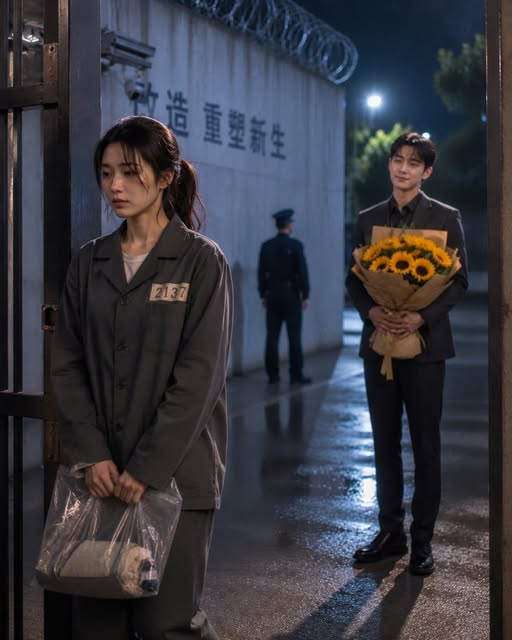
When the last box was inside, Gabriel placed a bouquet of sunflowers on the kitchen counter.
The same flowers he had brought outside the prison.
I looked at him.
“You still remember.”
“Yes.”
“Why sunflowers?”
He smiled.
“Because they turn toward light.”
I rolled my eyes.
“That’s terribly sentimental.”
“I had four years to think of it.”
For the first time, I laughed without immediately feeling guilty afterward.
That was how I knew something had changed.
Not that I had forgotten prison.
Not that I had forgiven myself completely.
But I had stopped believing every good moment needed to be punished.
The night I found my husband with my best friend, I did something terrible.
Betrayal did not justify it.
Anger did not erase responsibility.
I served the sentence the court gave me.
But prison taught me one thing I had not expected:
Accountability is not the same as deciding you no longer deserve a life.
Valeria had to live with what I did.
I had to live with what I did.
And Adrián eventually had to live with what he had done too.
None of us escaped consequences.
But I was the only one who had spent 1,340 nights believing my worst act should be my final identity.
Gabriel never believed that.
When he stood outside prison holding sunflowers and told me someone still remembered I was more than the worst thing I had done, I thought he was being kind.
Years later, I understood he was simply telling the truth.
I could not undo that night.
I could only make sure it was not the last meaningful thing I ever did.
And that became the life I built after prison.
