That night behind the flea-market sheds, I made myself a promise.
I would never again beg someone to make room for me.
If I ever had a door of my own, nobody would be able to push me through it.
The promise sounded ridiculous coming from a nineteen-year-old sleeping in a discount tent.
But I kept it.
The flea-market owner, Mr. Harlan, eventually discovered me behind the storage buildings.
I expected him to call the police.
Instead, he asked why I had been repairing a broken walnut dresser someone had thrown beside the dumpster.
“My grandmother taught me.”
He studied the dresser.
“You did that?”
“Yes.”
The next morning, he offered me twenty dollars to repair a table.
Then another.
Within six months, I was restoring furniture in the back corner of his warehouse.
Within two years, I had rented a tiny workshop.
I attended community college at night.
I learned bookkeeping.
Wood finishing.
Upholstery.
Business law.
Anything that might stop me from ever being helpless because I did not understand a document or a number.
At twenty-six, I bought three acres outside Ridge Hollow.
At twenty-nine, I finished building the workshop.
At thirty-one, the house went up beside it.
Nothing enormous.
Nothing inherited.
Every room represented invoices, missed weekends, splinters, taxes, rejected loans and mornings when I opened the shop before sunrise.
The gate came last.
People always assumed it was because expensive furniture passed through the property.
That was partly true.
But the first night the automatic gate closed behind my truck, I sat there staring at it for nearly ten minutes.
Because nineteen-year-old Paige had once owned nothing she could lock.
Now thirty-one-year-old Paige did.
And twelve years after my mother told me I was no longer her responsibility, she stood outside that gate expecting me to become hers.
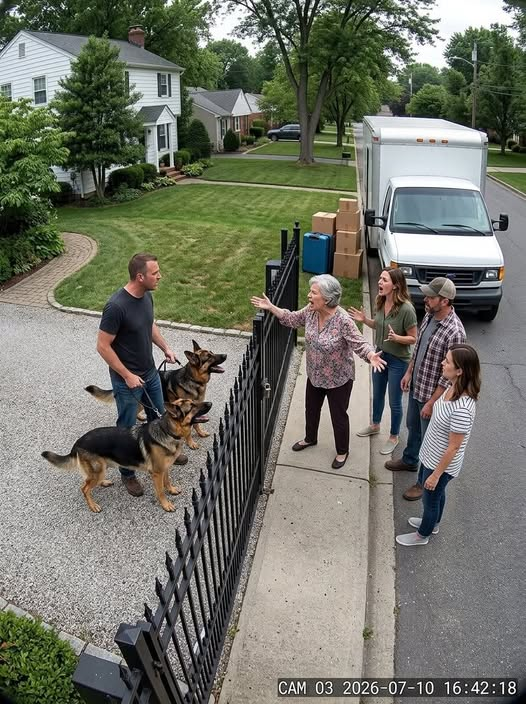
“Paige!”
Mallory’s voice came through the intercom.
“Open it.”
I leaned back in my office chair.
“No.”
Silence.
My mother blinked toward the camera.
“What?”
“You can’t move in.”
Grant stepped forward.
“Hold on. Diane said you had plenty of space.”
“I do.”
He waited.
I added:
“That doesn’t mean it’s available.”
Mallory’s face changed.
“You know what happened to us.”
“No.”
That stopped her.
Mom had apparently expected gossip to travel faster.
Mallory crossed her arms.
“Grant’s business had problems.”
Grant looked irritated.
“It wasn’t my fault.”
I said nothing.
Mallory continued:
“We had to leave the rental.”
“Today?”
“Yesterday.”
“And you drove three hours here without asking me?”
Mom interrupted.
“We didn’t need to ask.”
I actually smiled.
That sentence was so perfectly Diane Whitaker that twelve years disappeared for a moment.
She still believed family meant access.
Her access.
Her decisions.
Everyone else adjusting.
“Mom, this is my home.”
“I’m your mother.”
“Yes.”
“And Mallory is your sister.”
“Yes.”
“And those are your nieces and nephew.”
I looked at the three children.
The oldest girl was maybe eleven.
The youngest boy was asleep against Mallory’s shoulder.
They had done nothing wrong.
That mattered.
So I said:
“The children shouldn’t be standing outside while adults argue. I’ve already booked two hotel rooms in town for three nights.”
Mom stared at the camera.
“You did what?”
“I’ll send Mallory the confirmation.”
Grant scoffed.
“We don’t need a hotel. There’s a guest suite twenty yards from where you’re sitting.”
“No.”
His face hardened.
“And I’m not opening my workshop for your business.”
He looked toward Mallory.
She looked toward Mom.
That told me something.
They had discussed more than bedrooms.
“What exactly were you planning?” I asked.
Nobody answered.
So I waited.
Finally, Mallory said:
“Grant needs somewhere to restart.”
“In my workshop?”
“Only part of it.”
I laughed.
“Part of the building where my twelve employees work?”
“You have plenty of room.”
There it was again.
The family equation.
Paige has more.
Therefore Paige needs less.
I stood and walked closer to the monitor.
“My workshop is not empty space. My house is not empty space. My savings are not extra money. They exist because I built them.”
Mom’s face tightened.
“You’ve become very selfish.”
I felt something strange.
Not pain.
Recognition.
The word had followed me throughout childhood whenever I tried to keep something.
My birthday money.
A new sweater.
Grandma’s books.
An afternoon alone.
If Mallory wanted it and I resisted, I was selfish.
I pressed the intercom.
“When you made me leave at nineteen, what did you tell me?”
Mom’s eyes shifted.
“I don’t remember every argument from twelve years ago.”
“I do.”
Mallory looked down.
I continued:
“You said I had to stop being your responsibility.”
Mom sighed.
“You were an adult.”
“So is Mallory.”
Her face changed.
“That is different.”
Of course it was.
It was always different when Mallory needed something.
Mom stepped closer to the gate.
“Your sister has three children.”
“And that’s why I paid for the hotel.”
“She needs family.”
“So did I.”
Silence.
The words came out quietly.
That made them stronger.
I looked directly into the camera.
“When you saw me collecting carts at the grocery store, did you know I had nowhere permanent to sleep?”
Mom went still.
Mallory looked at her.
“What?”
I continued:
“You saw me.”
“Paige—”
“You slowed down.”
Her mouth tightened.
“I thought you were working.”
“I was.”
“You didn’t know where I was living.”
“No.”
“That’s the point.”
Mallory looked stunned.
“Mom, what is she talking about?”
Mom immediately became defensive.
“She chose not to call.”
I almost laughed.
“I was nineteen.”
“You had friends.”
“I had floors until people needed their floors back.”
Mallory looked at me differently now.
Not guilty exactly.
But uncertain.
As if someone had finally changed the lighting on a memory she had always found convenient.
I said:
“For weeks, I slept behind the Ridge Hollow flea market.”
Mallory’s face drained.
“You never told me.”
“You never asked.”
That sentence traveled through the intercom and settled between us.
Grant finally spoke.
“Okay, this is obviously a family issue. Can we deal with history later and get the truck inside?”
“No.”
He stared at the camera.
“You’re seriously going to leave children without a home?”
“I booked them a hotel.”
“For three days.”
“Yes.”
“And after that?”
“You and Mallory make a plan.”
His voice sharpened.
“I thought family helped family.”
I looked at him.
“Help is not the same as surrendering my house and business because you arrived with boxes.”
That ended his argument.
Mom tried again.
“Your grandmother would be ashamed.”
For the first time all afternoon, I felt angry.
Not out of control.
Not wounded.
Simply angry.
“Don’t use Grandma.”
Mom’s expression shifted.
“She believed family stayed together.”
“She also believed you asked before taking something that didn’t belong to you.”
I reached into my desk drawer.
Inside was the old brass key to Grandma Elaine’s house.
The house had been sold after her death.
The key opened nothing now.
I still kept it.
“She taught me something you never did.”
Mom stared silently.
“She taught me that a repaired crack isn’t something to be ashamed of.”
“But she also said you have to pay attention to what caused it.”
My voice remained steady.
“I have.”
Mallory suddenly walked away from the intercom.
She and Grant began arguing beside the truck.
I couldn’t hear everything.
Then Grant got into the cab and slammed the door.
Mallory came back alone.
“Paige.”
Her voice was quieter.
“Can the kids use the hotel?”
“Yes.”
“And me?”
“Yes.”
She looked toward Grant.
“What about him?”
“That’s your decision. The rooms are booked under your name.”
Mom immediately said:
“I’m not staying in some roadside hotel.”
“It’s not roadside.”
“I’m coming inside.”
“No.”
“Paige.”
“No.”
She grabbed the bars.
“I gave birth to you.”
I closed my eyes for a second.
Then answered:
“And I am grateful that I’m alive.”
“But birth did not give you permanent ownership of every home I would someday build.”
Mom looked genuinely shocked.
Maybe because nobody had ever told her no without eventually negotiating it down to yes.
She stepped back.
“So that’s it?”
“For tonight, yes.”
“You’ll let your own mother stand outside?”
“I’ll pay for your room too.”
“I don’t want your charity.”
The irony almost made me laugh.
“Then don’t take it.”
I ended the intercom call.
They remained outside for another twenty-three minutes.
I know because the security log recorded it.
Eventually, the moving truck backed away.
The boxes were loaded again.
The gate never opened.
The next morning, Mallory called.
For the first time in twelve years, she did not begin by asking for something.
“Grant lied.”
I sat down.
“About what?”
“The business.”
The failure had not happened suddenly.
For almost a year, he had been borrowing money to keep it alive.
Then he stopped paying rent.
Mallory knew things were bad but not how bad.
Mom had known more.
They had spent weeks discussing my property.
My workshop.
My guest rooms.
Even whether Grant could “help manage” my restoration company until he got back on his feet.
Nobody had called me.
Nobody had asked.
Because Mom had told them:
Paige always complains at first, but she eventually does the sensible thing.
I was quiet.
Mallory whispered:
“She really thought you’d open the gate.”
“I know.”
“So did I.”
“I know that too.”
Then came the question I had once thought I wanted to hear.
“Why didn’t you tell me what happened after you left?”
I looked through the office window toward my workshop.
Twelve employees.
Deliveries arriving.
A young apprentice sanding the leg of a century-old table.
“Because you watched me pack.”
Mallory started crying.
I continued gently:
“You were nineteen too.”
“You didn’t throw me out.”
“But you stood there and told me it should be easy because I didn’t need anyone.”
She whispered:
“I’m sorry.”
I believed she was.
That did not make my spare room hers.
Over the next several months, Mallory made changes.
She separated her finances from Grant’s failing business.
They eventually moved into a modest rental.
Grant took a salaried job rather than trying to restart inside my workshop.
Mom moved in with them for exactly six weeks before Mallory finally understood several things about boundaries that I had learned at nineteen.
Our relationship did not magically heal.
Mom never truly apologized.
She preferred phrases like:
“We all made mistakes.”
I stopped correcting her.
Her version of history no longer controlled my future.
Mallory and I rebuilt something smaller.
More careful.
She brought the children to visit eventually.
By invitation.
The first time they came, her oldest daughter stood beside the gate and asked:
“Aunt Paige, why do you keep it locked?”
I smiled.
“To keep everyone safe.”
She nodded.
Then asked:
“But you opened it for us.”
“Yes.”
“Why?”
I pressed the button.
The gates slowly separated.
“Because you were invited.”
Simple.
That was the entire lesson.
Twelve years earlier, I left my mother’s duplex with two trash bags because Mallory needed my bedroom.
Mom told me to tell people I had chosen independence.
For a long time, I hated that word.
Independent had meant forgotten.
Disposable.
Easy to sacrifice.
But standing inside the property I built myself, watching the gate close after my family’s first unexpected arrival, I finally understood that the word belonged to me now.
I was independent.
Not because I needed nobody.
I had friends.
Employees.
Neighbors.
People I loved and people who loved me.
I was independent because nobody else got to decide that loving them required abandoning myself.
My mother once told me:
“You’ve always acted like you don’t need us. This should be easy for you.”
She had been wrong.
It wasn’t easy.
Being thrown out at nineteen nearly broke me.
Building everything afterward took twelve years.
But when she finally returned with a moving truck, three grandchildren and a complete plan for property she had never helped me build, I did something the quiet daughter had never been expected to do.
I kept the gate locked.
And I said:
“I can help you without giving you my home.”
That was the answer they had never prepared for.
Because my family had always believed boundaries meant rejection.
It took me twelve years to learn the difference.
A locked gate does not mean there is no love behind it.
Sometimes it simply means the person inside finally understands that love needs a door—
and she gets to decide when it opens.
