That evening, Chu Nghien really came back.
Or rather—
he came to the door.
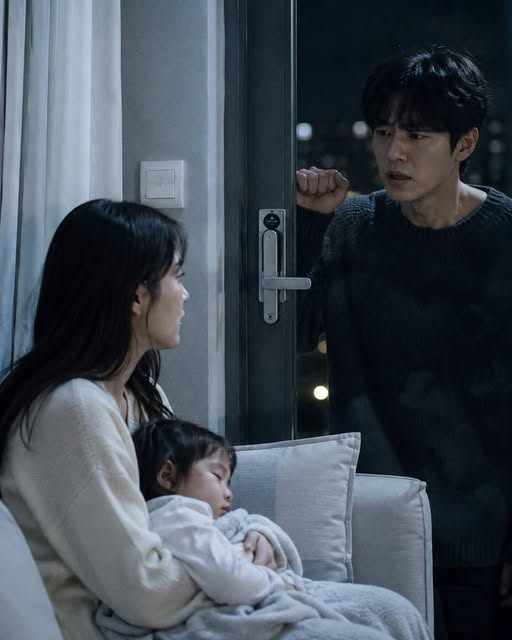
At 7:13 p.m., the intercom rang.
I was helping Tieu Vu eat porridge.
“Who is it?”
His voice came through the speaker.
“Me.”
“Did you make an appointment?”
There was silence.
Then:
“Tham Tri Y, stop joking.”
“I’m not joking.”
I looked at the clock.
“Tieu Vu sleeps at eight-thirty. If you want to see her, you have twenty minutes.”
The door opened.
Chu Nghien walked in with the expression of a man returning to inspect property that had somehow learned to refuse him.
He looked around.
His slippers were gone.
His coat hooks were empty.
The framed photograph from our wedding had disappeared from the cabinet.
He frowned.
“Where are my things?”
“Your clothes are packed.”
“You really want me to move out?”
I handed Tieu Vu a spoon.
“You already moved out last night.”
His face darkened.
“I stayed at Lam Nguyet’s because you locked me out.”
“You went to Lam Nguyet’s because you chose to.”
“That’s different.”
“No.”
I looked at him.
“It’s just the first time you had to live with the result.”
Tieu Vu suddenly spoke.
“Dad.”
Chu Nghien’s expression softened immediately.
He crouched beside her.
“Baby, are you better?”
She nodded.
Then asked:
“Why didn’t you come when Mom called you?”
His hand stopped.
Children rarely know where adults hide their excuses.
They just ask the question.
Chu Nghien glanced at me.
I said nothing.
Finally, he answered:
“Dad made a mistake.”
Tieu Vu looked at him.
“Was Aunt Lam more sick than me?”
“No.”
“Then why did you go there?”
He had no answer.
Tieu Vu lowered her head and continued eating.
That hurt him more than any argument I could have made.
Twenty minutes later, I handed him the rest of his belongings.
He stared at the suitcase.
“You’re serious.”
“Yes.”
“Over one night?”
I almost laughed.
“One night?”
I opened my phone.
There were twenty-seven screenshots in a folder.
Lam Nguyet at the hospital for stomach pain.
Lam Nguyet moving apartments.
Lam Nguyet calling because someone followed her home.
Lam Nguyet crying because her electricity went out.
Lam Nguyet asking him to drive her to an appointment.
Lam Nguyet needing help assembling furniture.
Each time, Chu Nghien left.
Each time, I stayed.
Each time, he told me:
She’s alone.
As though I had never been.
I put the phone down.
“You keep calling it one night because you only count the night I finally changed the lock.”
His face slowly changed.
I continued.
“I count every night before it.”
He sat down.
“Tri Y, nothing happened between me and Lam Nguyet.”
“I didn’t say it did.”
His head lifted.
That surprised him.
“I don’t need you to sleep with someone else for this marriage to end.”
Silence.
“You simply gave her the part of you that belonged at home.”
His eyes reddened.
“Don’t say that.”
“Why?”
“Because I came back every time.”
I smiled faintly.
“Yes.”
“You always came back.”
“After she finished needing you.”
That night, I gave him a document.
Not divorce papers.
Not yet.
A separation agreement prepared by a lawyer.
The house remained mine.
Our finances would be separated.
Tieu Vu would stay with me.
He could see her according to a temporary schedule until we decided what came next.
Chu Nghien read the first page.
Then threw it on the table.
“I won’t sign.”
“That’s your choice.”
“You’re trying to break the family.”
“No.”
I looked at him calmly.
“I’m checking whether there is still one.”
He stared at me for a long time.
Then picked up his suitcase.
Before leaving, he said:
“You’ll regret this.”
Maybe the old me would have been frightened.
This time I only answered:
“Then I’ll regret it in a house where I can sleep.”
The door closed.
I did not change the lock again.
There was no need.
He no longer had access.
The next week was the first time Chu Nghien had to manage his own life in years.
He forgot his work badge.
Missed a dry-cleaning pickup.
Arrived late to a meeting because no one reminded him his car needed servicing.
Called me to ask where his insurance documents were.
I answered once:
“In the folder labeled insurance.”
He became angry.
“You always handled these things.”
“Correct.”
“So where is everything?”
“In the place where I always told you it was.”
Silence.
Then:
“Can you just help me this once?”
I looked at Tieu Vu coloring at the table.
“No.”
Not because I wanted revenge.
Because every “just this once” had built our marriage.
And I was tired of constructing a life for a man who used his free time to rescue someone else.
Lam Nguyet was delighted at first.
Everyone knew.
She posted coffee from his car.
Photographed his coat on the chair beside her.
One caption read:
Some people always appear when you need them most.
I saw it once.
Then muted her.
I had no interest in watching the audition for a role I had already resigned from.
Two weeks later, she came to my house.
I opened the door only halfway.
She smiled awkwardly.
“Sister Tri Y…”
“Don’t.”
Her smile disappeared.
“I came because A Nghien has been in a bad mood.”
“That sounds like something you should discuss with A Nghien.”
“He keeps saying you misunderstood us.”
“I didn’t.”
She froze.
I continued:
“I understand perfectly.”
“You call.”
“He goes.”
“I call.”
“He decides whether I deserve to wait.”
Her eyes filled.
“I never asked him to leave his family.”
“No.”
“You only asked him to leave the house every time you needed something.”
Her expression changed.
“That’s not fair.”
I nodded.
“Exactly.”
Then I closed the door.
A month later, Chu Nghien stopped appearing at Lam Nguyet’s every call.
Not because I asked him.
Because reality finally reached him.
When she called at midnight because she heard noises outside her window, he told her to contact security.
She became offended.
When her car broke down, he sent her the number of roadside assistance.
She cried.
When she wanted him to accompany her to a work dinner because she “felt awkward going alone,” he said he had Tieu Vu that evening.
Lam Nguyet’s response finally broke whatever fantasy he had left.
You’ve changed.
Chu Nghien told me about it months later.
Apparently he asked her:
“How?”
She answered:
You used to make me feel important.
Not loved.
Not respected.
Important.
And suddenly he understood.
Every emergency had made him feel necessary.
At home, I was competent.
I solved problems.
Raised our daughter.
Paid bills.
Remembered appointments.
I rarely needed rescuing.
Lam Nguyet, on the other hand, needed something every week.
And Chu Nghien had confused being needed with being valued.
By the time he understood, I had already filed for divorce.
He came to my office the day he received the papers.
I was leaving work.
He stood outside.
“Tri Y.”
I stopped.
He held the envelope.
“You actually filed.”
“Yes.”
“I thought we were cooling off.”
“I was.”
His eyes brightened for a second.
Then I added:
“And when I cooled down, I still wanted the divorce.”
His face went pale.
“What about Tieu Vu?”
“She has two parents.”
“She doesn’t need two married parents who teach her that one person can be permanently abandoned as long as the other comes home eventually.”
He looked away.
“I’m trying.”
“I know.”
“I stopped answering Lam Nguyet.”
“That’s your decision.”
“I changed.”
“I hope so.”
“Then why can’t we try again?”
Because that was the part he still did not understand.
I looked at him.
“You’re changing because the door closed.”
He said nothing.
“I needed you to change when the door was still open.”
His eyes reddened.
“I’m sorry.”
I believed him.
That made it sadder.
The divorce took seven months.
There was no dramatic battle over the house.
The records were clear.
I had bought it before marriage.
Chu Nghien had contributed to household expenses, but ownership was not a mystery.
Our real arguments were about Tieu Vu.
At first, he wanted equal time immediately.
Then our mediator asked him basic questions.
Her pediatrician’s name.
Her allergy medication.
Her kindergarten teacher.
The date of her last vaccination.
He could answer almost none.
He looked at me afterward.
Ashamed.
I did not mock him.
I only said:
“Learn.”
And he did.
Slowly.
He attended parent meetings.
Took Tieu Vu to the doctor.
Learned which yogurt she hated.
Learned that she needed the hallway light on when sleeping somewhere unfamiliar.
Learned that a child’s fever did not wait until his schedule became convenient.
A year after the divorce, Tieu Vu came home from a weekend with him carrying a handmade paper house.
There were three stick figures outside.
Me.
Her.
Chu Nghien.
But the father figure stood in front of a separate little square.
I asked:
“What’s that?”
“Dad’s house.”
“And this?”
“Our house.”
I looked at her.
“Does that make you sad?”
She thought seriously.
Then shook her head.
“No.”
“Dad still comes when he says he will.”
That sentence almost made me cry.
Not because I wanted him back.
Because finally, after everything, he had learned the one thing our daughter needed most.
Reliability.
Lam Nguyet eventually moved away.
The last I heard, she got engaged to someone from another city.
Chu Nghien did not attend the wedding.
He never spoke badly about her.
To his credit, he eventually stopped blaming her entirely.
One evening, while returning Tieu Vu, he stood outside my door and said:
“I used to think she was the problem.”
I waited.
“She wasn’t.”
“No.”
“I liked feeling like someone couldn’t function without me.”
He smiled bitterly.
“Then I came home to you and assumed because you could handle everything, you didn’t need anything.”
I looked at him.
“I needed a husband.”
He nodded.
“I know.”
Too late.
But finally true.
He glanced at the lock.
“Same one?”
I smiled.
“Yes.”
“Still won’t give me a key?”
“No.”
He laughed softly.
“Fair.”
Before leaving, he said:
“Tri Y.”
“Yes?”
“I’m sorry about that night.”
I knew which night.
The fever.
The unanswered calls.
The two hours outside the door.
All of it.
I nodded.
“I know.”
Then I closed the door.
Not angrily.
Not dramatically.
Just because the conversation was over.
Everyone used to say Lam Nguyet lacked a sense of security.
So Chu Nghien ran to her every time she called.
A broken pipe.
A nightmare.
A dark hallway.
A lonely dinner.
He gave her reassurance so often that he forgot the people inside his own home needed it too.
That night, I changed the lock as a joke he thought had gone too far.
But the lock was never really the important part.
The important part was what happened afterward.
I stopped opening the door automatically.
Stopped solving every problem.
Stopped waiting.
Stopped teaching my daughter that love meant accepting whatever was left after everyone else had been comforted.
Chu Nghien once accused me of acting like building management.
He was right.
For years I had been available twenty-four hours a day.
Repairs.
Meals.
Childcare.
Emotional support.
Free service.
No complaints.
Then one morning, the management board resigned.
And only after everything stopped working—
did he finally understand who had been keeping the building standing.
