I spent the night in a detention room.
Not because anyone had proven I attacked Julia.
Because my own husband had looked a police officer in the eye and invented a scene that never happened.
That was the part I could not stop thinking about.
Oliver had not misunderstood.
He had not arrived halfway through and confused what he saw.
He had not even been there.
He had simply decided that Julia needed to compete the following day—
and that I was an acceptable price.
At eight the next morning, an officer opened the door.
“Mrs. Lowe.”
I stood.
“There’s new evidence.”
My heart jumped.
“What evidence?”
“A delivery driver came forward.”
The young man had been picking up breakfast from the shop next door when Julia started shouting.
His helmet camera had been recording.
The footage was not perfect.
But it was enough.
Julia entered my shop carrying a sealed cup she had purchased earlier.
She sat outside for several minutes.
Then, believing nobody was watching, she opened the lid herself.
Her hand moved toward the cup.
The camera could not clearly show what she dropped inside.
But when she returned, she was already filming with her phone.
Then came the argument.
The soy milk thrown at me.
The first slap—
hers.
And the moment I grabbed her wrist to stop the second.
She yanked backward, stumbled and struck her hand against the wall.
I never hit her.
But the footage contained something even more devastating.
The street outside.
For the entire confrontation, Oliver Lowe was nowhere in sight.
He arrived seventeen minutes after police were called.
The officer looked at me.
“Your husband claimed he witnessed the incident from across the street.”
“Yes.”
“He didn’t.”
“No.”
The word tasted strangely peaceful.
By noon, I was released.
Oliver was waiting outside the station.
For once, he did not look like the untouchable president of the National Go Association.
His coat was wrinkled.
His eyes were bloodshot.
“Emily.”
I walked past him.
He caught up.
“I saw the video.”
I stopped.
“Good.”
“Julia lied.”
I looked at him.
Something in my expression made him stop speaking.
“No, Oliver.”
“What?”
“Don’t make this about Julia lying.”
His brow furrowed.
“But she did.”
“Yes.”
“And you?”
He went pale.
“You lied before you knew she was lying.”
Silence.
That was the part he could not escape.
He had not protected an innocent student.
He had chosen a student without knowing the truth.
I asked:
“Why did you say you were there?”
His throat moved.
“Her competition…”
I laughed.
One short sound.
“That’s your answer?”
“She had spent months preparing.”
“And I spent a night detained.”
His face tightened.
“I thought it would only be temporary.”
“So was my innocence?”
He closed his eyes.
I continued:
“You knew there was no camera.”
“You knew nobody could immediately contradict you.”
“And because you believed your reputation mattered more than mine, you used it.”
“Emily—”
“You didn’t save Julia.”
I looked directly at him.
“You sacrificed me.”
He said nothing.
I left.
My father was still in the hospital.
When I entered his room, he looked at my face for several seconds.
Then asked:
“Did Oliver do that?”
“No.”
I sat beside him.
“But he did something worse.”
I told him everything.
My father listened without interrupting.
When I finished, he said:
“You’re divorcing him?”
“Yes.”
“Good.”
I almost laughed.
“That quickly?”
He gave me the same look he had used when I was fifteen and tried to hide a failed exam.
“Emily, I taught you to make soy milk.”
“Yes.”
“I did not raise you to let some Go genius use you as a disposable stone.”
That time, I really laughed.
And then I cried.
Not because I wanted Oliver back.
Because my father had just put my marriage into one sentence.
For seven years, I had treated Oliver as though he were the entire board.
Every move depended on him.
Every sacrifice needed to benefit him.
Meanwhile, he had treated me like a stone he could give away if it protected something he valued more.
The divorce papers were filed that week.
Oliver came to the shop the day I reopened.
This time, there were cameras.
Four of them.
He noticed immediately.
I was hanging a new sign behind the counter.
He stood quietly until I finished.
Then said:
“I resigned temporarily from the association presidency.”
I turned.
“Why?”
“There’s an ethics review.”
I said nothing.
“My statement to police…”
His voice lowered.
“They’re investigating it.”
“That sounds appropriate.”
He flinched slightly.
Then:
“Julia has been removed from the upcoming team events while they review her conduct.”
Again, I said nothing.
He seemed frustrated.
“Emily, do you care at all?”
I looked at him.
“About consequences?”
“Yes.”
“No.”
That surprised him.
“I care about what happened to me.”
“Whatever happens professionally to you or Julia belongs to the people responsible for deciding it.”
His eyes reddened.
“I went to see her.”
“Why are you telling me?”
“Because I asked why she did it.”
I waited despite myself.
Oliver had gone to Julia’s apartment the previous evening.
She had initially cried.
Then apologized.
Then blamed stress.
Finally, when he asked why she had claimed I attacked her, she said:
Because I knew you would believe me.
Oliver stopped speaking.
I understood immediately why that sentence had destroyed him.
Julia had known.
She knew exactly how he would choose.
And she had been right.
He whispered:
“She said she wanted to prove that if it ever came down to the two of you, I would stand with her.”
I nodded.
“And you proved it.”
His face collapsed.
“I didn’t think of it that way.”
“You didn’t think of me at all.”
That was worse.
He sat at one of the small plastic tables.
For the first time, the famous Oliver Lowe looked completely ordinary.
“Nothing happened between Julia and me.”
“I believe you.”
His head lifted.
“You do?”
“Yes.”
That had stopped mattering.
I continued:
“You keep trying to defend yourself against the wrong accusation.”
“I’m not divorcing you because you slept with your student.”
“I’m divorcing you because when her future and my dignity were placed on opposite sides, you did not even hesitate.”
His eyes closed.
“Can I fix it?”
“No.”
The answer came easily.
He looked at me.
“Seven years, Emily.”
“I know.”
“You loved me for seven years.”
“Yes.”
“Then how can you end it because of one day?”
I put down the cloth in my hand.
“It wasn’t one day.”
“It was the day I finally understood all the others.”
He said nothing.
“The dinners you missed.”
“The conversations you didn’t hear.”
“The way you defended Julia every time I said she crossed a boundary.”
“The fact that when I asked for a divorce, you barely looked up.”
I paused.
“But the moment I said her name…”
“You stood.”
His face slowly lost color.
Because he remembered.
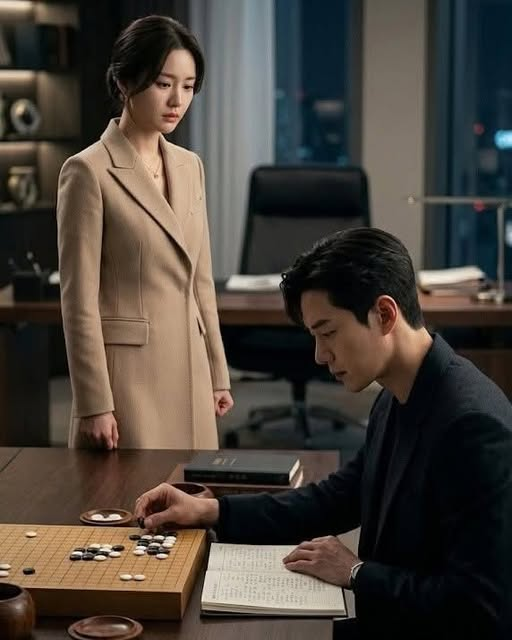
The Go book.
My divorce request.
His indifference.
Then Julia’s name.
And his immediate attention.
He whispered:
“I didn’t realize.”
“I did.”
The divorce took five months.
There were no children.
Very little shared property.
Oliver did not fight me after the first mediation session.
Perhaps he finally understood that making me stay would only repeat the same mistake.
Julia eventually admitted that she had deliberately staged the complaint about the drink because she was angry after learning Oliver and I had discussed having a child someday.
She had convinced herself that if our marriage ended, she might finally become important to him in the way she wanted.
It did not happen.
Oliver removed himself from coaching her.
The association reassigned her.
I never saw her again.
I did not need to.
My life became surprisingly quiet.
My father recovered enough to come home.
He began sitting in the corner of my breakfast shop every morning, pretending to supervise.
Whenever I made the soy milk too thin, he complained loudly enough for customers to hear.
“You learned nothing from me.”
“Dad, people are eating.”
“They deserve the truth.”
The customers loved him.
Business improved.
I added cameras.
A delivery window.
Then a second location near the train station.
Nothing impressive compared with Oliver’s tournaments, sponsorships and television interviews.
But every morning, people lined up for something I had made with my own hands.
That mattered.
A year after the divorce, Oliver came back.
He arrived early.
No students.
No assistants.
No coat that made everyone turn their heads.
He ordered plain soy milk and two steamed buns.
I placed them in front of him.
He looked at me.
“Do you still hate me?”
I thought about it.
Then shook my head.
“No.”
His eyes filled with something almost hopeful.
So I added:
“I stopped needing to.”
He looked down.
“I returned to the association.”
“I heard.”
“Not as president.”
I nodded.
“I’m coaching children now.”
“That sounds good.”
He smiled faintly.
“They argue with every move.”
“Also sounds good for you.”
He laughed.
Then became quiet.
“I understand something now.”
“What?”
“In Go, I used to think the worst mistake was misreading the board.”
He looked at me.
“It isn’t.”
I waited.
“The worst mistake is seeing only the stone you’re trying to save and forgetting what you sacrifice to keep it.”
For once, Oliver Lowe had said exactly the right thing.
Just years too late.
He asked:
“If I had told the truth that day…”
I interrupted gently.
“We would still have had problems.”
His face changed.
“But maybe we would have had a chance to solve them.”
“Yes.”
That was the honest answer.
He nodded.
Then finished his breakfast.
Before leaving, he stopped at the door.
“Emily.”
“Yes?”
“I am sorry.”
“I know.”
He left.
I watched him disappear into the morning crowd.
Then someone at the counter shouted:
“Boss, we’re out of buns!”
I turned around.
Life had already moved on.
Years earlier, I asked Oliver for a divorce while he studied an old game of Go.
He did not look up.
I could have said I was lonely.
That I was tired.
That our marriage was dying.
Maybe he would have turned another page.
But I said Julia Grant’s name—
and suddenly he was completely awake.
At the time, I thought that reaction proved he loved her.
Later, I understood something more painful.
It proved that he had simply learned to treat her feelings as urgent—
and mine as something that could wait.
Then he lied to protect her.
And in doing so, he finally made one move even a genius could not undo.
He did not lose me because Julia was more important.
He lost me because he acted as though I was expendable.
For years, Oliver could read hundreds of possibilities across a nineteen-by-nineteen board.
But he failed to understand the simplest position of his life:
the wife beside him was not a stone he could sacrifice and expect to place back later.
