The insurance specialist finished speaking.
I thanked her and hung up.
The hospital room fell silent.
Manh Thoi Vien stared at me.
“You’re threatening my brother?”
“No.”
I put my phone beside the crib.
“I’m informing you that I do not authorize him to drive my car.”
Phung Le Binh immediately raised her voice.
“Family members borrowing a car requires authorization now?”
“Yes.”
She froze.
Apparently the word was unfamiliar when applied to my property.
Thoi Vien rubbed his forehead impatiently.
“Thanh Hoa, Thoi An already took it.”
“Then bring it back.”
“The wedding is next month.”
“That has nothing to do with my Porsche.”
He stared at me.
“You’ve changed since giving birth.”
I almost laughed.
“No.”
I looked at my sleeping baby.
“I’m simply too tired to continue pretending I don’t notice things.”
Neither of them understood what I meant.
Not yet.
The car did not return in two days.
Or three.
Manh Thoi An used it for the wedding.
Then for photographs.
Then, without asking me, drove it away for his honeymoon.
Thoi Vien told me:
“They’re only going to Suzhou.”
The next day:
“They extended the trip.”
Then:
“Why are you calculating everything so precisely? It’s just a car.”
I stopped asking.
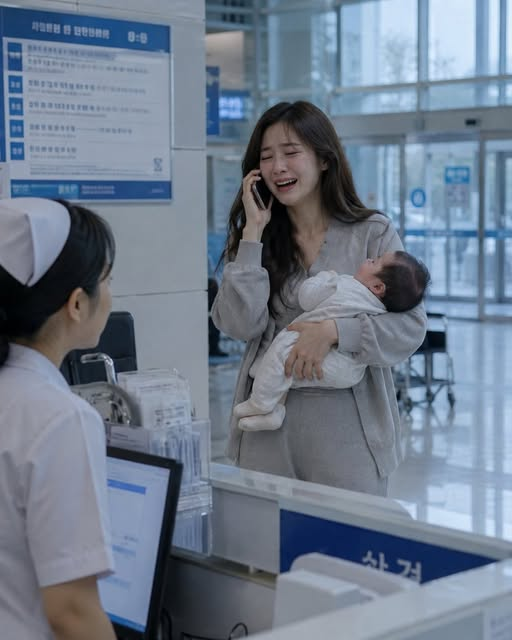
On the morning I was discharged, I dressed the baby slowly, packed the formula, diapers and medical papers, and stood in the hospital lobby.
Everyone else seemed to have someone waiting.
A husband carrying bags.
A mother holding flowers.
A father carefully fastening a newborn seat.
I called Thoi Vien.
“Where are you?”
“At work.”
“I’m being discharged.”
A pause.
“You’re leaving today?”
I closed my eyes.
“Yes.”
“I told you.”
“Oh.”
He sounded distracted.
“Take the Porsche and come pick us up.”
Another silence.
“The car is still with Thoi An.”
First call.
I waited ten minutes.
Called again.
“Can you come yourself?”
“Thanh Hoa, I’m in the middle of something.”
“Your wife and child are leaving the hospital.”
“Calling a taxi costs only a few dozen yuan.”
Second call.
I looked down at my baby.
Then called one final time.
He did not answer.
Third call.
And standing there with my child in my arms, I suddenly laughed.
The nurse beside me stared.
Maybe she thought I was exhausted.
I was.
But not confused anymore.
I made a fourth call.
Not to my husband.
To the bank.
“Please cancel supplementary card 6912 immediately.”
The representative verified my identity.
“Would you like to reduce the limit instead?”
“No.”
“Cancel it.”
“Understood.”
I continued:
“And send the complete twelve-month statement to my email.”
After hanging up, I called a locksmith.
Then a lawyer.
Then a taxi.
By the time Manh Thoi Vien realized something was wrong—
I was already home.
The apartment had been mine before marriage.
Thoi Vien moved in after our wedding.
For three years, I paid the mortgage.
He called it “our home.”
That afternoon, I finally remembered the deed called it mine.
The locksmith had just installed the new cylinder when my phone began exploding.
First Thoi An.
Then his wife.
Then my mother-in-law.
Finally Thoi Vien.
I answered.
“What did you do to the card?”
“Canceled it.”
His voice rose.
“Thoi An is on his honeymoon!”
“Then he should use his own card.”
“They’re checking into a hotel!”
“Hotels generally accept payment from guests.”
“Thanh Hoa!”
I moved the phone away from my ear.
He shouted:
“Why would you suddenly cancel it without telling me?”
I looked at the new lock.
Then said:
“You took my money without asking.”
“You took my car without asking.”
“So I canceled my card without asking.”
Silence.
Then:
“You’re my wife!”
“For now.”
The line went completely quiet.
He whispered:
“What does that mean?”
“I’m filing for divorce.”
He arrived home forty minutes later.
Or tried to.
His key no longer worked.
He rang the bell until the baby started crying.
I opened the door but did not let him inside.
“What are you doing?”
His face was red.
“You changed the lock?”
“Yes.”
“My things are inside!”
“I packed what you need.”
I pointed toward two suitcases beside the door.
His expression was almost identical to mine in the hospital when I discovered the eighty-thousand-yuan charge.
Disbelief.
Not because something had been lost.
Because he had never imagined I had the right to decide.
“You’re throwing me out because my brother borrowed your car?”
“No.”
“Then because of eighty thousand?”
“No.”
“Then what?”
I looked at him.
“The eighty thousand was only money.”
“The Porsche was only a car.”
“The taxi was only a few dozen yuan.”
His jaw tightened.
I continued:
“But every time something belonged to me, it became ‘only’ something.”
“My money.”
“Only eighty thousand.”
“My car.”
“Only two days.”
“My recovery.”
“Only confinement.”
“My discharge.”
“Only a taxi ride.”
I looked directly into his eyes.
“And every time something concerned your family, it became important enough that I was supposed to sacrifice for it.”
He stopped speaking.
That was the marriage.
Reduced to one pattern.
His family mattered automatically.
I mattered only when convenient.
That night I opened the complete card statement.
The eighty thousand was not the beginning.
There were restaurant bills.
His mother’s imported medicine.
His father’s fishing equipment.
Thoi An’s business meals.
Wedding deposits.
Jewelry installments.
Photography.
Hotels.
Fuel.
And dozens of smaller purchases I had never noticed because Thoi Vien knew I rarely checked.
Over three years, the total was staggering.
But something else bothered me more.
His own salary account showed almost none of those expenses.
During the divorce financial disclosure, the answer became clear.
Every month, Thoi Vien transferred a large portion of his salary to his mother.
Some went toward his brother’s business.
Some remained in savings under his own name.
He had been saving his money—
while spending mine.
When I confronted him, he actually looked offended.
“That was family money.”
“No.”
I pushed the statements across the table.
“That was my credit.”
“I was planning for our future.”
“With your savings?”
“Yes.”
“And whose money paid for your family’s present?”
He went silent.
I smiled.
“Mine.”
For years, he had repeated:
One family. Don’t calculate so clearly.
Funny.
He had calculated perfectly.
His money accumulated.
Mine circulated.
Manh Thoi An returned the Porsche four days later.
Not because he suddenly respected me.
Because my lawyer sent written notice revoking permission to use it.
The car came back dirty, covered in wedding adhesive and with significantly more mileage.
I said nothing.
I took photographs.
Had it inspected.
Sent the repair and cleaning bill.
Thoi An called me furious.
“Sister-in-law, are you seriously charging me?”
“Yes.”
“You gave us eighty thousand and now you care about this?”
“I didn’t give you eighty thousand.”
“Brother said—”
“Your brother spent it.”
There was a difference.
He finally understood that.
The money was later included in the financial settlement discussions.
I did not demand that every meal ever purchased for his family be returned.
That would have kept me trapped in three years of receipts.
I asked for only the clearly wedding-related charges made shortly before and after childbirth to be accounted for.
His family called me cruel.
I called it closing the books.
Phung Le Binh came to see me once.
She stood outside my door carrying soup.
I did not invite her in.
“You’re really divorcing over money?”
“No.”
“Then what is it?”
I looked at her.
“Your son missed the birth because of Thoi An’s engagement.”
She opened her mouth.
“He allowed your family to spend my card while I was recovering.”
“He took my car without permission.”
“And when I stood at the hospital with his baby, he told me to call a taxi.”
Her expression changed slightly.
I continued:
“The strange thing is that none of those things alone ended my marriage.”
“Then why divorce?”
“Because every one of them taught me the same thing.”
“What?”
“In your family, I was a resource before I was a person.”
She went silent.
Before leaving, she muttered:
“You’re making Thoi Vien suffer.”
I looked at my baby sleeping inside.
“No.”
“I’m simply no longer preventing him from experiencing the consequences of his own choices.”
The divorce took several months.
The apartment remained mine.
The Porsche remained mine.
The supplementary card was already dead.
Thoi Vien kept his personal savings.
He repaid the portion of disputed wedding expenses we ultimately agreed on.
There was no dramatic bankruptcy.
No one became homeless.
His family simply had to start paying for themselves.
And strangely—
that was enough to create chaos.
Thoi An postponed buying a new car.
My mother-in-law switched to a less expensive brand of imported medication after her doctor confirmed it was medically appropriate.
My father-in-law stopped replacing fishing equipment every season.
Thoi Vien discovered how much daily life actually cost when another person was no longer quietly absorbing it.
The Manh family survived.
Of course they did.
They had simply become accustomed to surviving on me.
Thoi Vien became a father more slowly.
At first he treated visits like appointments.
Then the baby developed a fever one evening during his parenting time.
He called me six times.
I answered.
We handled it together.
Not because I loved him.
Because our child deserved two responsible adults.
Over time, he improved.
He learned diaper sizes.
Feeding schedules.
Doctor appointments.
He learned that parenting was not looking at a newborn twice and saying:
“Looks like you.”
It was showing up.
Again.
And again.
I never used our child to punish him.
But I also never used our child as a reason to take him back.
Those were different things.
A year after the divorce, I went to another hospital.
This time for a routine pediatric appointment.
When we finished, it was raining outside.
I stood under the entrance checking the weather when a black car stopped in front.
Thoi Vien got out.
He had come for his scheduled afternoon with the baby.
He walked toward me carrying an umbrella.
For a moment, I remembered the day of discharge.
Three unanswered needs.
One taxi.
A newborn in my arms.
He stopped in front of me.
“I brought the child seat.”
“Good.”
Then he hesitated.
“Thanh Hoa.”
“What?”
“I’m sorry I didn’t come that day.”
I looked at him.
He had apologized before.
But this time he did not add:
I was busy.
Or:
You could have taken a taxi.
Or:
My brother needed the car.
Just:
“I should have been there.”
I nodded.
“Yes.”
He looked at me.
“Is it really too late?”
“Yes.”
He lowered his head.
Then accepted the baby from me carefully.
That was all.
No reunion.
No dramatic embrace.
Some apologies are valuable even when they arrive too late to save the relationship.
They can still save the person who finally understands what they did.
People later said I divorced because my brother-in-law borrowed my Porsche.
Others said it was because my husband spent eighty thousand yuan.
Some blamed my mother-in-law.
Some blamed postpartum emotions.
They were all wrong.
I divorced because the day I left the hospital, I finally saw my marriage without excuses.
I was holding the smallest, most vulnerable person in my life.
And the man who called himself my husband thought getting us home safely was less important than inconveniencing his younger brother.
That afternoon, I made four phone calls.
Three to him.
One to the bank.
The first three changed nothing.
The fourth changed my life.
That night, the Manh family called me heartless because the supplementary card stopped working.
But the card had never been the real problem.
The real problem was that everyone had become so accustomed to taking from me that the moment I stopped giving—
they mistook a boundary for betrayal.
I changed the lock that night.
Months later, I changed my marital status.
And after that, I changed something even harder:
I stopped confusing being generous with being endlessly available.
The door to my home still opens.
My child’s father still visits.
My friends come in.
My parents have keys.
But now every person who enters knows one simple rule:
Being family gives you a place in my life.
It does not give you ownership of it.
