PART 2
The training field fell silent.
A moment earlier, recruits had been whispering about the slap.
Now every eye was fixed on the base commander.
He stood beside the military vehicle holding an unusually thick folder.
The sergeant’s face looked pale.
Not embarrassed.
Not angry.
Terrified.
That caught my attention immediately.
Because a man willing to slap another instructor in front of dozens of witnesses wasn’t usually afraid of much.
The commander walked forward slowly.
Two military police officers stepped out of the vehicle behind him.
The recruits noticed.
The instructors noticed.
Everyone noticed.
The commander opened the folder.
The first page contained photographs.
Dozens of them.
The commander held one up.
“I’ve been conducting a command review for the last eight weeks.”
The sergeant swallowed hard.
No one said a word.
The commander continued.
“Originally, this review had nothing to do with today’s incident.”
That statement sent a ripple through the crowd.
The slap was already serious enough.
But apparently this folder involved something else entirely.
Something bigger.
The commander looked directly at the sergeant.
“Would you like to explain why training equipment repeatedly disappeared under your supervision?”
The sergeant’s jaw tightened.
“I don’t know what you’re talking about.”
The commander flipped another page.
“Interesting.”
Another photograph appeared.
Then another.
Then another.
Equipment storage rooms.
Inventory sheets.
Access logs.
Signed documents.
The commander looked unimpressed.
“Because according to these records, you signed for every missing item.”
The recruits exchanged stunned glances.
I felt my pulse quicken.
This wasn’t about professional jealousy.
This wasn’t about a bad attitude.
This was something far more serious.
And judging by the sergeant’s expression, he knew exactly where this was heading.
PART 3
Within an hour, the training field had transformed into an investigation scene.
The recruits were dismissed.
The instructors were ordered to remain available for questioning.
Military police escorted the sergeant away.
He didn’t resist.
But he also didn’t say a word.
That silence bothered me.
People who were falsely accused usually defended themselves.
The sergeant simply stared at the ground.
Later that afternoon, I was called into headquarters.
The commander sat across from me.
The folder rested on his desk.
I immediately recognized it.
“Ma’am,” he said, “there are some things you should know.”
I nodded.
He opened the folder again.
The evidence was extensive.
Missing equipment.
Altered inventory reports.
Unauthorized access records.
Forged signatures.
My stomach sank.
This wasn’t a paperwork mistake.
Someone had been deliberately manipulating records.
For months.
Maybe years.
The commander slid several documents toward me.
“Your name appears repeatedly.”
I looked up sharply.
“My name?”
He nodded.
I examined the papers.
My signature appeared on multiple forms.
The problem was simple.
I hadn’t signed them.
Every signature was fake.
A cold chill ran through me.
The commander leaned back.
“We believe someone used your reputation to hide discrepancies.”
Suddenly everything made sense.
The sergeant’s obsession with competing against me.
His resentment.
His hostility.
His constant attempts to undermine me.
I had unknowingly become part of his cover.
And now that cover was collapsing.
Fast.
PART 4
The investigation intensified immediately.
Over the next two weeks, auditors examined everything.
Equipment logs.
Training records.
Financial reports.
Security footage.
Nothing escaped scrutiny.
What they discovered shocked the entire command.
The missing equipment wasn’t random.
The items followed a pattern.
High-value gear.
Specialized equipment.
Expensive electronics.
Each disappearance had been carefully hidden.
The sergeant appeared connected to nearly every incident.
But investigators still lacked one thing.
A clear explanation.
Where had everything gone?
That answer arrived unexpectedly.
One evening, military police searched an off-base storage facility.
The unit had been rented under a relative’s name.
Inside they found stacks of military equipment.
Boxes upon boxes.
Some still carried government property tags.
The inventory list stretched for pages.
The discovery made headlines across the installation.
Suddenly everyone was talking about the case.
The recruits.
The instructors.
Even personnel from neighboring bases.
The sergeant’s situation grew worse by the hour.
Yet the biggest revelation was still coming.
Because buried inside the storage unit was a small locked container.
And what investigators found inside changed everything.
PART 5
The container held documents.
At first glance they seemed ordinary.
Receipts.
Invoices.
Account statements.
But financial investigators quickly noticed something unusual.
Money.
A lot of money.
Payments had been moving through multiple accounts.
Some deposits matched the value of missing equipment.
Others didn’t.
The numbers kept growing.
Thousands.
Then tens of thousands.
Then hundreds of thousands.
The investigation expanded beyond simple theft.
Now fraud specialists became involved.
Within days they uncovered a network of transactions stretching back years.
The sergeant wasn’t acting alone.
Several civilian contractors appeared connected.
A former supply clerk appeared connected.
Even a retired employee surfaced in the records.
The scope of the case exploded overnight.
Meanwhile, I continued instructing recruits.
At least I tried to.
Everywhere I went, people asked questions.
Everyone wanted answers.
Unfortunately, I didn’t have many.
Only investigators knew the full picture.
Then one morning the commander called an emergency staff meeting.
His expression told us everything.
Something major had happened.
And it wasn’t good for the sergeant.
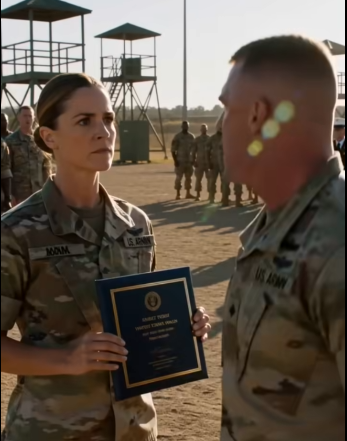
PART 6
The conference room was packed.
Senior instructors.
Command staff.
Investigators.
Legal officers.
Nobody looked relaxed.
The commander entered carrying another folder.
Even thicker than the first.
He placed it on the table.
Then he spoke.
“Last night we received new evidence.”
The room became still.
An investigator connected a laptop to the projector.
Security footage appeared.
The timestamp showed a date from nearly a year earlier.
The video displayed an equipment warehouse.
A figure entered.
Accessed restricted storage.
Loaded equipment onto a vehicle.
Then drove away.
The image quality wasn’t perfect.
But it was clear enough.
Everyone recognized the individual immediately.
The sergeant.
Several people gasped.
The footage continued.
Additional dates.
Additional thefts.
Additional evidence.
Each recording strengthened the case.
Then investigators played an audio recording.
A conversation.
The sergeant discussing inventory shortages.
At first it sounded routine.
Then he mentioned altering records.
Then forging approvals.
Then shifting blame to instructors.
Including me.
The room went silent.
There was no denying it anymore.
The evidence was overwhelming.
For months he had secretly built a system designed to protect himself while implicating others.
If the investigation hadn’t uncovered the truth, innocent people could have been punished.
Including me.
The realization left everyone shaken.
But the final twist was still ahead.
Because investigators had finally discovered why he started everything in the first place.
And nobody expected the answer.
PART 7
The motive surprised everyone.
Including the investigators.
For weeks people assumed greed was the primary reason.
They were only partially correct.
The real story was more complicated.
Years earlier, the sergeant had accumulated enormous personal debt.
Bad investments.
Failed business ventures.
Financial decisions he desperately wanted hidden.
Initially he sold a small amount of equipment to solve immediate problems.
Then another item.
Then another.
Each time he convinced himself it would be the last.
Instead, the thefts grew larger.
The lies multiplied.
The cover-ups expanded.
Eventually the situation became impossible to control.
His career depended on maintaining the deception.
Then something happened that made everything worse.
My arrival.
When I joined the instructor staff, recruits responded positively.
Training results improved.
Graduation performance increased.
Command staff noticed.
Recognition followed.
The sergeant saw me as a threat.
Not because of the award.
Because my reputation highlighted his declining one.
The more respected I became, the more scrutiny he feared.
The award ceremony simply pushed him over the edge.
The applause wasn’t what angered him.
The applause terrified him.
Because he realized leadership was exposing what intimidation had hidden.
And when I challenged him publicly, he lost control completely.
The slap wasn’t the beginning of his downfall.
It was the moment years of pressure finally exploded.
PART 8 (THE END)
Three months later, the case concluded.
The sergeant accepted responsibility.
Multiple charges followed.
Several accomplices faced consequences as well.
The stolen equipment was recovered.
The fraudulent records were corrected.
The innocent personnel implicated by forged documents were fully cleared.
For me, life slowly returned to normal.
Training cycles continued.
New recruits arrived.
Graduation ceremonies came and went.
The investigation became history.
Then one afternoon, the commander called me into his office.
I assumed it involved routine business.
Instead, he handed me a letter.
Inside was a recommendation for a distinguished leadership award.
I looked up in surprise.
“Sir, this isn’t necessary.”
He smiled.
“Actually, it is.”
I laughed nervously.
“For getting slapped?”
The commander shook his head.
“No.”
He pointed toward the training grounds outside his window.
“For setting the example every instructor should follow.”
I stayed silent.
The commander continued.
“You stood your ground when it would’ve been easier to stay quiet.”
His words stayed with me.
Weeks later, during another graduation ceremony, I stood beside hundreds of recruits preparing to leave training.
As the ceremony ended, one recruit approached.
Then another.
Then several more.
They weren’t there because of awards.
Or evaluations.
Or recognition.
They simply wanted to say thank you.
For believing in them.
For treating them with respect.
For helping them succeed.
Watching them walk away toward their futures, I finally understood something important.
Leadership isn’t measured by rank.
It isn’t measured by fear.
And it certainly isn’t measured by how loudly people obey.
Real leadership is measured by trust.
By integrity.
By the example you set when nobody is watching.
The sergeant spent years trying to prove he was the strongest instructor on base.
In the end, strength wasn’t what people remembered.
Character was.
The applause that day lasted less than a minute.
The slap lasted less than a second.
But the truth those moments revealed changed lives for years afterward.
And what began as a simple award ceremony became the day an entire deception finally collapsed.
The recruits learned a lesson about leadership.
The command learned a lesson about accountability.
And I learned that doing the right thing doesn’t always make life easier—sometimes it simply makes the truth impossible to ignore.
THE END.
