PART 2 — THE FOOTAGE BEGINS
The equipment bay fell completely silent.
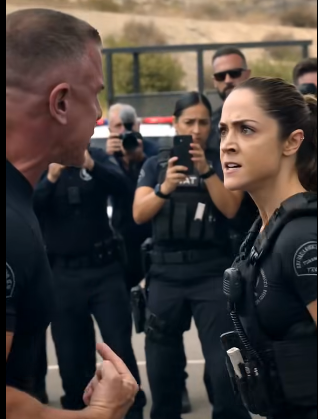
My cheek still burned from the slap.
The training officer stood frozen.
Across the training grounds, hundreds of guests stared at the giant monitor inside the media tent.
The police chief appeared on screen beside the commissioner.
Neither looked pleased.
The chief folded his arms.
“Since today’s event was intended to demonstrate professionalism, let’s review some training records.”
The training officer’s confidence evaporated instantly.
The first video started playing.
It showed a SWAT exercise from six months earlier.
The training officer was leading a team through a simulated hostage rescue.
At first nothing seemed unusual.
Then reporters noticed something.
The route he ordered the team to take placed multiple officers directly in the line of fire.
Several experienced operators in the crowd immediately exchanged worried glances.
The video continued.
An instructor on the recording questioned the tactic.
The training officer ignored him.
Moments later, simulation rounds struck three officers.
The exercise was ruled a failure.
The screen froze.
Gasps spread through the crowd.
The chief spoke.
“That recommendation violated department protocol.”
The commissioner nodded.
“And the violation was documented.”
The training officer looked ready to collapse.
But the chief wasn’t finished.
“Play the second clip.”
PART 3 — THE PATTERN
The next video began.
This one was from four months earlier.
A different exercise.
A different team.
The same training officer.
Again he instructed operators to ignore established tactical procedures.
Again experienced instructors objected.
Again he overruled them.
The result was identical.
Failure.
Dangerous failure.
The reporters began taking furious notes.
Questions erupted across the tent.
One journalist raised her voice.
“How many times has this happened?”
Nobody answered immediately.
The commissioner looked directly into the camera.
“More than once.”
The crowd erupted.
City officials looked horrified.
Community leaders stared at one another.
The training officer’s face had turned ghost white.
Then the chief said something that changed everything.
“The third video is why we’re here today.”
A chill ran down my spine.
The screen switched again.
And suddenly everyone understood why the chief looked so angry.
PART 4 — THE SECRET COMPLAINTS
The third recording wasn’t a training exercise.
It was an internal meeting.
The room on screen contained supervisors, instructors, and department administrators.
The date stamp showed it happened two months earlier.
The training officer sat at the center of the table.
The audio played.
A senior instructor spoke first.
“We’ve received seven formal complaints regarding unsafe instruction.”
The crowd watching the monitor gasped.
Seven.
The training officer immediately became defensive.
The video continued.
Another supervisor added:
“Several operators report retaliation after questioning procedures.”
My stomach tightened.
Retaliation.
The word hit hard.
Because I suddenly remembered conversations whispered in hallways.
Transfer requests.
Cancelled opportunities.
Promotions that mysteriously disappeared.
People who challenged him often paid a price.
The recording continued.
An administrator recommended additional review.
The training officer argued aggressively.
Then he said something that made the entire crowd fall silent.
“If operators don’t like my training, they can leave the unit.”
The screen froze.
The chief appeared again.
His voice was calm.
Too calm.
“For two months we conducted an independent investigation.”
Nobody moved.
Nobody spoke.
Then he delivered the bombshell.
“The investigation confirmed every complaint.”
The crowd exploded into chaos.
Reporters surged toward the front.
Cameras swung wildly.
Microphones appeared everywhere.
The training officer looked physically ill.
But the worst revelation had not yet arrived.
PART 5 — THE FILES
The commissioner stepped forward.
“We discovered something else.”
A new image appeared.
Emails.
Documents.
Personnel files.
The commissioner continued.
“Several officers who reported safety concerns experienced unusual disciplinary actions shortly afterward.”
The audience gasped.
One by one, examples appeared.
Negative performance reviews.
Cancelled instructor certifications.
Denied promotions.
Transfers.
Each case involved officers who challenged the training officer.
A pattern emerged.
A disturbing pattern.
Several officers around me suddenly looked vindicated.
One veteran operator shook his head.
“I knew it.”
Another officer whispered:
“He did the same thing to me.”
The training officer finally found his voice.
“This is ridiculous.”
Nobody listened.
The evidence kept coming.
The commissioner displayed timestamps.
Internal communications.
Witness statements.
Every piece fit together.
Then a final document appeared.
The commissioner looked directly at the crowd.
“This complaint was submitted three weeks ago.”
My heart stopped.
A photograph appeared on screen.
It was me.
The room gasped again.
I had filed concerns about tactical safety after observing repeated mistakes during training sessions.
The investigation had already begun before today’s demonstration.
The slap wasn’t the reason the chief was watching.
He had already been under scrutiny.
Today’s incident simply happened in front of everyone.
The training officer stared at me.
For the first time, I saw genuine fear in his eyes.
PART 6 — THE UNEXPECTED WITNESS
The situation seemed finished.
Then a voice emerged from the crowd.
“There’s something else.”
Everyone turned.
An elderly man slowly approached the stage.
Most civilians didn’t recognize him.
Many officers did.
Retired Deputy Chief Harold Mason.
A legend within the department.
The man who helped build the SWAT program decades earlier.
The commissioner looked surprised.
“Chief Mason?”
The retired officer nodded.
Then he addressed the crowd.
“I’ve remained quiet for years.”
The room listened carefully.
“But I won’t remain quiet today.”
His voice carried across the entire training ground.
Mason revealed that several months earlier, younger officers had contacted him privately.
They feared speaking publicly.
They feared retaliation.
They feared losing their careers.
So they came to him.
The retired chief pulled a thick folder from a briefcase.
Inside were statements.
Letters.
Reports.
Years of them.
The audience was stunned.
Some complaints dated back nearly a decade.
A decade.
The training officer looked ready to faint.
Mason placed the folder on a table.
Then he spoke directly to him.
“You didn’t build this program.”
The training officer remained silent.
“You inherited it.”
The retired chief’s voice hardened.
“And then you nearly destroyed it.”
The crowd erupted into applause.
PART 7 — THE DECISION
By late afternoon, the entire city seemed aware of what had happened.
News helicopters circled overhead.
Social media exploded.
Video clips spread everywhere.
The slap.
The footage.
The investigation.
The complaints.
Everything.
The commissioner eventually called everyone together.
Officers.
Media.
Officials.
Community leaders.
He stood beside the chief and delivered the decision.
Effective immediately, the training officer was suspended.
His instructor certification was revoked.
An external review board would examine every training record from the previous ten years.
The announcement triggered another wave of applause.
Then the commissioner surprised everyone.
He looked directly at me.
“Officer Bennett.”
I froze.
“Step forward.”
My heart raced.
I walked toward the stage.
Hundreds of eyes followed me.
The commissioner smiled.
“The reason today’s mistake was corrected is because one officer chose safety over silence.”
The crowd applauded again.
I felt embarrassed.
Uncomfortable.
But proud.
The commissioner continued.
“Professionalism isn’t protecting egos.”
He paused.
“It’s protecting lives.”
The applause became thunderous.
For the first time all day, I felt the tension begin to disappear.
I thought the story was over.
But life had one final surprise waiting.
PART 8 — THE END
Six months later, the department hosted another public demonstration.
Same city.
Same reporters.
Same community leaders.
But this time the atmosphere felt completely different.
The training program had undergone massive reform.
Independent instructors reviewed procedures.
Safety standards improved.
Officer feedback became mandatory.
Trust slowly returned.
That morning, I stood near the briefing area reviewing equipment.
A familiar voice called my name.
I turned.
Retired Chief Mason smiled.
Beside him stood the police commissioner.
The commissioner handed me a small envelope.
I opened it carefully.
Inside was an official letter.
Promotion.
I stared at it in disbelief.
The commissioner laughed.
“You earned it.”
I couldn’t speak.
Months earlier I had simply corrected a dangerous mistake.
I never imagined any of this would happen.
Mason placed a hand on my shoulder.
“Most people stay quiet when it’s risky.”
He smiled.
“You didn’t.”
As the demonstration began, I looked across the crowd.
Families.
Citizens.
Reporters.
Young officers.
Veterans.
People who trusted us to do the job correctly.
I finally understood what that day had really been about.
Not embarrassment.
Not revenge.
Not scandal.
Accountability.
The cameras rolled.
The demonstration started.
And this time every procedure was executed correctly.
Safely.
Professionally.
Exactly as it should have been.
The crowd applauded.
The officers smiled.
The city regained confidence.
And the training officer who once slapped me in anger became little more than a cautionary tale whispered in academy classrooms.
A reminder that rank does not make someone right.
A reminder that pride can be dangerous.
And a reminder that sometimes a single person willing to speak up can change an entire organization.
The slap that was meant to silence me ended up exposing years of misconduct.
The humiliation he intended for me became his own downfall.
And the truth he tried to hide became the reason the department finally changed for the better.
