PART 2 — THE RECORDS NO ONE WAS SUPPOSED TO SEE
Finally, the director revealed that Emily Ross had received the highest score in the entire state, while Victoria Kensington had finished only eighteenth overall, and the records inside the envelope further showed that three separate complaints had been filed about attempts to influence the judges before the final selection.
For one breathless second, nobody moved.
The applause that had filled the hall died so completely that I could hear the faint buzz of the giant screen behind me. I stood under the spotlight with one hand pressed to my burning cheek, my heart pounding so loudly it seemed impossible that everyone else could not hear it.
Victoria’s face had gone pale.
“What is that supposed to mean?” she demanded, but her voice no longer carried the sharp confidence it had moments before. It trembled at the edges.
The event director, Mr. Hale, looked as though he wished the stage would split open and swallow him. He adjusted his glasses, glanced toward the sponsors seated in the front row, and continued.
“These documents indicate that several anonymous calls were made to the exhibition committee requesting that the opening ceremony be reassigned to Miss Kensington, regardless of final scores.”
A murmur rolled through the crowd.
Victoria snapped her head toward the front row.
Her father, Grant Kensington, sat perfectly still in a tailored black suit, his expression carved from stone. Beside him, two women from the sponsor committee whispered nervously.
“That’s a lie,” Victoria said.
But nobody rushed to defend her.
Not the teachers who usually laughed at her jokes. Not the students who followed her around the hall like satellites. Not even Principal Marrow, who had once told me, with a tight smile, that “girls like me should learn to be grateful for small opportunities.”
Mr. Hale lifted the final page.
“There is more.”
Victoria took one step backward.
I saw it then—not guilt exactly, but fear. The kind of fear people feel when the world they built on applause suddenly asks for proof.
“These notes also include a written statement from a committee assistant,” Mr. Hale said, “alleging that Miss Ross’s application file was nearly removed from consideration after outside pressure.”
The hall erupted.
Reporters shouted questions. Parents rose from their seats. Teachers looked anywhere but at me.
My throat tightened.
My application file?
For months, I had worked on that project in secret, designing a low-cost cooling device for outdoor workers and traveling performers like my father. It used recycled materials, condensation channels, and a small solar-powered fan. I had built the first model behind the circus supply truck, under a flickering lamp, while elephants slept nearby and my little brother handed me screws from an old mint tin.
That project was more than an invention.
It was every summer my mother had fainted from heat while stitching costumes. It was every afternoon my father had smiled through exhaustion while selling tickets under the desert sun. It was every child at the circus who deserved shade, safety, and a chance.
And someone had tried to erase it.
Victoria suddenly pointed at me again.
“She’s acting innocent,” she shouted. “Look at her! She wants everyone to pity her because she sells candy at some circus.”
The words struck harder than the slap.
I heard laughter from somewhere in the crowd, quickly swallowed by angry whispers.
My eyes burned, but I refused to cry.
Then a voice rang out from the back.
“She sells candy because she helps her family!”
Everyone turned.
My little brother, Noah, stood near the aisle in his too-big jacket, gripping our mother’s hand. He was only ten, but his chin was lifted like a soldier’s.
“And she studies after work,” he shouted. “She doesn’t sleep sometimes. She built that machine with broken parts because we couldn’t buy new ones.”
My mother tried to pull him back, but her own face had crumpled.
I had not known they were there.
Seeing them nearly broke me.
Then my father stepped beside them, still wearing his circus vest, his palms stained with grease from repairing generators. He looked at me with such pride that the room blurred.
In that moment, I realized I had not come to the exhibition alone. Every sacrifice my family had made was standing with me.
Mr. Hale turned toward me.
“Miss Ross,” he said gently, “would you like to say something?”
The microphone was placed in my hand.
My fingers trembled around it.
Victoria folded her arms, waiting for me to stumble.
For a second, I almost did.
Then I looked at the screen, at my name glowing above everyone else’s. I looked at my family. I looked at every camera pointed at my patched uniform.
And I spoke.
“I don’t know who tried to remove my file,” I said, my voice small at first. “I don’t know who thought I didn’t belong here. But I know what I built. I know why I built it. And I know that tonight was supposed to be about every student who worked hard, not about who had the most money.”
The hall went still.
I swallowed.
“My cheek hurts,” I continued, and a nervous ripple moved through the crowd. “But being slapped in public doesn’t hurt as much as being underestimated for years.”
Victoria’s eyes widened.
I turned toward her.
“You said the spotlight should have belonged to you. Maybe it never belongs to anyone. Maybe it’s only borrowed long enough to show people the truth.”
For a heartbeat, silence.
Then the applause began.
Not polite applause. Not forced applause.
It rose like thunder.
PART 3 — THE PRICE OF A PERFECT IMAGE
Security escorted Victoria offstage, but she did not go quietly.
“This is not over!” she screamed as two guards guided her toward the side exit. “Do you know who my father is?”
The sentence hung in the air like poison.
Everyone knew.
That had always been the problem.
Grant Kensington finally stood. His jaw was tight, but his eyes were colder than anger. He did not look at Victoria. He looked at the cameras.
“This has clearly been an emotional misunderstanding,” he said smoothly.
A reporter called out, “Did you contact the committee about changing the results?”
He smiled without warmth.
“My family has supported youth education in Nevada for years. We would never interfere with a fair process.”
Another reporter asked, “Then why were there complaints?”
His smile sharpened.
“I suggest you verify your facts before damaging reputations.”
It was a warning dressed as advice.
But something had changed. The crowd had heard too much. The envelope had opened too publicly. And the giant screen still displayed the rankings no amount of money could rearrange.
Mr. Hale stepped forward.
“For transparency, the complete voting audit will be made available to all participating schools and sponsors tonight.”
Grant Kensington’s eyes flashed.
Victoria, still near the side exit, looked as if she had been struck.
For years, her life had been arranged like a magazine photograph. Perfect hair, perfect grades, perfect charity appearances, perfect interviews beside her father at casino galas. People called her ambitious. People called me lucky when I earned something.
But now the beautiful glass case around her image had cracked.
And everyone had heard it.
The ceremony eventually continued, though nothing felt normal anymore. My cheek was red. My hands shook when I pressed the ceremonial button. Yet when the lights burst across the exhibition hall and the curtains lifted to reveal rows of student inventions, the audience cheered so loudly that I almost forgot the pain.
Almost.
Afterward, sponsors and judges surrounded my booth. They asked about my cooling device, about the prototype, about production costs. One engineer from Reno crouched beside the model and examined the condensation channels with real interest.
“You designed this yourself?” he asked.
“Yes, sir.”
“And these parts?”
“Scrap metal, plastic tubing, a salvaged fan, and solar cells from broken garden lights.”
He stared at me as if I had just pulled lightning from my pocket.
“This could actually work.”
Those five words changed everything inside me.
Not “how charming.” Not “what an inspiring story.” Not “good for someone like you.”
This could actually work.
My mother stood behind the booth, wiping her eyes with a tissue that had become useless long ago. My father kept pretending to examine the display board, though his shoulders shook every time someone praised me. Noah told every visitor, “My sister made that,” even when nobody asked.
For one golden hour, I felt taller than the chandeliers.
Then I saw her.
Victoria stood near the hallway entrance, no longer surrounded by security. Her makeup had smudged beneath one eye. Her phone was pressed to her ear. She was crying.
I should have felt satisfied.
Part of me did.
But another part of me—the part raised in cramped trailers where everyone’s pain was visible—could not look away.
She ended the call and leaned against the wall, shaking.
I stepped away from my booth before I could change my mind.
My mother caught my wrist.
“Emily,” she whispered, “you don’t owe her kindness.”
“I know.”
But I went anyway.
Victoria stiffened when she saw me.
“Come to gloat?” she snapped.
“No.”
“Then what do you want?”
I looked at her carefully. Without the crowd, without the perfect posture, without people admiring her, she looked younger. Frightened. Human.
“You shouldn’t have hit me,” I said.
Her lips pressed together.
“I know.”
The words were barely audible.
I had expected another insult. The apology, even that tiny broken version of one, unsettled me.
“Why?” I asked. “Why did you hate me that much?”
She laughed once, but it sounded like something breaking.
“You think this is about you?”
I said nothing.
“My father told everyone I would open the exhibition,” she whispered. “He had donors coming. Cameras. Board members. He said it was already handled.”
My stomach tightened.
“And when they announced your name?”
“He looked at me like I had failed him.” Her eyes filled again, and she turned away angrily. “Do you know what it’s like to be loved only when you win?”
I did not answer quickly.
Because the truth was, I did not.
My family loved me when I came home empty-handed. They loved me when my inventions failed. They loved me when I smelled like sugar and dust after selling candy for eight hours.
Victoria had everything I thought I lacked.
But perhaps she lacked the one thing I had never lost.
Before I could respond, a loud voice cut through the hallway.
“Victoria.”
Grant Kensington approached with two men in suits. His expression was calm, but Victoria flinched.
“We’re leaving.”
She wiped her face instantly.
“Dad, I—”
“Not here.”
His gaze shifted to me.
For the first time that night, he spoke directly to me.
“Miss Ross, enjoy your moment.”
The words were polite.
The threat underneath was not.
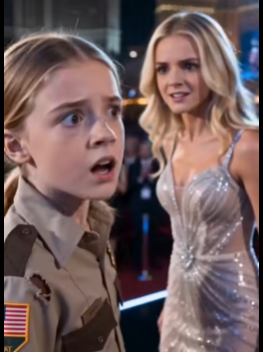
PART 4 — WHEN THE POWER WENT OUT
By morning, the video of the slap had spread everywhere.
People I had never met sent messages to the exhibition page. Some called Victoria cruel. Some called me brave. Some argued about privilege, fairness, and whether rich families always got away with things.
I did not read most of it.
I had work.
The circus opened at noon in a dusty lot outside Henderson, and by eleven-thirty I was filling paper bags with wrapped caramels while Noah taped a hand-drawn sign to our candy cart: STATE WINNER SPECIAL — BUY TWO, CHEER FOR EMILY!
“Take that down,” I said, embarrassed.
“No.”
“Noah.”
“You’re famous now. Famous people need marketing.”
My father laughed from beneath the generator tent. My mother smiled as she arranged licorice ropes in a jar.
For a few hours, life returned to its familiar rhythm: children tugging their parents toward cotton candy, performers stretching behind the big top, the smell of popcorn, hay, dust, and engine oil blending into the strange perfume of my childhood.
Then a black SUV rolled onto the lot.
The laughter around me seemed to dim.
Grant Kensington stepped out.
He looked wildly out of place among the circus trailers, his polished shoes sinking slightly into the dirt. Two assistants followed him, one carrying a leather folder.
My father immediately moved toward me.
“What do you want?” he asked.
Grant smiled.
“To speak with your daughter about an opportunity.”
“No.”
“Dad,” I said softly.
Grant’s eyes remained on me.
“Five minutes, Miss Ross. Public place. Your family can stand right there.”
Against every instinct, I nodded.
He opened the folder and removed a document.
“My company is prepared to offer you a private scholarship,” he said. “Full tuition at any university in the country. Housing. Lab funding. Travel. In exchange, you will make a statement clarifying that last night’s incident was a misunderstanding caused by emotional stress.”
My mother inhaled sharply.
I stared at the paper.
Full tuition.
Housing.
Lab funding.
For someone like me, those words were not words. They were doors.
My father’s face darkened.
“You’re trying to buy her silence.”
Grant looked mildly offended.
“I’m trying to protect a young woman from being consumed by a media circus.”
“We already have a circus,” Noah muttered.
No one laughed.
Grant continued, “Think carefully. Public sympathy fades. Opportunities do not come often.”
I looked down at the scholarship offer.
My dream had always been college. A real lab. Real tools. A room where rain did not leak through the ceiling. The offer sparkled like water in the desert.
Then I remembered the envelope.
I remembered my file almost disappearing.
I remembered Victoria’s palm across my face, and the way she had whispered, Do you know what it’s like to be loved only when you win?
I handed the paper back.
“No.”
Grant’s smile vanished.
“You are making an emotional decision.”
“No,” I said. “For once, I’m making a decision nobody bought.”
His assistant shifted uncomfortably.
Grant leaned closer.
“You have no idea how difficult life can become when powerful people stop being polite.”
My father stepped between us.
“And you have no idea how stubborn circus people are when someone threatens family.”
For a second, Grant’s mask slipped. I saw fury there, bright and ugly.
Then he turned and walked back to the SUV.
That evening, everything went wrong.
Ten minutes before the main show, the circus lights failed.
The big top plunged into darkness. Children screamed. Parents grabbed phones. Somewhere near the animal enclosure, a horse kicked against a gate.
My father sprinted toward the generator.
I followed.
Smoke curled from the control box.
“Sabotage,” he whispered.
My blood went cold.
A cable had been cleanly cut.
Without power, the ventilation system inside the tent stopped. In the desert heat, hundreds of guests could not safely remain inside. The show would be canceled. Refunds would ruin us.
Then I saw my cooling prototype sitting in the back of our truck, still packed from the exhibition.
It was not built to power a circus.
But it was built to move air.
“Dad,” I said, “how many auxiliary fans do we have?”
He stared at me.
“Emily, no.”
“How many?”
“Six.”
“And the solar battery units?”
“Four working.”
I grabbed the toolbox.
“Then we don’t need the whole grid. We need airflow, aisle lights, and enough time to evacuate safely or finish a shortened show.”
My father’s eyes changed.
Not fear now.
Trust.
For the next twenty minutes, the circus became my laboratory. Performers held flashlights. Noah ran extension cords. My mother guided families calmly toward cooler sections. I connected my prototype’s airflow system to the auxiliary fans and rerouted power through the solar batteries.
Sweat ran into my eyes. My hands shook.
Then the first fan spun.
A cheer rose from inside the tent.
The second fan started.
Then the third.
A performer shouted, “Lights in aisle two!”
Children clapped.
By the time the emergency lamps glowed along the rows, my father looked at me with tears in his eyes.
“You did it.”
But outside the tent, under the moonlit edge of the lot, I saw a figure watching.
Victoria.
PART 5 — THE GIRL WHO CAME BACK
I marched toward her, anger carrying me faster than fear.
“Did your father do this?” I demanded.
Victoria hugged herself, her face pale in the emergency glow.
“I don’t know.”
“That’s not good enough.”
“I don’t know!” she cried. “I followed him.”
That stopped me.
“What?”
“He left the house angry after you refused the offer. I heard him tell someone to ‘send a message.’ I thought he meant legal threats or reporters. Then I saw one of his security contractors near your lot.”
My stomach turned.
“And you didn’t warn us?”
“I tried!” she said. “My phone was taken. My driver wouldn’t stop. I jumped out two blocks away.”
For the first time, I noticed her shoes. Expensive sandals, torn and dust-covered. Her ankle was bleeding.
She had run.
Behind us, the circus audience clapped as the performers began a shortened show beneath emergency lights. It looked strangely magical, like a dream held together by wires and stubbornness.
Victoria looked toward the tent.
“You saved them.”
“No,” I said. “We saved them.”
She shook her head. “I slapped you in front of everyone.”
“Yes.”
“I tried to humiliate you.”
“Yes.”
“I don’t deserve your help.”
“Probably not.”
A startled laugh escaped her, mixed with tears.
Then I said, “But deserving help and needing help aren’t always the same thing.”
Her face crumpled.
She told us everything.
Not excuses. Not polished explanations. Everything.
Her father had not only pressured the exhibition committee. He had funded programs at three schools, including ours, and expected loyalty in return. He had arranged photo opportunities disguised as competitions. He had trained Victoria to treat every room as a battlefield and every achievement as proof she deserved love.
“If I came second,” she whispered later, sitting on a crate outside our trailer while my mother cleaned her ankle, “he asked why I wasn’t first. If I came first, he asked why the margin wasn’t bigger.”
My mother’s expression softened, though she said nothing.
Victoria looked at me.
“When your name appeared above mine, I didn’t see your work. I saw myself disappearing.”
The honesty hurt more than another insult would have.
My father contacted the police about the cut cable. A circus guest had recorded a man near the generator tent. The footage was blurry, but Victoria recognized him as one of her father’s private contractors.
By midnight, reporters had arrived again.
This time, Victoria stepped in front of the cameras before anyone could stop her.
Her hands trembled.
“My name is Victoria Kensington,” she said. “Last night, I assaulted Emily Ross because I was angry, jealous, and ashamed. There is no excuse. Emily earned the honor she received. My father attempted to pressure the exhibition committee, and tonight I believe someone connected to him tried to damage her family’s circus.”
Gasps rose from the gathered crowd.
A reporter shouted, “Are you accusing Grant Kensington of sabotage?”
Victoria closed her eyes.
“I’m saying the truth should be investigated, even if it destroys the image my family paid for.”
That sentence became the second video.
By morning, it had spread even faster than the slap.
Sponsors withdrew from Kensington charity events. The school district announced an inquiry. The exhibition committee released the full voting audit. The police confirmed they were reviewing footage from the circus lot.
But the biggest surprise came at noon.
A woman named Celeste Vale arrived at the circus in a silver sedan. She was elegant, silver-haired, and carried herself like someone who had walked through fire and learned not to flinch.
Victoria froze when she saw her.
“Grandmother?”
Celeste looked at her, then at me.
“So,” she said, “you’re the girl who refused Grant’s money.”
I nodded cautiously.
She smiled.
“Good.”
PART 6 — THE SECRET BEHIND THE KENSINGTON FORTUNE
Celeste Vale was Grant Kensington’s mother-in-law, though everyone in Las Vegas knew her by another title: the original architect of the Kensington casino empire.
“My late husband built the first hotel,” she told us inside our small trailer, accepting tea from my mother as if she were visiting a palace. “But I built the foundation beneath it. Contracts. Land deals. Political relationships. Mistakes, too.”
Victoria sat beside her, looking like a child again.
Celeste placed a folder on the table.
“Grant has controlled the family business since my daughter died. I let him because I thought stability mattered more than truth.”
Her voice faltered for the first time.
“I was wrong.”
Inside the folder were documents: payments to consultants, donations tied suspiciously to school programs, private security invoices, and messages that made my father’s face grow darker with every page.
One invoice listed the security contractor Victoria had seen near our circus lot.
The service description was vague: event disruption management.
My mother whispered, “That sounds like sabotage dressed in a suit.”
Celeste nodded.
“I cannot prove every crime. Not alone. But I can prove enough to make powerful people nervous.”
I looked at Victoria.
“Why bring this to us?”
Celeste’s eyes sharpened.
“Because Grant understands money. He understands fear. He does not understand people who cannot be purchased.”
Her gaze moved around our trailer—the patched curtains, the cramped table, the invention parts stacked near my bed.
“And because your daughter,” she told my parents, “has built something more valuable than a machine. She has built proof that brilliance survives where privilege assumes nothing can grow.”
I felt heat rise in my cheeks.
Celeste then turned to Victoria.
“As for you, my dear, you must decide whether you want comfort built on silence or freedom built on consequences.”
Victoria stared at her hands.
“What if I lose everything?”
Celeste reached across the table.
“Then perhaps you will finally discover what was yours.”
That afternoon, we went back to the exhibition hall.
Not for a ceremony.
For a hearing.
School officials, sponsors, legal representatives, reporters, and several students gathered in a conference room that smelled like coffee and panic. Principal Marrow looked as if he had aged ten years overnight.
Victoria entered beside me.
The room went silent.
Someone whispered, “Why are they together?”
I wondered the same thing.
But when the committee asked for statements, Victoria stood first.
She did not cry this time. She did not perform. She spoke plainly.
She admitted what she had done. She described the pressure from her father. She named the people who had called committee members. She handed over copies of messages. Then she turned toward me in front of everyone.
“Emily,” she said, “I am sorry. Not because I got caught. Not because people hate me online. I’m sorry because I looked at you and saw a threat instead of a person. You were never stealing my future. You were proving I could choose a different one.”
My throat tightened.
The committee chair asked if I wished to respond.
I stood slowly.
Part of me wanted to punish her forever. Another part remembered her running through dust with a bleeding ankle to warn us.
“I accept your apology,” I said. “But forgiveness doesn’t erase accountability.”
Victoria nodded through tears.
“I know.”
Then Principal Marrow was asked about why my application had been nearly flagged as incomplete despite all required materials being submitted.
He stammered.
Emails appeared on the screen.
His face collapsed.
The truth was uglier than I expected. He had not removed my file, but he had delayed forwarding it after receiving a call from a Kensington foundation representative. He claimed he thought he was “protecting the school’s donor relationship.”
Mr. Hale spoke coldly.
“You nearly buried the highest-scoring student in the state to please a donor.”
No one defended him.
By sunset, Principal Marrow had been placed on administrative leave. The sponsor committee announced a full ethics review. Grant Kensington’s company released a statement denying wrongdoing, but nobody seemed impressed.
As we left, Victoria stopped beside the giant exhibition banner.
“I don’t know where I’m supposed to go tonight,” she whispered.
I looked at my parents.
My father sighed the long sigh of a man about to do something kind against his better judgment.
“We’ve got an extra cot,” he said. “But circus breakfast starts early.”
Victoria blinked.
“You’d let me stay?”
My mother touched her shoulder.
“Only if you wash dishes.”
For the first time since I had met her, Victoria smiled without trying to look perfect.
PART 7 — THE INVENTION THAT BECAME A PROMISE
Victoria lasted exactly nine minutes washing dishes before dropping a pan loud enough to scare the trapeze twins.
Noah laughed so hard he had to sit on the ground.
“I thought rich people had staff for gravity,” he said.
Victoria threw a soap bubble at him.
For three days, she stayed with us while Celeste arranged legal protection and the investigation into Grant widened. During that time, the circus changed her in ways no lecture could have.
She learned that performers stitched their own costumes, repaired their own props, cooked for one another, and shared everything from medicine to birthday cake. She learned that applause at the circus was not owed to anyone. It had to be earned every night.
And I learned something too.
Victoria was not stupid. Not lazy. Not empty.
She had been raised like a trophy and punished whenever she behaved like a person.
On the fourth day, she found me working on my cooling device behind the trailer.
“You’re increasing airflow but losing efficiency through the side vents,” she said.
I looked up.
She hesitated. “Sorry. I researched your design.”
I raised an eyebrow.
“You researched my invention?”
“I needed to understand exactly how badly you beat me.”
I laughed before I could stop myself.
She knelt beside the prototype.
“My project was about luxury energy management for hotels. Mostly theory, but I know thermal mapping software. If we combine your low-cost cooling system with predictive heat zones, it could help outdoor workers, emergency shelters, maybe even temporary medical tents.”
I stared at her.
“You want to help me?”
“I want to earn the right to try.”
That sentence stayed with me.
So we worked.
Not as instant best friends. Life is not that simple. Some days I still remembered the slap and felt anger flare inside me. Some days Victoria slipped into arrogance without noticing, and Noah would make a buzzer sound until she apologized. But slowly, something unexpected formed between us.
A partnership.
My practical design and her modeling software created a stronger system. My father helped build a larger frame. My mother designed fabric channels that could fold and travel. Circus electricians tested battery loads. Performers offered brutal feedback.
“It sounds like a dying lawn mower,” one clown said.
“It looks like a laundry basket had a baby with a spaceship,” said another.
We improved it anyway.
Two weeks later, the Youth Innovation Exhibition invited me to present the upgraded design at a special public showcase. This time, I asked Victoria to present with me.
The committee hesitated.
The internet exploded again.
Some people said I was too forgiving. Others said Victoria deserved no second chance. A few claimed it was all a publicity stunt.
The night before the showcase, I found Victoria sitting alone outside the big top.
“Maybe I shouldn’t come,” she said.
“Are you afraid?”
“Yes.”
“Good,” I said. “That means you understand it matters.”
She looked at me.
“How do you stand people judging you?”
I thought about that.
“I don’t,” I admitted. “I just stand anyway.”
The next day, the hall was even more crowded than before.
My cheek had healed, but everyone remembered. Cameras followed us as we walked onto the stage together. Victoria wore a simple navy dress instead of designer glitter. I wore my repaired circus jacket because, this time, I wanted everyone to see it.
I began the presentation.
“This device started because people I love work in dangerous heat,” I said. “But it became bigger because innovation should not depend on wealth.”
Victoria stepped forward.
“And I joined because I had to learn that intelligence without character is just another form of vanity.”
The audience murmured.
She continued, voice steady.
“I cannot undo what I did to Emily. I can only choose what I do next.”
Together, we unveiled the new system: The Ross-Vale Mobile Cooling Shelter.
I had not known Victoria included her grandmother’s name until I saw the display.
Victoria whispered, “Kensington didn’t deserve to be on it.”
Celeste, seated in the front row, covered her mouth.
The demonstration worked perfectly.
Cool air flowed through the fabric channels. The thermal map shifted colors on the screen. Judges asked questions. Engineers requested specs. A representative from a disaster relief nonprofit asked whether the design could be deployed in heat waves.
By the end, applause filled the hall again.
But this time, it did not belong to one girl.
It belonged to everyone who had helped build something from wreckage.
Then Mr. Hale returned to the microphone with another envelope.
My stomach dropped.
Victoria whispered, “Not again.”
The audience laughed nervously.
Mr. Hale smiled.
“This envelope contains an announcement from the National Young Inventors Foundation.”
I gripped the edge of the table.
He opened it.
“Emily Ross has been awarded a full national engineering scholarship.”
The room exploded.
My mother sobbed into my father’s shoulder. Noah jumped like a firework. I stood frozen, unable to breathe.
“And,” Mr. Hale continued, “the foundation has also approved seed funding to develop the Ross-Vale Mobile Cooling Shelter for emergency and community use.”
Victoria grabbed my hand.
I thought that was the surprise.
It was not.
PART 8 — THE END — THE STAGE THAT FINALLY BELONGED TO THE TRUTH
Before the applause ended, Celeste Vale rose from her seat.
She walked to the stage slowly, with the calm of a woman who had decided that fear had wasted enough of her life.
Mr. Hale handed her the microphone.
“My name is Celeste Vale,” she said. “For many years, I helped build an empire that rewarded winning at any cost. Today, I would like to begin repairing what that lesson destroyed.”
The hall quieted.
Victoria’s hand tightened around mine.
Celeste looked at her granddaughter.
“Victoria, your mother left a trust for you before she died. Your father told you access depended on family approval. That was false.”
Victoria stopped breathing.
Celeste continued, “The trust becomes yours when you turn eighteen, but its educational portion can be transferred immediately to any accredited purpose you choose.”
Grant Kensington entered the hall at that exact moment.
The doors opened behind the audience, and suddenly he was there, flanked by attorneys, his face dark with fury.
“Celeste,” he said loudly, “do not do this.”
Every camera turned.
Victoria went rigid.
For a moment, all the old fear returned to her face.
Then Celeste smiled.
“You are too late, Grant.”
He moved toward the stage.
“You have no authority to make public family matters.”
Celeste lifted another document.
“I have every authority. And as of this morning, I have petitioned the board to suspend your control pending investigation.”
The hall erupted again.
Grant’s mask shattered.
“You ungrateful old woman,” he snapped.
Victoria flinched, but she did not step back.
Then she released my hand and walked to the front of the stage.
“No, Dad.”
Two small words.
But they struck harder than any slap.
Grant stared at her.
“What did you say?”
Victoria’s voice shook, but it did not break.
“I said no. I am not your advertisement anymore. I am not your proof. I am not your perfect daughter standing beside you so people don’t see what you are.”
His face turned crimson.
“You will regret this.”
She nodded, tears spilling freely.
“Maybe. But at least the regret will be mine.”
Security approached Grant before he could answer. Reporters shouted. Attorneys objected. Celeste stood like a queen amid the chaos.
And then, in the strangest twist of all, Noah climbed onto a chair and yelled, “Can Emily still get her scholarship, or are rich people still fighting?”
The entire hall burst into laughter.
Even Victoria laughed through her tears.
The tension cracked. The fear loosened. Grant was escorted out, still threatening lawsuits, but his voice faded beneath applause—not for wealth, not for power, but for a girl who had finally refused to be owned.
Celeste turned back to the microphone.
“The educational portion of Victoria’s trust,” she said, “will fund a new program for students whose work is overlooked because they lack resources. It will begin with a fabrication lab open to public school students, traveling performers’ children, and rural communities.”
Victoria looked stunned.
Celeste smiled gently.
“The program will be directed by its first scholarship recipient, Emily Ross, with student advisory leadership offered to Victoria, if she chooses to earn it.”
I stared at her.
Me?
Direct a lab?
I was sixteen. I still had caramel stuck to half my notebooks. My bedroom was a trailer bunk beside a box of spare wires.
But then I looked at my family.
My mother nodded while crying. My father pressed a hand over his heart. Noah gave me two thumbs up, then mouthed, “Ask for snacks in the lab.”
I turned to the audience.
For once, I did not feel like an accident standing under someone else’s light.
“I’ll do it,” I said.
The applause rose again, but softer this time. Warmer. Like rain after a long drought.
Months later, the first Ross-Vale Community Lab opened in a renovated warehouse not far from the circus route. The walls were painted bright yellow. The worktables were secondhand but sturdy. There were shelves of donated parts, sewing machines, 3D printers, soldering stations, and a snack cabinet Noah considered his personal achievement.
Children came from everywhere.
Some arrived in school uniforms. Some came from farms. Some came from shelters. Some came from traveling families like mine, with dust on their shoes and ideas too big for their pockets.
Above the entrance hung a sign:
BRILLIANCE DOES NOT NEED PERMISSION.
Victoria worked there every Saturday.
At first, people watched her carefully. Some never forgave her, and she accepted that. She cleaned tables, organized tools, helped younger students with software, and never once asked for special treatment. Slowly, not because she demanded it, but because she earned it, people began asking for her help.
As for Grant Kensington, investigations continued. Some charges stuck. Some vanished into the fog that powerful people know how to create. But his reputation never fully recovered, because the world had seen what he wanted hidden: a man who could buy rooms, but not truth.
The circus changed too.
My cooling shelters traveled with us that summer, protecting performers and audiences during the hottest weeks. A disaster relief organization later ordered fifty units. Then a hundred.
My invention, born behind a supply truck from scraps and stubborn love, began appearing in places I had never been—wildfire camps, outdoor clinics, school fields, emergency shelters.
But my favorite unit stayed at the circus.
It sat beside the candy cart, humming gently while Noah sold caramels beneath a sign that read:
COOLED BY SCIENCE. SWEETENED BY REVENGE.
I told him to change it.
He refused.
One evening, nearly a year after the slap, I stood backstage at the same exhibition hall in Las Vegas. This time, I was not there to compete. I had been invited to open the ceremony as a guest speaker.
My jacket was still patched.
But now the patches were intentional—each one sewn from fabric donated by a circus performer, a lab student, or someone whose life had touched mine that year. It was no longer a sign of poverty. It was a map of belonging.
Victoria stood beside me, holding a clipboard.
“Nervous?” she asked.
“Terrified.”
“Good,” she said, smiling. “That means you understand it matters.”
I laughed.
The stage manager signaled.
The lights rose.
The audience waited.
Before I stepped out, Victoria touched my arm.
“Emily?”
“Yeah?”
“I’m glad you were chosen that night.”
I looked at her, remembering the slap, the envelope, the darkness, the broken cable, the apology, the lab, the impossible friendship neither of us had seen coming.
“So am I,” I said.
Then I walked onto the stage.
The applause came like a wave, but this time I understood something I had not understood before.
The spotlight had never been the prize.
The prize was what it revealed.
It revealed cruelty, yes. It revealed corruption. It revealed envy and fear and the ugly ways people try to own what was never theirs.
But it also revealed my family in the back row, cheering as if I had hung the moon.
It revealed a girl named Victoria, who lost her perfect image and found her real self underneath.
It revealed a grandmother brave enough to dismantle the empire she helped build.
It revealed a circus that could survive sabotage with wires, courage, and a little impossible science.
And it revealed me—not as a poor girl lucky to stand onstage, not as a candy seller in a patched uniform, not as someone waiting to be chosen by powerful people.
But as Emily Ross.
Inventor.
Daughter.
Sister.
Friend.
A girl who had been slapped in front of hundreds and still pressed the button.
A girl who learned that sometimes the envelope meant to expose a secret becomes the door to a future.
I reached the podium and looked out at the students waiting for their own names to be called.
“My story began,” I said, “when someone tried to take the spotlight from me.”
I smiled.
“But it became something much better when I realized there was enough light for all of us.”
And this time, when the hall erupted, nobody was being humiliated.
Nobody was being erased.
Nobody had to be perfect to belong.
The stage finally belonged to the truth.
THE END
