PART 2 — THE SIGNATURE ON THE CERTIFICATION
The greenhouse fell completely silent.
Hundreds of visitors stared at the breeding record book.
The conservation director slowly held up the final certification page.
I could hear my own heartbeat.
Brielle Kensington leaned forward.
Scientists crowded closer.
Reporters lifted their cameras.
Then the director read the name.
“Volunteer Breeding Specialist: Ava Morales.”
For a moment, nobody reacted.
I stared at the page.
My knees felt weak.
The signature was mine.
Every incubation log.
Every feeding record.
Every habitat adjustment.
Every observation.
All documented under my name.
The crowd erupted into surprised whispers.
Parents pointed toward me.
Several biologists exchanged impressed looks.
Brielle’s face turned ghostly white.
“No,” she said quietly.
The director nodded.
“The butterfly selected for today’s ceremonial release is a direct descendant of the first successful breeding cycle completed by Ava Morales.”
The audience gasped.
Everything Brielle had claimed about deserving the spotlight suddenly collapsed.
The symbolic butterfly wasn’t chosen because of money.
It wasn’t chosen because of sponsorships.
It existed because someone had spent years protecting a species most people barely noticed.
And that person was me.
PART 3 — THE RECORD NOBODY WAS SUPPOSED TO SEE
The director carefully turned another page.
Then another.
His expression changed.
A deep frown crossed his face.
“Interesting.”
The crowd immediately quieted.
Scientists leaned forward.
“What is it?” someone asked.
The director held up a supplemental report attached to the breeding records.
“This page was added this morning.”
A ripple of confusion spread through the audience.
The report contained a request.
A formal amendment.
A request to revise the official history of the breeding program.
The director’s expression darkened.
“Someone attempted to remove Ava Morales as lead volunteer from the conservation archive.”
Gasps echoed through the greenhouse.
I froze.
Brielle’s eyes widened.
The director continued reading.
“The request was submitted at 8:03 this morning.”
Every camera immediately pointed toward the stage.
Then he read the account information.
“The submission originated from a Kensington Foundation administrative credential.”
The audience exploded with whispers.
Brielle suddenly looked terrified.
Not angry.
Terrified.
Because everyone understood what that meant.
Someone had tried to erase me before the ceremony began.
PART 4 — THE SECRET INSIDE THE GREENHOUSE FILES
The director wasn’t finished.
He opened a storage envelope tucked inside the record book.
Several older documents slid out.
The pages looked decades old.
One of the senior scientists immediately recognized them.
“Oh my goodness.”
The greenhouse became silent again.
The scientist adjusted her glasses.
“These are original acquisition records.”
Nobody understood why that mattered.
Then she looked toward Brielle’s family.
And everything changed.
For years, visitors believed the Kensington Foundation had rescued the rare butterfly species.
Their name appeared on signs.
Their donations funded exhibits.
Their public relations materials told the same story repeatedly.
But the documents revealed something completely different.
The species had actually been saved years before the foundation became involved.
The first conservation effort had been started by a small volunteer team.
No corporate funding.
No media coverage.
No sponsorship announcements.
Just ordinary people.
The scientist read the names.
Most had passed away.
Some had retired.
None had received public recognition.
The crowd listened in stunned silence.
Then she read the final name.
The leader of the original rescue effort.
Miguel Morales.
My grandfather.
My breath caught.
The room spun.
I barely remained standing.
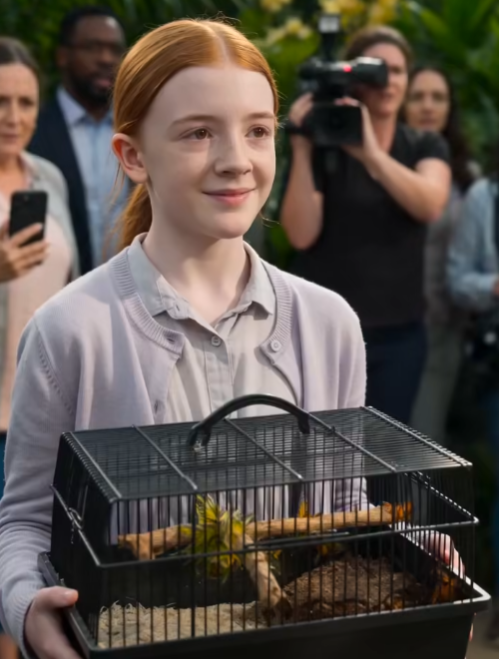
PART 5 — THE LEGACY THAT REFUSED TO DIE
The documents revealed a remarkable story.
Twenty-five years earlier, the butterfly population had nearly vanished.
Government agencies lacked funding.
Major organizations showed little interest.
Most experts believed the species would disappear.
But a local naturalist named Miguel Morales refused to quit.
My grandfather.
Working alongside volunteers, he collected data, protected habitats, and preserved breeding stock.
For years he worked without recognition.
For years he spent his own money.
For years he fought to keep the species alive.
Eventually the project succeeded.
Only afterward did large donors arrive.
Including the Kensington Foundation.
The crowd listened in silence.
Many people wiped tears from their eyes.
Then the director found a handwritten letter from my grandfather.
The final paragraph stunned everyone.
“If these butterflies survive, remember the volunteers. Wealth may build buildings, but dedication keeps life alive.”
The greenhouse erupted into applause.
Long.
Loud.
Emotional.
The standing ovation seemed endless.
I couldn’t stop crying.
Because suddenly I understood why I had always loved this work.
It wasn’t just conservation.
It was family.
PART 6 — BRIELLE’S CONFESSION
The applause slowly faded.
Then Brielle stepped forward.
The confidence that had defined her all afternoon was gone.
She looked exhausted.
Broken.
Ashamed.
“I found those documents.”
The audience fell silent.
Every camera focused on her.
She swallowed hard.
“I found them six weeks ago.”
Gasps spread through the crowd.
She lowered her head.
“I learned my family wasn’t responsible for saving the species.”
Nobody interrupted.
Tears formed in her eyes.
“I was scared.”
Her voice cracked.
“My entire life I’ve been told our family created everything.”
The confession echoed through the greenhouse.
“When I realized it wasn’t true, I panicked.”
She looked toward me.
Then toward the breeding records.
“I tried to make sure nobody saw the documents.”
The crowd remained silent.
Not because they approved.
But because honesty had finally arrived.
Then Brielle whispered four words.
“I’m sorry, Ava.”
For the first time all day, she sounded sincere.
PART 7 — THE RELEASE
Three months later, the greenhouse hosted another ceremony.
This time the atmosphere felt completely different.
The signs had been updated.
The exhibits had been corrected.
The original volunteer team finally received public recognition.
Many surviving conservation workers attended.
Some traveled across the country.
Others brought children and grandchildren.
At the center of the greenhouse stood a special butterfly enclosure.
Inside rested dozens of butterflies descended from the original rescue population.
The director smiled at me.
“Ready?”
I nodded.
The crowd gathered quietly.
Scientists.
Families.
Volunteers.
Students.
Everyone watched.
I opened the enclosure.
For a moment nothing happened.
Then one butterfly lifted into the air.
Another followed.
Then ten.
Then fifty.
A living cloud of color filled the greenhouse.
Orange.
Blue.
Gold.
Black.
The audience gasped.
Children pointed excitedly.
People applauded.
Some cried.
The butterflies drifted through sunlight streaming from the glass ceiling.
And for the first time, every person who had protected them was finally remembered.
PART 8 — THE END
Several months later, a letter arrived at my home.
The return address surprised me.
Brielle Kensington.
Inside was a handwritten note.
No lawyers.
No sponsors.
No media campaign.
Just honesty.
She explained that she had begun volunteering at wildlife rehabilitation centers.
Not as a donor.
As a worker.
Cleaning enclosures.
Preparing food.
Doing the jobs nobody noticed.
The same kinds of jobs she once dismissed.
Then she wrote a sentence I never forgot.
“My family taught me how to fund projects.”
“Your family taught me how to care about them.”
I read those words several times.
Because they captured the entire story.
The conflict had never been about a butterfly.
Or a ribbon ceremony.
Or public recognition.
It was about understanding where value truly comes from.
A year later, the greenhouse unveiled a permanent conservation exhibit.
At its center sat the original breeding record book.
Protected behind glass.
Beneath it stood a plaque.
Not honoring a corporation.
Not honoring a wealthy donor.
But honoring the volunteers who saved an entire species.
My grandfather’s name was there.
And beside it was mine.
Whenever I visit, I watch children read the display.
I watch families learn the story.
And every so often, someone quietly points to the plaque and says my name.
Not with pity.
Not with surprise.
But with respect.
The kick that was supposed to steal my moment ended up revealing decades of hidden truth.
It restored forgotten heroes.
It corrected history.
It saved a legacy.
And it reminded everyone that real conservation isn’t built by people seeking credit.
It’s built by people willing to care when nobody is watching.
The breeding record survived.
The butterflies survived.
The truth survived.
And in the end, that truth flew farther than any butterfly ever could.
