Adrian discovered the truth the next morning.
Not from me.
From the hospital.
At 9:40, Vivian entered his office holding a stack of documents.
“Mrs. Zhou still hasn’t responded.”
Adrian didn’t look up.
“She’ll come back.”
Vivian hesitated.
“There’s something else.”
She placed a hospital notice on his desk.
Adrian read the first line.
Then stopped.
My sister’s name.
Time of death.
His eyes narrowed.
“What is this?”
Vivian’s face lost color.
“Apparently her condition became worse.”
“Apparently?”
“She was scheduled for surgery.”
“I know.”
Adrian looked at the date.
His expression changed.
“The payment was approved three days later.”
Vivian said nothing.
“Three days later?”
“It was delayed in the system.”
Adrian stood.
“You told me it was postponed.”
“It was.”
“You told me she was stable.”
Vivian swallowed.
“That’s what I understood.”
Adrian stared at her.
Then he picked up his coat.
He arrived at the hospital twenty minutes later.
The doctor remembered me immediately.
“Elena Zhou?”
“Yes.”
“I’m her husband.”
The doctor’s expression became cold.
“You’re late.”
Adrian froze.
“What happened to her sister?”
The doctor explained only what mattered.
The surgery had been urgent.
The payment authorization had not arrived in time.
My sister’s condition deteriorated.
She died before the financial issue was resolved.
Adrian stared at the floor.
Then asked:
“Where is Elena?”
The doctor looked at him strangely.
“She left yesterday.”
Adrian’s head lifted.
“Left?”
The doctor hesitated.
Then handed him another document.
Not the full medical record.
Just enough.
A clinic discharge notice bearing my name.
Adrian read it once.
Then again.
His hand began to shake.
“Pregnancy?”
The doctor said nothing.
He didn’t need to.
Adrian understood.
For the first time, the man who had controlled every dollar in my life lost control of his own body.
He sat down in the hospital corridor.
Then sank to his knees.
Not because someone pushed him.
Because the truth finally became heavier than his pride.
His wife had lost her sister.
Ended a pregnancy.
Left the country.
And while all of that happened, he had sent her fifty-two dollars and demanded an apology for Vivian.
He called me.
The number no longer existed.
Again.
Nothing.
He sent messages.
Undelivered.
He contacted my old employer.
I had resigned.
He went to the apartment.
My clothes were gone.
My books.
My photographs.
Even the chipped blue cup my sister had given me years earlier.
Everything that proved I had lived there had disappeared.
On the kitchen counter was one envelope.
Inside were divorce papers.
Already signed.
And beneath them, the fifty-two-dollar transfer receipt.
I had printed it.
Across the bottom, I had written:
Keep it. You may need it more than I do.
Adrian fired Vivian that afternoon.
Then he discovered firing her was the easiest part.
An internal audit revealed she had blocked or delayed several payments she considered “unnecessary” without properly informing him.
Mine had not been the only one.
But Adrian couldn’t hide behind her.
His signature appeared on the policy that allowed it.
He had created a marriage where his wife needed permission from a secretary to spend money.
He had approved the system.
Vivian had abused it.
Adrian had built it.
When his lawyer suggested blaming everything on her, Adrian finally said:
“No.”
The lawyer looked surprised.
“She made decisions outside her authority.”
“And I gave her authority over my wife.”
That was the first honest sentence Adrian spoke after I disappeared.
Meanwhile, I was thousands of kilometers away.
I changed my surname back.
Found a small apartment.
Started working again.
At first, every sound from my phone frightened me.
Every unknown number made me think he had found me.
But the weeks passed.
Then months.
Slowly, I began to understand what freedom felt like.
It was not happiness.
Not immediately.
Freedom was making a purchase without explaining it.
Choosing dinner without asking whether it was wasteful.
Visiting a doctor without requesting approval from someone’s secretary.
Sleeping without wondering whether Adrian would come home angry because Vivian had complained about me.
I also went to counseling.
I had lost too much too quickly.
My sister.
My marriage.
A pregnancy.
The life I once believed I would have.
There was no dramatic recovery.
Some mornings I was fine.
Others, I barely wanted to speak.
But for the first time, grief belonged to me.
Nobody told me I was inconvenient for feeling it.
Six months after I left, Adrian found me.
Not physically.
My lawyer received a letter.
He had finally signed the divorce without contest.
No demands.
No threats.
No attempt to force me home.
There was also a financial settlement.
I refused most of it.
My lawyer asked:
“Are you sure?”
“Yes.”
“Legally, you may be entitled to considerably more.”
“I want what is fair.”
Nothing else.
Adrian had spent years using money as control.
I would not let money become the final thread connecting us.
The divorce became official.
A year later, I returned to the city.
Only once.
My sister’s grave had been moved to the family cemetery after another relative arranged it.
I went with flowers.
I expected the cemetery to be empty.
It wasn’t.
Adrian stood several meters away.
He looked different.
Thinner.
Older.
The expensive suit was gone.
For a moment, neither of us spoke.
Then he said:
“I didn’t know you were coming.”
“Neither did I.”
He looked toward my sister’s grave.
“I come once a month.”
I stiffened.
“You don’t have to.”
“I know.”
That answer stopped me.
No defense.
No demand for gratitude.
Just acknowledgment.
He continued:
“I can’t fix what happened.”
“No.”
“I know that too.”
His voice shook slightly.
“I spent a long time wanting to explain myself.”
“And?”
“Eventually I realized every explanation started with me.”
I looked at him.
He swallowed.
“I was afraid people would marry me for money.”
“So I turned money into a weapon before anyone could use it against me.”
“I called that caution.”
“It was control.”
I said nothing.
He continued.
“And I trusted Vivian because she never challenged me.”
“You challenged me constantly.”
“So I decided you were difficult.”
The wind moved through the trees.
Then he said the words I never expected.
“I’m sorry about the pregnancy.”
My body went still.
Adrian did not step closer.
He didn’t ask me to forgive him.
He simply said:
“You should never have had to go through any of that alone.”
I looked toward my sister’s name carved in stone.
“No.”
“I shouldn’t have.”
Adrian’s eyes filled.
“If I had known…”
I turned toward him.
“Don’t.”
He stopped.
“Don’t tell me you would have changed because there was a child.”
My voice remained calm.
“You should have cared when it was my sister.”
“You should have cared when I was begging for help.”
“You should have cared before losing something that belonged to you.”
He lowered his head.
“You’re right.”
That mattered.
But it did not repair anything.
He asked one question before leaving.
“Are you happy?”
I thought about it.
“Yes.”
Not every day.
Not perfectly.
But yes.
I had rebuilt a career.
Made friends who knew nothing about the Zhou name.
Bought a tiny apartment with my own savings.
And started volunteering with a nonprofit that helped families navigate emergency medical expenses.
My sister’s death could never become something good.
But I could make sure her name became connected to fewer families facing the same helplessness.
Adrian nodded.
“I’m glad.”
Then he walked away.
He never asked me to return.
That was the closest thing to love he had ever given me.
Too late.
But real.
Years later, I learned that Adrian had changed his company’s financial policies completely.
No spouse.
No family member.
No employee could have essential medical expenses delayed by a personal assistant.
An independent emergency fund was created.
Every refusal required written review.
Vivian’s name disappeared from the company.
Mine did too.
Good.
I no longer wanted to be remembered as Adrian Zhou’s wife.
People sometimes imagine the cruelest part of my story was the fifty-two dollars.
It wasn’t.
Money is only paper and numbers.
The cruelest part was that Adrian believed fifty-two dollars could compensate for something he had never bothered to understand.
My sister’s life.
My grief.
My dignity.
The marriage he had hollowed out one approval request at a time.
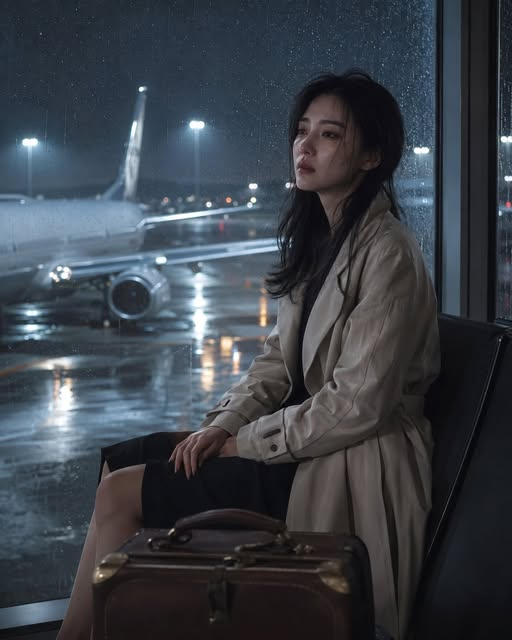
The day I boarded that plane, I thought I was running away.
Years later, I understood I had actually been moving toward the first life that truly belonged to me.
Adrian eventually learned what his fifty-two dollars were worth.
Exactly fifty-two dollars.
Nothing more.
They could not buy forgiveness.
They could not bring back my sister.
They could not undo the choices we had made.
And they could not purchase the woman who finally realized she was allowed to leave.
His money came too late.
My freedom didn’t.
