The train had been moving for less than twenty minutes when the conductor knocked on my cabin door.
“Miss Hayes?”
My entire body stiffened.
Nobody was supposed to know that name except the hotel staff.
“Yes?”
“There’s been a change in the route. The train may stop before Rosehaven because of the storm.”
I looked toward the dark window.
“Where?”
“Westbridge.”
My fingers tightened around the jasmine flower.
Westbridge was still four hours from Rosehaven.
And Ethan had already started looking for me.
I knew it without proof.
For five years, he had rarely asked where I went.
Now that I had left him, he would suddenly need to know every step.
That was how men like Ethan worked.
They ignored what they believed they owned and panicked only when it disappeared.
My phone vibrated.
Unknown number.
I rejected the call.
Again.
Rejected.
Then a message appeared.
Clara Hayes? Really?
My blood turned cold.
A second message followed.
Get off at the next station. I’ll bring you home.
Ethan.
I stared at the screen for several seconds.
Then another message arrived.
Don’t force me to come after you.
I switched off the phone.
For the first time, I understood that the divorce had not given Ethan what he wanted.
He wanted to end the marriage.
But he still expected me to remain available.
In Harbor City.
Visible.
Predictable.
A woman he could point to years later and say:
That was my ex-wife.
He had never imagined I might become someone he could no longer find.
At 10:16 p.m., the train stopped unexpectedly.
Not Westbridge.
A smaller station surrounded by rain and darkness.
Someone knocked twice on my door.
I didn’t answer.
Then came a woman’s voice.
“Miss Bennett.”
Not Hayes.
Bennett.
I opened the door carefully.
An elderly woman stood outside wearing a dark wool coat.
Her silver hair was pinned neatly behind her head.
When she saw me, her eyes immediately dropped to the sandalwood hairpin.
Then to the jasmine flower in my hand.
Her expression changed.
“You look exactly like your mother.”
I forgot how to breathe.
“Who are you?”
“My name is Margaret Vale.”
She stepped closer.
“I worked for Eleanor Hayes for twenty-two years.”
My mother.
Nobody had called her that in front of me for more than a decade.
Before I could ask another question, Margaret looked down the corridor.
“We need to leave.”
“Why?”
“Because Ethan Whitmore’s people are already waiting at Westbridge.”
I stared at her.
“How does he know where I’m going?”
Margaret’s face became grim.
“Because he has always known more about you than you realized.”
A black car carried us away from the station.
I sat in the back with my suitcase between my knees.
Margaret didn’t speak until the train tracks disappeared behind us.
Then she opened her handbag and placed an old photograph in my lap.
My mother stood in front of a white house surrounded by jasmine vines.
Beside her was a man I recognized immediately.
Ethan’s father.
Charles Whitmore.
I looked up.
“What is this?”
“The reason your mother told you never to return to Rosehaven.”
My hands began to shake.
Margaret continued.
Twenty-three years earlier, my mother had been the controlling shareholder of Hayes Maritime Holdings, one of the largest shipping and port-development companies on the southern coast.
After my grandfather died, several investors attempted to force her to sell.
Charles Whitmore was one of them.
My mother refused.
Then came lawsuits.
Frozen accounts.
Investigations.
Anonymous threats.
And finally, a warehouse fire that destroyed company archives.
Officially, everything was unrelated.
Margaret never believed that.
Neither had my mother.
“Where does Ethan fit into this?”
Margaret looked at me.
“He was seventeen.”
“So nowhere.”
“Then.”
That single word frightened me.
Margaret reached into her bag again.
This time she handed me a copy of a private investigation report.
My name appeared on the first page.
ELENA HAYES — CURRENTLY USING THE NAME ISABELLA BENNETT.
The report was dated six years earlier.
One year before I married Ethan.
I stared at it.
“He knew.”
“Yes.”
My stomach turned.
The supposedly accidental meeting at a charity dinner.
His interest.
His patience.
The way he had pursued me despite having dozens of women from powerful families around him.
I had spent years believing I was the ordinary woman Ethan Whitmore had unexpectedly chosen.
But Ethan hadn’t stumbled into my life.
He had found me.
“Why?”
Margaret hesitated.
Then she said:
“Because your mother never sold her final shares.”
I stopped breathing.
“What shares?”
“Thirty-one percent of Hayes Maritime.”
“That company disappeared.”
“No.”
Margaret shook her head.
“It changed names.”
She looked directly at me.
“Today it is Whitmore Oceanic.”
The world tilted.
Ethan’s family empire.
Ports.
Shipping.
Logistics.
Billions in assets.
The company that had made the Whitmores untouchable.
Part of it had belonged to my mother.
And apparently—
Still belonged to me.
We reached Rosehaven shortly before dawn.
The white house from the photograph was still standing.
Older.
Covered in vines.
But alive.
Margaret opened the gate.
Three people were waiting inside.
One was an attorney.
One was a retired judge.
The third man stood when I entered.
He was nearly eighty.
Thin.
Straight-backed.
His eyes filled with tears when he saw me.
“Eleanor’s daughter.”
I looked at Margaret.
“Who is he?”
“Samuel Hayes.”
My mother’s older brother.
My uncle.
The man I had been told died when I was a child.
I stepped backward.
“No.”
Samuel’s face broke.
“Your mother made everyone disappear from your life because she believed it was the only way to keep you safe.”
“Then why are you here?”
“Because she died believing the danger had passed.”
He looked toward my suitcase.
“She was wrong.”
I almost laughed.
“Everyone keeps deciding what I should know for my own protection.”
No one answered.
Good.
I was finished with secrets disguised as love.
“Tell me everything.”
So they did.
My mother had placed her remaining company interest into a protected trust before taking me away.
The beneficiary was me.
But control would transfer only after one of three events:
My thirty-fifth birthday.
My voluntary return to Rosehaven.
Or a verified attempt by another shareholder to interfere with my marital or personal status for financial gain.
I stared at the attorney.
“My divorce.”
He nodded.
“Triggered a review.”
“Why?”
“Because Ethan Whitmore’s attorneys requested you waive all unidentified historical claims against companies connected to the Whitmore family.”
My stomach dropped.
Thirty-two pages.
The fluorescent tabs.
The clauses I had barely cared about because I only wanted freedom.
The attorney placed my divorce agreement on the table.
Page twenty-six.
A sentence buried inside dense language.
I had signed away no inheritance directly.
But Ethan’s lawyers had attempted to create a broad release that could later be used against unknown claims.
There was only one problem.
My mother’s trust specifically prohibited indirect waivers without independent counsel.
The clause was worthless.
And Ethan knew it.
That was why he was chasing me.
Not because he suddenly loved me.
Not because divorce had broken his heart.
Because my disappearance meant he no longer controlled what I might discover.
My phone, still switched off, felt heavy inside my bag.
Samuel asked:
“Do you want to fight?”
I looked toward the window.
Dawn was beginning to turn the sky gray.
“No.”
Everyone stared at me.
I continued.
“I want the truth documented.”
The attorney nodded slowly.
“And then?”
“Then I want whatever belongs to me returned.”
Ethan arrived in Rosehaven that afternoon.
Of course he did.
Three black vehicles stopped outside the gates.
He walked up alone.
No jacket.
No tie.
Rain on his shoulders.
For five years I had almost never seen Ethan Whitmore look disorganized.
That day he looked terrified.
I met him on the porch.
His eyes moved over my face.
Then toward the house behind me.
“You found them.”
Not Who are these people?
Not What is this place?
You found them.
I smiled faintly.
“So you knew.”
His jaw tightened.
“Isabella—”
“My name is Elena Hayes.”
He closed his eyes briefly.
“You haven’t used that name since you were twelve.”
“How do you know?”
Silence.
There it was.
Five years of marriage collapsed inside that silence.
“How long had you been investigating me before we met?”
“It wasn’t like that.”
“How long?”
“One year.”
I nodded.
“Did you marry me because of the shares?”
“No.”
The answer came immediately.
Too immediately.
“I approached you because of them.”
My chest tightened.
“But I married you because I loved you.”
I actually laughed.
“What a convenient distinction.”
“It’s true.”
“You spent five years controlling every part of my life.”
“I was protecting you.”
“From discovering this?”
He looked away.
That was answer enough.
I stepped toward him.
“You didn’t let me take taxis alone.”
“Security.”
“You controlled my schedule.”
“Security.”
“You decided where we traveled.”
“Security.”
“You discouraged me from contacting people from my childhood.”
“Elena—”
“You weren’t keeping danger away.”
My voice became quiet.
“You were keeping my past away.”
He looked shattered.
“I was going to tell you.”
“When?”
No answer.
“After another five years?”
Silence.
“After my mother’s trust expired?”
“It doesn’t expire.”
The moment he said it, both of us froze.
He knew the trust terms.
I smiled sadly.
“Thank you.”
His face changed.
“For what?”
“For finally giving me the one confession I needed.”
Behind me, the door opened.
The attorney stepped onto the porch.
Ethan immediately understood.
“This conversation was recorded?”
“Yes.”
His anger appeared instantly.
“You set me up.”
“No.”
I shook my head.
“I asked my ex-husband questions about my own life.”
The next six months destroyed the story Ethan’s family had spent decades building.
Not the entire Whitmore empire.
Life was not that simple.
But investigators and civil courts reviewed old corporate transfers, trust records, and the restructuring that created Whitmore Oceanic.
My mother’s protected stake still existed through successor entities.
After negotiations and litigation, control of a substantial block of shares was restored to the Hayes trust.
Charles Whitmore had died years earlier.
Ethan inherited the consequences.
He lost voting control over Whitmore Oceanic.
Not because I stole anything from him.
Because part of what he thought was his had never legally belonged solely to his family.
The mansion I left him?
He kept it.
The cars?
Kept them.
The jewelry?
I never returned for it.
He could have all of it.
I took my mother’s name back.
That was worth more.
Ethan came to Rosehaven once more after the settlement.
I found him standing beneath the jasmine vines.
“You really stayed.”
“Yes.”
“You hate Harbor City that much?”
“No.”
I touched one of the flowers.
“I just discovered I like knowing where my own front door leads.”
He gave a broken smile.
“I deserved that.”
I said nothing.
Then he asked:
“Was any of it real?”
I knew what he meant.
Our marriage.
The mornings.
The nights he fell asleep with his head in my lap.
The rare moments when he forgot to be Ethan Whitmore and simply laughed.
“Yes.”
His eyes lifted.
“That’s what makes it worse.”
His hope disappeared.
“I loved you.”
“Then why did you send the divorce?”
He looked toward the garden.
“I thought distance would make things easier.”
“For whom?”
He had no answer.
Then he admitted the ugliest part.
He had believed I would remain in Harbor City after the divorce.
He planned to keep supporting me financially.
Keep security nearby.
Keep track of me.
Maybe, he said, after enough time passed, we would find our way back to each other.
I stared at him.
“You divorced me and still planned my future.”
His voice broke.
“I didn’t know how to let you go.”
“No.”
I shook my head.
“You never learned how to let me choose.”
That was the difference.
And it was too large to repair.
He left before sunset.
This time, nobody followed him.
A year later, I opened the white house to the public for the first time.
Part of it became a medical recovery center for women leaving controlling households.
Another part became my home.
The old jasmine vines were restored.
The sandalwood hairpin sat beside my mother’s photograph.
And the tiny flower I had carried out of the Whitmore mansion?
I pressed it between the pages of my mother’s old journal.
One afternoon, Margaret found me there.
“You kept it.”
“Yes.”
“Why?”
I looked at the dried jasmine.
“Because I thought that night I was leaving with nothing.”
I smiled.
“I was wrong.”
I had my name.
My history.
My mother’s trust.
My choices.
Most importantly, I had discovered that freedom did not begin when Ethan signed the divorce.
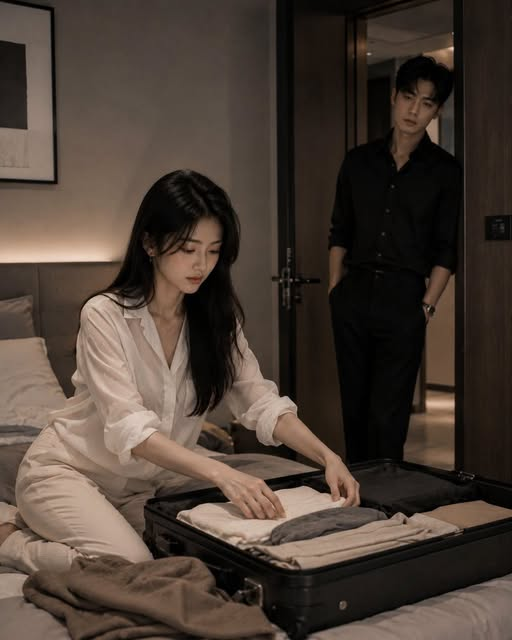
It began at the moment I walked out with one suitcase and refused to let him decide what happened next.
Ethan believed my disappearance was dangerous because he might lose control of the shares.
He misunderstood.
The most dangerous thing I took from him that night wasn’t money.
It was certainty.
The certainty that I would always be somewhere he could find me.
The certainty that I would always accept the version of my life he gave me.
The certainty that even divorced, I would remain part of the Whitmore world.
I didn’t.
I disappeared exactly as I had promised.
Not because nobody ever found me again.
But because the woman Ethan Whitmore thought he owned never existed again after that night.
