I did not go to a hotel.
I went straight to the hospital.
Not because I was afraid of my shaved head.
Because I needed to know what had been in that milk.
The doctor documented my condition, took samples, and asked whether I wanted the police contacted.
“Yes.”
That word came easier than I expected.
Then I called my attorney.
“Rachel, activate the protection clauses in my investment agreement with Ward Technologies.”
She went silent.
“All of them?”
“All of them.”
“Emilia, that could remove Nathan from control of the company.”
I touched the cap covering my head.
“I know.”
Nathan had forgotten how Ward Technologies began.
Five years earlier, he had an idea.
I had the capital.
My initial investment covered the office, engineers, patents, equipment, and nearly a year of payroll.
But my father refused to let me hand over millions based on love.
So Nathan signed an agreement.
If he committed serious misconduct against me, misused company funds, or exposed the business to substantial legal risk, my investment company had the right to demand an independent review and suspend certain founder privileges while the issue was investigated.
Nathan had laughed when he signed it.
“Your father thinks I’m going to become some kind of monster.”
I had defended him.
Now I wished Dad had been there so I could tell him:
You were right to make me keep the paperwork.
At 8:10 the next morning, Ward Technologies received formal notice.
At 8:32, the board called an emergency meeting.
At 9:15, Nathan began calling me.
I did not answer.
Then came the messages.
What did you do?
Call me immediately.
You’re destroying my company over a stupid joke.
That one made me stop.
A stupid joke.
I took a photograph of my hospital documentation.
Then another of my shaved head after the marker had been cleaned away.
I did not send either.
I forwarded Nathan’s message to my attorney instead.
Documentation was more useful than arguing.
Jade called shortly afterward.
I answered once.
Her crying started immediately.
“Sister-in-law, I’m sorry.”
“Don’t call me that.”
She went silent.
“Nathan said you agreed.”
My hand tightened around the phone.
“Agreed to what?”
“That you wanted a dramatic haircut for your anniversary.”
I closed my eyes.
“Did I speak to you?”
“No.”
“Did I sit down voluntarily?”
She hesitated.
“No.”
“Was I awake?”
Silence.
Then she whispered:
“Not really.”
There it was.
I asked:
“What was in the milk?”
“I don’t know.”
“Jade.”
“Nathan gave it to you.”
My breathing slowed.
“He told me you had taken something to help you sleep and that you wanted to surprise people with a new look.”
“You drew on my forehead.”
She began crying harder.
“I thought it was funny.”
“You photographed me.”
“I deleted them.”
My stomach turned cold.
“Photos?”
Plural.
Jade realized her mistake.
I stayed quiet.
Finally she whispered:
“There were three.”
“Did you send them anywhere?”
“No.”
Too fast.
I did not argue.
“Do not contact me again. Speak through the investigators.”
I hung up.
The board meeting lasted four hours.
I did not attend in person.
My lawyer did.
The facts were simple enough.
There was a police report.
Medical documentation.
Photographs.
Messages.
And a video from the penthouse hallway showing me leaving that night with my head covered while Nathan followed me shouting.
More importantly for the company, auditors found something unrelated to my marriage.
Nathan had been paying Jade through a “creative research fellowship.”
Except she was not doing meaningful work for Ward Technologies.
Tuition.
Apartment payments.
Clothing allowances.
Trips.
All processed through company-related accounts.
I had thought I was personally financing her education.
Apparently Nathan had quietly expanded her benefits using corporate money.
When the board asked why, he said:
“She’s talented.”
The CFO asked for her work product.
Nathan could not produce enough to justify the payments.
By evening, he was suspended as CEO pending investigation.
Not because he humiliated his wife.
Because he had combined personal misconduct with questionable use of company resources.
The distinction mattered.
I did not want hundreds of employees punished because Nathan had become cruel.
I wanted the company protected from him.
He showed up at my attorney’s office the next day.
I was there.
He stopped when he saw me without the cap.
For the first time since our anniversary, Nathan looked ashamed.
“Emilia…”
“Sit.”
He did.
Rachel placed divorce papers in front of him.
His head snapped up.
“You’re serious?”
“Yes.”
“You’re divorcing me over hair?”
I almost laughed.
“No.”
I leaned forward.
“I’m divorcing you because I drank something from my husband, lost consciousness, and woke up to find another woman altering my appearance while you stood there defending her.”
He looked away.
“You exaggerated what happened.”
“The medical report will answer that.”
His face changed.
Then he tried another approach.
“Jade got carried away.”
“You handed her the clippers.”
Silence.
“She’s young.”
“So you keep telling me.”
“She doesn’t understand consequences.”
“Then now she can learn.”
His eyes narrowed.
“You slapped her.”
“Yes.”
I did not pretend otherwise.
“And I will answer for my own actions if required.”
That surprised him.
I continued:
“But you do not get to use my bad decision after waking up humiliated to erase what happened before it.”
He had no answer.
Then I pushed another folder toward him.
The penthouse title.
He stared at it.
“What is this?”
“The apartment belongs to my premarital holding company.”
“I know that.”
“Good.”
“So you have thirty days to move.”
His face hardened.
“You said this was our home.”
“It was.”
I paused.
“Until you helped another woman humiliate me inside it.”
He stood.
“You can’t just take everything away.”
“I’m not.”
I looked at him.
“Your personal assets remain yours.”
“Your legitimate shares remain subject to the company agreements.”
“Your belongings will be delivered properly.”
I pointed toward the divorce petition.
“I’m not taking your life, Nathan.”
My voice became quiet.
“I’m removing myself from it.”
That frightened him more than anger ever had.
Jade’s story changed three times.
First, she said I had consented.
Then she said Nathan told her I had consented.
Finally, faced with messages recovered from her phone, she admitted the truth.
Hours before our anniversary, she had written:
Will she really let me do it?
Nathan replied:
She’ll be asleep. Stop worrying. She makes everything too serious anyway.
Another message:
Draw something stupid too. Maybe she’ll finally loosen up.
Jade answered with laughing emojis.
I read those messages once.
Only once.
Then I handed the phone back to the investigator.
I did not need to torture myself with them.
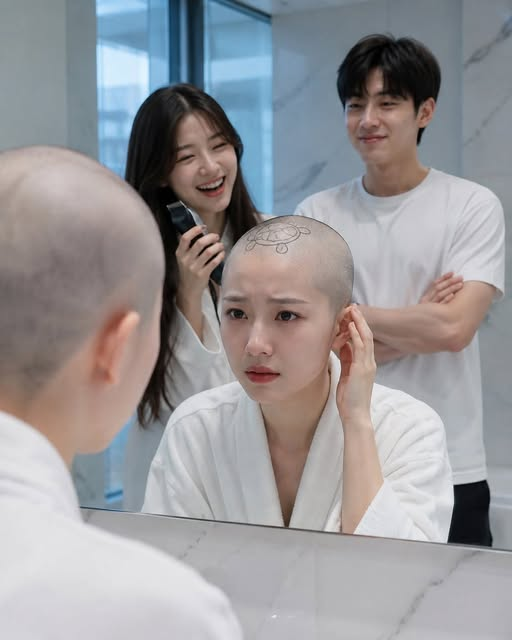
They had treated my dignity like entertainment.
That was enough.
The criminal case proceeded separately from the divorce.
I did not ask for dramatic punishment.
I told the truth.
Jade did too, eventually.
Nathan’s role was documented through messages, medical evidence, and witness statements.
The company board permanently removed him as chief executive after its own governance investigation.
He retained a reduced economic interest under the corporate agreements, but no longer controlled day-to-day operations.
Ward Technologies survived.
In fact, six months later, it was doing better under a professional CEO.
That might have hurt Nathan more than bankruptcy would have.
He had spent years saying:
“This company is me.”
It wasn’t.
The engineers were still there.
The products were still there.
The customers remained.
Only his name had disappeared from the office door.
Jade lost her fellowship.
The questionable corporate benefits stopped.
She later returned to university through ordinary financial aid and part-time work.
I did not interfere.
I also did not resume paying her tuition.
She wrote me a long apology months later.
At the end, she said:
You gave me opportunities when nobody else did, and I repaid you by trying to impress Nathan at your expense.
I believed that was probably true.
I replied with one sentence:
Build a life in which you never need to humiliate another woman to feel chosen.
Then I blocked the number.
Nathan resisted the divorce for almost a year.
Not because he wanted to save our marriage.
At least not initially.
He wanted access back.
To the penthouse.
To the company.
To the social circle my family connections had opened.
Only when those doors stayed closed did he start talking about love.
He came to one mediation carrying flowers.
I stared at them.
“Five years,” he said.
“Yes.”
“You’re really throwing away five years?”
“No.”
I shook my head.
“I lived them.”
His eyes reddened.
“I loved you.”
“Maybe you did.”
He looked surprised.
“But love without respect became dangerous.”
He lowered his head.
Then he whispered:
“I don’t know why I let Jade matter so much.”
I did.
“She made you feel admired.”
He looked up.
“I knew you before you were successful.”
“I knew every weakness.”
“I knew how much of the company began with my money.”
I smiled sadly.
“Jade looked at you and saw a genius.”
His face tightened.
“And you liked that version of yourself more than the husband you had to be with me.”
He did not deny it.
That was the closest we ever came to understanding what had happened.
The divorce became final fourteen months after our anniversary.
When I walked out of court, my hair had started growing back.
Short.
Uneven.
Mine.
Rachel touched it lightly.
“You could get extensions.”
I smiled.
“No.”
For months, I had hidden my head beneath scarves, wigs, hats.
Then one morning I stopped.
I had realized I was treating my appearance like evidence of something shameful.
It wasn’t.
So I let it grow at its own pace.
Some days I hated it.
Other days I liked it.
But nobody else got to decide what happened to it anymore.
That was enough.
Two years later, Ward Technologies held its annual innovation conference.
I attended as a major shareholder.
Not Nathan’s wife.
Not the heiress who financed him.
Emilia Ward.
My own name was printed beneath my photograph.
Before the keynote began, a young employee approached me.
“Ms. Ward?”
“Yes?”
She hesitated.
“I like your hair.”
It had reached my shoulders again.
I touched it instinctively.
“Thank you.”
Then she smiled.
“But the short version in your old board photo looked pretty cool too.”
I laughed.
For the first time, the memory did not hurt.
Nathan contacted me once more after that conference.
His message said:
I saw your picture. Your hair grew back.
I stared at the words.
Then another appeared.
I know that doesn’t mean what I did disappeared. I’m sorry.
I did not answer.
But I did not feel angry either.
That was when I knew he had finally become part of my past.
On our fifth anniversary, Nathan handed me a glass of hot milk and expected me to wake up humiliated, cry, forgive him, and continue being the generous wife who funded everyone around her.
Instead, I woke up and took one photograph.
That photograph did not destroy him.
Neither did my father’s contracts.
Neither did the board.
Nathan lost his marriage because he had stopped believing I deserved basic respect.
He lost his position because he treated company money like a private reward system.
And he lost the penthouse because he had forgotten whose name was actually on the title.
Months later, I found the old anniversary photo while clearing my cloud storage.
Shaved head.
Black turtle.
Hair scattered around the chair.
Nathan in the mirror.
Jade holding the clippers.
I stared at it for a long time.
Then I moved it into the evidence archive and closed the folder.
I did not delete it.
Not because I wanted to remember the humiliation.
Because I wanted to remember the woman in that photograph.
She looked powerless.
She wasn’t.
Nathan thought taking my hair would make me smaller.
Instead, it was the night I finally cut something far more permanent—
him out of my life.
