The first line of Michael’s letter read:
Daniel, if Laura keeps the promise I asked of her and raises you as her own, then one day, when she becomes old and afraid of being a burden, it will be your turn not to leave her.
My vision blurred.
I could barely continue.
Daniel gently steadied the paper in my hands.
Michael had written the letter only days before his accident.
He apparently had no idea he would die so soon.
It was supposed to be something Daniel received when he was older.
Son,
Laura worries she will never become your real mother because she did not give birth to you.
She does not understand that motherhood is not only blood.
It is staying.
I watched her learn which cereal you like.
I watched her sit outside your room when you had nightmares because you were too proud to let her come inside.
I watched her secretly sew the sleeve of your school jacket after you told her not to bother.
If I am ever gone, do not let anyone tell her she has no place beside you.
And if life gives you enough years to see her hair turn gray, remember this:
She will probably try to step aside before you have a chance to ask her to stay.
She has always been like that.
So stop her.
Bring her home.
Tell her that the promise did not end when you grew up.
By the time I reached the signature, I could no longer see the page.
Michael.
Thirty-three years dead.
And somehow he still knew me well enough to predict exactly what I would do at seventy.
I covered my face.
Daniel knelt in front of me.
“Mom.”
“I didn’t know he wrote this.”
“Neither did I.”
“Why now?”
Daniel looked toward the suitcase.
“Because Emily called me.”
I froze.
“Emily?”
“She found the nursing-home papers when you asked her to help print a copy of your medication list.”
I felt embarrassed.
“I told her not to say anything.”
“She ignored you.”
Despite myself, I laughed through my tears.
That sounded exactly like Emily.
Daniel continued:
“She told me you’d paid the deposit and were planning to move today.”
“I didn’t want anyone rearranging their lives because of me.”
“Mom.”
His voice became firmer.
“You rearranged your entire life for me.”
“That was different.”
“Why?”
“You were a child.”
“And now you’re my mother.”
I shook my head.
“You have two children. A wife. A career. You already have enough responsibility.”
Daniel looked almost offended.
“You think you’re a responsibility?”
“At my age?”
“Yes.”
I looked away.
He took my hand.
“Do you remember when I was eleven and broke my arm?”
“Of course.”
“You slept in a chair beside my hospital bed for three nights.”
“You were scared.”
“When I failed my university entrance examination the first time?”
“You passed the next year.”
“Because you spent a year telling me one failure did not determine my life.”
I tried to interrupt.
He wouldn’t let me.
“When I married Emily, who paid the deposit on our first apartment?”
“That was a gift.”
“Exactly.”
He squeezed my hand.
“So why, when you need something, do you suddenly call it a burden?”
I had no answer.
Because there wasn’t a good one.
Only fear.
Daniel carried my suitcase back into the bedroom.
I followed him.
“No, leave it. I already paid for the room.”
“We’ll cancel it.”
“They won’t return everything.”
“I don’t care.”
“I do. Money shouldn’t be wasted.”
He turned.
For one second, he looked exactly like the stubborn eight-year-old boy who used to stand with his hands on his hips when I refused to buy myself new shoes.
“Fine.”
He pulled out his phone.
“I’ll waste my money.”
“Daniel!”
He laughed.
That laugh broke something open inside me.
I had spent months imagining myself disappearing quietly into a residence because I thought dignity meant needing nobody.
Maybe I had confused dignity with loneliness.
We drove to Daniel’s house that afternoon.
Emily was standing at the entrance.
Beside her were my grandchildren, sixteen-year-old Hannah and twelve-year-old Ben.
The moment I got out of the car, Ben ran toward me.
“Grandma!”
I barely had time to open my arms.
Hannah followed.
Then Emily.
I whispered:
“You told him.”
She hugged me tighter.
“Yes.”
“I asked you not to.”
“I know.”
“You’re very disobedient.”
“I learned from you.”
Daniel laughed behind us.
Then I saw something through the open front door.
The downstairs study had been emptied.
The desk was gone.
A bed stood near the window.
My old armchair was in the corner.
Even the little wooden sewing box Michael had given me years earlier sat on a shelf.
I stared.
“What is this?”
Emily smiled.
“Your room.”
I shook my head immediately.
“No.”
Everyone’s faces fell.
“I cannot take Daniel’s office.”
Daniel walked past me.
“It wasn’t my office anymore.”
“You worked there every day.”
“I rented a small workspace near the engineering firm.”
“You moved your entire office because of me?”
He shrugged.
“I’ve wanted to separate work from home anyway.”
I knew that was only partly true.
But this time, instead of arguing, I looked at the room.
There were grab bars in the bathroom.
A small emergency button beside the bed.
Better lighting.
No rugs to trip over.
A kettle with automatic shutoff.
My eyes narrowed.
“How long have you been preparing this?”
Emily looked guilty.
“Four days.”
Four days.
While I was secretly preparing to leave them—
they had been secretly preparing for me to stay.
I sat on the bed.
And cried again.
At seventy, apparently crying had become my new occupation.
The first month was difficult.
Not because they treated me badly.
Because they treated me too well.
If I stood up too quickly, Daniel appeared.
If I carried groceries, Emily took the bag.
If I coughed, Ben asked whether we should call an ambulance.
Finally, one evening I slammed my spoon onto the table.
“I am seventy, not seven!”
Everyone froze.
Then Hannah burst out laughing.
Soon we all did.
After that, we made rules.
I would still cook when I wanted.
I would take my own walks.
I would manage my own money.
Nobody would inspect me every five minutes.
In exchange, I agreed not to hide falls, dizziness, forgotten medication, or anything else simply because I feared worrying them.
Daniel called it our treaty.
I called it everyone learning to mind their business properly.
Then something happened that proved moving in had been the right choice.
Three months later, I forgot where I was.
Only for a few minutes.
I woke one morning, walked into the hallway and could not remember why the walls looked unfamiliar.
My heart began racing.
Then Hannah appeared.
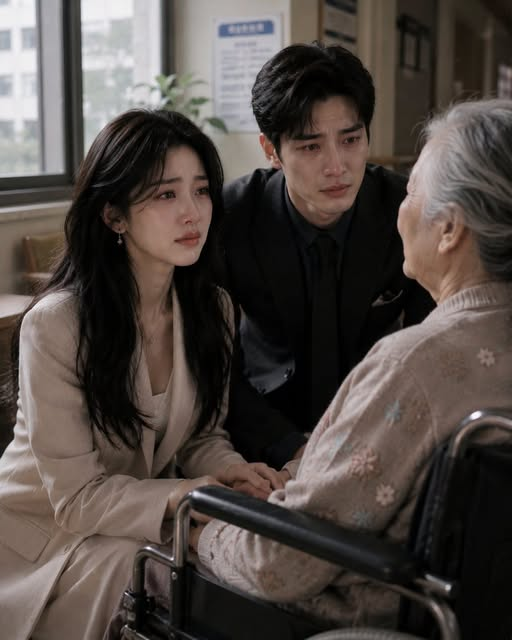
“Grandma?”
I looked at her.
“Where am I?”
She did not panic.
She did not look frightened.
She took my hand.
“You’re home.”
Those two words settled me.
Home.
Not Daniel’s house.
Not a place I was borrowing.
Home.
My memory returned.
But Daniel still took me to the doctor.
There was no dramatic diagnosis.
Just aging, medication adjustments, follow-up tests and the recommendation that I no longer live completely alone.
I sat silently during the drive home.
Daniel noticed.
“What?”
“I suppose the nursing home idea wasn’t completely ridiculous.”
He shook his head.
“No. It wasn’t.”
That surprised me.
“A good residence isn’t abandonment, Mom.”
He glanced at me.
“But you weren’t choosing one because you wanted that life.”
He paused.
“You were choosing it because you thought you weren’t allowed to need us.”
He was right.
Again.
Annoyingly.
A year passed.
Then another.
I began helping Ben with cooking.
Hannah started bringing friends home just because, according to her, “Grandma makes better snacks than Mom.”
Emily pretended to be offended.
I joined a local gardening club.
Daniel complained that I was busier than him.
One afternoon, I found him in the garage holding Michael’s old letter.
“You still carry it?”
“Sometimes.”
He smiled.
“I read it when you start talking about being a burden again.”
“That’s emotional blackmail.”
“Effective emotional blackmail.”
I tapped his shoulder.
Then I asked:
“Did your father really ask you to take care of me?”
Daniel looked at me.
“No.”
I frowned.
“But the letter—”
“He didn’t say take care of you.”
Daniel unfolded it.
“He said don’t let you believe you don’t belong.”
I went quiet.
There was a difference.
A big one.
I had spent years thinking care meant becoming someone’s responsibility.
Michael had understood something better.
Sometimes care simply means refusing to let someone erase themselves from the family because age has convinced them love must now be earned.
On my seventy-third birthday, Daniel gave me a small frame.
Inside was Michael’s letter.
Not the original.
A copy.
Beneath it, Daniel had added one sentence in his own handwriting.
Dad, promise fulfilled. She stayed.
I cried.
Naturally.
Then Ben complained:
“Grandma cries at every present now.”
I threw a napkin at him.
Everyone laughed.
Later that evening, after the cake and noise disappeared, I sat alone beside the window.
Daniel came over.
“Regret not going to the residence?”
I pretended to think.
“The food there looked better.”
He laughed.
Then sat beside me.
For years after Michael died, I believed the promise I made beside his coffin belonged only to Daniel.
I would raise him.
I would not abandon him.
I would make sure one frightened little boy never felt unwanted again.
I kept that promise for more than thirty years.
What I never understood was that love had quietly turned it into a circle.
The boy grew up.
The hands I once held became the hands steadying mine.
The child who once asked me:
“Are you going to leave too?”
was now the man standing in my doorway saying:
“You’re not leaving.”
At seventy, I thought my usefulness had ended.
I thought the kindest thing I could do was pack quietly and disappear before anyone had to ask me to.
I was wrong.
A family is not a debt ledger.
Nobody has to earn a chair by remaining young, strong, productive or convenient.
Michael’s last gift was not the letter.
It was the reminder hidden inside it.
Thirty-three years earlier, I had promised not to abandon his son.
And when I finally became the frightened one standing at the edge of a new life—
his son kept the promise for both of us.
