Marcus stared at the blinking ruby.
“What did you activate?”
I could barely keep my eyes open.
“My father’s emergency beacon.”
Years earlier, after the Sterling family received threats during a business dispute, my parents had placed discreet trackers inside a handful of family heirlooms.
I had laughed at the idea then.
My mother had not.
“If you ever activate this,” she told me, “someone will come.”
The red light blinked again.
Marcus looked toward the basement door.
“How long?”
I whispered:
“Not long.”
Then everything went dark.
I woke up in a hospital.
Not Julian’s private clinic.
Not a Grant-owned facility.
A Sterling hospital.
My father was sitting beside the bed.
Older than I remembered.
His hair had turned almost completely gray during the six years I had spent distancing myself from him because Julian told me my family “interfered too much.”
When Dad realized I was awake, he did not ask questions.
He simply took my hand.
“Amelia.”
That one word almost broke me.
“I’m sorry.”
“No.”
His voice shook.
“Not now.”
My mother stood behind him with tears in her eyes.
And near the door was Marcus.
Two detectives were beside him.
That was when I understood.
The pendant had done more than summon my family.
Marcus had finally told them everything.
He had ignored Julian’s order.
After activating the beacon, Marcus called emergency services himself.
Then he preserved the mansion’s security recordings before Julian could erase them.
The cameras showed Isabella approaching me before dinner.
They showed her deliberately stepping backward and falling after whispering something I could not hear.
They showed Julian giving the punishment order without asking what had happened.
They showed employees taking me toward the basement.
And most importantly—
they showed Marcus repeatedly warning Julian that I needed medical care.
Julian refused.
More than once.
He could no longer call what happened an accident.
He could no longer say he had not known.
The evidence showed that he knew enough to understand I was in danger and still chose to leave me there.
That was why detectives were waiting outside my hospital room.
My father leaned closer.
“Do you want us to handle everything?”
Six years ago, I would have said yes.
The old Amelia Sterling had grown up surrounded by people capable of making problems disappear.
But lying in that hospital bed, I understood something.
I did not want Julian erased.
I wanted him exposed.
“No private settlements.”
Dad went still.
“No threats.”
He studied me.
“No family pressure.”
My voice was weak, but certain.
“I want the police to investigate.”
My father’s eyes filled.
Then he nodded.
“Whatever you want.”
For the first time in years, someone powerful asked what I wanted—
and accepted the answer.
Julian tried to enter the hospital that evening.
Security stopped him downstairs.
He called me seventeen times.
I answered the eighteenth.
“Amelia.”
His voice sounded completely different.
No arrogance.
No coldness.
“Where are you?”
I looked around the room.
“My family found me.”
Silence.
Then:
“Listen to me. I didn’t know it was that serious.”
I closed my eyes.
“Marcus told you.”
“He exaggerated.”
“He told you I needed a hospital.”
“I was angry.”
“And?”
Nothing.
I continued:
“You ordered no doctors.”
His breathing changed.
“Amelia, I never wanted you to die.”
That sentence told me everything.
Because somehow he still believed intent was the only thing that mattered.
“I begged you for three years to stop letting Isabella humiliate me.”
Silence.
“You didn’t listen.”
“I told you she manipulated situations.”
Nothing.
“You called me jealous.”
“Amelia—”
“And today you punished me before asking a single question.”
His voice broke.
“I made a mistake.”
“No.”
I stared through the hospital window.
“You made a decision.”
Then I hung up.
Isabella disappeared from the Grant mansion that night.
She made it as far as the airport.
Police stopped her before boarding.
Not because she had ordered what Julian did.
She hadn’t.
But investigators had found something else.
Messages.
Hundreds of them.
For months, Isabella had been provoking conflict deliberately.
She sent Julian photographs of me speaking to male colleagues with captions like:
Your wife looks happy when you’re not around.
She told him I was insulting her privately.
She staged arguments.
And on the afternoon of the family dinner, she wrote to a friend:
Tonight I’m going to make Amelia lose control in front of him.
The friend replied:
And if she doesn’t?
Isabella answered:
Then I’ll fall anyway. Julian always believes me.
That message destroyed her innocent-act defense.
But it did not make her responsible for Julian’s final command.
That belonged to him.
I made sure nobody forgot that.
When one relative said:
“Isabella ruined your marriage.”
I answered:
“No.”
“Isabella tested it.”
“Julian ruined it.”
The Sterling family’s connection to the Grants became public within days.
People had always known my father invested in Grant Holdings years earlier.
What they did not know was how much.
Six years ago, when the Grant family nearly collapsed under debt, my father provided emergency financing through a private trust.
Julian had spent years presenting his recovery as his own brilliance.
In reality, several major loans still depended on Sterling guarantees.
Dad wanted to pull everything immediately.
I stopped him.
“Will employees lose jobs?”
He looked at me.
“Possibly.”
“Then no.”
His expression hardened.
“Amelia, they nearly killed you.”
“Julian did.”
I shook my head.
“Not the receptionist.”
“Not the drivers.”
“Not the warehouse workers.”
“Not thousands of people who don’t even know my name.”
My father stared at me for a long time.
Then asked:
“What do you want?”
“A governance review.”
His eyebrows lifted.
“Freeze Julian’s authority.”
“Separate Sterling financing from his personal control.”
“And protect the operating companies.”
Dad slowly smiled.
Not because he was happy.
Because, after six years, he recognized his daughter again.
“Done.”
Grant Holdings did not collapse overnight.
That would have been easy.
Instead, something worse happened to Julian.
He lost control.
The board suspended him during the criminal and internal investigations.
Independent directors took over.
Sterling guarantees were renegotiated under stricter conditions.
Personal expenses were audited.
Transactions connected to Isabella were reviewed.
Julian discovered that a company bearing his surname could continue functioning without obeying him.
That broke his pride more efficiently than bankruptcy ever could.
I spent almost two months in recovery before I saw him again.
The meeting happened through attorneys.
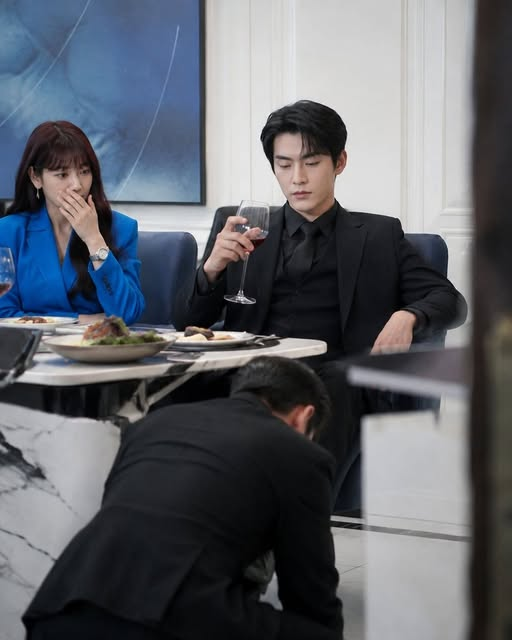
Julian entered wearing a plain dark suit.
No entourage.
No Isabella.
No bodyguards.
He looked at me and stopped.
For several seconds he could not speak.
Then:
“You look better.”
I almost laughed.
“Compared to your basement?”
His face went white.
“Amelia…”
My lawyer remained beside me.
Julian sat.
“I signed the divorce papers.”
He pushed them across the table.
I looked at the signature.
For years, I thought seeing it would hurt.
It didn’t.
He continued:
“I’m not contesting your property.”
“That’s sensible.”
“The Manhattan apartment. Your Sterling shares. Everything you brought into the marriage.”
I nodded.
Then he said:
“I want you to know I ended things with Isabella.”
I looked at him.
“That has nothing to do with me anymore.”
His jaw trembled.
“She lied.”
“Yes.”
“She made me believe—”
I interrupted.
“Stop.”
He froze.
“Do not make her your excuse.”
His eyes lowered.
“She lied about being pushed.”
“Yes.”
“But you ordered what happened afterward.”
Silence.
“That was you.”
He covered his face.
For the first time, Julian Grant looked like a man forced to meet himself without anyone else standing nearby to blame.
Then he whispered:
“I thought you would always forgive me.”
That hurt.
Because it was true.
I had forgiven everything before.
The first time Isabella moved into our home.
The first dinner Julian abandoned because she called.
The first time he accused me of jealousy.
The first time he let her sit in my place at a family event.
Every surrender taught him the same lesson:
Amelia stays.
So he kept pushing.
Until one day, he pushed past the point where returning became impossible.
“I know,” I said.
He looked up.
“That was my mistake too.”
His expression changed.
“What?”
“I kept forgiving without changing anything.”
I stood.
“I won’t make that mistake again.”
The criminal case took more than a year.
There were no dramatic instant verdicts.
There were statements.
Medical records.
Video evidence.
Expert testimony.
Employee accounts.
Marcus testified.
So did members of the household staff who had been afraid to speak while Julian controlled their jobs.
Ultimately, Julian faced serious legal consequences for ordering and knowingly allowing violence against me and for obstructing medical assistance.
Isabella faced separate consequences connected to her deception and other conduct uncovered during the investigation.
Marcus was not charged.
He had participated in the security system that enabled Julian’s behavior for years, and he admitted that failure openly.
But on the night that mattered most, he disobeyed the order, summoned help, preserved evidence, and testified truthfully.
Months later, he came to see me.
“I should have stopped him sooner.”
“Yes.”
He nodded.
No excuses.
Then he asked:
“Do you hate me?”
“No.”
He looked surprised.
“I think you were afraid.”
His eyes lowered.
“That doesn’t make everything okay.”
“I know.”
“But you finally chose not to be afraid.”
He nodded.
That was enough.
My divorce became final before the criminal proceedings ended.
I returned to Sterling House afterward.
Not permanently.
Just long enough to rebuild my life.
I expected my father to demand that I stay.
Instead, he handed me keys to a small townhouse he owned near Central Park.
“You need somewhere that belongs to you.”
I looked at him.
“Not the family?”
“Yours.”
I started crying.
Dad laughed softly.
“Your mother says I’m finally learning boundaries.”
From the hallway, Mom shouted:
“You are.”
For the first time in years, I laughed until my side hurt.
Three years later, I started a foundation.
Not for revenge.
For survivors who needed emergency legal help, temporary housing, and medical advocacy.
I named it the Jade Project.
People assumed it was because of the pendant.
They were only partly right.
The pendant had saved my life.
But what mattered more was what it represented.
A connection I thought marriage required me to sever.
Proof that isolation had never been love.
On the wall of the foundation’s main office, the pendant sits inside a small glass case.
Under it is one sentence:
A way out only matters if you remember you are allowed to use it.
I saw Julian once more.
Years later.
He was leaving a courthouse after another hearing related to the corporate matters.
He looked older.
Smaller somehow.
He stopped when he saw me.
“Amelia.”
I nodded.
He glanced at the jade pendant around my neck.
“You still have it.”
“Yes.”
His eyes filled with something I could not name.
“Your family really came.”
I looked at him.
“They never stopped waiting.”
That was the truth I had taken longest to understand.
Julian had convinced me that choosing him meant abandoning everyone else.
My father’s calls became “interference.”
My mother’s concern became “control.”
My old friends became “bad influences.”
One by one, my world shrank until Julian and Isabella occupied almost all of it.
The pendant did not bring my family back.
It reminded me they had never truly left.
People later told the story as if the Sterlings destroyed Julian Grant.
They didn’t.
My father did not send an army.
My mother did not buy judges.
No company was burned to the ground.
We did something Julian had spent years believing powerful people never had to face.
We told the truth.
We preserved evidence.
We let professionals investigate.
We protected innocent employees.
And I stopped standing between Julian and the consequences of his own decisions.
That was enough.
That night in the basement, I believed my life had been reduced to one locked door and one man’s command.
No doctors.
But Julian had forgotten something.
Before I was Mrs. Grant, I had been Amelia Sterling.
And even more importantly—
before I belonged to any family name, I belonged to myself.
I closed my hand around the jade pendant and activated the signal.
Julian thought it was a declaration of war.
It wasn’t.
It was something much simpler.
I was finally asking for help.
And this time, when the door opened—
I walked out of his life for good.
