I zoomed in on the withdrawal slip.
My mother’s signature was on the first line.
The second belonged to the person listed as the family monitor on Lizzy’s restricted care account.
Natalie Bennett.
Me.
I stared at it until my hands went cold.
I had never signed that document.
The withdrawal was for $4,800.
The description said:
Emergency medical and educational expenses for Elizabeth Bennett.
The same day that money disappeared, Lizzy had been locked in a closet without enough food.
I called the bank.
Then my attorney.
Then the detective assigned to Lizzy’s case.
By sunrise, I understood why my mother had texted:
You ruined everything.
She wasn’t talking about the family.
She was talking about the paper trail.
When Ian had entered treatment the year before, he had arranged for my parents to become temporary guardians.
But he had never completely trusted them with the money.
So his attorney created a restricted account for Lizzy.
Routine expenses could be paid normally.
Large withdrawals required two approvals.
One from the guardian.
One from me.
I remembered signing the original setup forms.
My parents had told me it was only a formality.
After that, they never asked me to approve a single withdrawal.
Because apparently they didn’t need to.
They had simply begun signing my name themselves.
I went through every statement again.
$3,200.
$5,100.
$2,700.
$6,400.
My forged signature appeared over and over.
New television.
Resort reservation.
Furniture.
A payment toward my father’s truck.
None of it had anything to do with Lizzy.
By noon, the bank froze the account.
My parents’ access ended.
Then Ian called.
I almost didn’t recognize his voice.
“Natalie?”
“Ian.”
“What happened to Lizzy?”
My throat tightened.
“Who told you?”
“Mom called the facility screaming that you kidnapped her.”
Of course she did.
I told him the truth.
Not every detail.
Just enough.
Lizzy was safe.
She was in the hospital.
The doctors were concerned about neglect.
And our parents had been taking money from her care account.
Ian went completely silent.
Then:
“I sent money too.”
I closed my eyes.
“What?”
“Every month.”
He had been transferring additional money directly to my father.
For food.
Clothes.
School supplies.
Birthday gifts.
Almost $18,000 over the year.
“I kept asking for pictures,” Ian whispered. “Dad said Lizzy hated cameras.”
My anger returned.
Not hot.
Cold.
Precise.
“Did you ever authorize them to sign my name?”
“No.”
“Did you ever tell them to lock Lizzy anywhere?”
His voice cracked.
“What kind of question is that?”
The answer was enough.
The emergency custody hearing happened two days later.
My mother arrived wearing pearls.
My father wore his church suit.
They looked exactly like the respectable grandparents everyone knew.
Mom cried before the hearing even began.
“Natalie has always hated discipline.”
My father nodded solemnly.
“Lizzy is a difficult child. She refuses food, refuses school, lies for attention.”
Then the hospital records were presented.
The school attendance records.
The photographs of the external latch.
The bank statements.
The forged withdrawals.
Their expressions changed.
My mother pointed at me.
“She broke into our house!”
My attorney answered calmly.
“She entered after receiving a midnight call from a six-year-old child asking for help. Emergency services and the hospital then documented the child’s condition.”
My father tried another direction.
“We never starved anybody.”
The guardian ad litem asked:
“Then why was Elizabeth not attending school?”
Silence.
“And where did the care money go?”
My mother started crying harder.
“We deserved something too! Do you know how stressful raising a child is at our age?”
The courtroom became very quiet.
She realized what she had said too late.
My attorney placed the withdrawal slips in front of her.
“Did Natalie authorize these?”
Mom looked at me.
Then at the judge.
“I don’t remember.”
I spoke for the first time.
“I do.”
Everyone turned.
“I never signed them.”
The judge examined the pages.
Then asked my parents:
“Who did?”
Neither answered.
That silence destroyed the last of their story.
Temporary guardianship was terminated immediately.
Lizzy was placed with Adam and me while Ian continued treatment and the court reviewed the long-term arrangement.
My parents were ordered to have no unsupervised contact with her.
For the first time in months, nobody could simply take Lizzy back because they were “family.”
The investigation uncovered even more.
My parents had told the school Lizzy was being homeschooled.
She wasn’t.
They told Ian she was regularly seeing a pediatrician.
She wasn’t.
They told relatives she refused gifts.
In reality, many of the clothes and toys people sent never reached her.
Some had been returned for store credit.
Others were still unopened in the garage.
Then the detective found my father’s notebook.
Every monthly payment was listed.
Beside several entries were comments.
L — too much food this week.
School asking questions again.
Nat cannot know about bank.
I stopped reading after that.
I no longer needed to understand how my parents justified what they had done.
Understanding would not make Lizzy safer.
Accountability might.
The financial fraud was handled separately from the neglect investigation.
They eventually had to repay a substantial portion of the money they had misused.
Their guardianship privileges were gone.
Their reputation in the community collapsed—not because I publicly humiliated them, but because the facts could no longer be hidden behind Sunday smiles.
My mother blamed me.
My father blamed Ian.
Neither blamed themselves for a long time.
That became their problem.
Not mine.
The first weeks with Lizzy were harder than I expected.
She asked permission for everything.
“Auntie, can I open the refrigerator?”
“Yes.”
“Can I have two crackers?”
“Yes.”
“Can I leave the hallway light on?”
“Yes.”
One night she woke me at two in the morning.
She stood beside my bed holding her stuffed bear.
“Are you going to send me back because I ate too much?”
I sat up immediately.
“No.”
“What if Grandma says I’m bad?”
“You still stay.”
“What if Grandpa says you stole me?”
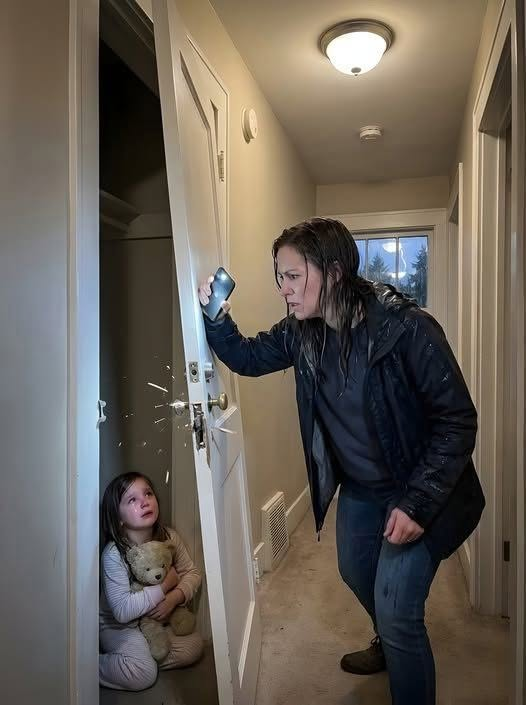
“You still stay.”
Her chin trembled.
“What if I make you tired?”
I pulled back the blanket.
“You still stay.”
She climbed beside me.
Adam brought another pillow without saying anything.
For months, that was how healing looked.
Not dramatic speeches.
A stocked refrigerator.
An unlocked bedroom door.
School every morning.
Dinner at the same time.
Adults who came back when they said they would.
Ian completed treatment eight months later.
His first visit with Lizzy was supervised because everyone agreed she needed stability more than anybody needed a perfect reunion.
When she saw him, she froze.
Ian knelt several feet away.
He didn’t rush toward her.
“Hi, Liz.”
She clutched the bear.
“Daddy?”
His eyes filled.
“Yes.”
“Why didn’t you come?”
That question nearly broke him.
“I was sick, sweetheart.”
She stared at him.
“Grandma said you didn’t want me.”
Ian shook his head immediately.
“That wasn’t true.”
He wiped his face.
“And I should have made sure you knew that.”
Lizzy slowly approached.
Then handed him the bear.
“You can hold Mr. Bear.”
Ian took it as though she had handed him something priceless.
That was the beginning.
Not instant repair.
Not pretending the lost year had disappeared.
Just one safe visit at a time.
Eventually, the court approved a gradual reunification plan.
Lizzy continued living with us during the transition.
Months later, she began spending weekends with Ian.
He found work.
Got his own apartment.
Attended every parenting session the court recommended.
And unlike our parents, he never called accountability an insult.
My mother wrote me a letter almost a year later.
She said family should forgive.
She said she had made “mistakes.”
She said Lizzy deserved grandparents.
I wrote back only once.
Lizzy deserves safe grandparents. Those are not automatically the same thing.
I never argued about it again.
Forgiveness, if it ever came, would not mean access.
Two years after the midnight call, Lizzy was eight.
She was healthy.
Talkative.
Annoyingly obsessed with astronomy.
And completely incapable of walking past a bakery without asking for something chocolate.
One evening she stayed with us while Ian worked late.
At bedtime, she placed Mr. Bear on my dresser.
“Aunt Natalie?”
“Yes?”
“Do you remember when I called you?”
Every word.
“Yes.”
“I thought you wouldn’t come.”
I swallowed.
“Why?”
“Grandma said nobody believed children.”
I crouched beside her.
“She was wrong.”
Lizzy nodded.
“I know.”
Then she smiled.
“Because you came.”
That was all she needed to say.
People later asked what destroyed my parents’ lies.
The hospital report?
The school records?
The bank statements?
The forged signature?
All of those mattered.
But the first crack appeared before any adult saw a document.
It happened at 12:17 in the morning, when a frightened six-year-old found a phone and decided to risk asking for help.
My parents thought they controlled her food.
Her money.
Her school.
Even the story everyone heard about her.
They were wrong.
Because Lizzy still had one thing they had not managed to take.
Her voice.
And the night she used it, I finally listened.
